
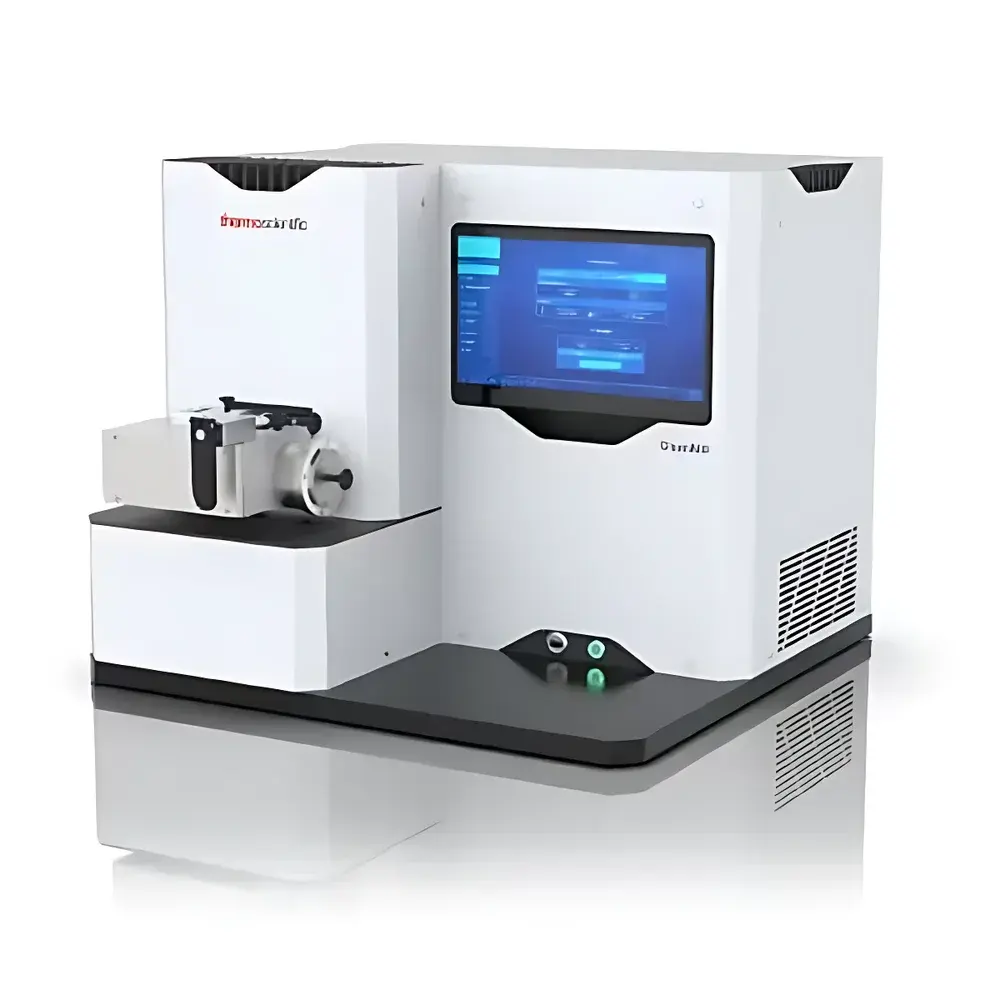
Thermo Scientific CleanMill Broad Ion Beam Milling System
| Brand | Thermo Fisher Scientific |
|---|---|
| Origin | Shanghai, China |
| Manufacturer Type | Authorized Distributor |
| Product Category | Domestic (China-manufactured) |
| Model | CleanMill Broad Ion Beam Milling System |
| Pricing | Request Quote |
Overview
The Thermo Scientific CleanMill Broad Ion Beam Milling System is a high-precision, ultra-low-damage surface preparation instrument engineered for scanning electron microscopy (SEM) and analytical electron microscopy (AEM) applications in advanced materials research. It operates on the principle of broad-beam argon ion sputtering—using collimated, high-energy inert gas ions to remove material via physical sputtering—enabling artifact-free cross-sectional polishing and controlled milling without introducing mechanical deformation, smearing, or thermal damage. Unlike conventional mechanical polishing or focused ion beam (FIB) systems, the CleanMill delivers uniform, large-area (up to 3 mm × 3 mm), nanoscale-smooth surfaces ideal for high-resolution imaging of beam-sensitive, air-sensitive, or heterogeneous materials—including battery electrodes, soft polymers, biological composites, thin-film stacks, and corrosion interfaces. Its modular architecture supports integration into vacuum-compatible workflows and is purpose-built for reproducible, operator-independent sample preparation under controlled environmental conditions.
Key Features
- High-Energy Ion Source: Dual-ion-gun configuration with a primary high-voltage ion gun capable of acceleration up to 16 kV, enabling rapid material removal and efficient bulk milling of hard ceramics, metals, and intermetallics.
- Ultra-Low-Voltage Polishing Capability: Optional low-energy ion gun with dedicated optics supporting ion acceleration from 100 V to 2 kV—critical for final-stage surface finishing with sub-nanometer roughness (Ra < 0.5 nm) and minimized subsurface damage.
- Wide Energy Range & Tunable Beam Geometry: Continuously adjustable ion energy (2–16 kV) and independently controllable beam incidence angle (0°–90°) allow optimization for diverse material classes and specific analytical requirements (e.g., minimizing channelling contrast or enhancing topographic fidelity).
- Integrated Real-Time Monitoring: High-resolution CCD camera and intuitive touchscreen interface enable live observation of ion milling progression, facilitating precise endpoint detection and process repeatability across multiple samples.
- Cryogenic Milling Option: LN2-cooled stage with automated cryogen refill ensures stable temperature control down to –140 °C, preserving structural integrity of volatile organics, hydrated phases, and radiation-sensitive specimens during ion exposure.
- Vacuum Compatibility & Transfer Integration: Designed for seamless coupling with the Thermo Scientific CleanConnect Sample Transfer System and IGST (Inert Gas Sample Transfer) workflow—enabling contamination-free, oxygen- and moisture-free transfer of air-sensitive samples directly into SEM or TEM holders under inert atmosphere.
Sample Compatibility & Compliance
The CleanMill system accommodates standard 30 mm SEM stubs, half-grid TEM holders, and custom mounting fixtures. It supports conductive, semi-conductive, and insulating samples—with optional low-kV charge compensation and conductive coating protocols. The system complies with ISO 14644-1 Class 5 cleanroom-compatible design standards for chamber construction and meets CE marking requirements for electromagnetic compatibility (EMC) and low-voltage directive (LVD). All software-controlled operations adhere to GLP/GMP-aligned audit trail functionality, including timestamped parameter logs and user-access controls—supporting traceability in regulated environments such as battery R&D labs, semiconductor failure analysis, and pharmaceutical materials characterization.
Software & Data Management
Controlled via Thermo Scientific SmartControl™ software, the CleanMill provides intuitive, wizard-driven operation with pre-configured method templates for common materials (e.g., “Li-ion Cathode”, “Polymer Blend”, “Oxide Heterostructure”). All process parameters—including ion energy, beam current, milling duration, tilt angle, and cryo-stage temperature—are digitally logged with full metadata. Export formats include CSV and XML for integration with LIMS platforms. The software supports 21 CFR Part 11-compliant electronic signatures, role-based user permissions, and encrypted data storage—ensuring regulatory readiness for quality assurance laboratories operating under FDA or ISO/IEC 17025 frameworks.
Applications
- Preparation of artifact-free cross-sections for high-resolution SEM/EDS/EELS analysis of layered battery materials (NMC, Si-anodes, solid electrolytes)
- Surface planarization of soft matter—including hydrogels, lipid bilayers, and polymer blends—for AFM-SEM correlative microscopy
- Interface analysis in metallurgical coatings, thermal barrier systems, and additive manufacturing builds
- Failure analysis of microelectronic packaging and solder joint interfacial degradation
- Corrosion science studies requiring native-state oxide/metal interface preservation
- Geological thin-section preparation for mineral phase mapping without hydration artifacts
FAQ
What vacuum level does the CleanMill system achieve during operation?
The system reaches a base pressure of ≤5 × 10⁻⁶ mbar using a turbomolecular pump backed by a dry scroll pump—ensuring minimal residual gas interaction during ion milling.
Can the CleanMill be used for TEM lamella preparation?
While optimized for broad-beam cross-sectioning, it is not a replacement for FIB-SEM lamella thinning; however, it serves as an upstream step for pre-thinning bulk samples prior to final FIB refinement.
Is remote operation supported?
Yes—SmartControl™ software enables secure remote monitoring and method execution via Ethernet-connected LAN environments, with TLS-encrypted communication.
How often does the ion source require maintenance?
Under typical usage (8 hrs/day, 5 days/week), the ion source operates >1,500 hours before scheduled refurbishment; consumables include filament assemblies and aperture plates, documented in the preventive maintenance schedule.
Does the system support automated multi-sample batch processing?
Yes—optional motorized sample stage with programmable XYZ positioning allows unattended sequential milling of up to 12 samples per run, with individual parameter sets per position.






