
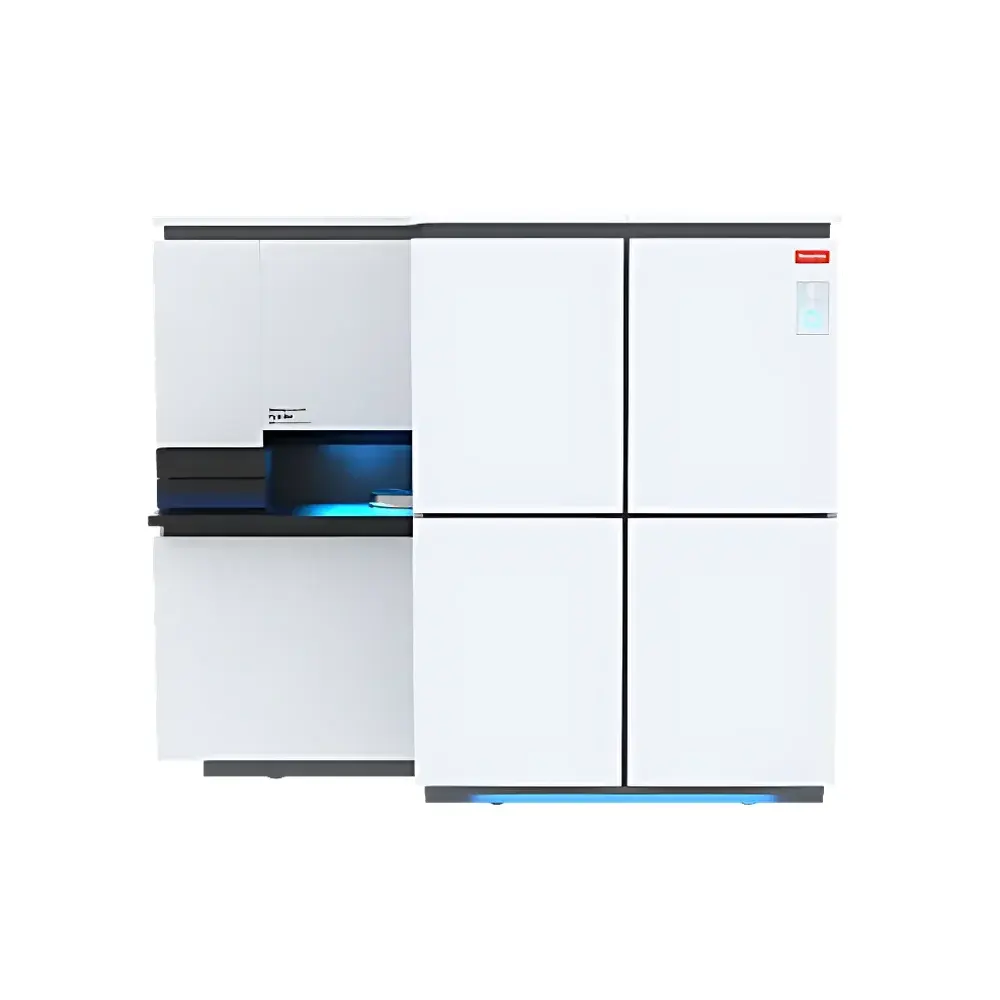
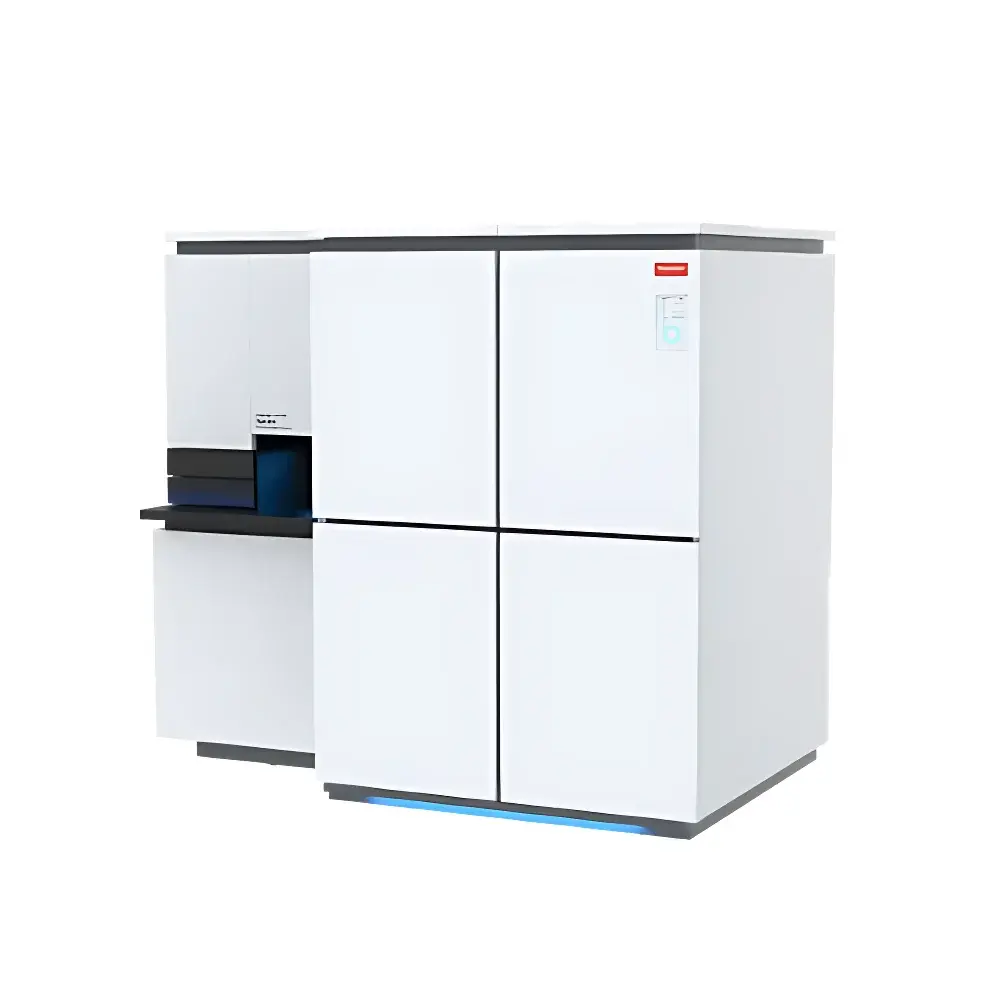
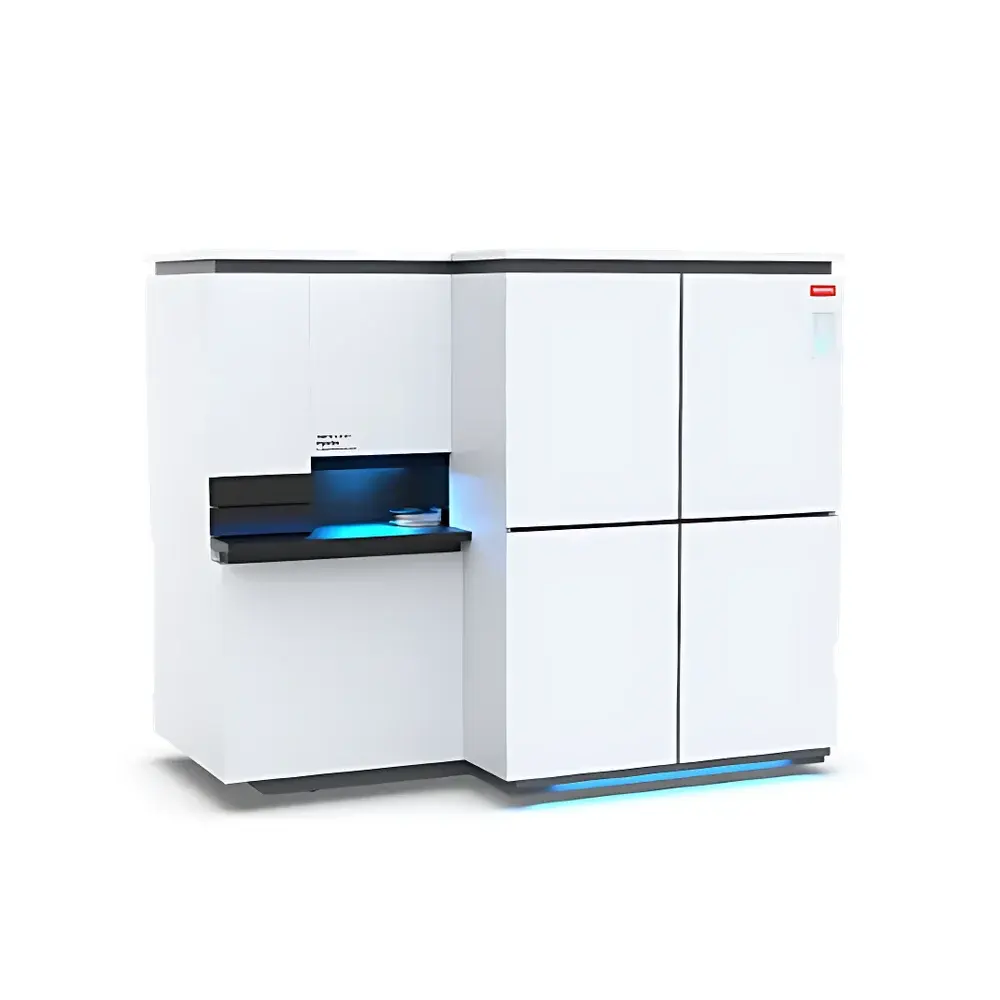
Thermo Scientific Hypulse X-Ray Photoelectron Spectrometer
| Brand | Thermo Scientific |
|---|---|
| Origin | Switzerland |
| Model | Hypulse |
| Instrument Type | XPS with REELS and ISS capabilities |
| Ion Source | MAGCIS dual-mode (Ar⁺/Ga⁺/Cs⁺/O₂⁺) |
| Depth Profiling | Integrated femtosecond laser ablation (fs-LA) system |
| Acquisition Modes | Snapshot mode (<1 s per spectrum), Scanning mode (energy-resolved) |
| Imaging | Stage-based mapping and SnapMap fast imaging |
| Compliance | Designed for ISO/IEC 17025-compliant labs |
Overview
The Thermo Scientific Hypulse X-Ray Photoelectron Spectrometer is a high-performance, multi-technique surface analysis platform engineered for quantitative elemental composition, chemical state identification, and depth-resolved characterization of solid materials at the nanoscale. Operating on the fundamental principle of photoelectric emission—where monochromatic Al Kα or Mg Kα X-rays excite core-level electrons from sample surfaces—the Hypulse measures kinetic energy distributions of emitted photoelectrons to generate high-fidelity XPS spectra. Complementing standard XPS, the system integrates Reflection Electron Energy Loss Spectroscopy (REELS) for valence band structure analysis and Low-Energy Ion Scattering (ISS) for topmost atomic layer sensitivity (≤0.3 nm). Its modular architecture enables seamless transition between techniques without breaking vacuum, ensuring measurement integrity across heterogeneous samples.
Key Features
- Dual-Mode MAGCIS Ion Source: Provides flexible sputter depth profiling using Ar⁺, Ga⁺, Cs⁺, or O₂⁺ ions—optimized for differential etch rates across oxides, polymers, and metals while minimizing preferential sputtering artifacts.
- Femtosecond Laser Ablation (fs-LA) Integration: Delivers ultra-low thermal load ablation with sub-micron spatial resolution, enabling artifact-free depth profiling of heat-sensitive materials (e.g., organic thin films, battery SEI layers, and biomaterials) where conventional ion beams induce chemical degradation.
- Snapshot Acquisition Mode: Captures full-spectrum XPS data in under one second at fixed analyzer pass energy—ideal for time-resolved studies, process monitoring, and high-throughput screening of catalyst libraries or wafer lots.
- Scanning Acquisition Mode: Enables high-resolution spectral acquisition via energy scanning of the hemispherical analyzer, delivering superior peak separation for overlapping chemical states (e.g., C–C, C–O, C=O, and carbonate species in polymer blends).
- SnapMap Fast Imaging: Acquires lateral chemical maps at pixel dwell times <50 ms without mechanical stage rastering—reducing total mapping time by up to 80% compared to conventional stage-scanned XPS imaging.
- Ultra-High Vacuum (UHV) Environment: Base pressure <2 × 10⁻¹⁰ mbar ensures minimal surface contamination during analysis and enables long-term stability for sequential multi-technique measurements.
Sample Compatibility & Compliance
The Hypulse accommodates conductive and insulating samples up to 50 mm in diameter, including wafers, powders (mounted on conductive tape), cross-sectioned devices, and air-sensitive specimens transferred via integrated load-lock. Charge neutralization is achieved via dual-beam electron flood gun and low-energy Ar⁺ flood source. The system meets stringent regulatory requirements for analytical instrumentation in regulated environments: it supports full electronic audit trails compliant with FDA 21 CFR Part 11, facilitates GLP/GMP documentation workflows, and aligns with ISO/IEC 17025 method validation frameworks. All calibration protocols reference NIST-traceable standards (e.g., Au 4f₇/₂ at 84.0 eV, Cu 2p₃/₂ at 932.7 eV, Ag 3d₅/₂ at 368.3 eV).
Software & Data Management
Avantage™ Data System v10+ serves as the unified software platform—providing real-time spectral processing, automated peak fitting with Shirley background subtraction, quantification using Scofield sensitivity factors, and depth profile reconstruction with angle-resolved correction. Raw data are stored in vendor-neutral .vms format, fully compatible with third-party tools (e.g., CasaXPS, Igor Pro). The system supports secure network deployment with role-based user permissions, encrypted database storage, and automatic backup to NAS or cloud repositories. Batch processing scripts enable reproducible analysis of hundreds of spectra across multiple instruments in centralized QC laboratories.
Applications
- Thin-film stack characterization in semiconductor manufacturing (e.g., HfO₂/SiO₂ gate dielectrics, Co/TiN interconnect barriers)
- Corrosion product identification and oxide thickness quantification on aerospace alloys
- Surface functionalization verification of biomedical implants (e.g., PEGylation, plasma polymer coatings)
- SEI and CEI layer evolution analysis in Li-ion battery electrodes pre/post cycling
- Contamination forensics on photomasks and EUV optics
- Catalyst surface oxidation state mapping (e.g., Pt⁰/Pt²⁺/Pt⁴⁺ distribution in PEMFC anodes)
FAQ
What vacuum level does the Hypulse maintain during analysis?
The system achieves and sustains a base pressure below 2 × 10⁻¹⁰ mbar in the analysis chamber, critical for minimizing hydrocarbon adsorption and ensuring surface-sensitive detection limits.
Can the fs-LA module be used independently of XPS acquisition?
Yes—the femtosecond laser ablation subsystem operates as a standalone depth-profiling tool and can be synchronized with external detectors (e.g., TOF-SIMS, Raman) via TTL triggers.
Is Avantage software validated for use in regulated pharmaceutical QC labs?
Avantage v10+ includes IQ/OQ documentation templates and supports 21 CFR Part 11 compliance features—including electronic signatures, audit trail review, and change control logs—validated per internal SOPs aligned with ASTM E2500 and USP .
How is charge referencing handled for insulating samples?
The Hypulse employs a dual-stage charge compensation strategy: low-energy electron flooding combined with adjustable low-energy Ar⁺ ion flooding, dynamically optimized per spectrum to stabilize binding energy scales within ±0.05 eV repeatability.
Does the system support in situ gas dosing or heating stages?
Optional UHV-compatible accessories include a 10⁻⁹ mbar-rated gas dosing manifold (for reactive ambient studies) and a temperature-controlled stage (–150 °C to +500 °C), both fully integrated into Avantage acquisition sequencing.






