
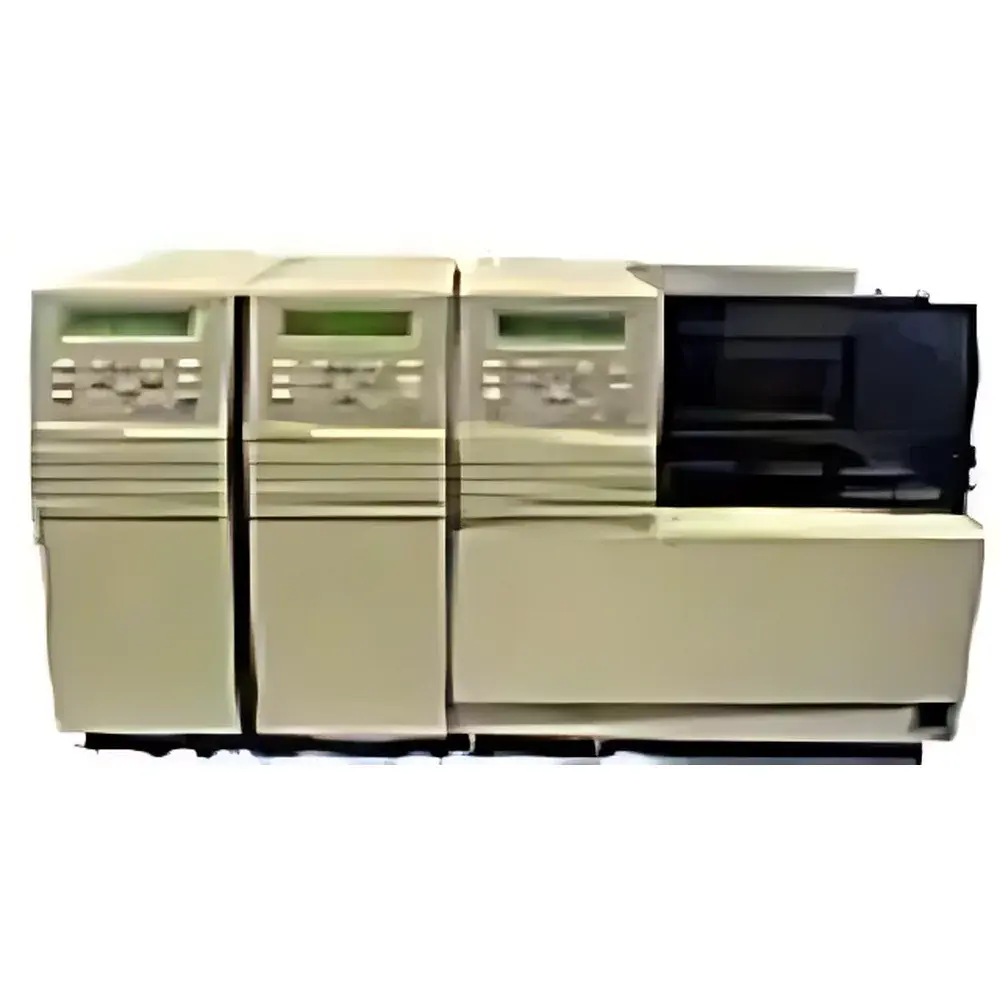
Thermo Scientific TSP P1500 / UV1000 / AS3000 High-Performance Liquid Chromatography System
| Origin | Imported |
|---|---|
| Manufacturer Type | Authorized Distributor |
| Model Series | TSP P1500 (Quaternary Pump), UV1000 (Variable Wavelength Detector), AS3000 (Autosampler) |
| Compliance | CE, UL, RoHS |
| Operating Pressure Range | Up to 400 bar |
| Flow Rate Range | 0.001–10.000 mL/min |
| Wavelength Range (UV1000) | 190–700 nm |
| Detection Limit (UV1000) | < 5 × 10⁻⁹ g/mL (caffeine, 254 nm) |
| Injection Volume Range (AS3000) | 0.1–100 µL |
| Precision (RSD) | ≤ 0.3% for retention time, ≤ 0.5% for peak area |
Overview
The Thermo Scientific TSP P1500 / UV1000 / AS3000 HPLC system is a modular, high-reliability liquid chromatography platform engineered for precision separation, identification, and quantification of thermally labile, non-volatile, and polar compounds in pharmaceutical, environmental, food safety, and academic research laboratories. Based on classical reversed-phase, normal-phase, ion-exchange, and size-exclusion chromatographic principles, this system employs high-pressure gradient elution (up to 400 bar) with quaternary solvent delivery, real-time UV-Vis absorbance detection, and automated sample introduction. Its architecture adheres to fundamental chromatographic theory—retention governed by analyte partitioning between mobile and stationary phases—and supports method development, stability-indicating assays, and routine QC testing under GLP/GMP-aligned workflows.
Key Features
- Modular design enables flexible configuration: TSP P1500 quaternary pump (0.001–10.000 mL/min, ±0.1% flow accuracy), UV1000 variable-wavelength detector (190–700 nm, dual-beam optics, 1 nm wavelength resolution), and AS3000 autosampler (0.1–100 µL injection volume, 120-position vial capacity, temperature-controlled tray option)
- Robust fluidic path with sapphire-plated check valves and stainless-steel pump heads ensures long-term reproducibility and compatibility with aggressive mobile phases (e.g., 100% acetonitrile, 0.1% TFA)
- Integrated backpressure regulation and pulse-dampening technology deliver stable baseline performance and sub-microliter injection precision (RSD ≤ 0.3% for retention time, ≤ 0.5% for peak area)
- Front-panel keypad and LCD interface support standalone method execution; optional Ethernet connectivity enables remote monitoring and control via Thermo Chromeleon CDS software
- Compliance-ready hardware architecture: CE-marked, UL-listed, RoHS-conformant; detector optical cell meets ASTM E2869-21 specifications for UV photometric linearity and stray light performance
Sample Compatibility & Compliance
The system accommodates a broad range of sample matrices—including aqueous extracts, organic extracts, biological fluids (serum, urine), and formulated drug products—when paired with appropriate column chemistries (C18, phenyl-hexyl, HILIC, or SEC). It supports ISO 17025-compliant calibration protocols using certified reference standards (e.g., NIST-traceable caffeine, uracil, naphthalene). All modules are designed for seamless integration into FDA 21 CFR Part 11–compliant environments when used with validated Chromeleon CDS v7.3+ featuring electronic signatures, audit trails, and role-based access control. Routine maintenance intervals align with manufacturer-recommended service cycles (e.g., pump seal replacement every 6 months under standard usage).
Software & Data Management
Data acquisition, processing, and reporting are managed through Thermo Chromeleon Chromatography Data System (CDS), a validated, multi-user platform supporting ICH Q2(R2) method validation documentation. Chromeleon provides real-time chromatogram visualization, peak integration using tangent skim or valley-to-valley algorithms, system suitability assessment (tailing factor, resolution, theoretical plates), and customizable report templates compliant with USP , EP 2.2.46, and JP 6.03. Raw data files (.cdf) are stored with embedded metadata (instrument ID, operator, date/time stamp, method parameters), enabling full traceability during regulatory inspections. Optional LIMS integration (via ODBC or HL7) facilitates automated result transfer to enterprise quality management systems.
Applications
- Pharmaceutical QC: Assay and impurity profiling of APIs per ICH Q3B(R3); dissolution testing of solid oral dosage forms
- Environmental analysis: Quantification of PAHs, pesticides (e.g., atrazine, glyphosate derivatives), and endocrine disruptors in water and soil extracts
- Food & beverage: Vitamin C, preservatives (sorbic acid, benzoic acid), and mycotoxin (aflatoxin B1) analysis per AOAC 2012.01 and EU Commission Regulation (EC) No 401/2006
- Academic research: Separation of natural product isolates, polymer molecular weight distribution (SEC mode), and chiral resolution using polysaccharide-based columns
FAQ
Is the TSP P1500/UV1000/AS3000 compatible with modern column technologies such as sub-2-µm particles?
Yes—the system’s low dwell volume (< 650 µL) and high-pressure capability (400 bar) support UHPLC-compatible methods when operated with appropriately rated columns and fittings.
Can the UV1000 detector be upgraded to a diode array detector (DAD)?
No—the UV1000 is a fixed-wavelength or variable-wavelength single-channel detector; DAD functionality requires separate Thermo Scientific UltiMate 3000 PDA modules.
What validation documentation is provided with the system?
Each shipment includes Factory Acceptance Test (FAT) reports, IQ/OQ documentation templates aligned with ASTM E2500-22, and instrument-specific calibration certificates traceable to NIST standards.
Does the AS3000 support needle wash and injection loop rinsing protocols?
Yes—programmable wash cycles (up to 3 solvents) and post-injection loop purge are configurable within Chromeleon methods to minimize carryover.
Is remote diagnostics supported?
Yes—when connected via Ethernet and licensed Chromeleon Remote Access, qualified engineers can perform secure, real-time troubleshooting and firmware updates under customer authorization.
Related Products






