
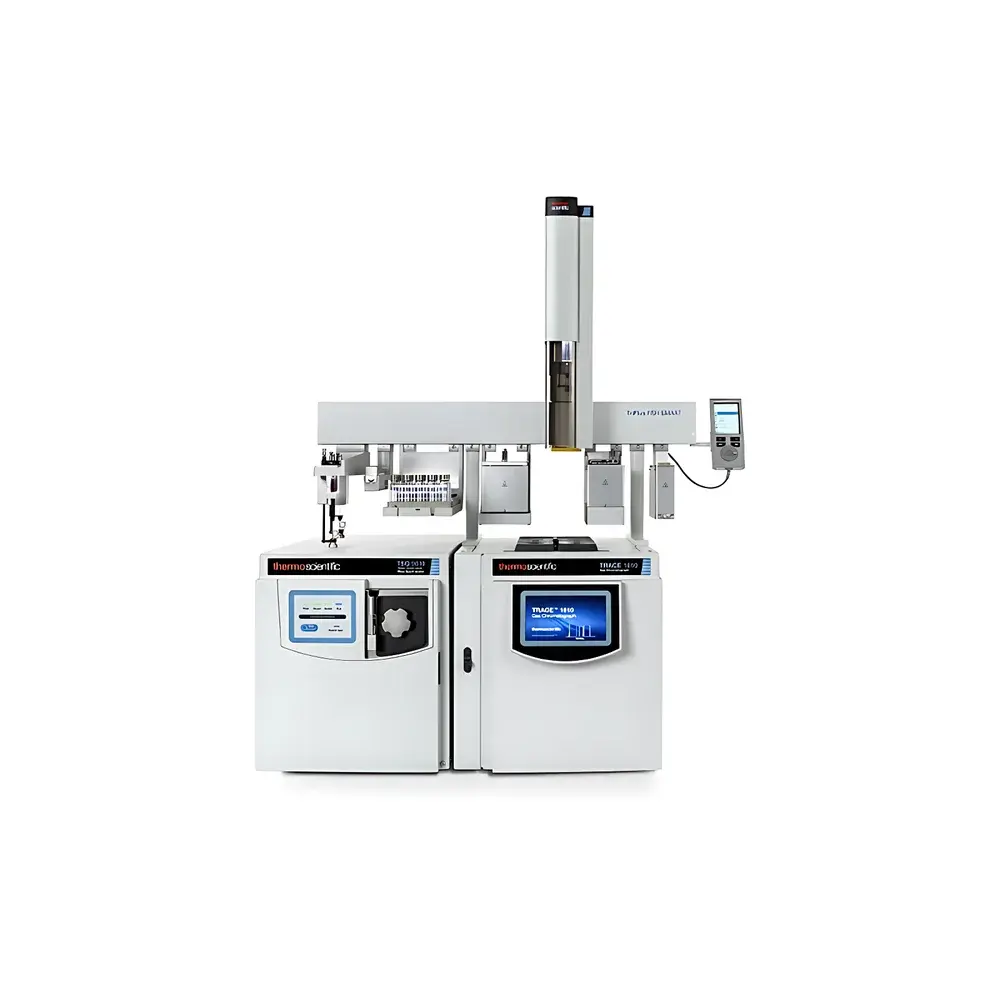
Thermo Scientific TSQ 9610 Triple Quadrupole GC-MS/MS System
| Brand | Thermo Fisher |
|---|---|
| Origin | Singapore |
| Manufacturer Type | Original Equipment Manufacturer (OEM) |
| Origin Category | Imported Instrument |
| Model | TSQ 9610 |
| Instrument Type | Triple Quadrupole Mass Spectrometer |
| Chromatography Configuration | Conventional Gas Chromatography Coupled to Tandem Mass Spectrometry |
| Detector | XLXR Extended Linear Dynamic Range Electron Multiplier |
| Linear Dynamic Range Enhancement | 2× vs. prior-generation detectors |
| Detector Lifetime Improvement | Up to 8× |
| Ion Source Technology | NeverVent™ AEI and ExtractaBrite™ Sources |
| Software Suite | Thermo Scientific Chromeleon CDS with SmartTune, Method Optimization Wizard, Instrument Health Monitoring, Pre-validated Method Packages |
Overview
The Thermo Scientific TSQ 9610 Triple Quadrupole GC-MS/MS System is a purpose-built analytical platform engineered for high-throughput, regulatory-compliant quantitative analysis of volatile and semi-volatile organic compounds in complex matrices. Operating on the fundamental principle of gas chromatographic separation coupled with tandem mass spectrometric detection via collision-induced dissociation (CID) in a triple quadrupole configuration, the system delivers exceptional selectivity, sensitivity, and quantitative precision. Its architecture is optimized for routine operation in regulated environments—including food safety testing, environmental monitoring, forensic toxicology, and pharmaceutical impurity profiling—where reproducibility, method robustness, and audit-ready data integrity are non-negotiable requirements.
Key Features
- NeverVent™ Ion Source Technology: Enables maintenance of the Advanced Electron Ionization (AEI) and ExtractaBrite™ ion sources without venting the mass spectrometer vacuum system—reducing downtime by up to 70% during routine source cleaning or replacement.
- XLXR Detector: A next-generation extended linear dynamic range electron multiplier delivering >106 linear response across concentration ranges, with demonstrated operational lifetime exceeding 8,000 hours under continuous high-sensitivity acquisition conditions.
- Robust Quadrupole Design: Precision-machined, temperature-stabilized RF/DC rods ensure long-term mass accuracy stability (<±0.1 Da over 48 h) and minimal peak shape distortion across wide mass ranges (m/z 10–1,050).
- Integrated GC Interface: Optimized for compatibility with all major Thermo Scientific Trace 1300/1310 Series and legacy ISQ GC platforms, supporting split/splitless, PTV, and direct capillary injection modes with active flow control.
- Enhanced Collision Cell Geometry: Features improved ion transmission efficiency and reduced cross-talk between MRM transitions, enabling simultaneous quantification of >500 analytes per run without signal suppression artifacts.
Sample Compatibility & Compliance
The TSQ 9610 supports broad sample applicability—including aqueous extracts, organic solvent dilutions, derivatized metabolites, and thermally labile pesticides—when paired with appropriate GC inlet configurations and column chemistries (e.g., low-bleed 5%-phenyl methylpolysiloxane phases). It complies with international regulatory frameworks including EPA Methods 525.3, 8270E, and 8082A; EU Commission Regulation (EU) No 2021/2090 for pesticide residue analysis; and ISO/IEC 17025:2017 requirements for accredited testing laboratories. Data acquisition and reporting meet FDA 21 CFR Part 11 compliance when deployed with Chromeleon CDS v7.3 or later, featuring full electronic signature support, audit trail logging, and role-based access control.
Software & Data Management
Controlled exclusively through Thermo Scientific Chromeleon Chromatography Data System (CDS) v7.3+, the TSQ 9610 integrates tightly with instrument hardware diagnostics and method lifecycle management tools. Key software capabilities include SmartTune—a fully automated mass calibration and optimization routine that adapts to ambient temperature drift and detector aging—and Method Optimization Wizard, which empirically determines optimal collision energies and dwell times for new MRM methods using built-in compound libraries. Pre-validated application method packages (e.g., for PFAS, PCBs, and mycotoxins) accelerate deployment and reduce qualification effort. All raw data files (.RAW) are stored in vendor-neutral, open-format archives compliant with ASTM E2524-06 standards for long-term digital preservation.
Applications
The TSQ 9610 excels in applications demanding ultra-low detection limits and high matrix tolerance: quantification of trace-level polycyclic aromatic hydrocarbons (PAHs) in soil leachates at sub-ppt levels; multi-residue screening of >300 pesticides in fruit homogenates per single injection; confirmation and quantitation of illicit drugs and metabolites in urine specimens per SAMHSA guidelines; and residual solvent analysis in pharmaceutical intermediates per ICH Q3C(R8). Its dual-source flexibility allows seamless switching between standard EI mode for library matching and softer CI/PCI modes for molecular ion retention—without hardware reconfiguration.
FAQ
What regulatory standards does the TSQ 9610 support for GLP/GMP environments?
It supports full 21 CFR Part 11 compliance when used with Chromeleon CDS v7.3+, including electronic signatures, audit trails, and secure user authentication protocols required for FDA-inspected facilities.
Can the TSQ 9610 be integrated into existing laboratory information management systems (LIMS)?
Yes—via ODBC-compliant database export, HL7 message routing, and RESTful API endpoints for bidirectional data exchange with major LIMS platforms including LabWare, STARLIMS, and Thermo Scientific SampleManager.
Is method transfer from older TSQ platforms (e.g., TSQ Quantum XLS) straightforward?
MRM transition lists, collision energy tables, and chromatographic parameters are backward-compatible; Chromeleon’s Method Migration Assistant automates syntax conversion and validates retention time alignment across generations.
What maintenance intervals are recommended for the XLXR detector?
Under typical usage (≤10 hrs/day, <100 injections/day), detector performance verification is recommended every 90 days; physical replacement is typically required only after ≥8,000 operational hours or documented loss of linearity beyond ±5% RSD at 100 fg on-column injection.
Does the system support isotopic dilution quantitation (IDMS)?
Yes—the TSQ 9610 natively supports stable isotope-labeled internal standard (SIL-IS) workflows with dedicated integration algorithms for ratio-based quantitation and correction of matrix-induced ion suppression effects.




