
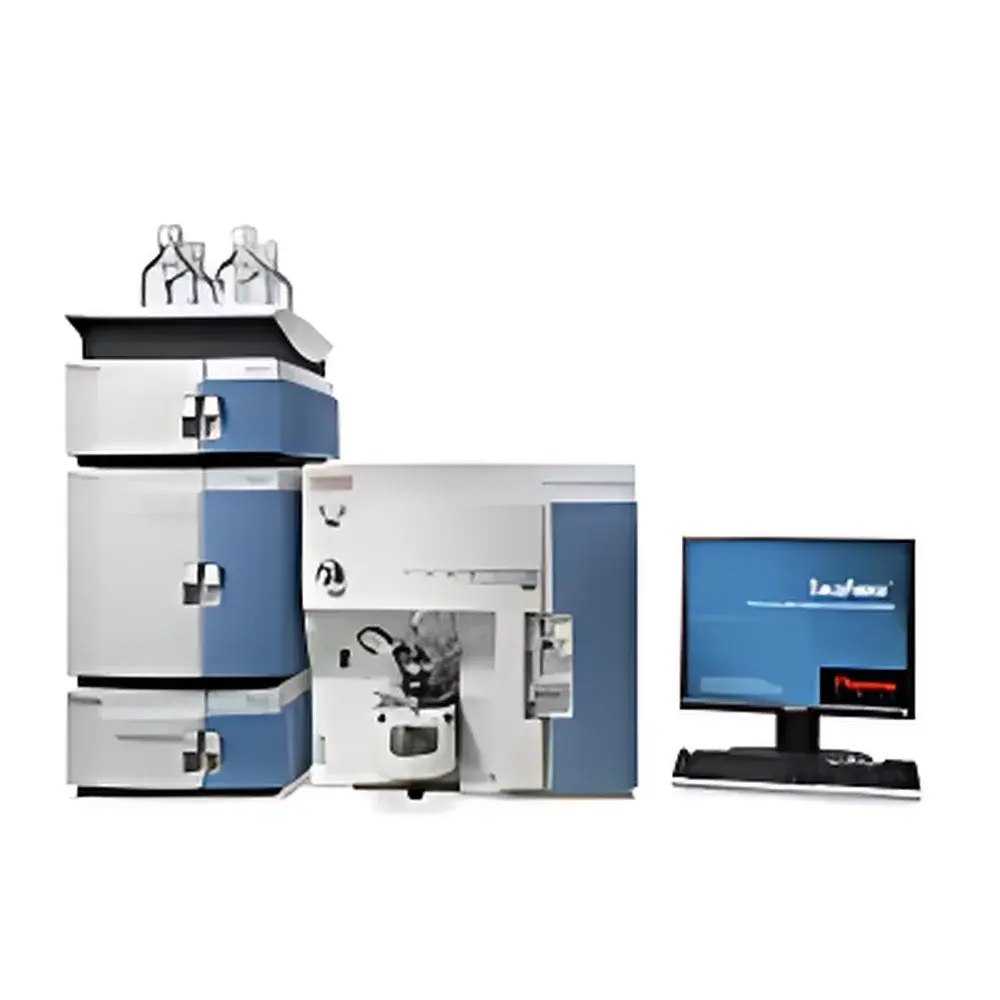
Thermo Scientific TSQ Quantum Access MAX Triple Quadrupole Liquid Chromatography Mass Spectrometer
| Brand | Thermo Fisher |
|---|---|
| Origin | USA |
| Manufacturer Type | Original Equipment Manufacturer (OEM) |
| Import Status | Imported |
| Model | TSQ Quantum Access MAX |
| Price Range | USD 250,000 – 380,000 |
| Instrument Type | Triple Quadrupole (TQ) LC-MS/MS |
Overview
The Thermo Scientific TSQ Quantum Access MAX is a high-performance triple quadrupole liquid chromatography tandem mass spectrometer engineered for demanding quantitative and qualitative analysis in regulated and research laboratories. It operates on the principle of electrospray ionization (ESI) or heated electrospray ionization (HESI-II), coupled with collision-induced dissociation (CID) in a pressurized argon collision cell, enabling highly selective and sensitive detection via multiple reaction monitoring (MRM) and enhanced data-dependent acquisition workflows. Designed specifically for complex matrix analysis—including environmental extracts, food commodities, biological fluids, and pharmaceutical formulations—the system delivers robust reproducibility, low ng/L to pg/mL detection limits, and compliance-ready data integrity architecture. Its core architecture supports both targeted quantitation and structural elucidation within a single analytical run, making it particularly suited for multi-residue screening, method validation, and regulatory submissions under GLP, GMP, and FDA 21 CFR Part 11 frameworks.
Key Features
- Quantitative Enhanced Data-dependent MS/MS (QED-MS/MS): Simultaneously acquires quantitative MRM transitions and full-scan product ion spectra without compromising dwell time or cycle time—enabling concurrent quantitation and confirmation in one injection.
- High-Selectivity SRM (H-SRM): Reduces chemical noise through optimized quadrupole resolution and ultra-short dwell times (200 analytes in a single multi-residue method.
- Zero-Cross-Talk Collision Cell: Minimizes precursor ion carryover between consecutive MRM transitions, eliminating false positives in high-throughput screening of complex samples such as soil extracts or plasma.
- Ion Max Source with HESI-II Probe: Delivers stable ion currents across wide dynamic ranges and variable flow rates (5–1000 µL/min), compatible with UHPLC and nanoLC configurations.
- Fast Polarity Switching: Sub-50-ms polarity reversal enables dual-mode acquisition (positive/negative ESI) within a single chromatographic run—critical for analyzing compound classes with divergent ionization efficiencies (e.g., acidic pesticides and basic mycotoxins).
- FAIMS Pro Interface Compatibility: Optional high-field asymmetric waveform ion mobility spectrometry integration adds an orthogonal separation dimension, improving selectivity in co-eluting isobaric interferences.
Sample Compatibility & Compliance
The TSQ Quantum Access MAX accommodates a broad range of sample types—from small molecules (e.g., veterinary drugs, environmental contaminants, metabolites) to intact peptides and post-translationally modified proteins. It meets key international performance standards including ASTM D7622 (pesticide residue analysis), ISO 17025 method validation requirements, and USP validation guidelines. All instrument control, data acquisition, and reporting functions are fully compliant with FDA 21 CFR Part 11 when deployed with Thermo Scientific Chromeleon CDS v7.3 or later, supporting electronic signatures, audit trails, and secure user access controls required for GLP/GMP environments.
Software & Data Management
Controlled by Thermo Scientific Xcalibur software and integrated with Chromeleon Chromatography Data System (CDS), the platform provides end-to-end workflow automation—from method setup and instrument calibration to report generation and spectral library searching. The built-in searchable spectral library includes >10,000 reference MS/MS spectra for common contaminants (e.g., EU pesticide list, FDA drug impurities, EPA priority pollutants). Raw data files adhere to open mzML format, ensuring long-term archival compatibility and third-party processing interoperability. Audit trail functionality logs all user actions—including parameter changes, reprocessing events, and report exports—with immutable timestamps and operator identification.
Applications
- Food safety testing: Multi-analyte screening of pesticides, veterinary drug residues, mycotoxins, and adulterants in fruits, dairy, meat, and infant formula.
- Environmental monitoring: Quantification of PFAS, pharmaceuticals, flame retardants, and endocrine disruptors in wastewater, sediment, and drinking water per EPA Method 1694 and ISO 21675.
- Clinical toxicology: Therapeutic drug monitoring (TDM), newborn screening, and forensic toxicology using validated LC-MS/MS assays aligned with CLIA and CAP requirements.
- Pharmaceutical development: Impurity profiling, stability-indicating assays, and bioanalysis of small-molecule APIs and biologics in accordance with ICH M10 and FDA Bioanalytical Method Validation Guidance.
- Academic research: Targeted metabolomics, lipidomics, and proteomics workflows leveraging QED-MS/MS for confident annotation and absolute quantitation.
FAQ
What is the mass range supported by the TSQ Quantum Access MAX?
The system provides unit mass resolution across a nominal mass range of m/z 10–2000, optimized for small molecules and peptides; extended range operation up to m/z 4000 is achievable with reduced sensitivity for larger biomolecules.
Does the instrument support automated method development?
Yes—pre-configured application databases (e.g., pesticide screening, banned dye analysis) are included, and method optimization tools within Xcalibur enable rapid tuning of collision energies, dwell times, and source parameters based on compound class.
Is remote monitoring and troubleshooting possible?
Instrument status, queue management, and real-time diagnostics are accessible via Chromeleon Web Console; remote desktop support is available through Thermo Fisher Technical Services under valid service contracts.
Can the TSQ Quantum Access MAX be upgraded to include FAIMS?
Yes—the system features a modular front-end interface designed for seamless integration of the FAIMS Pro device without hardware modification or downtime.
How does the system ensure data integrity in regulated environments?
Full 21 CFR Part 11 compliance is enabled via role-based access control, electronic signatures, tamper-evident audit trails, and secure raw data storage—all validated during IQ/OQ/PQ qualification protocols.





