
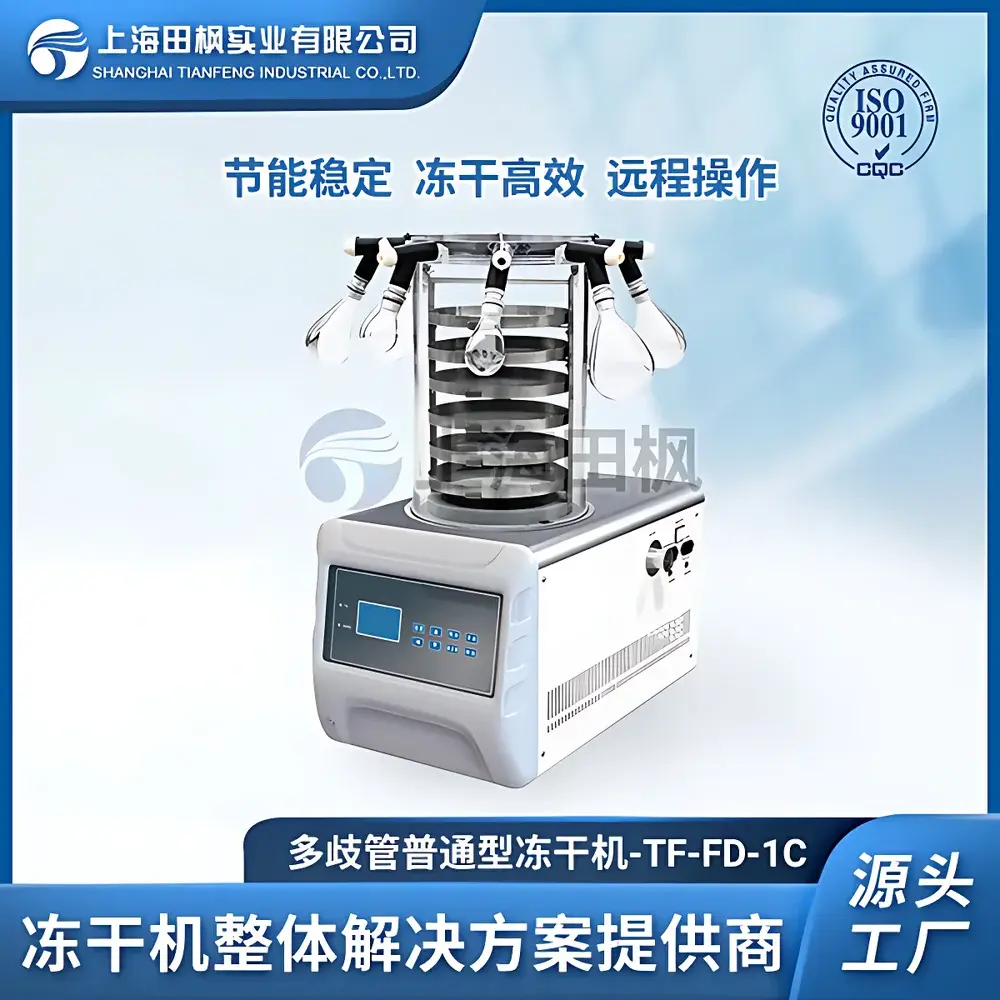
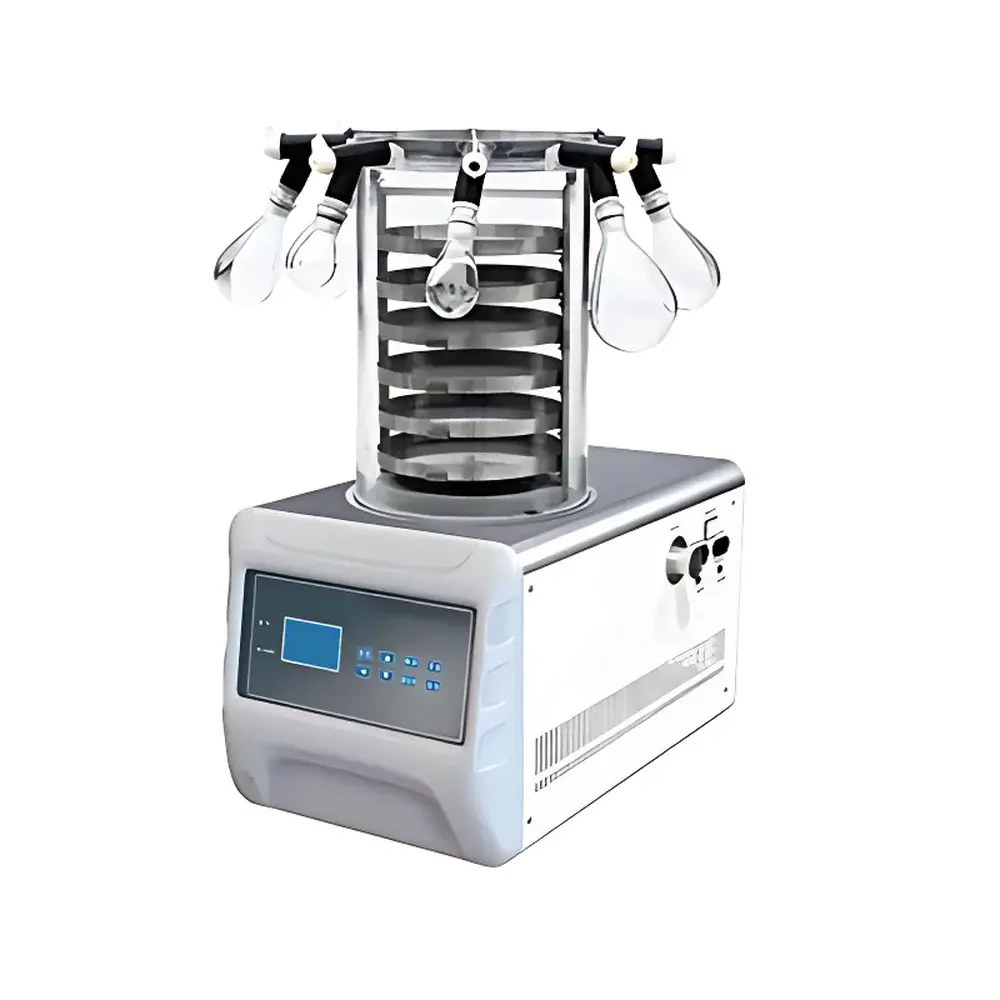
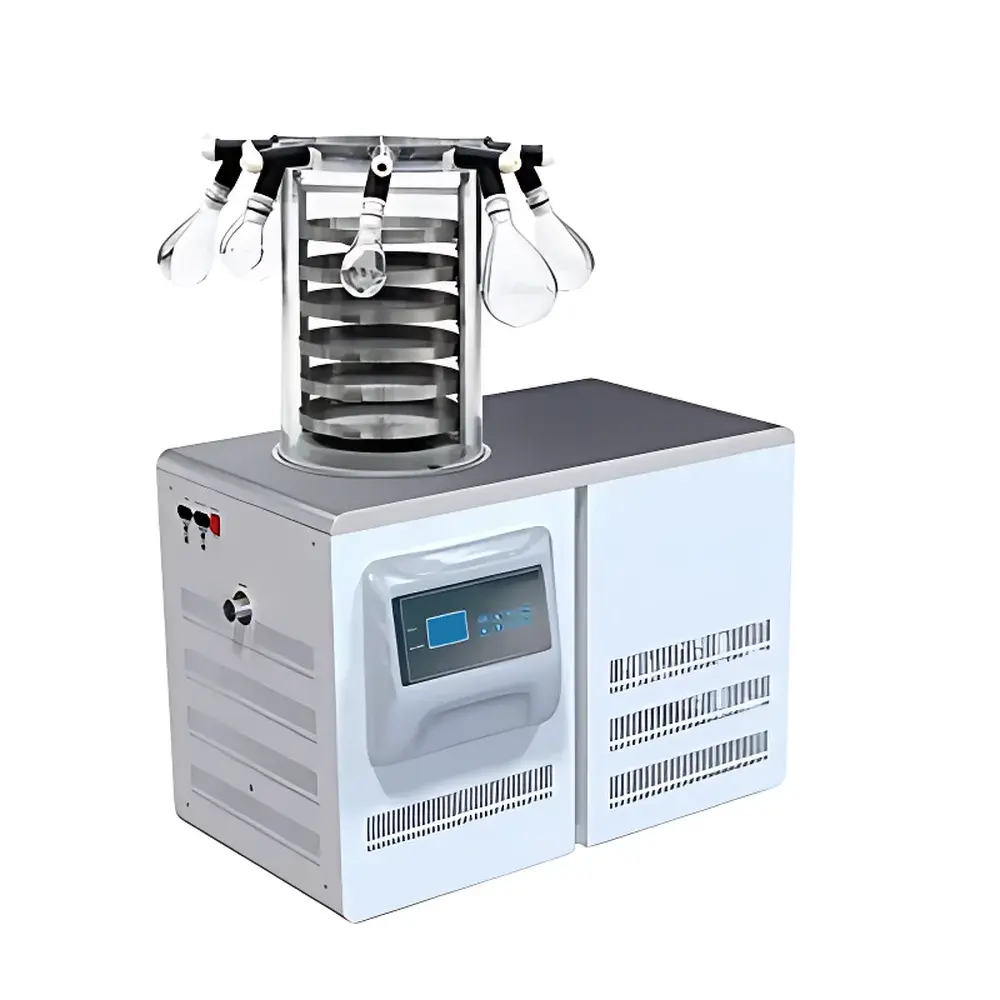
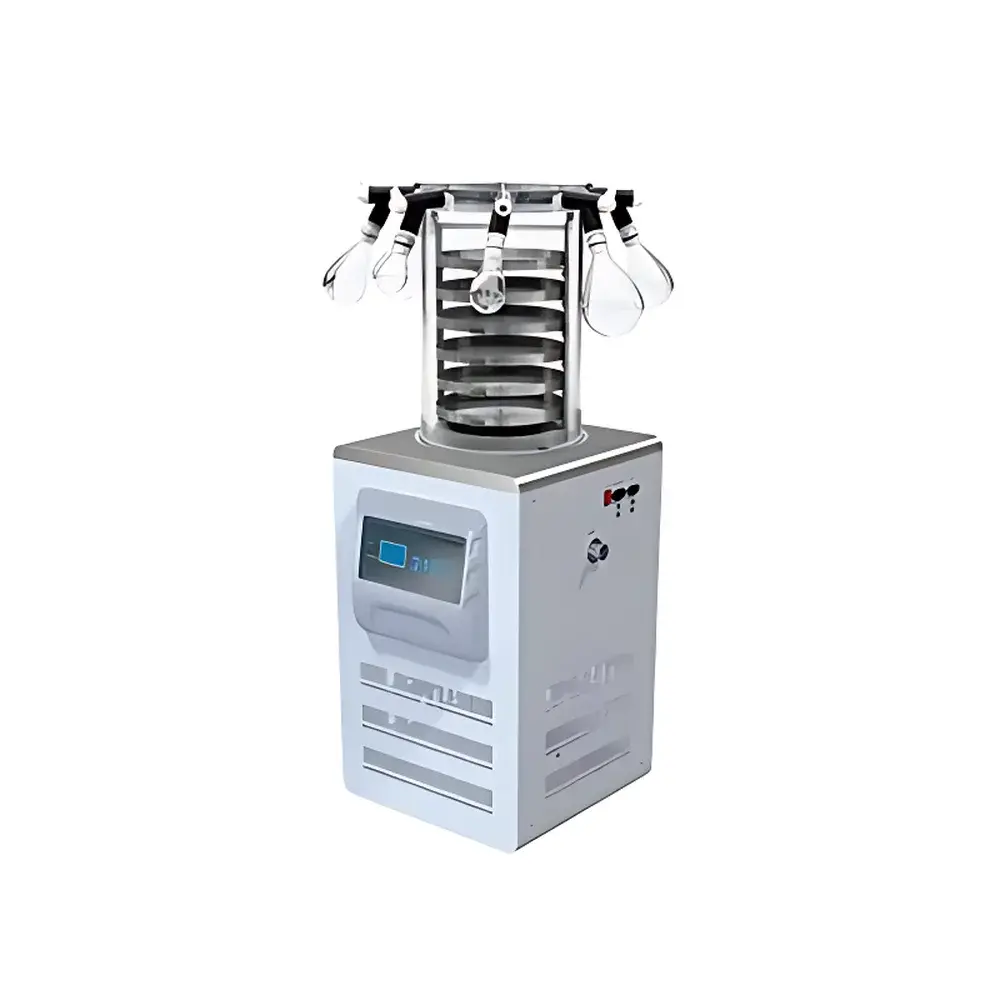
Tianfeng FD-1 (Manifold-Type) Laboratory Freeze Dryer
| Brand | Tianfeng |
|---|---|
| Origin | Shanghai, China |
| Manufacturer Type | Direct Manufacturer |
| Equipment Type | Manifold-Type Freeze Dryer |
| Application | Laboratory-Scale Lyophilization |
| Shelf Area | 0.12 m² |
| Ultimate Vacuum (Empty Chamber) | <10 Pa |
| Condenser Temperature | <−50 °C |
| Ice Capacity | 3 kg/24 h |
| Dimensions (W×H×D) | 370 mm × 650 mm × 360 mm |
| Power Consumption | 1100 W |
| Electrical Supply | 220 V, 50 Hz |
| Refrigeration System | Air-Cooled, Hermetic Compressor |
| Chamber Material | Stainless Steel (304), Transparent Acrylic Bell Jar |
| Manifold Ports | 8 Standard ISO-KF 16 Flanges |
| Sample Vials | Compatible with 50 mL, 100 mL, 250 mL, 500 mL, and 1000 mL Erlenmeyer flasks or round-bottom flasks |
Overview
The Tianfeng FD-1 (Manifold-Type) Laboratory Freeze Dryer is a compact, air-cooled lyophilization system engineered for precise, reproducible freeze-drying of heat-sensitive biological, pharmaceutical, and analytical samples in research laboratories. It operates on the fundamental principle of sublimation—removing water from frozen samples under deep vacuum while maintaining temperatures below the eutectic point. This process preserves structural integrity, enzymatic activity, immunogenicity, and long-term stability—critical for vaccines, monoclonal antibodies, diagnostic reagents, cell lysates, and natural product extracts. Unlike shelf-heated systems, the FD-1 employs a passive, ambient-temperature drying chamber (acrylic bell jar) with manifold-mounted flasks, enabling independent sample handling and minimizing cross-contamination risk. Its condenser operates at ≤−50 °C, ensuring efficient vapor capture during primary drying and compatibility with aqueous and low-volatility solvent systems.
Key Features
- Air-cooled, hermetically sealed refrigeration unit eliminates need for external water cooling—ideal for labs with limited utility infrastructure.
- Stainless steel (AISI 304) condenser and baseplate ensure corrosion resistance, cleanability, and compliance with GLP lab hygiene standards.
- Eight ISO-KF 16 standard manifold ports allow simultaneous drying of up to eight independently sealed vessels (e.g., 50–1000 mL flasks), each fitted with dedicated stopcocks for sequential or parallel operation.
- Digital LED display shows real-time condenser temperature and chamber vacuum level—enabling accurate process monitoring without external gauges.
- Transparent acrylic drying chamber provides full visual access to sublimation progression, ice formation, and cake morphology—supporting method development and troubleshooting.
- Ergonomic soft-touch control panel with intuitive function keys simplifies vacuum pump start/stop, valve actuation, and alarm acknowledgment—reducing operator training time.
- Modular design supports field-upgradable accessories, including optional vacuum gauge calibration kits, oil mist filters, and inert gas backfill modules (N₂ or Ar).
Sample Compatibility & Compliance
The FD-1 is validated for use with aqueous buffers, protein solutions, microbial cultures, tissue homogenates, and botanical extracts. Its −50 °C condenser temperature ensures effective trapping of water vapor and low-volatility solvents such as tert-butanol and acetic acid—though highly volatile organics (e.g., acetone, methanol) require pre-freezing at ultra-low temperatures or use of the −80 °C FD-1L variant. The system meets mechanical safety requirements per IEC 61010-1 and electromagnetic compatibility per EN 61326-1. While not certified for GMP manufacturing, its design supports audit-ready documentation: vacuum logs, temperature traces (via optional external data logger), and maintenance records align with FDA 21 CFR Part 11 expectations when integrated into validated workflows. All wetted surfaces comply with USP for plastic components and ASTM F899 for stainless steel finish.
Software & Data Management
The FD-1 operates as a stand-alone instrument without embedded software; however, it is fully compatible with third-party data acquisition systems via analog (0–10 V) or digital (RS-485 Modbus RTU) outputs for vacuum and condenser temperature signals. When paired with compliant DAQ hardware and validated software (e.g., LabVIEW-based custom applications or commercial platforms like WinCC OA), users can generate ALCOA+ compliant electronic records—including time-stamped, user-identified, and audit-trail-enabled freeze-drying logs. Optional USB-connected vacuum controllers enable automated pressure ramping and endpoint detection based on pressure rise tests (PRT), supporting IQ/OQ protocols required for laboratory instrument qualification.
Applications
- Biopharmaceutical R&D: Stabilization of monoclonal antibodies, recombinant enzymes, and viral vectors prior to formulation screening and stability studies.
- Vaccine Development: Lyophilization of live-attenuated and subunit vaccine candidates to extend shelf life without cold-chain dependency.
- Diagnostic Manufacturing: Production of dried calibrators, controls, and lateral flow assay reagents with batch-to-batch consistency.
- Academic Research: Preservation of microbial strains (bacteria, yeast, fungi), primary cell lines, and cryopreserved tissue sections for biobanking.
- Natural Product Isolation: Dehydration of plant extracts, marine metabolites, and fermentation broths while retaining thermolabile secondary metabolites.
- Materials Science: Preparation of porous scaffolds, aerogels, and nanostructured catalysts via lyophilized templating.
FAQ
What is the maximum sample volume per flask on the FD-1 manifold?
Each port accommodates standard round-bottom or Erlenmeyer flasks up to 1000 mL; however, optimal drying uniformity is achieved with ≤500 mL per vessel at full 0.12 m² shelf-equivalent load.
Can the FD-1 handle samples containing organic solvents?
It is suitable for low-volatility solvents (e.g., tert-butanol, DMSO) when pre-frozen thoroughly; high-volatility solvents (e.g., ethanol, acetone) require −80 °C condensation capability and are recommended for the FD-1L series.
Is the vacuum pump included with the system?
No—the FD-1 requires an external two-stage oil-sealed rotary vane pump (minimum 4 m³/h pumping speed, ultimate vacuum ≤1 Pa) or a dry scroll pump compatible with water vapor load.
How often does the condenser require defrosting?
Defrosting is manually initiated after each run or when ice accumulation exceeds ~80% of condenser capacity; typical cycle allows ≥3 kg ice collection before service intervention.
Does the system support regulatory-compliant validation documentation?
Yes—Tianfeng provides Factory Acceptance Test (FAT) reports, material certifications (3.1), and mechanical drawings. Installation Qualification (IQ) templates and Operational Qualification (OQ) test protocols are available upon request for integration into quality management systems.



