
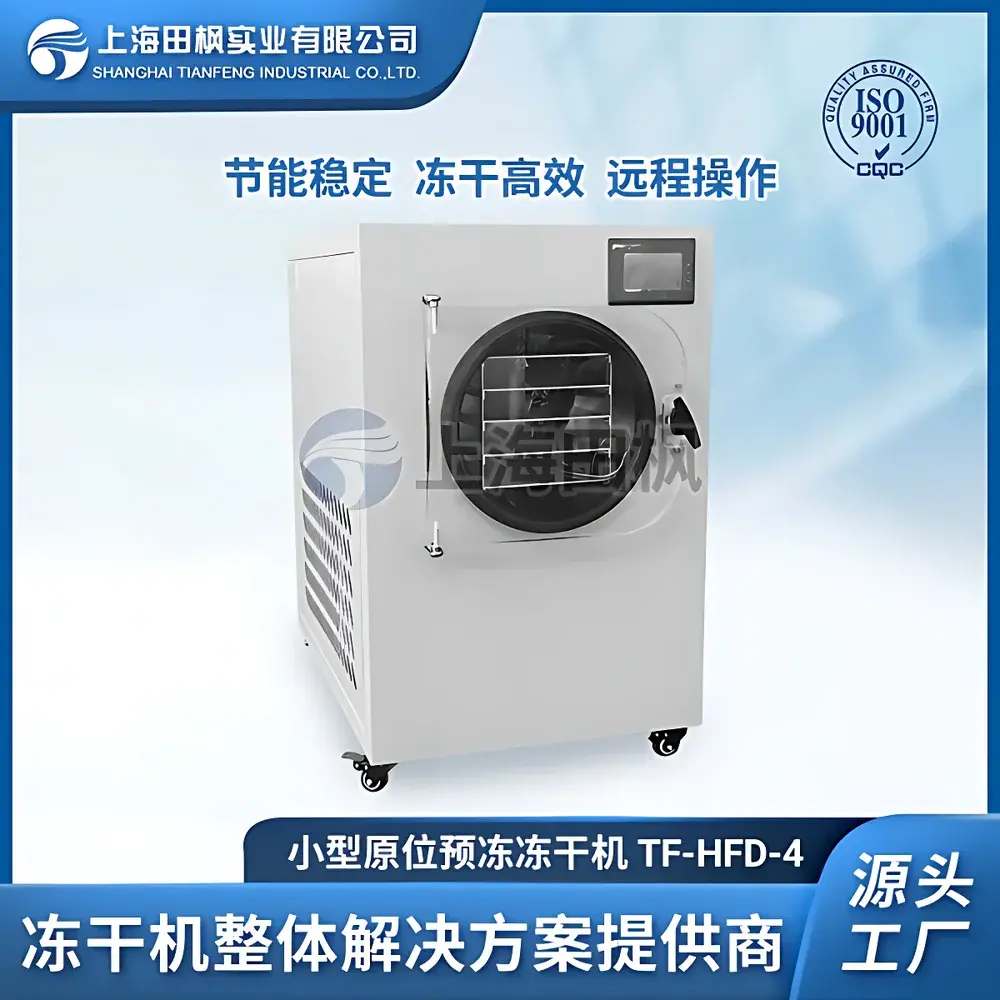
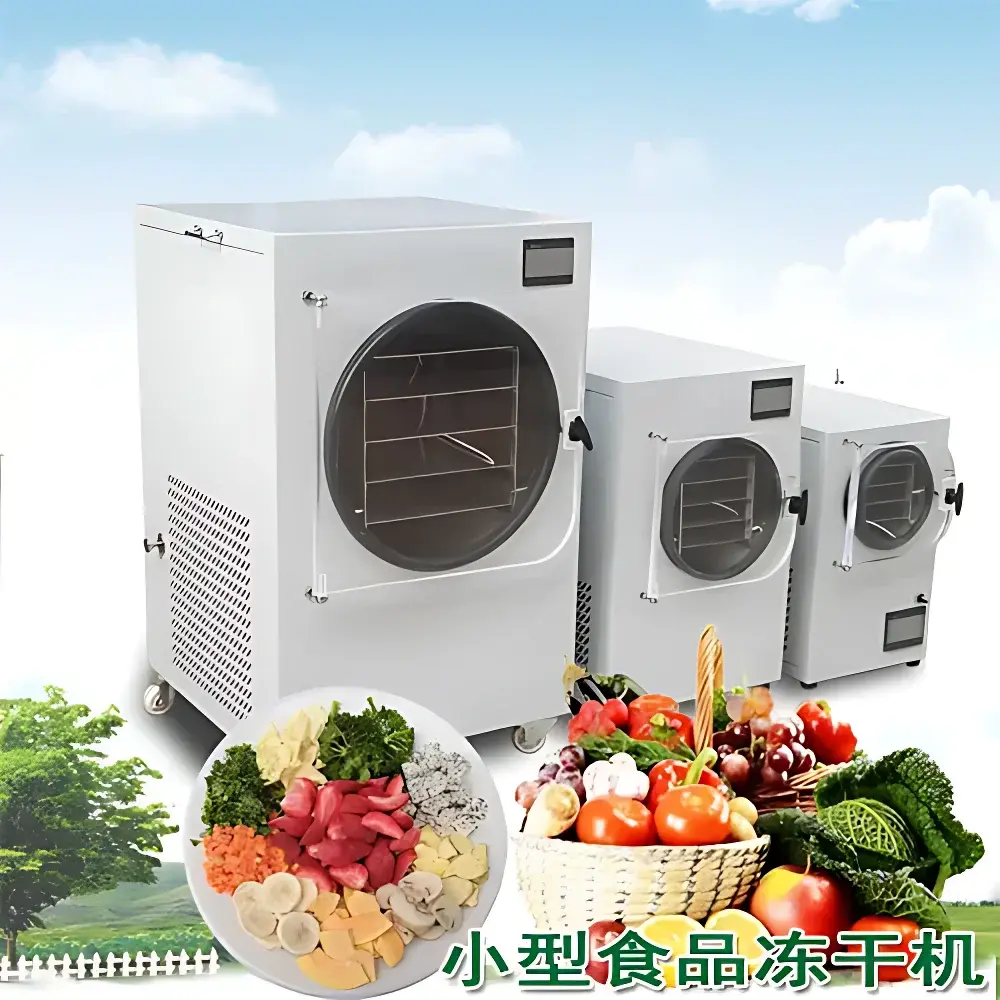
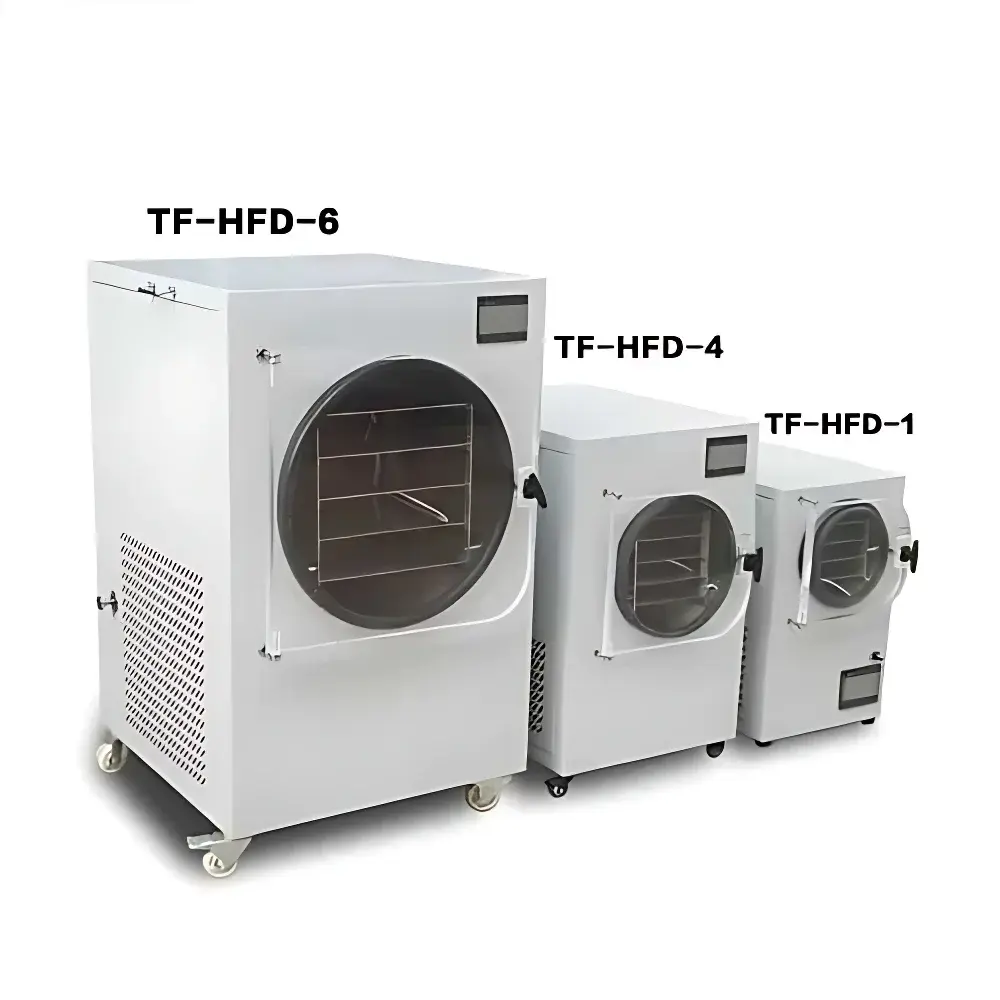
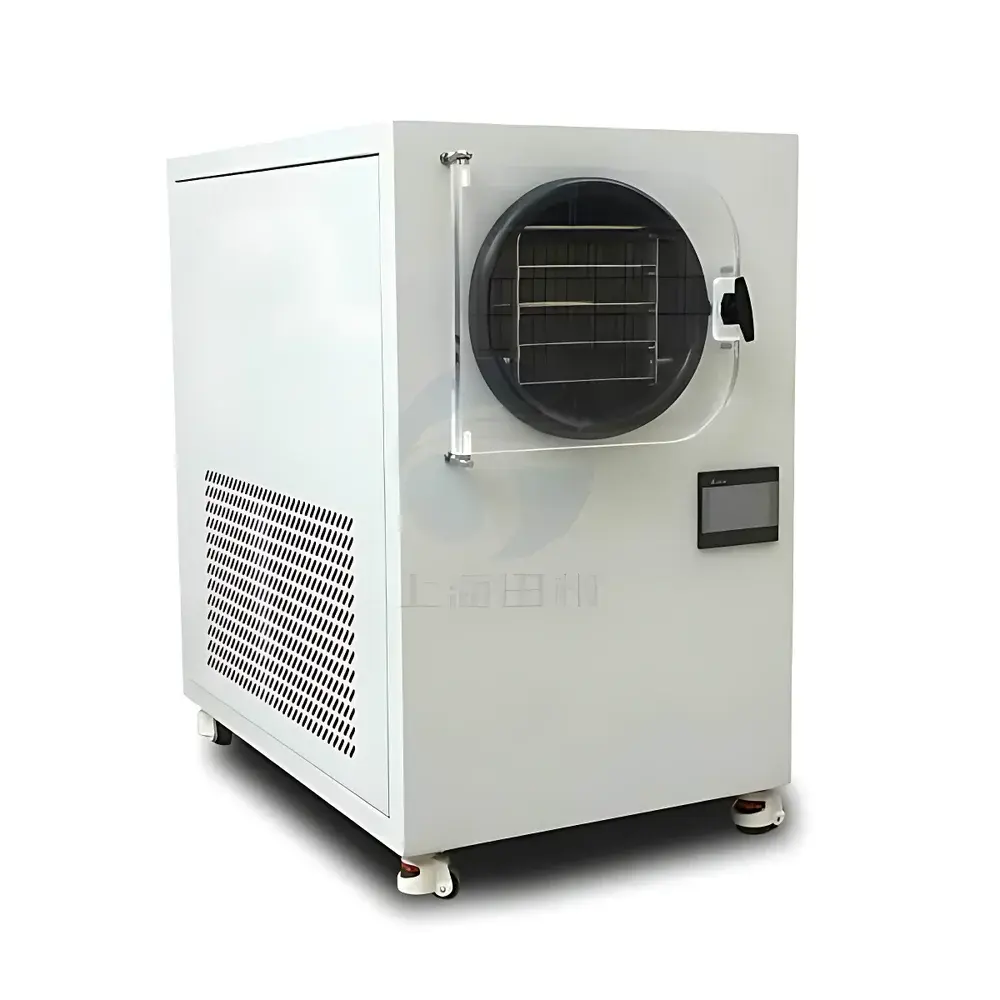
Tianfeng HFD-4 Agricultural Product Freeze Dryer – Pilot-Scale Vacuum Lyophilization System
| Brand | Tianfeng |
|---|---|
| Origin | Shanghai, China |
| Manufacturer Type | Direct Manufacturer |
| Country of Origin | China |
| Model | HFD-4 Agricultural Product FD Freeze Drying Production Line |
| Instrument Type | Standard Shelf-Type Freeze Dryer |
| Application Scope | Pilot-Scale Processing |
| Freeze-Drying Area | 0.4 m² |
| Ultimate Vacuum Pressure | ≤10 Pa |
| Condensate Capacity (24 h) | 4–6 kg/batch |
| Cold Trap Temperature | −40 °C |
| Main Unit Dimensions | 510 × 700 × 850 mm |
Overview
The Tianfeng HFD-4 Agricultural Product Freeze Dryer is a pilot-scale vacuum lyophilization system engineered for reproducible, GMP-aligned freeze-drying of heat-sensitive food matrices—including shiitake mushrooms, goji berries, fruits, vegetables, meats, and traditional Chinese medicinal herbs. It operates on the fundamental principle of sublimation: aqueous samples are first cryogenically solidified at low temperature, then subjected to high vacuum to enable direct phase transition of ice to vapor—bypassing the liquid state entirely. This preserves native microstructure, volatile compounds, enzymatic activity, and nutritional integrity far more effectively than conventional thermal drying methods. Unlike ambient- or elevated-temperature processes (e.g., hot-air drying, spray drying), lyophilization maintains volumetric fidelity, yielding porous, rehydratable architectures with minimal shrinkage or denaturation. The HFD-4 integrates a single-chamber, front-loading design with integrated cold trap (rear-positioned), enabling in-situ pre-freezing and primary drying without sample transfer—a critical advantage for process continuity and contamination control.
Key Features
- Stainless steel construction: Freeze-drying chamber and shelf structure fabricated from ASTM A240 304 stainless steel with mirror-finish internal polishing (Ra ≤ 0.4 µm) compliant with FDA and EU GMP surface roughness requirements for food and botanical processing.
- Integrated cold trap: −40 °C condenser with clean-grade stainless steel coil, configurable as monolithic or modular assembly per user maintenance preferences.
- Shelf customization: Optional aluminum alloy shelves (extruded, brushed finish; optimized thermal conductivity) or 304 stainless steel shelves (weld-free, electropolished edges; enhanced cleanability).
- Observation & illumination: Reinforced borosilicate glass viewport with integrated LED lighting for real-time visual monitoring of ice morphology, sublimation front progression, and cake formation.
- Intelligent control architecture: Omron PLC-based system with dual-mode operation (automatic recipe-driven or manual stepwise control), multi-profile storage, on-the-fly parameter adjustment, and step-jump functionality during active drying cycles.
- Efficient defrosting: Steam-assisted or immersion-style defrost protocol ensures rapid, residue-free cold trap cleaning with minimal downtime between batches.
- Refrigeration system: High-efficiency, imported compressors and refrigerant circuitry delivering stable cooling performance and rapid cooldown to target shelf temperatures (≤−40 °C within ≤90 min from ambient).
Sample Compatibility & Compliance
The HFD-4 accommodates heterogeneous biological matrices typical of agri-food R&D and small-batch production—whole or sliced shiitake caps, goji berry pulp suspensions, herbal decoctions, meat emulsions, and functional ingredient concentrates. Its chamber geometry and shelf spacing support standard 100–500 mL trays or custom silicone molds. All wetted surfaces conform to ISO 14644-1 Class 8 (ISO Class 5 under laminar flow hood integration) cleanliness standards when operated in controlled environments. While not certified for sterile pharmaceutical manufacturing, its design aligns with key elements of USP , ISO 22000, and Codex Alimentarius principles for food dehydration validation. Documentation packages include IQ/OQ templates supporting GLP-compliant installation and operational qualification.
Software & Data Management
The embedded HMI supports CSV export of time-stamped process logs—including shelf temperature, chamber pressure, condenser temperature, and elapsed cycle time—for traceability and batch record compilation. Audit trail functionality meets baseline FDA 21 CFR Part 11 expectations for electronic records (user login, parameter change logging, timestamped event history). Data retention is configurable up to 12 months onboard; external USB export enables integration with LIMS or MES platforms. Optional Ethernet interface allows remote supervision via secure VLAN-configured networks—subject to site-specific cybersecurity protocols.
Applications
This system serves as a scalable platform for process development and pilot validation across multiple sectors: optimization of freeze-drying cycles for polysaccharide-rich fungi (e.g., Lentinula edodes); stabilization of anthocyanin-rich goji extracts (Lycium barbarum); preservation of probiotic cultures in fermented vegetable matrices; dehydration of collagen peptides from marine sources; and formulation studies for nutraceutical tablets derived from herbal concentrates. It also supports academic research in food material science—investigating glass transition temperatures (Tg′), collapse behavior, and mass transfer kinetics under variable shelf-ramp profiles.
FAQ
What is the maximum batch capacity for goji berry puree?
Typical loading is 3–5 kg total mass (solid + moisture), depending on initial solids content and desired final moisture level (target: ≤5% w/w).
Can the HFD-4 be validated for GMP documentation?
Yes—Tianfeng provides IQ/OQ documentation templates and on-site commissioning support; full PQ requires user-defined product-specific protocols.
Is nitrogen backfilling supported?
Optional inert gas purge module (N₂ or Ar) is available for oxygen-sensitive botanicals, with programmable partial-pressure control during secondary drying and venting.
What maintenance intervals are recommended for the vacuum pump?
Oil-sealed rotary vane pumps require oil changes every 500 operating hours; preventive inspection of seals and filters is advised quarterly.
Does the system comply with CE or UL safety directives?
CE marking applies to electrical safety (EN 61000-6-2/6-4) and machinery directive (2006/42/EC); UL certification is available upon request for North American installations.



