
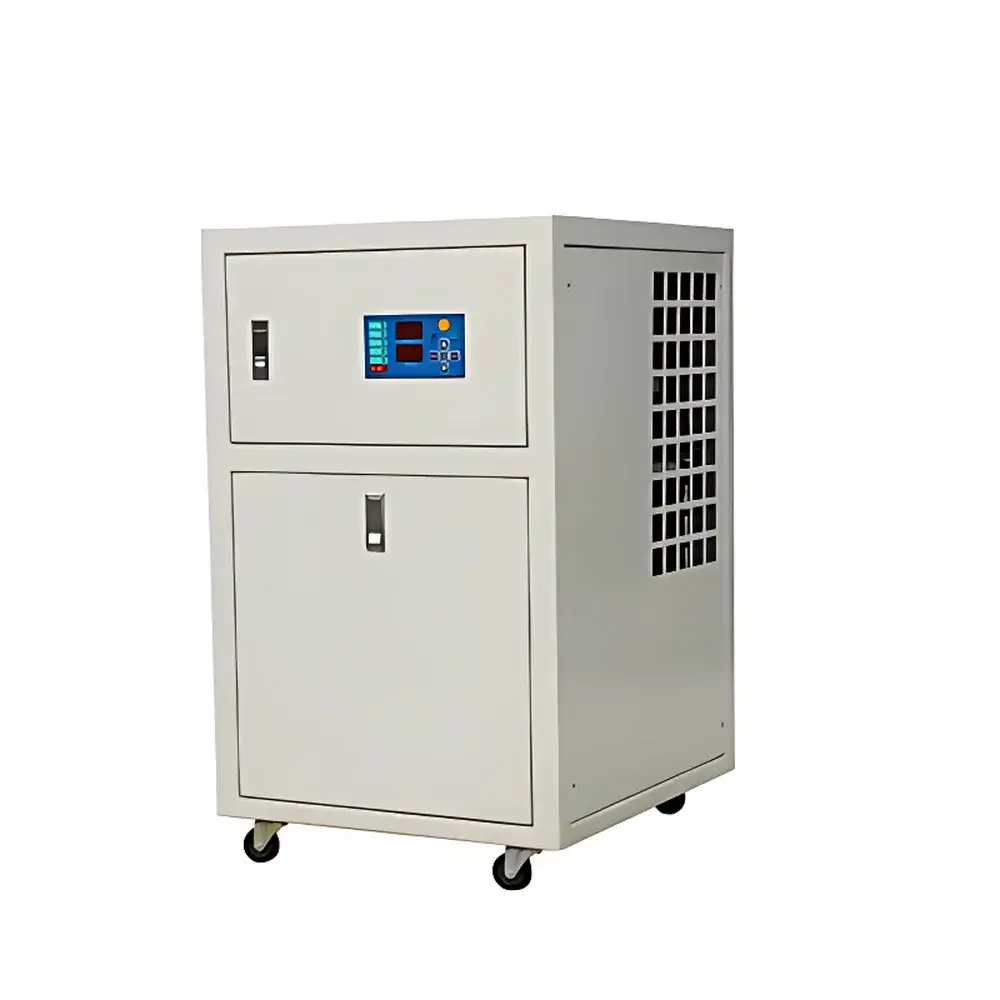
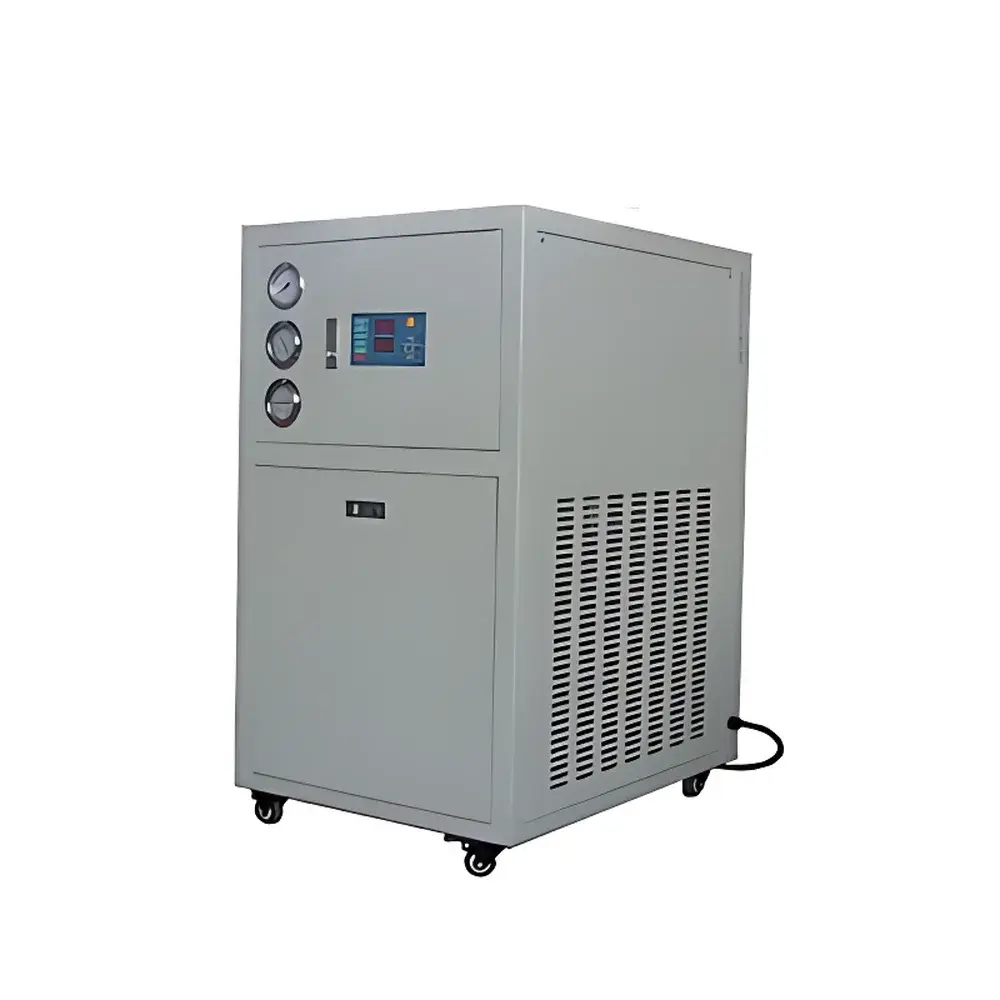
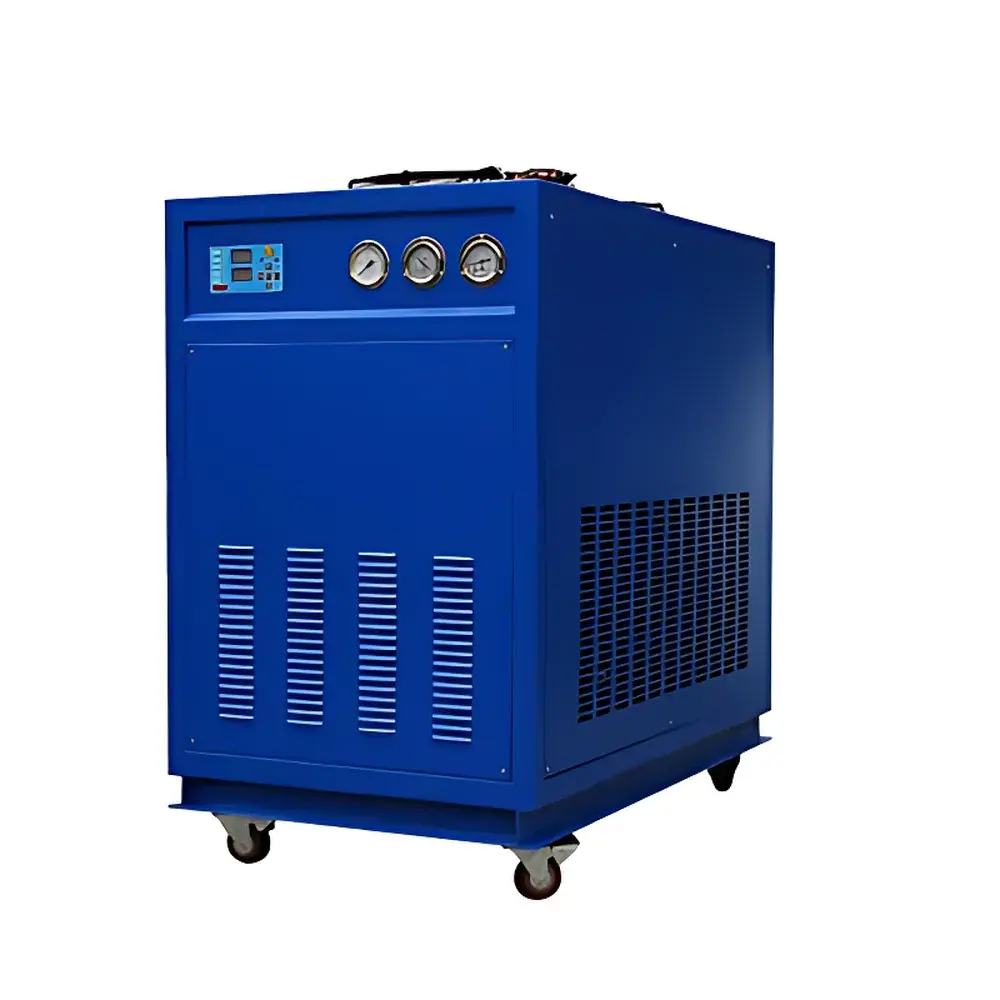
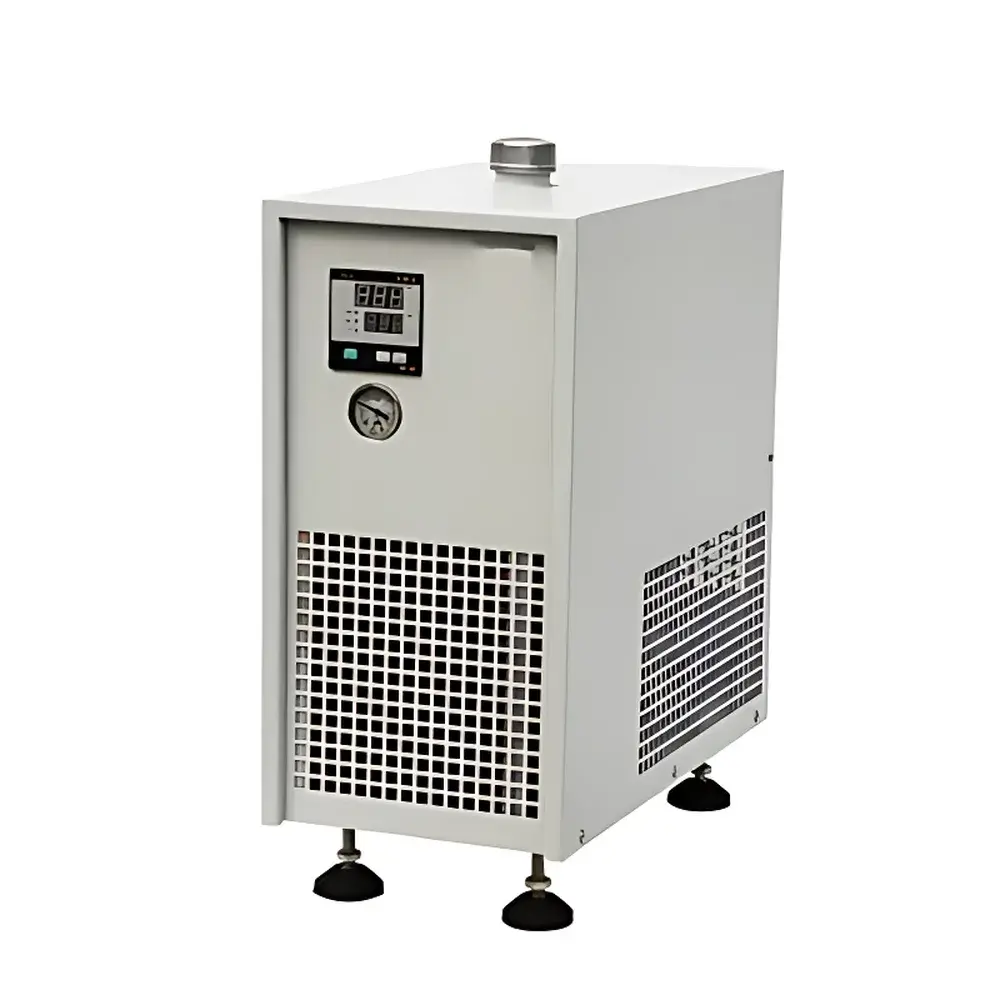
Tianfeng LS-0.3HP Integrated Circulating Chiller
| Brand | Tianfeng |
|---|---|
| Origin | Shanghai, China |
| Manufacturer Type | Direct Manufacturer |
| Instrument Type | Integrated Unit |
| Cooling Method | Air-Cooled |
| Temperature Control Range | 0–50 °C |
| Refrigeration Capacity | 0.3 kW |
| Temperature Stability | ±0.1 °C |
| Circulating Pump Pressure | 0–2 bar |
| Circulating Flow Rate | 20 L/min |
| Reservoir Volume | 4.9 L |
| Operating Mode | Continuous Duty |
| Power Supply | 220 V, 50 Hz |
| Compressor Type | Scroll Compressor |
| Safety Protections | High/Low Pressure Switch, Overcurrent Protection, Compressor Overheat Protection, Overtemperature Alarm |
| Construction | Stainless Steel Reservoir & Pump |
| Controller | Digital PID Temperature Controller (Optional RKC Model Available) |
| Dimensions (L×W×H) | 505 × 230 × 500 mm |
| Noise Level | Low-Noise Design |
| Certifications | ISO 9001:2000 Certified |
Overview
The Tianfeng LS-0.3HP Integrated Circulating Chiller is an air-cooled, precision temperature control system engineered for laboratory and light industrial applications requiring stable, continuous coolant circulation. It operates on the vapor-compression refrigeration cycle—utilizing a high-efficiency scroll compressor, thermostatic expansion valve, and optimized condenser/fan assembly—to deliver consistent thermal management across demanding analytical and instrumentation platforms. Designed for integration with heat-sensitive equipment—including graphite furnace atomic absorption spectrometers (GFAAS), inductively coupled plasma optical emission spectrometers (ICP-OES), X-ray fluorescence (XRF) analyzers, scanning electron microscopes (SEM), and transmission electron microscopes (TEM)—this chiller maintains process-critical components within tight thermal tolerances (±0.1 °C) over a broad operational range (0–50 °C). Its compact footprint (505 × 230 × 500 mm), stainless steel fluid path, and continuous-duty rating make it suitable for benchtop deployment in regulated environments where space, reliability, and corrosion resistance are essential.
Key Features
- Precision digital PID temperature controller with real-time display of outlet water temperature and system status
- Stainless steel reservoir (4.9 L) and pump housing—resistant to corrosion from deionized water, glycol-water mixtures, and common laboratory coolants
- Scroll-type compressor delivering stable refrigeration output (0.3 kW) with low vibration and extended service life
- Adjustable flow rate (0–20 L/min) and pressure (0–2 bar) to match varying thermal loads and instrument inlet specifications
- Comprehensive safety architecture: high/low refrigerant pressure cutoffs, compressor overheat protection, overcurrent circuit interruption, and overtemperature alarm with relay output
- Low-noise operation (<55 dB(A) at 1 m) compliant with ISO 7779 and ANSI S12.55 standards for laboratory acoustic environments
- Modular electrical design incorporating Siemens, Schneider, and Omron contactors, relays, and terminal blocks for long-term reliability under repeated cycling
- Factory-calibrated temperature sensor traceable to NIST-traceable reference standards (calibration certificate available upon request)
Sample Compatibility & Compliance
The LS-0.3HP is compatible with a wide range of laboratory instruments requiring external cooling, including but not limited to laser-based systems (e.g., laser ablation ICP-MS), vacuum deposition tools, high-resolution XRD goniometers, and electrophoresis power supplies. Its stainless steel wetted parts meet ASTM A240/A240M requirements for 304-grade austenitic stainless steel, ensuring compatibility with ultrapure water (UPW) and low-conductivity coolant formulations. The unit complies with IEC 61000-6-3 (EMC emission limits) and IEC 61000-6-2 (immunity to electrostatic discharge, fast transients, and surge). While not certified to UL 61010-1 or EN 61010-1 out-of-the-box, it is designed to support third-party safety certification for OEM integration into CE-marked analytical platforms. Documentation includes full bill-of-materials (BOM), RoHS-compliant component declarations, and ISO 9001:2000 quality system audit records.
Software & Data Management
This chiller operates as a standalone analog-controlled system with no embedded firmware or network interface. All setpoints and operational parameters are configured manually via front-panel keypad and rotary encoder. For laboratories requiring audit-ready temperature logging, the unit provides a 0–10 V analog output signal proportional to outlet temperature (±0.5% FS accuracy), compatible with external data acquisition systems (e.g., LabVIEW, Delta Tau PMAC, or Siemens SIMATIC S7 PLCs). Optional analog input (0–10 V or 4–20 mA) enables remote setpoint modulation from host instrumentation—supporting closed-loop integration with spectrometer thermal management modules or laser diode driver controllers. No internal storage or user-accessible software is provided; all calibration and maintenance logs must be maintained externally per GLP/GMP documentation protocols.
Applications
- Laboratory instrumentation cooling: GFAAS graphite tube ovens, ICP torch interfaces, SEM/TEM column chillers, XRF detector Peltier stages, and laser cavity heat sinks
- Materials science: Thermal stabilization of rheometers, DSC sample holders, and hot-stage microscopy stages
- Pharmaceutical QC: Temperature control for dissolution testers, HPLC column ovens, and automated sample changers operating under USP or environmental constraints
- Electronics testing: Thermal conditioning of semiconductor probe stations and RF power amplifier test benches
- Plastics & polymer labs: Mold temperature control during dynamic mechanical analysis (DMA) sample preparation and rheological testing
- Environmental testing: Support for ASTM D5276 (impact testing) and ISO 6603 (puncture testing) fixtures requiring stabilized ambient conditions
FAQ
What is the maximum recommended return water temperature?
For sustained compressor longevity, the inlet (return) water temperature should not exceed 40 °C. Higher return temperatures reduce condensing efficiency and accelerate refrigerant oil degradation.
Can this chiller operate continuously at 0 °C ambient temperature?
Yes—the unit is rated for continuous operation in ambient environments from 5 °C to 40 °C. Below 5 °C, optional low-ambient kits (e.g., head-pressure control valves and crankcase heaters) are required to prevent refrigerant migration and oil foaming.
Is the reservoir volume sufficient for integration with high-flow instruments?
With a 4.9 L tank and 20 L/min max flow, the system is optimized for instruments with internal flow resistances ≤2 bar and loop volumes 25 L), external buffer tanks or recirculation manifolds are recommended.
Does the chiller support glycol-based coolant mixtures?
Yes—up to 30% propylene glycol by volume is compatible. Viscosity increase above this threshold may reduce effective flow rate and require pump speed adjustment.
How often does the unit require preventive maintenance?
Under typical laboratory use (8 h/day, 5 days/week), compressor oil and refrigerant charge verification are recommended every 24 months; condenser coil cleaning every 6 months; and temperature sensor recalibration annually per ISO/IEC 17025 clause 6.5.



