
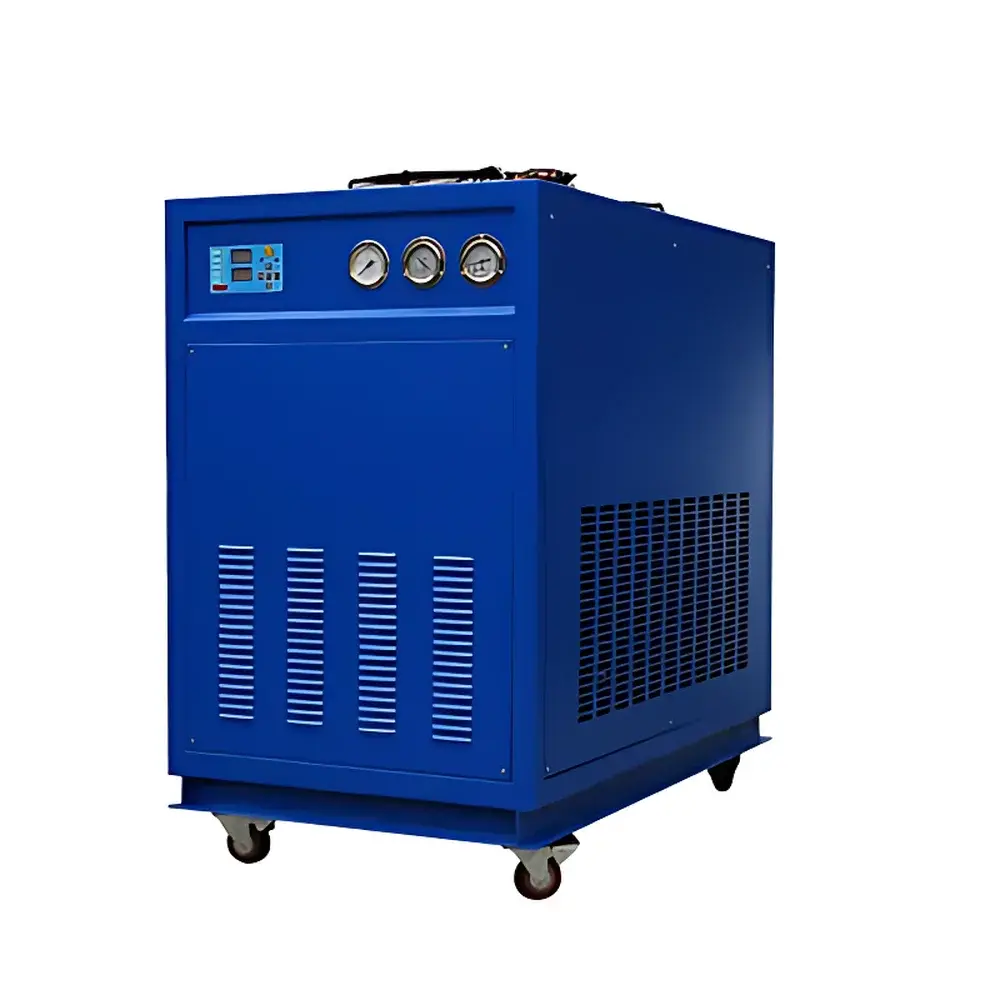
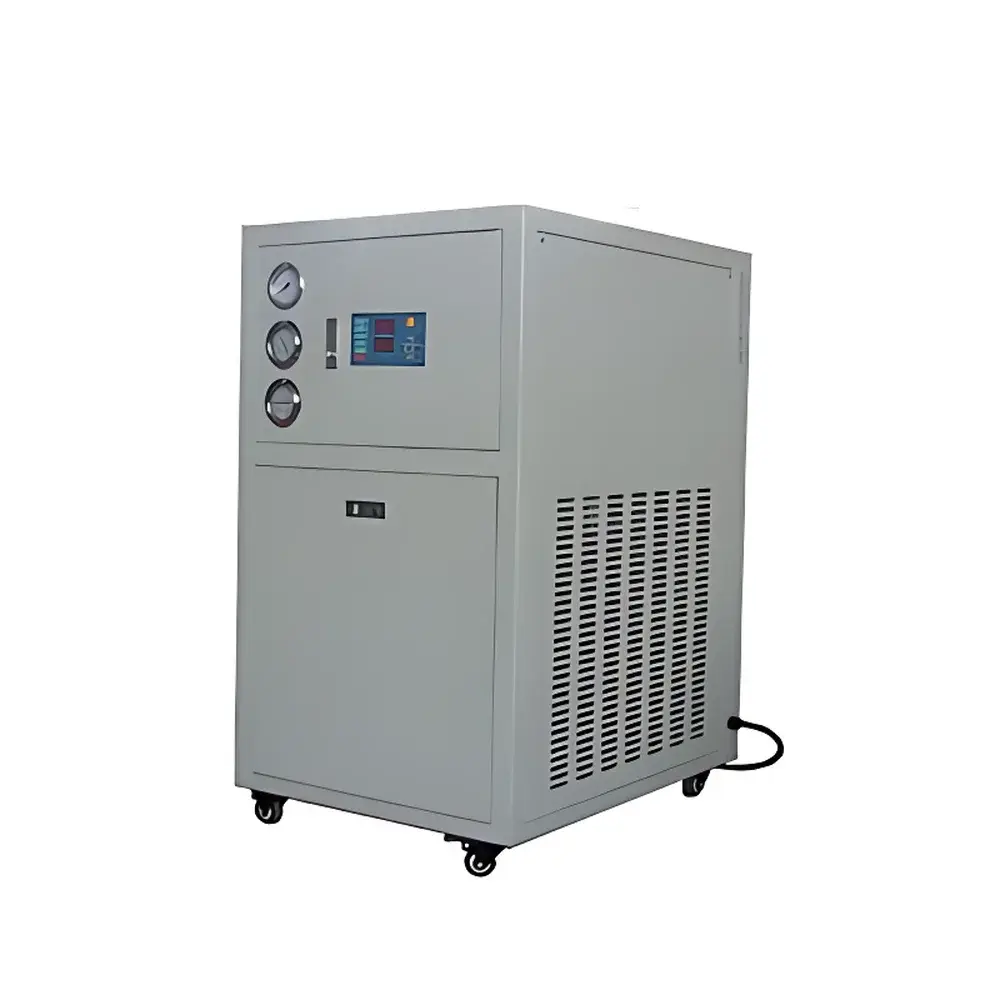
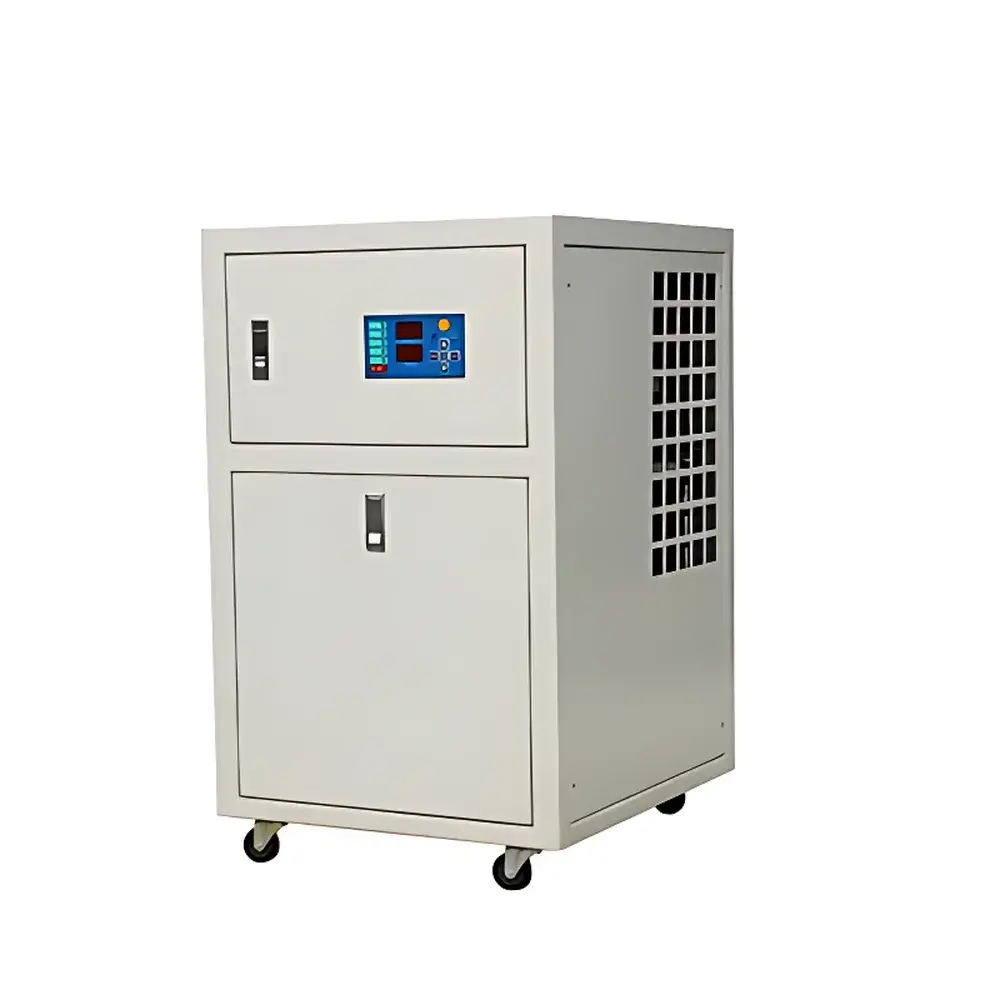
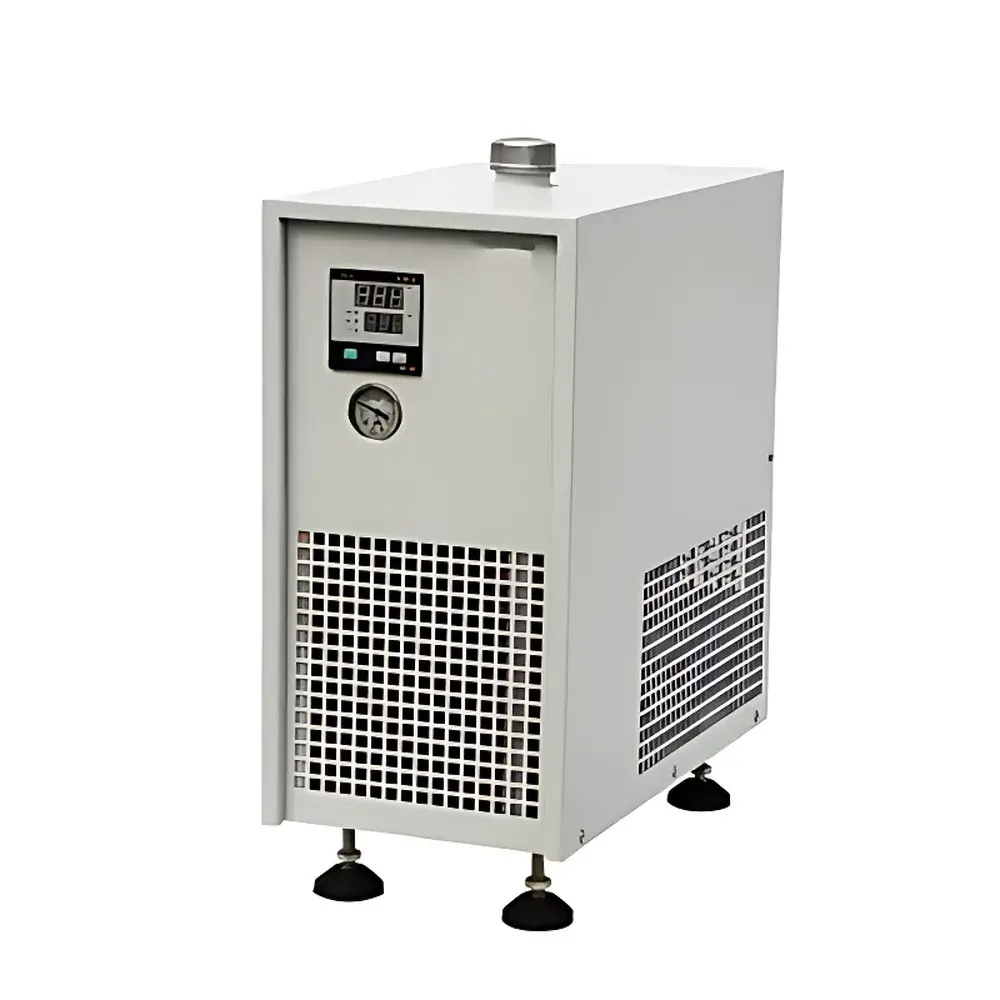
Tianfeng LS-12KW Integrated Circulating Chiller
| Brand | Tianfeng |
|---|---|
| Origin | Shanghai, China |
| Manufacturer Type | Direct Manufacturer |
| Instrument Type | Integrated Unit |
| Cooling Method | Water-Cooled |
| Temperature Control Range | 0–40 °C |
| Refrigeration Capacity | 12 kW (300–9000 W adjustable) |
| Temperature Stability | ±0.1 °C |
| Circulating Pump Pressure | 2.0 bar |
| Circulating Flow Rate | 38 L/min |
| Reservoir Volume | 85 L |
| Power Supply | 220 V, 50 Hz |
| Input Power | 5.1 kW |
| Dimensions (L×W×H) | 1200 × 715 × 1105 mm |
| Weight | Approx. 185 kg |
| Safety Protections | Compressor overheat, overcurrent, high/low pressure, and overtemperature protection |
| Construction | Stainless steel reservoir and pump |
| Compressor | High-efficiency scroll type |
| Control System | Digital PID temperature controller (standard Chinese OEM |
| Electrical Components | Siemens / Schneider / Omron |
| Expansion Valve & Solenoid Valve | Imported from Italy and Germany |
| Operating Mode | Continuous duty |
| Noise Level | ≤65 dB(A) |
Overview
The Tianfeng LS-12KW Integrated Circulating Chiller is an engineered thermal management solution designed for precision temperature stabilization of heat-generating laboratory and industrial equipment. Based on vapor-compression refrigeration cycle principles, it employs a high-efficiency scroll compressor, imported thermostatic expansion valves, and a robust stainless-steel fluid circuit to deliver stable, low-noise cooling performance under continuous operation. The chiller maintains setpoint temperatures within ±0.1 °C across its 0–40 °C control range—critical for applications demanding thermal consistency, such as analytical instrumentation, vacuum systems, and laser sources. Its integrated architecture eliminates external piping complexity while enabling rapid deployment in constrained lab spaces or production environments.
Key Features
- Stainless steel reservoir (85 L capacity) and circulation pump resistant to corrosion and microbial growth—essential for long-term compatibility with deionized water or glycol-water mixtures.
- Digital PID temperature controller with real-time display of outlet water temperature and system status; supports both fixed-setpoint and adaptive thermal regulation modes.
- Multi-layer safety architecture: compressor overheat protection, high/low refrigerant pressure cutoffs, overcurrent interruption, and overtemperature alarm with relay output for external interlock integration.
- Low-noise operation (≤65 dB[A]) achieved via acoustic insulation, vibration-dampened mounting, and optimized airflow design—suitable for shared laboratory environments.
- Modular electrical platform using certified components from Siemens, Schneider, and Omron, compliant with IEC 61000-6-3 (EMC) and IEC 61000-6-2 (immunity) standards.
- Adjustable flow rate (0–38 L/min) and pressure (0–2.0 bar) with built-in bypass valve—enabling fine-tuned matching to instrument-specific hydraulic requirements.
Sample Compatibility & Compliance
This chiller is routinely deployed to thermally stabilize high-precision laboratory instruments including graphite furnace atomic absorption spectrometers (GFAAS), inductively coupled plasma optical emission spectrometers (ICP-OES), inductively coupled plasma mass spectrometers (ICP-MS), X-ray fluorescence (XRF) analyzers, X-ray diffractometers (XRD), scanning electron microscopes (SEM), and transmission electron microscopes (TEM). It meets mechanical and electrical safety prerequisites for Class I, Group A laboratory equipment per IEC 61010-1. While not pre-certified to FDA 21 CFR Part 11, its digital controller supports audit-trail-capable data logging when interfaced with validated third-party SCADA or LIMS platforms. All wetted materials comply with USP Class VI biocompatibility requirements for indirect contact with process fluids.
Software & Data Management
The LS-12KW operates without proprietary software dependencies. Temperature setpoints, real-time outlet readings, and alarm states are accessible via the front-panel LCD interface. For integration into automated workflows, the unit provides dry-contact relay outputs for fault signaling and analog 4–20 mA output for remote temperature monitoring. Optional RS485 Modbus RTU communication enables bidirectional control and parameter readout—including compressor run hours, cumulative energy consumption (kWh), and maintenance interval tracking—when connected to building management systems (BMS) or laboratory infrastructure networks. Data integrity aligns with GLP/GMP documentation practices when paired with timestamped external loggers.
Applications
- Materials Characterization: Stabilizes XRD goniometers and SEM/TEM column cooling jackets to minimize thermal drift during high-resolution imaging or crystallographic analysis.
- Elemental Analysis: Maintains constant coolant temperature for ICP-MS torch interfaces and GFAAS graphite tubes—reducing baseline noise and improving detection limit reproducibility.
- Laser Systems: Provides consistent thermal loading for CO₂, fiber, and ultrafast lasers used in ablation, spectroscopy, or micromachining setups.
- Vacuum & Thin-Film Deposition: Regulates substrate stage and magnetron sputtering target temperatures to ensure uniform film stress and stoichiometry.
- Pharmaceutical QC: Supports controlled cooling of dissolution apparatus baths and HPLC column ovens per USP & EP monograph requirements.
- Industrial Process Support: Cools CNC spindles, injection molding dies, and ultrasonic cleaning tanks where thermal stability directly impacts dimensional accuracy or surface finish.
FAQ
What is the maximum allowable return water temperature?
The chiller is rated for continuous operation with inlet water temperatures up to 40 °C. Sustained return temperatures above this threshold may reduce compressor lifespan and trigger high-pressure cutouts.
Can this unit be integrated into a central chilled water loop?
No—it is a self-contained, closed-loop circulating chiller. It does not connect to facility-supplied chilled water; instead, it cools and recirculates fluid through the connected instrument’s internal heat exchanger.
Is glycol mixture compatible with the fluid circuit?
Yes. The stainless steel reservoir, pump, and refrigerant-side heat exchanger support aqueous solutions containing up to 35% propylene glycol by volume for sub-zero temperature operation or freeze protection.
Does the unit meet ISO 9001:2015 manufacturing quality requirements?
Yes. Tianfeng holds ISO 9001:2015 certification for the design, production, and service of laboratory and industrial refrigeration equipment, with documented traceability for all critical components and final functional testing records retained for 10 years.



