
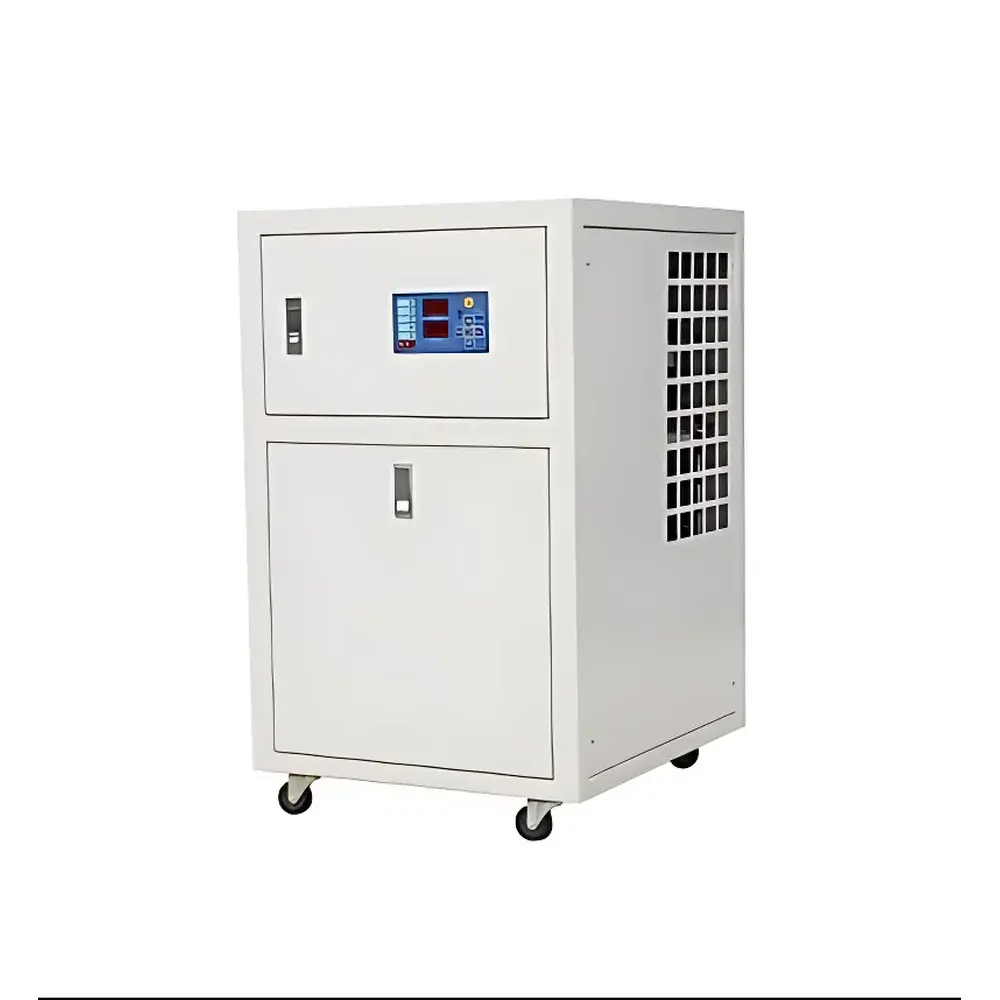
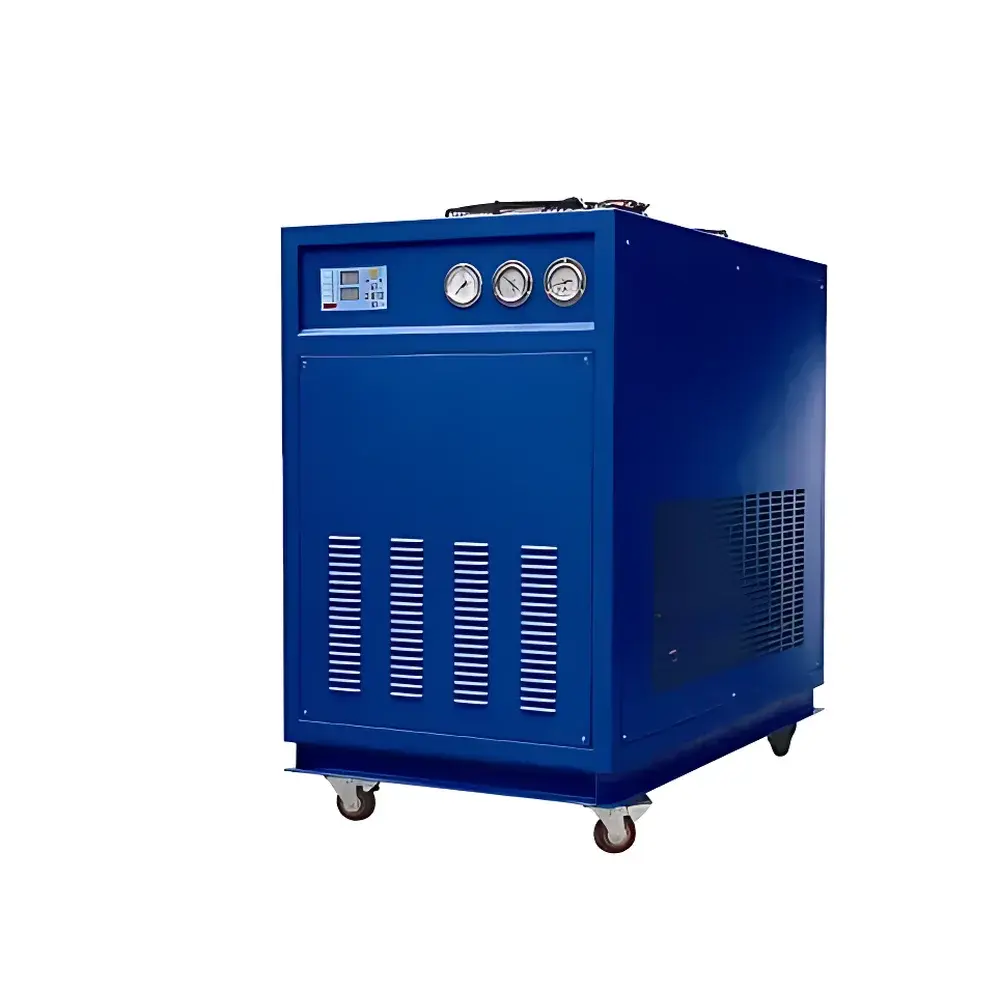
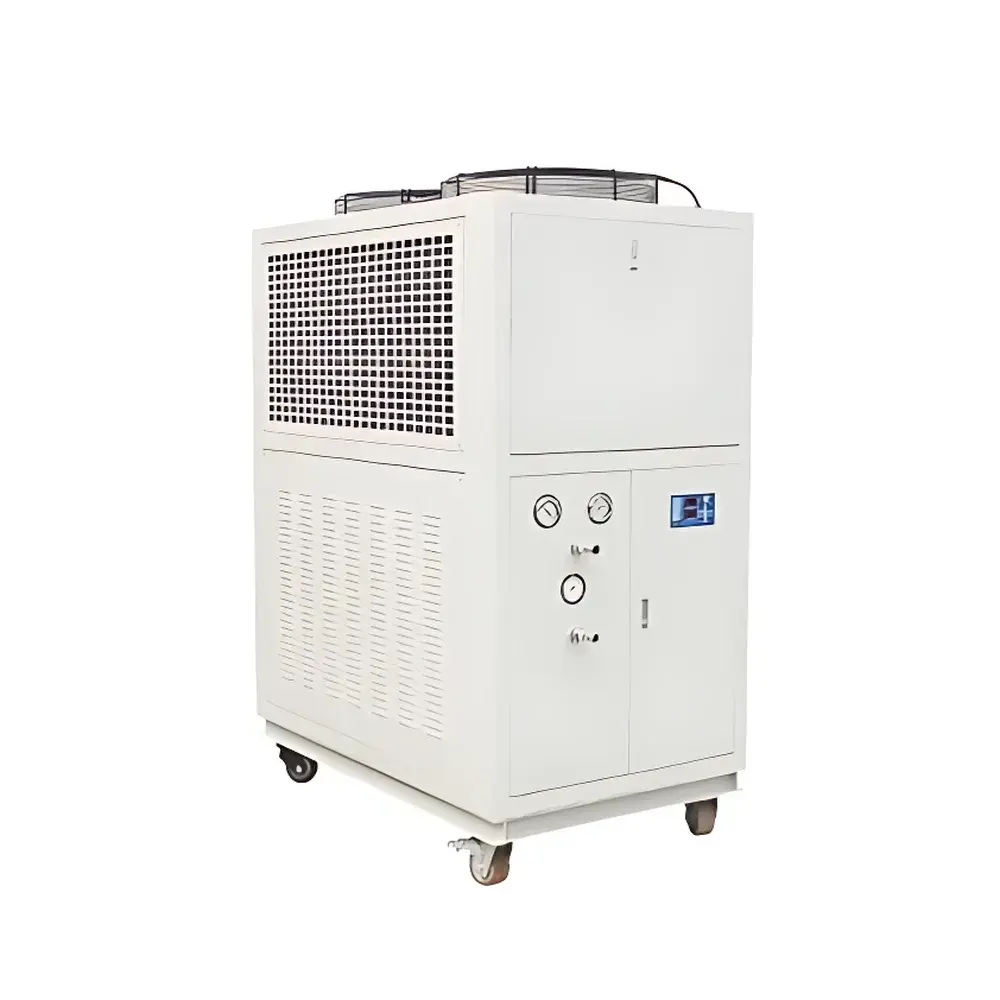
Tianfeng LS-15000W Screw-Type Circulating Chiller
| Brand | Tianfeng |
|---|---|
| Origin | Shanghai, China |
| Manufacturer Type | Direct Manufacturer |
| Equipment Type | Integrated Circulating Chiller |
| Cooling Method | Water-Cooled |
| Temperature Control Range | 0–10 °C |
| Refrigeration Capacity | 12 kW |
| Temperature Stability | ±0.1 °C |
| Circulation Pump Pressure | 2.0 bar |
| Circulation Flow Rate | 2 L/min |
| Reservoir Volume | 85 L |
| Operating Mode | Continuous Duty |
| Compressor Type | Scroll Compressor |
| Safety Protections | Compressor Overheat Protection, Overcurrent Protection, High/Low Pressure Switches, Overtemperature Alarm |
| Power Supply | 220 V, 50 Hz |
| Dimensions (L×W×H) | 1350 × 750 × 1445 mm |
| Weight | Not specified |
| Construction | Stainless Steel Reservoir & Pump |
| Controller | Domestic High-Accuracy PID Temperature Controller (Optional RKC Japan Unit) |
| Electrical Components | Siemens / Schneider / Omron |
| Expansion Valve & Solenoid Valve | Imported (Italy/Germany) |
| Noise Level | Low |
| Compliance | ISO 9001:2000 Certified |
Overview
The Tianfeng LS-15000W Screw-Type Circulating Chiller is an integrated, water-cooled precision temperature control system engineered for continuous-duty laboratory and industrial applications requiring stable, low-temperature coolant delivery. Unlike vapor-compression chillers with reciprocating compressors, this unit employs a high-efficiency scroll compressor—selected for its mechanical robustness, reduced vibration, and superior long-term reliability under sustained thermal load. The chiller operates on the fundamental principle of phase-change refrigeration: refrigerant undergoes compression, condensation, expansion, and evaporation within a closed-loop circuit to absorb heat from the process fluid (typically deionized water or water-glycol mixtures), which is then circulated via a stainless-steel pump to external equipment. Designed specifically for demanding analytical instrumentation—including graphite furnace atomic absorption spectrometers (GFAAS), inductively coupled plasma optical emission spectrometers (ICP-OES), ICP-mass spectrometers (ICP-MS), X-ray fluorescence (XRF) and X-ray diffraction (XRD) systems, scanning electron microscopes (SEM), and transmission electron microscopes (TEM)—the LS-15000W maintains coolant outlet temperatures between 0 °C and 10 °C with a stability of ±0.1 °C, minimizing thermal drift in sensitive detectors and high-power components such as RF generators, X-ray tubes, and electron optics.
Key Features
- Integrated architecture with compact footprint (1350 × 750 × 1445 mm), optimized for placement beneath lab benches or adjacent to analytical instruments without requiring dedicated mechanical rooms.
- Stainless steel reservoir (85 L capacity) and circulation pump—corrosion-resistant, non-reactive, and compliant with GLP-relevant fluid handling standards for trace-metal analysis workflows.
- Scroll compressor paired with imported thermostatic expansion valves (Italy/Germany) and solenoid valves ensures consistent refrigerant metering, reduced oil carryover, and extended service intervals.
- Dual-mode operation: precise constant-temperature mode and adaptive intelligent temperature control that dynamically adjusts setpoint based on real-time return-water temperature feedback—critical for variable-load instruments such as pulsed lasers or high-duty-cycle plasma sources.
- Digital PID temperature controller with LED display; optional upgrade to RKC (Japan) controller for enhanced repeatability and programmable ramp/soak profiles.
- Comprehensive safety suite: high/low refrigerant pressure switches, compressor winding overheat sensor, motor overcurrent protection, and independent overtemperature alarm—each triggering relay-based shutdown and fault signal output (dry contact) for integration into lab-wide monitoring systems.
- Low-noise design (<65 dB(A) at 1 m), suitable for installation in shared laboratory environments where acoustic interference must be minimized near acoustic-sensitive measurements (e.g., AFM, microcalorimetry).
Sample Compatibility & Compliance
This chiller is compatible with all standard laboratory cooling interfaces using 1/2″–3/4″ NPT or BSP threaded connections. It delivers consistent flow (2 L/min at 2.0 bar) across typical instrument inlet restrictions, including those found in ICP torch coolant manifolds, SEM column chill jackets, and laser diode heat exchangers. The unit meets ISO 9001:2000 quality management system requirements for design, manufacturing, and documentation traceability. While not intrinsically rated for hazardous locations, its electrical architecture complies with IEC 61000-6-3 (EMC emission limits) and IEC 61000-6-2 (immunity). For regulated pharmaceutical or clinical labs, the chiller supports audit-ready operation when paired with external data loggers (e.g., compliant with FDA 21 CFR Part 11 via third-party validation protocols), though native electronic record functionality is not embedded.
Software & Data Management
The LS-15000W operates as a standalone hardware-controlled system with no embedded firmware-based software interface or network connectivity. Temperature setpoint, status indicators (run/fault), and real-time outlet temperature are displayed locally via the front-panel LED interface. Fault conditions generate discrete dry-contact outputs (NO/NC) compatible with building management systems (BMS) or lab SCADA platforms for centralized alarm aggregation. For laboratories requiring automated temperature logging, third-party USB or RS-485 data acquisition modules may be interfaced with the analog 0–10 V or 4–20 mA process output (available upon request with optional controller configuration). All operational parameters—including cumulative runtime, compressor cycles, and alarm history—are retained mechanically via internal relays and do not require battery-backed memory.
Applications
- Analytical Instrument Cooling: Stabilizes thermal loads in GFAAS graphite furnaces, ICP plasma torches, XRF excitation sources, and electron microscope column assemblies—reducing thermal lensing, detector dark current drift, and vacuum chamber outgassing.
- Laser Systems: Maintains diode-pumped solid-state (DPSS) and fiber laser head temperatures within ±0.1 °C, preserving wavelength stability and beam pointing accuracy during extended acquisition sequences.
- Vacuum & Thin-Film Deposition: Controls substrate stage and magnetron sputtering target temperatures to ensure uniform film stress, adhesion, and stoichiometry in PVD/CVD tools.
- Materials Testing: Supplies regulated coolant to hot-stage accessories in DSC, TMA, and DMA instruments during controlled thermal ramping experiments.
- Process Validation Support: Used in pharmaceutical QC labs for jacketed reactor cooling during dissolution testing or stability chamber preconditioning per USP & ICH guidelines.
FAQ
What is the maximum allowable return water temperature for continuous operation?
The unit is designed for return water temperatures ≤40 °C. Sustained inlet temperatures above this threshold reduce condensing efficiency, increase discharge pressure, and accelerate compressor wear—potentially triggering high-pressure cutout protection.
Can this chiller be integrated into a facility’s central Building Management System (BMS)?
Yes—via optional 4–20 mA analog output (temperature) and dry-contact fault signals, enabling remote monitoring and alarm escalation without proprietary software dependencies.
Is the reservoir fluid path compatible with deionized water and 30% ethylene glycol solutions?
Yes. The stainless steel wetted parts (reservoir, pump head, heat exchanger) resist corrosion from both DI water and common glycol blends used to prevent freezing in ambient-controlled labs.
Does the chiller meet electromagnetic compatibility (EMC) requirements for use near sensitive instrumentation?
Yes—it conforms to IEC 61000-6-2 (immunity) and IEC 61000-6-3 (emissions), minimizing conducted/radiated interference with adjacent mass spectrometers or NMR preamplifiers.
What maintenance intervals are recommended for laboratory-grade operation?
Compressor oil inspection every 12 months; refrigerant charge verification every 24 months; filter-drier replacement every 36 months—aligned with ISO 5149 and ASHRAE Guideline 3-2021 for sealed-system chillers.



