
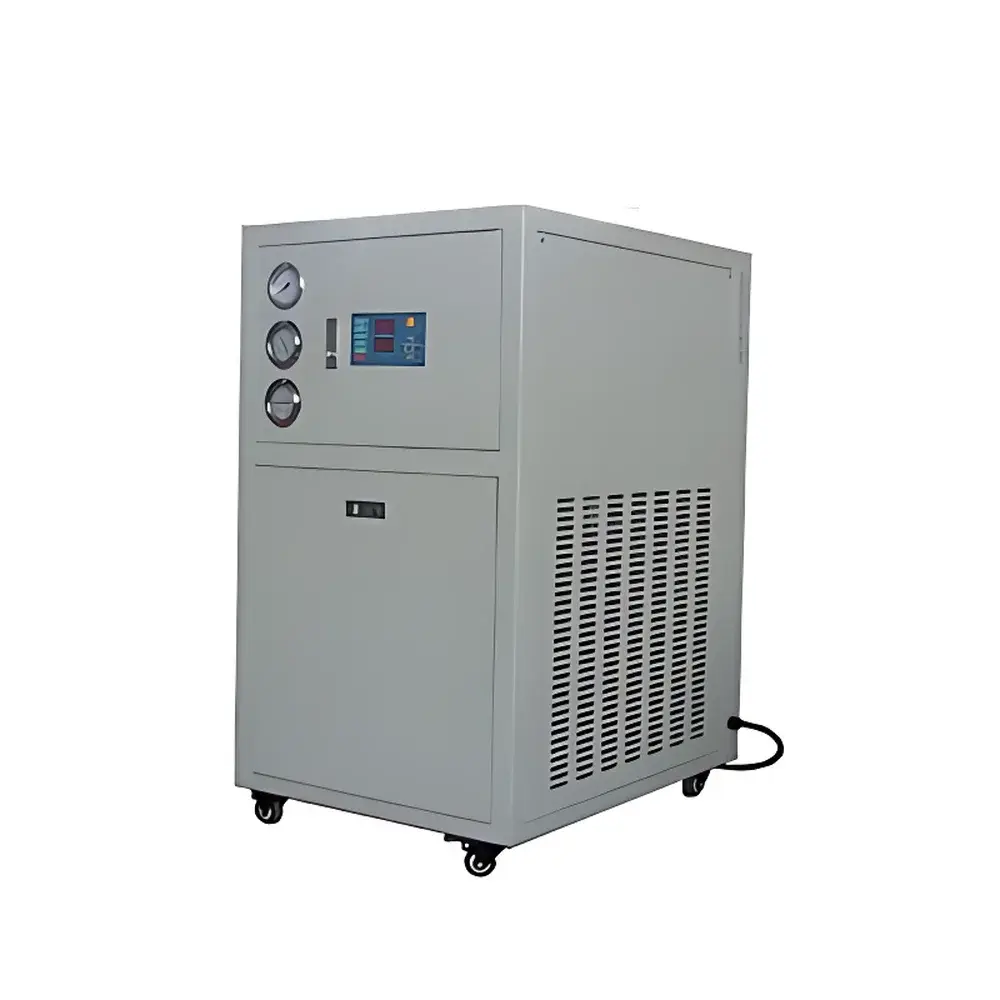
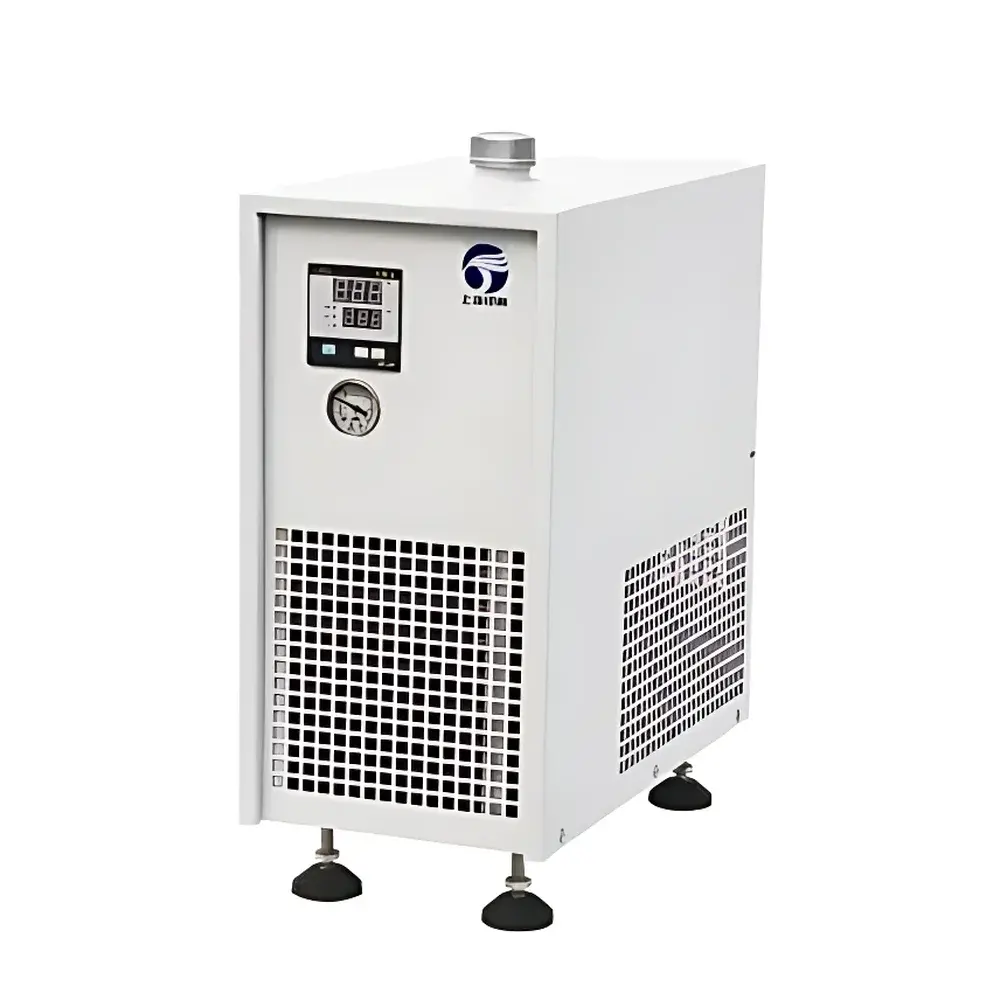
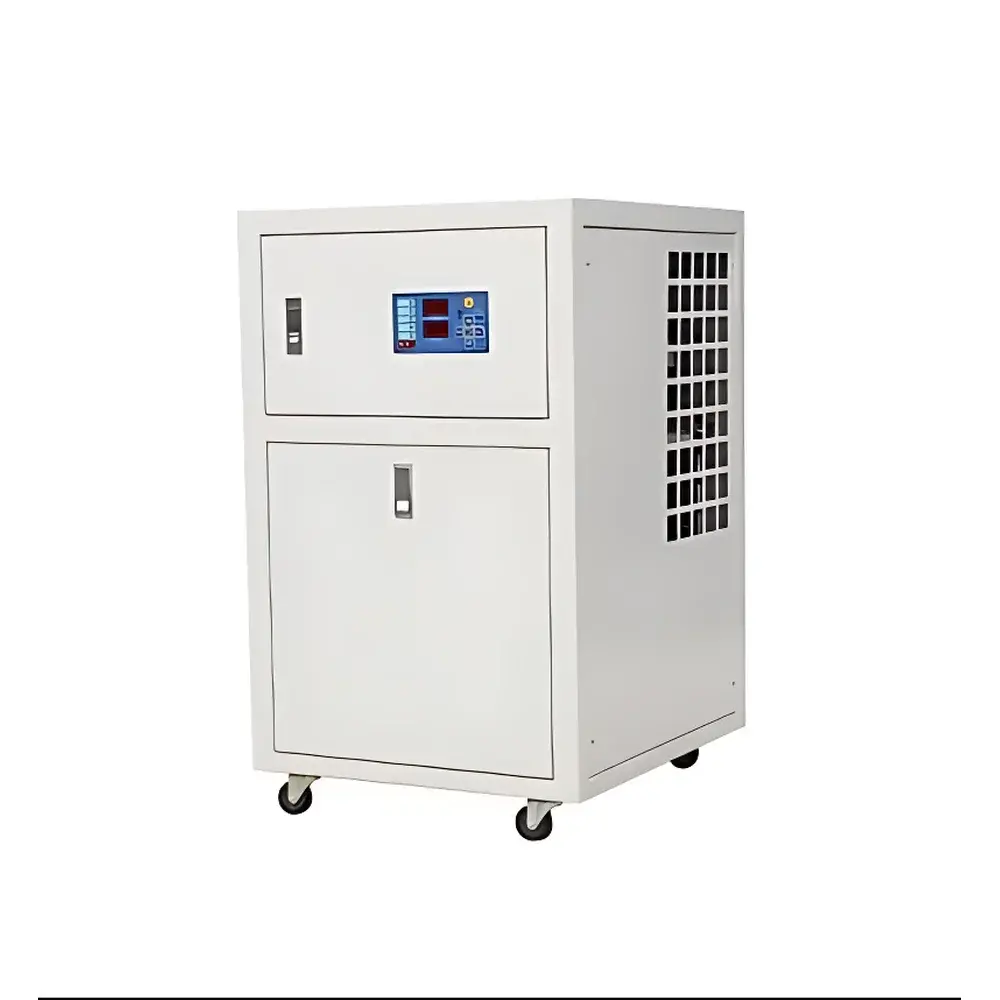
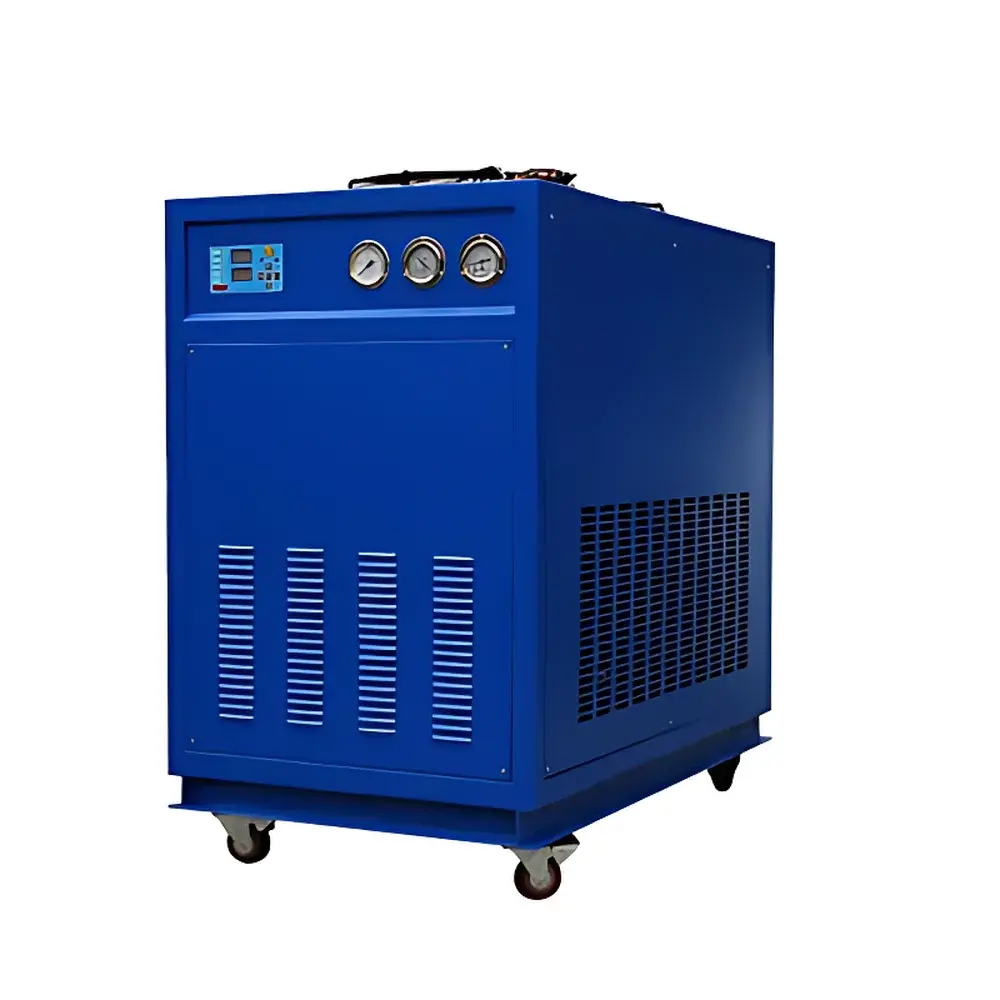
Tianfeng LS-2KW Integrated Circulating Chiller
| Brand | Tianfeng |
|---|---|
| Origin | Shanghai, China |
| Manufacturer Type | OEM Manufacturer |
| Product Category | Domestic |
| Model | Tianfeng LS-2KW |
| Instrument Type | Integrated Unit |
| Cooling Method | Water-Cooled |
| Temperature Stability | ±0.3°C (typical at 20°C setpoint) |
| Refrigeration Capacity | 2 kW @ ΔT = 5°C (12°C in / 7°C out) |
| Circulating Pump Pressure | 0–2 kgf/cm² |
| Circulating Pump Flow Rate | 0–60 L/min |
| Reservoir Volume | 27 L |
| Power Input | 1.34 kW |
| Voltage/Frequency | 220 V AC, 50 Hz |
| Dimensions (L×W×H) | 650 × 550 × 915 mm |
| Compressor | Scroll-type, high-efficiency |
| Safety Protections | Compressor overheat, overcurrent, high/low pressure, and overtemperature protection |
| Construction | Stainless steel reservoir and pump |
| Control System | Digital PID temperature controller (optional RKC unit available) |
| Noise Level | <65 dB(A) |
| Operating Ambient Temperature | ≤35°C |
| Coolant Temperature Range | 5–30°C |
Overview
The Tianfeng LS-2KW Integrated Circulating Chiller is a precision-engineered refrigeration system designed for stable thermal management of heat-generating laboratory and industrial equipment. It operates on the vapor-compression refrigeration cycle, utilizing a scroll compressor, thermostatic expansion valve, and copper-aluminum finned condenser to deliver consistent cooling performance under variable thermal loads. The chiller maintains precise coolant temperature control within ±0.3°C at typical operating setpoints—critical for applications requiring thermal stability such as analytical instrumentation, laser systems, and high-speed machining spindles. Its compact integrated architecture eliminates external piping complexity and reduces installation footprint, making it suitable for benchtop deployment in analytical labs, QC facilities, and pilot-scale manufacturing environments.
Key Features
- High-reliability scroll compressor with low vibration and extended service life
- Stainless steel reservoir and circulation pump for corrosion resistance and long-term fluid integrity
- Digital PID temperature controller with real-time display of outlet water temperature and operational status
- Adjustable flow rate (0–60 L/min) and pressure (0–2 kgf/cm²) to match diverse heat exchanger requirements
- Comprehensive safety suite: compressor overheat protection, high/low refrigerant pressure cutoff, overcurrent trip, and coolant overtemperature alarm
- Low-noise operation (<65 dB[A]) achieved through acoustic insulation and optimized fan design
- Modular electrical architecture using certified components from Siemens, Schneider Electric, and Omron
- Optional upgrade to RKC digital temperature controller for enhanced repeatability and programmable ramp-soak profiles
Sample Compatibility & Compliance
The LS-2KW chiller is compatible with a wide range of laboratory and industrial equipment requiring closed-loop liquid cooling, including graphite furnace atomic absorption spectrometers (GFAAS), inductively coupled plasma optical emission spectrometers (ICP-OES), scanning electron microscopes (SEM), X-ray diffractometers (XRD), and laser marking/cutting systems. It meets ISO 9001:2000 quality management system requirements and adheres to IEC 61000-6-3 (EMC emissions) and IEC 61000-6-2 (immunity) standards. While not certified to UL or CE for direct North American/EU market placement without local conformity assessment, its design incorporates safeguards aligned with FDA 21 CFR Part 11 data integrity principles when integrated with validated lab information management systems (LIMS). All wetted materials comply with USP Class VI biocompatibility requirements for non-sterile coolant circuits.
Software & Data Management
The standard configuration features a standalone digital controller with no embedded software or network interface. However, analog output signals (0–10 V or 4–20 mA) are provided for remote temperature monitoring and integration into building management systems (BMS) or SCADA platforms. Optional RS-485 Modbus RTU communication enables centralized logging of coolant temperature, pump status, and fault codes—supporting GLP/GMP audit trails when paired with compliant data acquisition hardware. No proprietary software is required; configuration remains accessible via front-panel keypad navigation. Firmware updates are performed manually via USB interface upon request and documented per change control procedures.
Applications
- Laboratory instrumentation: Thermal stabilization of plasma sources, X-ray tubes, detector cooling stages, and vacuum chamber jackets
- Materials characterization: Maintaining constant temperature during DSC, TGA, and rheometry sample preparation
- Electronics manufacturing: Controlling dielectric coolant temperature in ultrasonic cleaning baths and electroplating rectifiers
- Pharmaceutical R&D: Regulating jacketed reactor temperatures during API crystallization and lyophilization process development
- Mechanical testing: Stabilizing hydraulic oil temperature in universal testing machines and fatigue test rigs
- Optics and photonics: Managing thermal drift in high-power laser diode arrays and fiber amplifier modules
FAQ
What is the recommended maximum return water temperature for continuous operation?
The chiller is rated for inlet water temperatures up to 40°C. Sustained operation above this threshold increases compressor discharge pressure and reduces refrigerant subcooling, accelerating wear and potentially triggering high-pressure shutdown.
Can the LS-2KW be used with ethylene glycol/water mixtures?
Yes—up to 30% by volume glycol is supported; however, viscosity increase must be accounted for in flow rate calibration and pump head selection. Glycol use requires recalibration of temperature sensors due to thermal conductivity shifts.
Is remote monitoring capability built-in or optional?
Standard units include analog voltage/current outputs; Modbus RTU via RS-485 is available as a factory-installed option.
Does the chiller meet any regulatory standards for pharmaceutical cleanroom use?
While the unit itself carries no cleanroom classification, its stainless steel fluid path and absence of volatile organic coatings make it suitable for ISO Class 7/8 environments when installed with appropriate HEPA-filtered ambient air intake.
What maintenance intervals are recommended for laboratory-grade operation?
Compressor oil analysis every 2,000 operating hours; condenser coil cleaning quarterly; coolant replacement annually or per fluid manufacturer specifications.



