
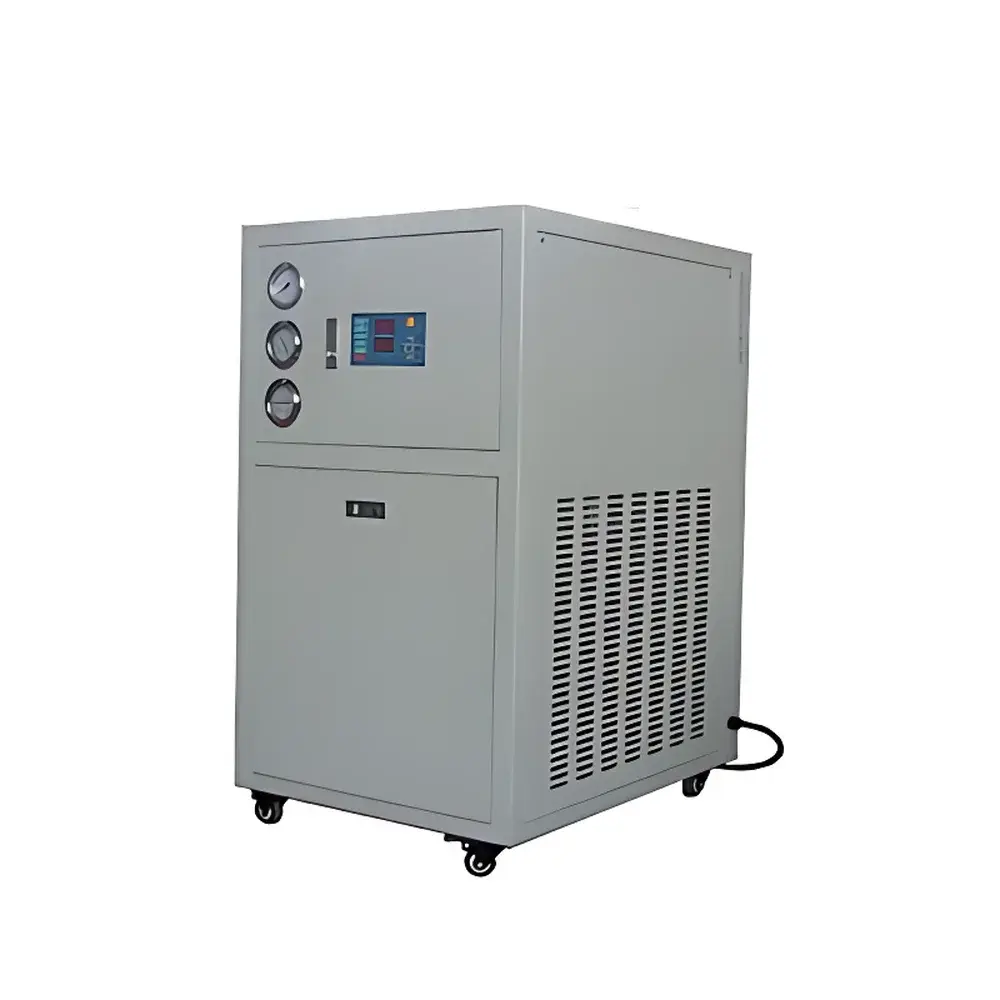
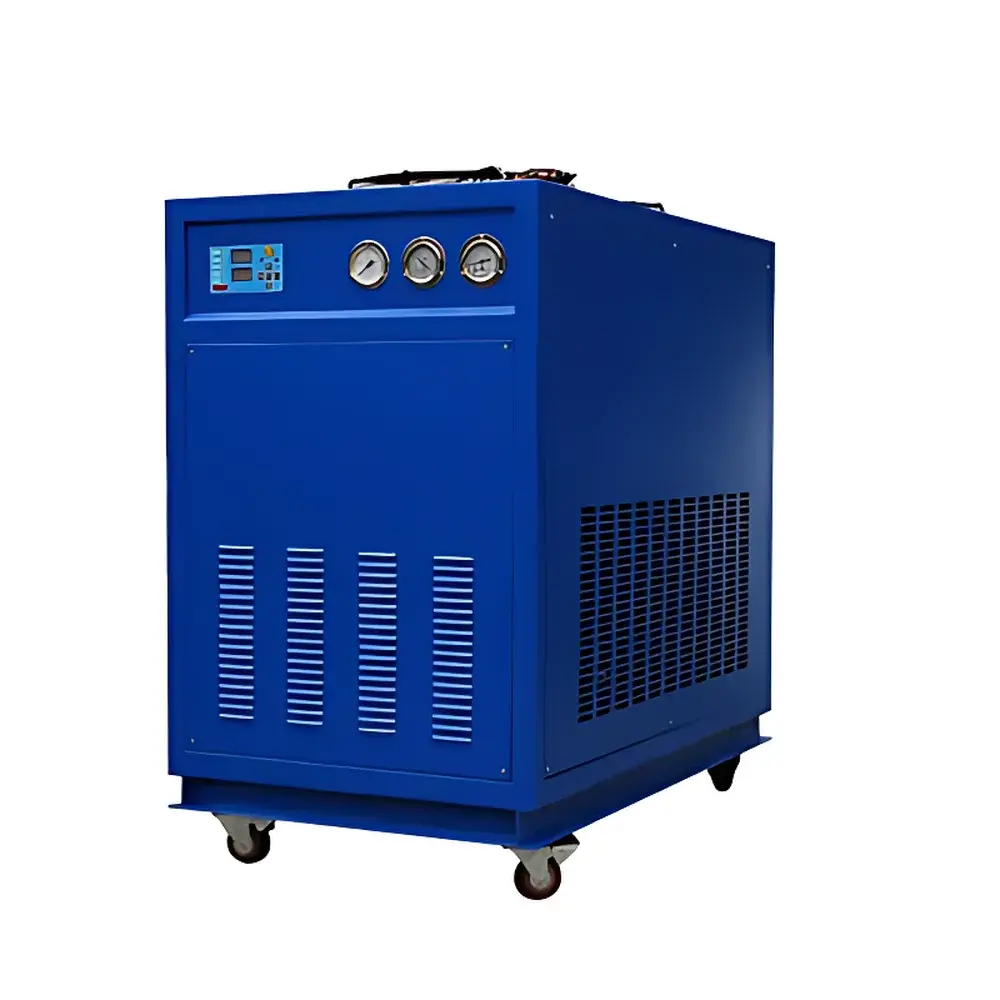
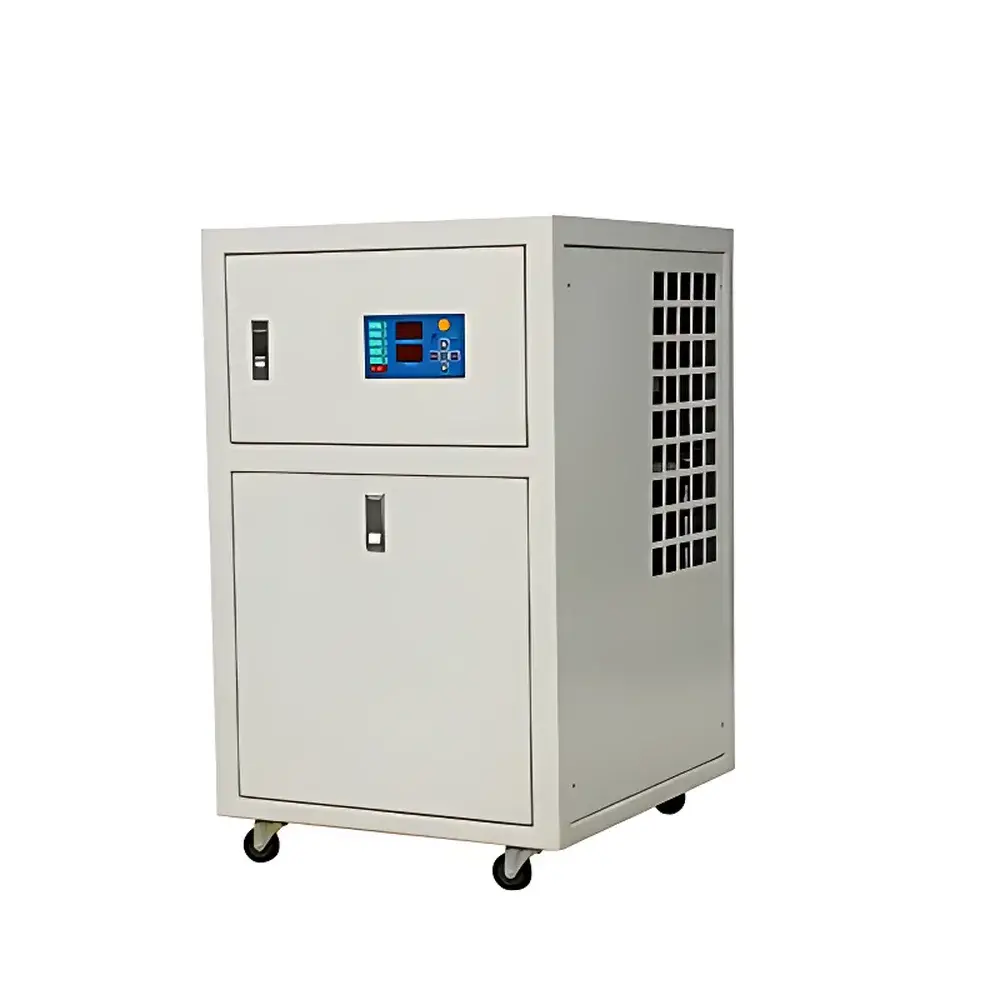
Tianfeng LS-3.5KW Compact Circulating Chiller
| Brand | Tianfeng |
|---|---|
| Origin | Shanghai, China |
| Manufacturer Type | Direct Manufacturer |
| Product Category | Domestic |
| Model | Tianfeng-LS-3.5KW |
| Instrument Type | Integrated Unit |
| Cooling Method | Water-Cooled |
| Temperature Control Range | 0–40 °C |
| Refrigeration Capacity | 300–9000 W |
| Temperature Stability | ±0.1 °C |
| Circulating Pump Pressure | 2.0 bar |
| Circulating Pump Flow Rate | 38 L/min |
| Reservoir Volume | 5–550 L |
| Operating Mode | Continuous |
| Rated Refrigeration Output | 3.5 kW |
| Power Input | 1.8 kW |
| Reservoir Capacity (Standard) | 45 L |
| Dimensions (L×W×H) | 800×600×1065 mm |
| Power Supply | 220 V, 50 Hz |
| Safety Protections | Compressor Overheat Protection, Overcurrent Protection, High/Low Pressure Switches, Overtemperature Alarm |
| Construction | Stainless Steel Reservoir & Pump |
| Compressor Type | Scroll Compressor |
| Temperature Controller | Domestic High-Accuracy PID Controller (Optional RKC Japan) |
| Key Components | Italian/German Expansion Valves, Solenoid Valves, Siemens/Schneider/Omron Electrical Components |
| Noise Level | Low |
| Certifications | ISO 9001:2000 Certified |
Overview
The Tianfeng LS-3.5KW Compact Circulating Chiller is an integrated, water-cooled temperature control system engineered for precision thermal management in laboratory and light-industrial environments. It operates on a vapor-compression refrigeration cycle, utilizing a high-efficiency scroll compressor, thermostatically regulated expansion valve, and PID-controlled circulation loop to maintain stable coolant temperatures across dynamic thermal loads. Designed for continuous-duty operation, the unit delivers consistent cooling capacity of 3.5 kW at standard conditions (inlet water 12 °C, outlet 7 °C), with adjustable setpoints spanning 0–40 °C and exceptional stability of ±0.1 °C. Its compact footprint (800 × 600 × 1065 mm), stainless steel reservoir (45 L standard), and integrated 38 L/min pump enable seamless integration with analytical instruments requiring reliable heat dissipation—particularly those sensitive to thermal drift, such as graphite furnace atomic absorption spectrometers (GFAAS), inductively coupled plasma optical emission spectrometers (ICP-OES), X-ray fluorescence (XRF) systems, scanning electron microscopes (SEM), and transmission electron microscopes (TEM).
Key Features
- Integrated design with fully enclosed scroll compressor for low vibration, extended service life, and reduced acoustic emissions
- Stainless steel reservoir and wetted components ensure corrosion resistance and compatibility with deionized or inhibited coolant solutions
- Digital PID temperature controller with real-time display, programmable ramp/soak profiles, and user-selectable control modes (constant-temperature or intelligent adaptive cooling)
- Multi-layer safety architecture: dual-pressure switches, compressor overheat cutoff, overcurrent protection, and overtemperature alarm with relay output for external interlock
- Adjustable flow (0–60 L/min) and pressure (0–2.0 bar) via calibrated bypass and impeller regulation—optimized for variable-head applications
- Compliance-ready electrical architecture featuring CE-marked Siemens, Schneider, and Omron contactors, relays, and power distribution modules
- ISO 9001:2000–certified manufacturing process with full traceability of critical components including imported thermostatic expansion valves and solenoid actuators
Sample Compatibility & Compliance
The LS-3.5KW chiller is compatible with a broad range of laboratory instrumentation requiring closed-loop liquid cooling, including but not limited to laser sources (e.g., DPSS, fiber-coupled diodes), vacuum system cold traps, plasma generators, and high-power RF amplifiers. Its 0–40 °C operating envelope supports both cryogenic pre-cooling and ambient-temperature stabilization protocols. The unit meets electromagnetic compatibility (EMC) requirements per IEC 61326-1 for laboratory use and incorporates grounding continuity and insulation resistance safeguards aligned with IEC 61010-1. While not intrinsically rated for hazardous locations, its sealed refrigerant circuit (R410A or R134a, depending on configuration) complies with EU F-Gas Regulation (EU) No 517/2014 and EPA SNAP program standards. For GLP/GMP-regulated laboratories, optional audit-trail-enabled controllers support 21 CFR Part 11–compliant data logging when paired with validated third-party software.
Software & Data Management
Standard operation requires no external software—the embedded controller provides local setpoint adjustment, real-time temperature/flow monitoring, and fault-code diagnostics via LED interface. Optional RS485 Modbus RTU or Ethernet TCP/IP communication ports enable integration into centralized building management systems (BMS) or LIMS platforms. When configured with a compliant data acquisition module, the chiller supports timestamped logging of inlet/outlet temperatures, compressor run hours, pressure differentials, and alarm events—retained for ≥30 days onboard and exportable via USB or network transfer. All firmware updates follow version-controlled release protocols, with change logs archived per ISO 9001 documentation requirements.
Applications
- Atomic Spectroscopy: Stabilizes graphite furnace temperature gradients during atomization cycles; maintains plasma torch coolant temperature within ±0.2 °C for ICP-MS signal reproducibility
- Electron Microscopy: Prevents thermal lensing in SEM/TEM column optics and detector assemblies; suppresses stage drift during long-duration imaging sessions
- X-ray Analytical Systems: Regulates anode target temperature in XRF and XRD sources to minimize spectral peak broadening and intensity drift
- Laser-Based Instruments: Manages diode stack junction temperature in Raman spectrometers and LIBS systems to preserve wavelength accuracy and beam quality
- Material Testing: Supports controlled thermal cycling in dynamic mechanical analyzers (DMA) and differential scanning calorimeters (DSC) auxiliary cooling modules
- Pharmaceutical QC: Provides stable coolant supply to dissolution testers and automated sample changers per USP & EP thermal validation guidelines
FAQ
What is the maximum allowable return water temperature for continuous operation?
The unit is rated for sustained operation with return coolant up to 40 °C. Exceeding this threshold increases condensing pressure, reducing compressor efficiency and accelerating refrigerant oil degradation.
Can the chiller be integrated into a facility’s central monitoring system?
Yes—optional Modbus RTU (RS485) or Ethernet interfaces support read-only access to operational parameters and alarm status for SCADA/BMS integration.
Is the reservoir volume customizable for specific application demands?
Standard configuration includes a 45 L stainless steel tank; custom volumes from 5 L to 550 L are available under OEM engineering agreement.
Does the unit comply with international electrical safety standards?
It conforms to IEC 61010-1 (Safety Requirements for Electrical Equipment for Measurement, Control, and Laboratory Use) and carries CE marking for EMC and low-voltage directives.
What maintenance intervals are recommended for optimal longevity?
Compressor oil analysis every 12 months; refrigerant circuit leak check annually; filter cartridge replacement every 6 months under continuous use; full system performance verification per ISO/IEC 17025 calibration schedule.
Related Products



