
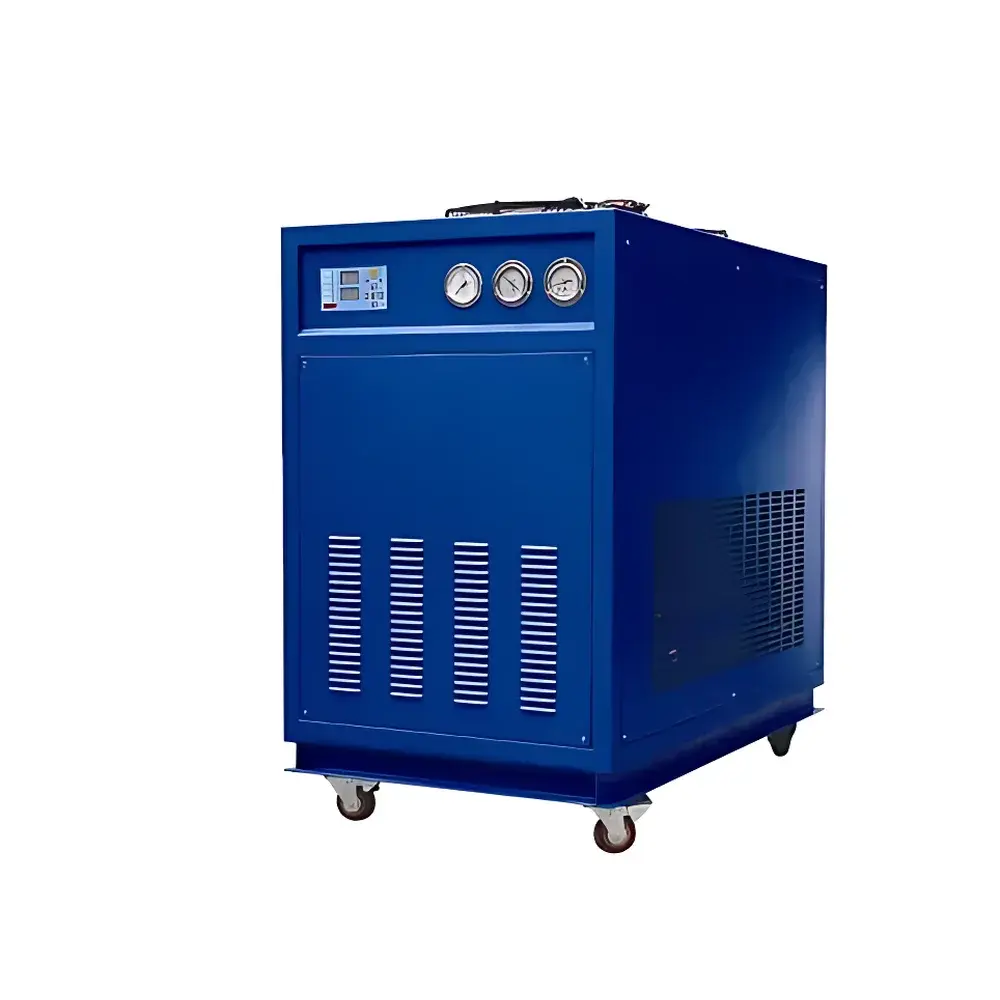
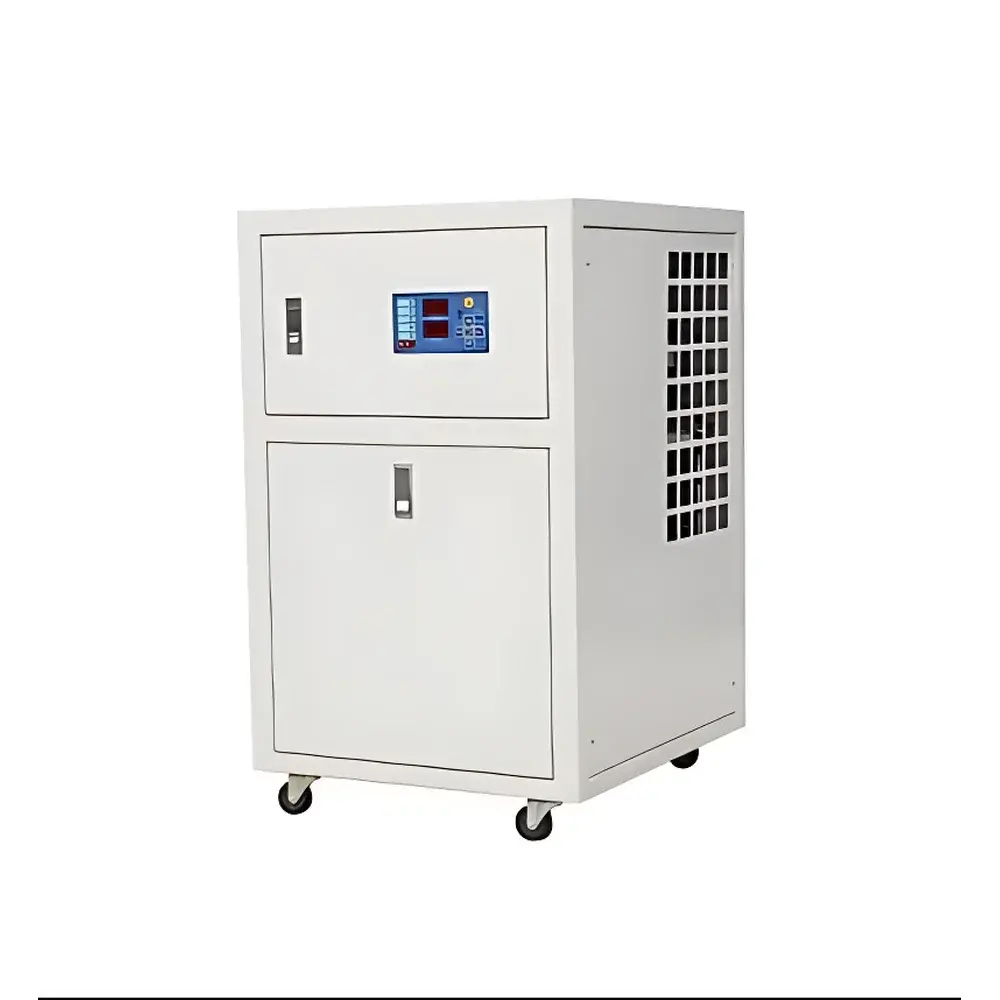
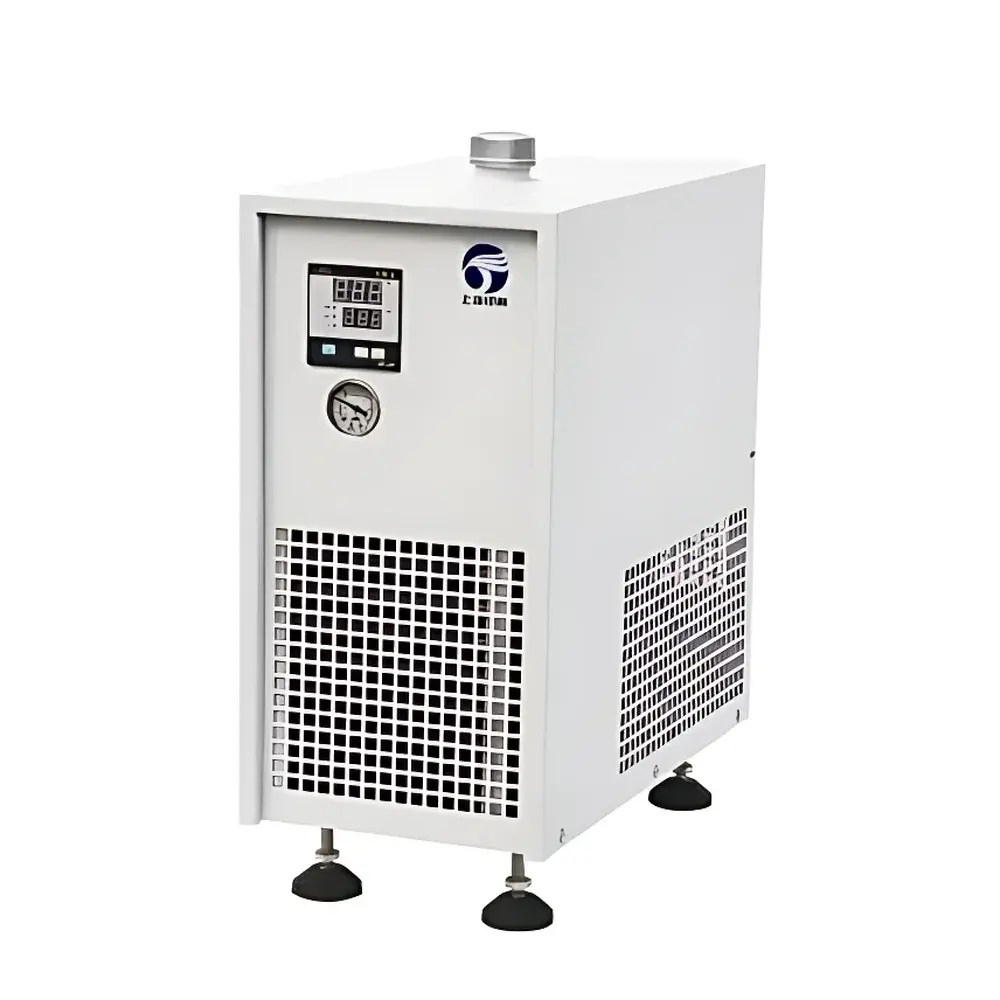
Tianfeng LS-30HP Low-Temperature Brine Circulating Chiller
| Brand | Tianfeng |
|---|---|
| Origin | Shanghai, China |
| Manufacturer Type | Direct Manufacturer |
| Equipment Type | Integrated Circulating Chiller |
| Cooling Method | Water-Cooled |
| Temperature Control Range | –20 °C to +30 °C (Freeze-Point Depressed Brine Operation) |
| Refrigeration Capacity | 97.5 kW @ ΔT = 5 °C (12 °C in / 7 °C out) |
| Temperature Stability | ±0.3 °C |
| Circulating Pump Pressure | 10 m H₂O (user pump: 92 m H₂O) |
| Circulating Flow Rate | 16 m³/h (user pump: 8 m³/h) |
| Reservoir Volume | 400 L |
| Power Supply | 380 V / 50 Hz / 3-phase + N + PE |
| Refrigerant | R22 |
| Compressor | Hermetic Scroll, 22.05 kW |
| Condenser | High-Efficiency Copper-Tube/Aluminum-Fin with Low-Noise External-Rotor Fan (30,000 m³/h airflow) |
| Evaporator | Plate Heat Exchanger |
| Safety Protections | Compressor Overheat, Overcurrent, High/Low Pressure, Overtemperature, Phase Sequence & Phase Loss, Discharge Overheat |
Overview
The Tianfeng LS-30HP Low-Temperature Brine Circulating Chiller is an engineered thermal management system designed for precision temperature control of high-heat-load laboratory and industrial equipment operating under sub-ambient conditions. Unlike standard water chillers, this unit utilizes a freeze-point depressed brine solution (e.g., ethylene glycol/water or calcium chloride/water mixtures) to achieve stable operation down to –20 °C while maintaining consistent thermal delivery across extended duty cycles. Its core thermodynamic architecture integrates a hermetic scroll compressor, plate-type evaporator, and optimized refrigerant circuitry compliant with ASHRAE Standard 15 and ISO 5149 safety requirements. The chiller operates on the vapor-compression cycle with R22 refrigerant—selected for its proven stability, compatibility with copper-based heat exchangers, and predictable saturation characteristics within the –30 °C to +40 °C operational envelope. It is purpose-built for applications demanding high thermal inertia, low temperature drift, and long-term unattended operation—particularly where equipment cooling interfaces require corrosion resistance, non-freezing fluid compatibility, and precise delta-T regulation.
Key Features
- Integrated industrial-grade design with 2300 × 1350 × 2000 mm footprint—optimized for lab utility rooms, equipment bays, and production floor integration.
- Hermetic scroll compressor (22.05 kW) delivering high volumetric efficiency, low mechanical wear, and minimal oil carryover—ensuring >20,000 hours MTBF under continuous load.
- Dual-pump configuration: primary chilled-brine circulation (16 m³/h @ 10 m head) and optional user-side secondary loop (8 m³/h @ 92 m head), enabling independent flow control for multi-instrument distribution.
- 400 L stainless-steel reservoir with integrated level sensor, anti-corrosion coating, and insulated lid—minimizing evaporation loss and thermal stratification.
- Digital PID temperature controller (standard Chinese OEM; optional RKC Japan unit) with 0.1 °C resolution, programmable ramp/soak profiles, and real-time deviation logging.
- Comprehensive safety suite: high/low pressure switches, phase sequence monitoring, discharge temperature cutoff, motor overcurrent protection, and automatic fault lockout with LED status indicators.
- Low-noise condensing assembly (<72 dB(A) at 1 m) featuring external-rotor fans and vibration-damped mounting—suitable for proximity to sensitive instrumentation.
- Full compliance with IEC 60204-1 (electrical safety), CE marking directives (2014/30/EU EMC, 2014/35/EU LVD), and RoHS-compliant component sourcing.
Sample Compatibility & Compliance
This chiller is validated for use with analytical instruments requiring stable, low-temperature coolant delivery—including graphite furnace atomic absorption spectrometers (GFAAS), inductively coupled plasma optical emission spectrometers (ICP-OES), ICP-mass spectrometers (ICP-MS), X-ray fluorescence (XRF) analyzers, X-ray diffractometers (XRD), scanning electron microscopes (SEM), and transmission electron microscopes (TEM). Its brine-compatible wetted materials (304 stainless steel reservoir/piping, EPDM seals, titanium-plated plate exchanger surfaces) resist degradation from common glycol-based coolants and meet ASTM D1384 corrosion resistance criteria. All electrical controls conform to GLP/GMP-relevant traceability standards: event logs retain timestamps for temperature setpoint changes, alarm activations, and power interruptions. While not FDA 21 CFR Part 11–certified out-of-box, audit-ready data export (via RS485 Modbus RTU or optional Ethernet) supports validation protocols under ISO/IEC 17025 and ISO 9001:2015 quality systems.
Software & Data Management
The embedded controller supports local parameter configuration via 4.3-inch TFT touchscreen interface with multilingual UI (English default). Operational data—including inlet/outlet temperatures, flow rate, compressor run time, and fault history—is stored internally for up to 30 days. Optional communication modules enable integration into centralized lab infrastructure: Modbus RTU allows PLC-level monitoring; BACnet MS/TP or MQTT clients support building management system (BMS) interoperability. For regulated environments, optional firmware upgrade provides electronic signature capability, user role-based access control (admin/operator/guest), and CSV-exportable audit trails compliant with Annex 11 principles. No cloud dependency—data remains on-device unless explicitly transmitted via secured LAN.
Applications
- Laboratory instrumentation cooling: Maintains thermal equilibrium in high-power RF generators (ICP), X-ray tube housings (XRF/XRD), electron beam columns (SEM/TEM), and laser excitation sources—reducing thermal lensing and signal drift.
- Materials science workflows: Enables controlled cryo-staging during synchrotron beamline experiments and low-temperature mechanical testing rigs.
- Pharmaceutical QC labs: Supports temperature-critical dissolution testing apparatus (USP ) and stability chambers requiring auxiliary cold sink capacity.
- Electron microscopy sample prep: Cools cryo-ultramicrotomes and sputter coaters to minimize ice crystal formation during vitrification.
- Industrial R&D: Provides stable coolant for semiconductor wafer probing stations, vacuum chamber shrouds, and high-speed spindle test benches—mitigating thermal growth-induced misalignment.
FAQ
What brine solutions are compatible with the LS-30HP?
Ethylene glycol/water (up to 40% vol), propylene glycol/water, and calcium chloride aqueous solutions are supported. Viscosity must remain below 25 cP at operating temperature to ensure pump efficiency and avoid cavitation.
Can this chiller operate continuously at –20 °C ambient?
Yes—the condenser is rated for ambient cooling air up to 40 °C; however, sustained operation below 15 °C ambient requires derating per AHRI 550/590 guidelines and may necessitate condenser fan speed modulation.
Is remote monitoring available without third-party SCADA?
Standard RS485 Modbus RTU enables direct connection to HMIs or custom Python/Node-RED scripts. Optional Ethernet module adds HTTP API and SNMP v3 support for IT-managed networks.
Does the unit include glycol concentration monitoring?
No—brine concentration must be verified externally using refractometry or density measurement prior to fill. The system does not incorporate inline conductivity or freezing-point sensors.
What maintenance intervals are recommended for GLP-compliant use?
Compressor oil analysis every 4,000 hours; refrigerant leak check annually; plate heat exchanger inspection and descaling every 12 months; filter drier replacement every 24 months—or sooner if pressure drop exceeds 1.5 bar across the evaporator.



