
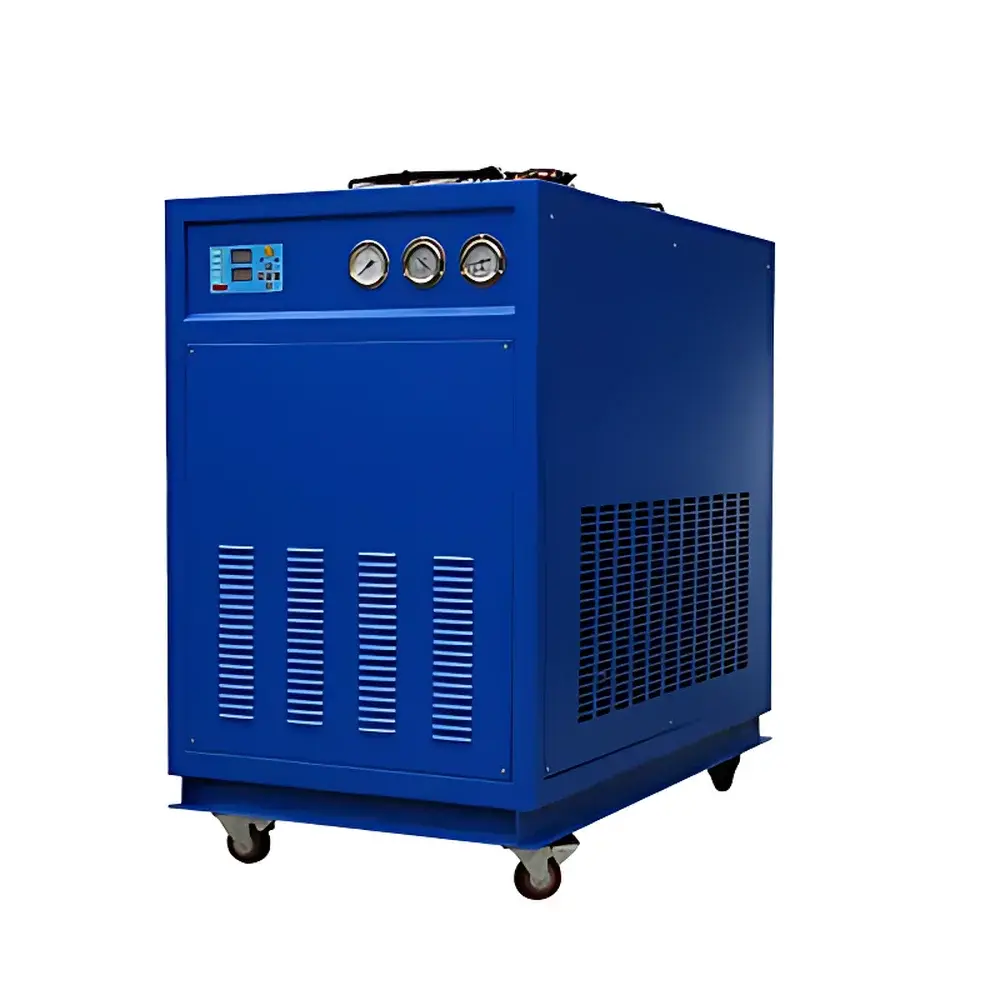
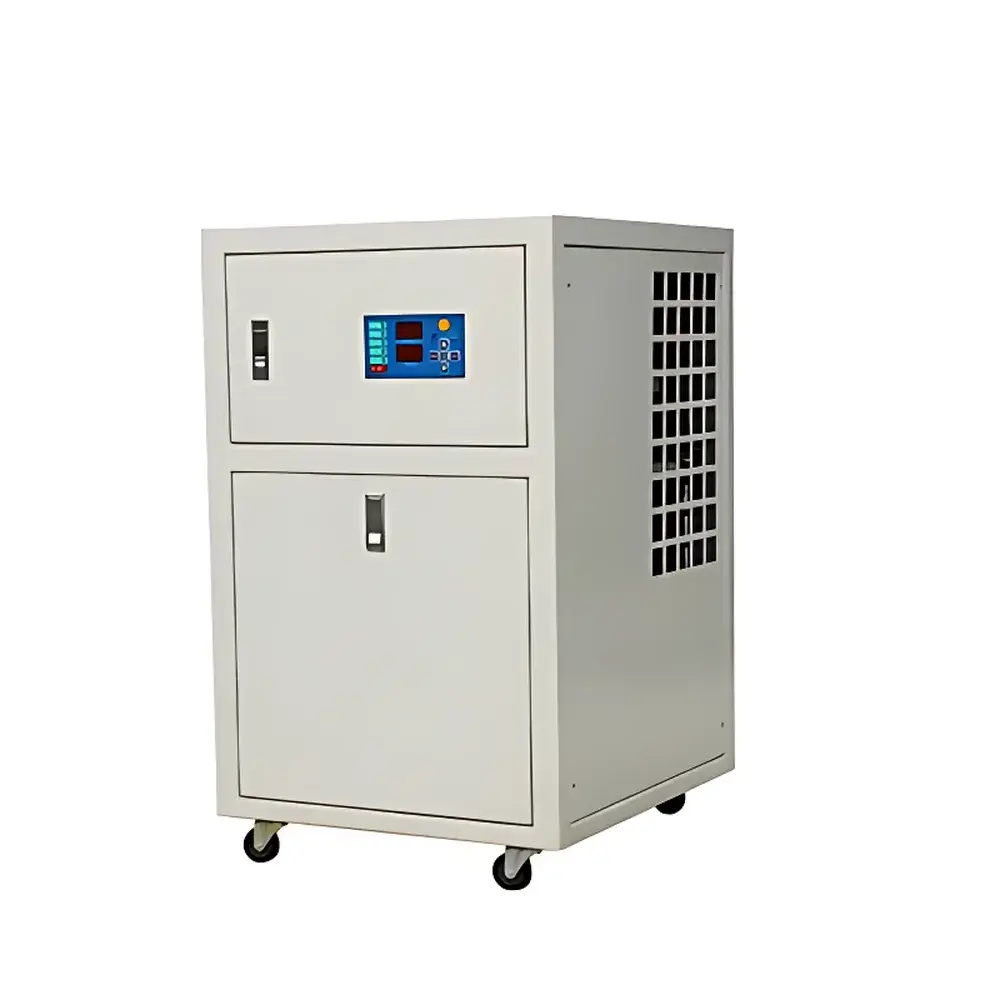
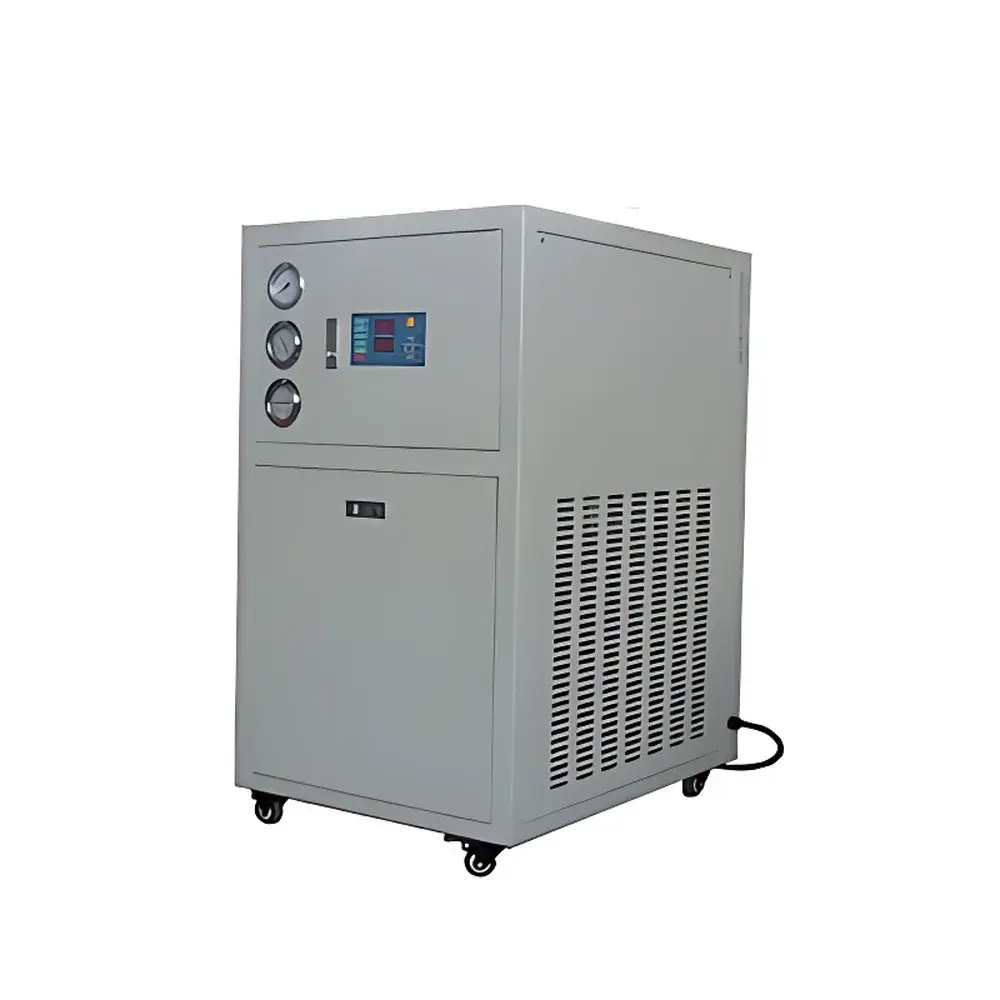
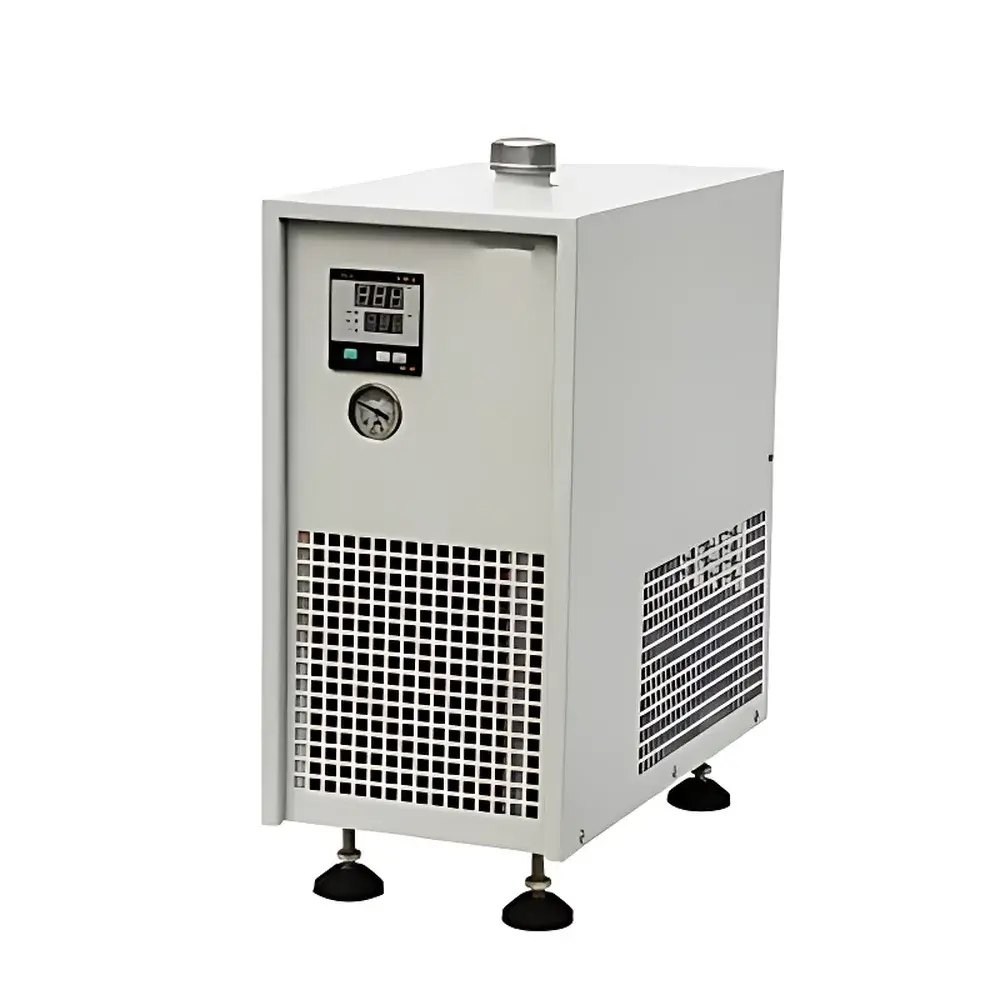
Tianfeng LS-6000W Air-Cooled Circulating Chiller
| Brand | Tianfeng |
|---|---|
| Origin | Shanghai, China |
| Manufacturer Type | Direct Manufacturer |
| Equipment Type | Integrated Air-Cooled Circulating Chiller |
| Cooling Capacity | 6 kW |
| Temperature Range | 0–10 °C |
| Temperature Stability | ±0.1 °C |
| Circulation Pressure | 2.0 bar |
| Flow Rate | 2 L/min |
| Reservoir Volume | 45 L |
| Power Consumption | 2.76 kW |
| Input Voltage | 220 V / 50 Hz |
| Compressor Type | Scroll Compressor |
| Safety Protections | Compressor Overheat Protection, Overcurrent Protection, High/Low Pressure Switches, Overtemperature Alarm |
| Enclosure Material | Stainless Steel Reservoir & Pump |
| Noise Level | Low |
| Operating Mode | Continuous Duty |
| Certifications | ISO 9001:2000 Certified |
Overview
The Tianfeng LS-6000W Air-Cooled Circulating Chiller is an integrated precision temperature control system engineered for laboratory and light-industrial applications requiring stable, continuous cooling of heat-generating instrumentation. Unlike water-cooled chillers that rely on external cooling towers or facility-supplied chilled water, this unit employs a self-contained air-cooled condensing system—making it ideal for environments where water infrastructure is limited or impractical. Its core thermodynamic architecture integrates a high-efficiency scroll compressor, thermostatically regulated expansion valve (imported from Germany/Italy), and PID-based digital temperature controller to deliver precise thermal management across demanding analytical workflows. Designed for compatibility with sensitive instrumentation—including graphite furnace atomic absorption spectrometers (GFAAS), inductively coupled plasma optical emission spectrometers (ICP-OES), X-ray diffractometers (XRD), scanning electron microscopes (SEM), and transmission electron microscopes (TEM)—the chiller maintains consistent coolant delivery at setpoint temperatures between 0 °C and 10 °C, with thermal stability within ±0.1 °C under steady-state conditions.
Key Features
- Integrated air-cooled design eliminates dependency on facility water circuits or cooling towers.
- Stainless steel reservoir (45 L) and pump housing ensure corrosion resistance and long-term fluid integrity.
- Digital PID temperature controller with real-time display and adjustable setpoint resolution of 0.1 °C.
- Scroll-type compressor delivering high volumetric efficiency, low mechanical wear, and acoustic noise reduction (<65 dB(A) at 1 m).
- Multi-layer safety architecture: high/low refrigerant pressure monitoring, compressor overheat cutoff, overcurrent protection, and overtemperature alarm with relay output.
- Adjustable flow rate (0–2 L/min) and pressure (0–2.0 bar) via calibrated bypass and isolation valves.
- Continuous-duty operation rated for 24/7 unattended use in controlled laboratory environments.
- Compliant with IEC 61000-6-3 (EMC emission standards) and IEC 61000-6-2 (immunity standards) for electromagnetic compatibility.
Sample Compatibility & Compliance
The LS-6000W is routinely deployed as a secondary cooling loop for instruments generating localized thermal loads up to 6 kW—particularly those requiring closed-loop recirculation of deionized or inhibited coolant. It meets functional requirements outlined in ASTM E2912 (Standard Guide for Selection and Use of Laboratory Chillers), supports GLP-compliant workflows through traceable temperature logging (when paired with optional data acquisition modules), and operates within ambient temperature limits specified by ISO 13849-1 for safety-related control systems. All electrical components—including contactors, relays, and circuit breakers—are sourced from globally certified suppliers (Siemens, Schneider Electric, Omron), ensuring compliance with CE, RoHS, and UL-listed equivalents for international deployment. The stainless-steel wetted path conforms to USP Class VI biocompatibility standards for non-reactive fluid handling.
Software & Data Management
While the base model features standalone analog/digital control, optional RS485 Modbus RTU interface enables integration into centralized lab infrastructure management platforms. When connected to compatible SCADA or LIMS systems, the chiller supports remote setpoint adjustment, real-time temperature/pressure telemetry, event-triggered alarm logging, and audit-trail generation compliant with FDA 21 CFR Part 11 requirements (with appropriate validation documentation and user access controls). Firmware updates are performed via secure USB port; all configuration changes are timestamped and attributed to operator ID. Optional RKC temperature controllers (model RP930 series) provide enhanced programmability—including ramp-soak profiles, deviation alarms, and dual-setpoint hysteresis control—for advanced thermal protocol execution.
Applications
- Laboratory instrumentation: GFAAS, ICP-MS, XRF, SEM/TEM, laser-based spectrometers, and high-power RF generators.
- Materials characterization systems: DSC, TGA, rheometers, and dynamic mechanical analyzers requiring stable thermal baselines.
- Biotechnology: Fermentation temperature regulation, chromatography column cooling, and electrophoresis power supply thermal management.
- Pharmaceutical QC: Dissolution apparatus cooling, tablet hardness testers, and automated sample preparation stations.
- Electronics testing: Thermal cycling support for semiconductor burn-in fixtures and PCB-level reliability testing.
- Optics & photonics: Stabilization of high-power laser diodes, fiber amplifiers, and interferometric measurement platforms.
FAQ
What is the maximum allowable return coolant temperature?
The unit is rated for inlet coolant temperatures up to 40 °C. Exceeding this threshold may trigger high-pressure cutout and reduce compressor service life.
Can the chiller operate with deionized water or glycol mixtures?
Yes—compatible with 0–30% ethylene or propylene glycol solutions; however, viscosity and thermal conductivity adjustments must be factored into flow calibration.
Is remote monitoring supported out-of-the-box?
Basic analog monitoring (temperature, fault status) is available via dry-contact outputs; full Modbus RTU integration requires optional communication module installation.
What maintenance intervals are recommended?
Condenser coil cleaning every 3 months in dusty environments; refrigerant charge verification annually; filter replacement every 6 months.
Does the unit meet regulatory requirements for GxP laboratories?
When validated per IQ/OQ protocols and operated with appropriate change control and calibration records, it supports GMP/GLP-compliant thermal management workflows.



