
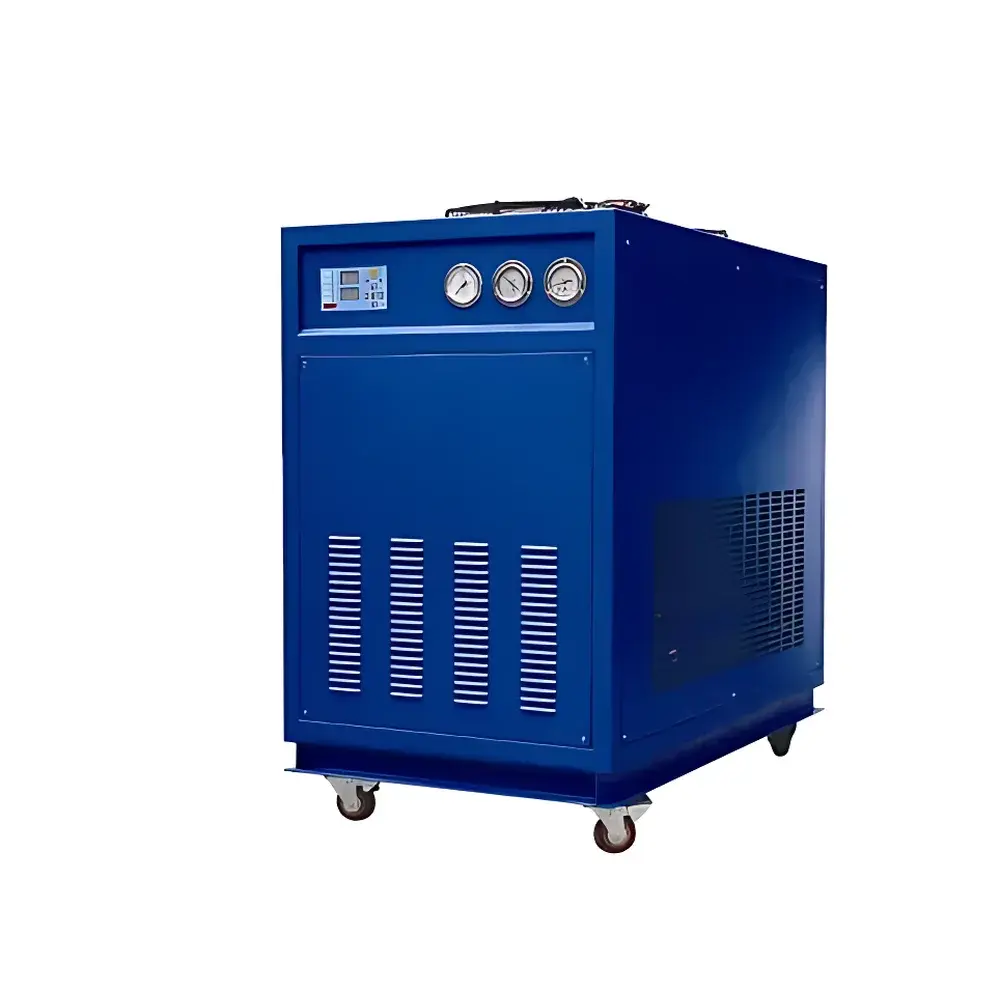
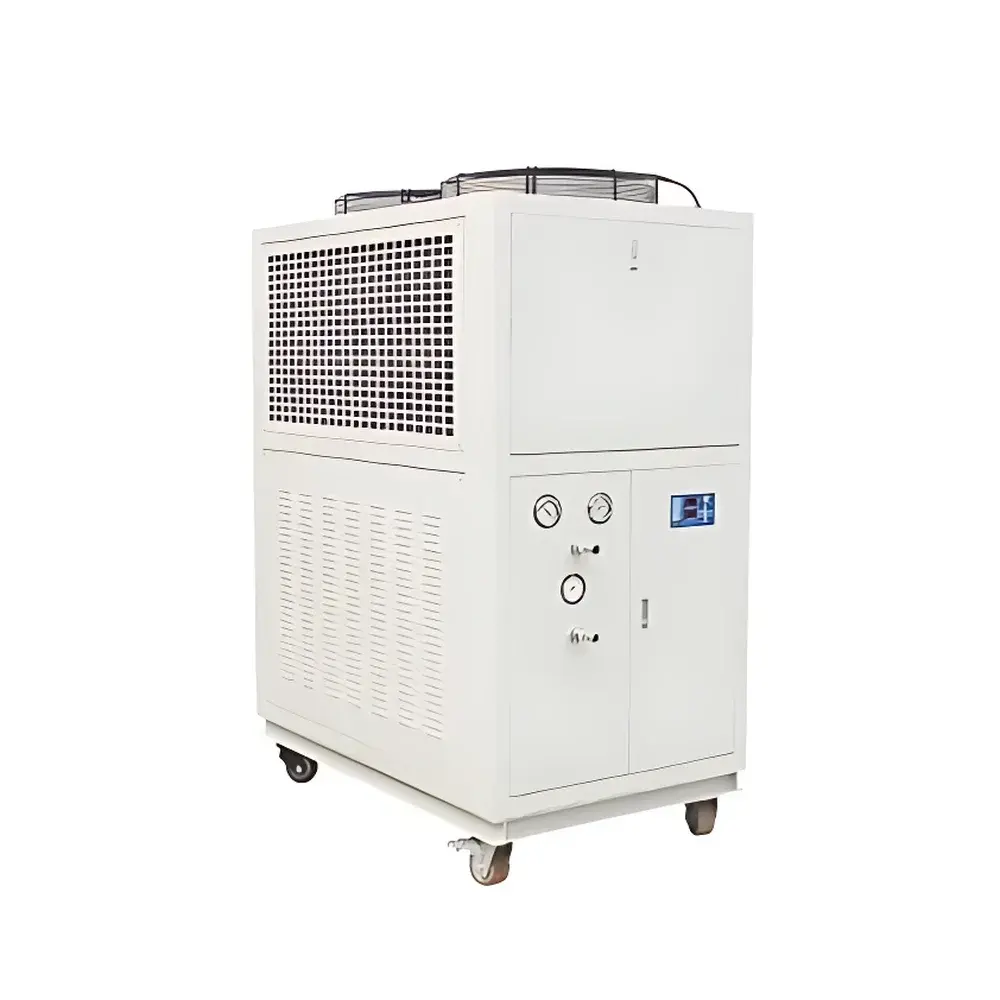
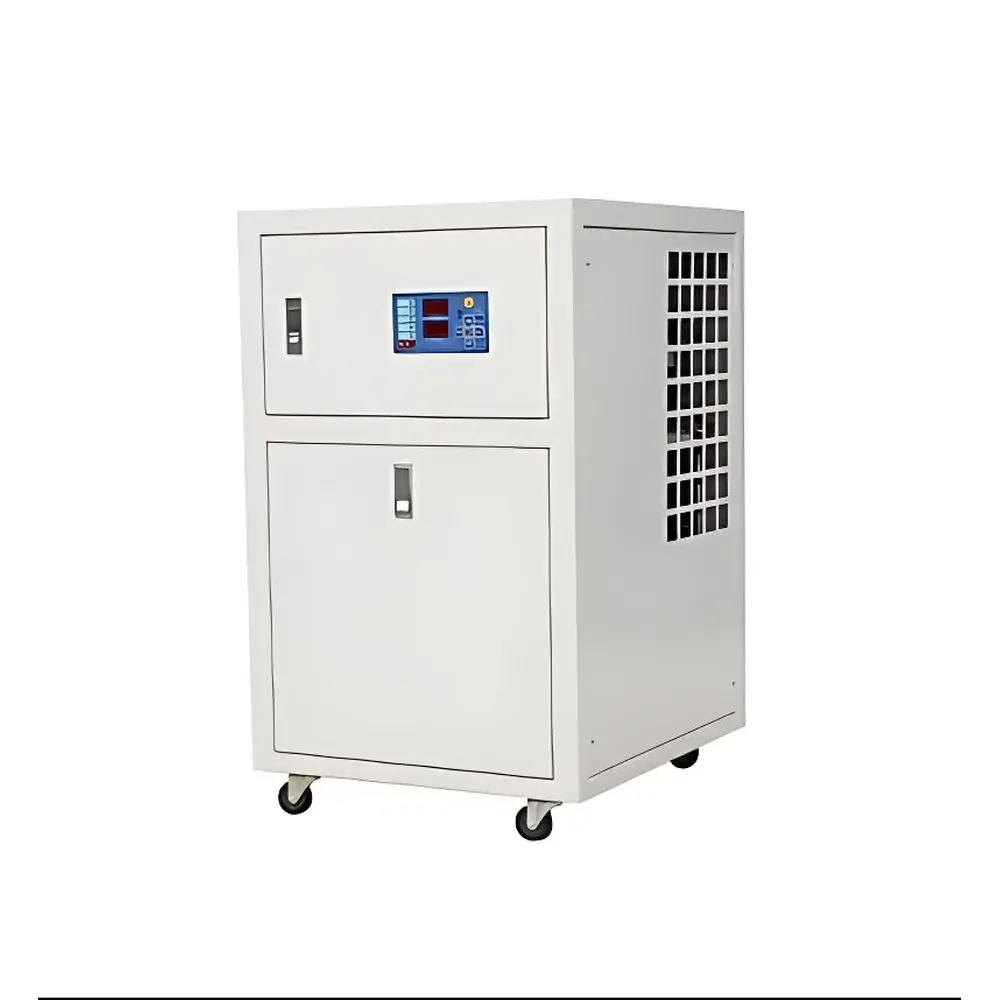
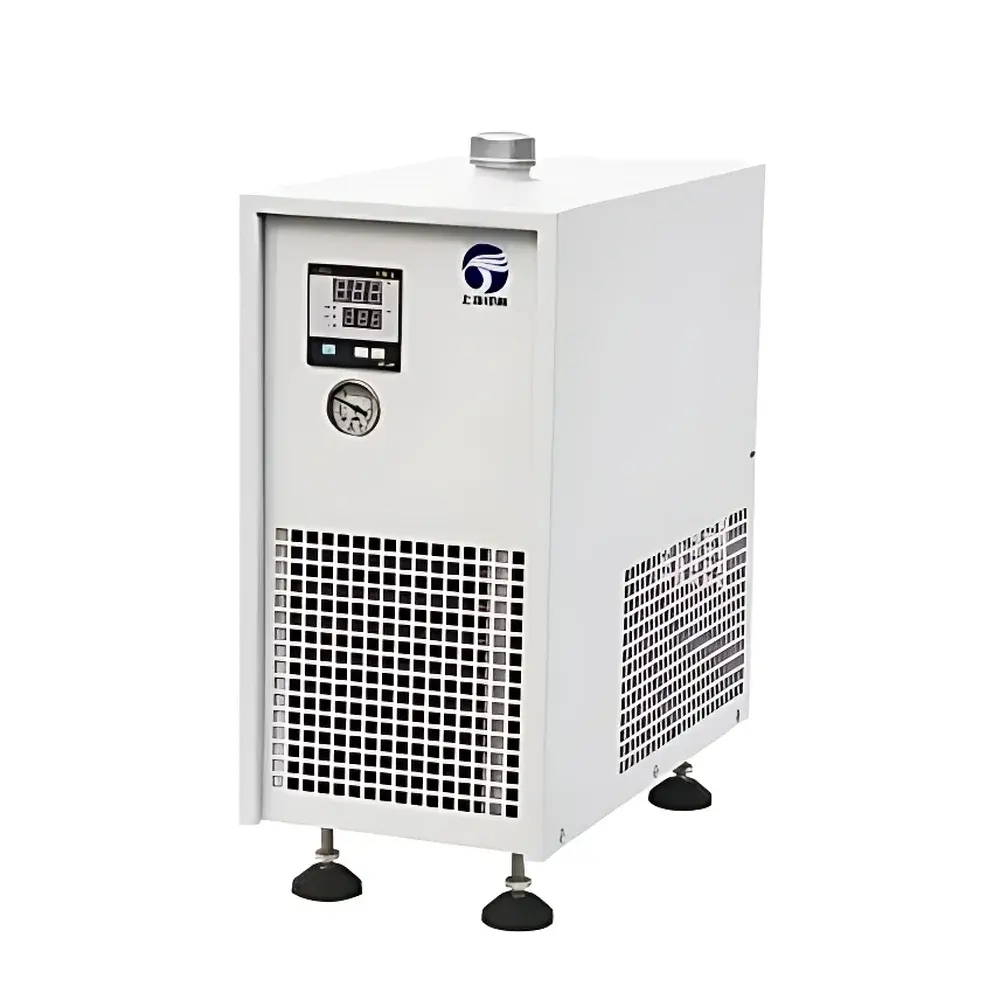
Tianfeng LS-8HP Integrated Circulating Chiller
| Brand | Tianfeng |
|---|---|
| Origin | Shanghai, China |
| Manufacturer Type | Direct Manufacturer |
| Equipment Type | Integrated Circulating Chiller |
| Cooling Method | Water-Cooled |
| Refrigeration Capacity | 24.9 kW (21,414 kcal/h) |
| Temperature Control Range | 5–30 °C (Freezing Water Outlet: 7 °C @ Inlet 12 °C) |
| Temperature Stability | ±0.3 °C |
| Circulating Pump Pressure | 0–2 kgf/cm² |
| Circulating Flow Rate | 0–60 L/min |
| Reservoir Volume | 180 L |
| Input Power | 7.15 kW |
| Power Supply | 220 V, 50 Hz |
| Dimensions (L×W×H) | 1350 × 800 × 1580 mm |
| Compressor | High-Efficiency Scroll Compressor |
| Safety Protections | Compressor Overheat Protection, High/Low Pressure Switches, Overcurrent Protection, Overtemperature Alarm |
| Construction | Stainless Steel Reservoir & Pump |
| Controller | Industrial-Grade PID Temperature Controller (Optional RKC Japan Unit) |
| Certifications | ISO 9001:2000 Certified |
Overview
The Tianfeng LS-8HP Integrated Circulating Chiller is a precision-engineered refrigeration system designed for stable, continuous thermal management of laboratory and industrial instrumentation requiring precise coolant temperature control. Operating on the vapor-compression refrigeration cycle, it delivers consistent cooling capacity via a closed-loop water/glycol circulation system—ideal for applications demanding tight thermal regulation, low noise operation, and long-term reliability. Unlike open-bath chillers or air-cooled units, this water-cooled chiller maintains high efficiency under variable ambient conditions by rejecting heat through an external cooling tower or dry cooler (not included), minimizing thermal drift during extended operation. Its compact integrated architecture eliminates the need for separate condenser units or complex plumbing, making it suitable for installation in constrained laboratory spaces, analytical instrument rooms, and cleanroom-adjacent support areas.
Key Features
- High-efficiency scroll compressor from European OEM suppliers, delivering stable refrigeration output with low mechanical vibration and extended service life
- Stainless steel reservoir (180 L capacity) and corrosion-resistant centrifugal pump engineered for compatibility with deionized water, glycol-water mixtures, and mild chemical coolants
- Dual-mode temperature control: fixed-setpoint mode for static thermal stabilization and adaptive PID mode for dynamic load compensation (e.g., pulsed laser sources or intermittent plasma excitation)
- Digital LED interface with real-time display of outlet temperature, flow rate, system pressure, and fault codes; supports RS485 Modbus RTU communication for integration into centralized lab monitoring systems
- Comprehensive safety architecture including high/low refrigerant pressure switches, compressor winding overtemperature sensors, phase-loss detection, and automatic shutdown with latched alarm status
- UL-listed electrical components (Siemens, Schneider, Omron) and IP54-rated control cabinet compliant with IEC 61000-6-2/6-4 electromagnetic compatibility standards
- Factory-calibrated temperature sensor (PT100 Class B, ±0.15 °C accuracy at 25 °C) traceable to NIST-equivalent national metrology institutes
Sample Compatibility & Compliance
The LS-8HP chiller is validated for continuous-duty operation with analytical instruments sensitive to thermal fluctuation—including graphite furnace atomic absorption spectrometers (GFAAS), inductively coupled plasma optical emission spectrometers (ICP-OES), inductively coupled plasma mass spectrometers (ICP-MS), X-ray fluorescence (XRF) analyzers, X-ray diffractometers (XRD), scanning electron microscopes (SEM), and transmission electron microscopes (TEM). Its temperature stability (±0.3 °C) meets ASTM E2917-22 requirements for thermal control systems used in spectroscopic calibration protocols. The unit complies with ISO 9001:2000 quality management standards and incorporates design elements aligned with GLP and GMP environmental control guidelines—particularly for laboratories performing method validation under USP , ISO/IEC 17025, or FDA 21 CFR Part 11–governed data integrity frameworks. All wetted surfaces are electropolished stainless steel (AISI 316), ensuring resistance to microbial growth and compatibility with cleaning-in-place (CIP) procedures.
Software & Data Management
While the base unit operates via embedded firmware without proprietary software dependency, optional Modbus RTU integration enables bidirectional communication with laboratory information management systems (LIMS) or building automation platforms (BAS). Temperature setpoints, real-time outlet readings, pump status, and alarm logs can be polled at user-defined intervals (1–60 s). For regulated environments, optional audit-trail-enabled controllers (RKC FP93 series) provide time-stamped event logging—including operator ID, parameter changes, and manual override actions—fully compliant with FDA 21 CFR Part 11 electronic record requirements. Data export is supported via CSV over USB or serial interface, eliminating vendor lock-in and enabling direct ingestion into MATLAB, Python pandas, or LabVIEW-based analysis pipelines.
Applications
This chiller serves as a critical thermal management subsystem across multiple domains: in elemental analysis labs, it stabilizes plasma torch temperatures in ICP systems to reduce spectral drift and improve detection limits; in materials characterization facilities, it maintains detector cold-finger temperatures in XRD and SEM systems to minimize thermal noise and preserve spatial resolution; in laser-based instrumentation (e.g., LIBS, Raman spectrometers), it prevents diode wavelength shift and power degradation caused by junction heating. Beyond analytical use, it supports controlled cooling of vacuum chamber shrouds, RF amplifier heatsinks, and high-speed spindle bearings in metrology-grade CNC systems—ensuring dimensional repeatability within ±1 µm over 8-hour shifts. Its 24.9 kW capacity also accommodates multi-instrument manifold configurations when deployed with flow-splitting manifolds and individual flow meters per branch.
FAQ
What is the minimum allowable inlet water temperature for stable operation?
The chiller is rated for inlet water temperatures between 5 °C and 30 °C. Operation below 5 °C risks evaporator freeze-up; sustained inlet temperatures above 30 °C degrade COP and may trigger high-pressure cutout.
Can this unit be integrated with a facility’s central cooling water system?
Yes—its water-cooled condenser accepts facility-supplied cooling water at 30–40 °C inlet, with a recommended ΔT of 8–10 °C. A differential pressure regulator and isolation valves are required for safe interconnection.
Is the reservoir compatible with 30% ethylene glycol solutions?
Yes—the stainless steel tank, pump, and internal piping are fully compatible with aqueous glycol mixtures up to 40% concentration for sub-zero operational envelopes.
Does the unit include flow monitoring and low-flow shutdown protection?
Yes—a turbine-type flow sensor provides analog output (4–20 mA) and triggers automatic shutdown if flow falls below 15 L/min for >10 seconds, preventing dry-running damage.
What maintenance intervals are recommended for laboratory-grade operation?
Compressor oil and refrigerant filter-drier replacement every 24 months; annual inspection of condenser water-side scaling and electrical contact resistance; quarterly verification of temperature sensor calibration against a traceable reference standard.



