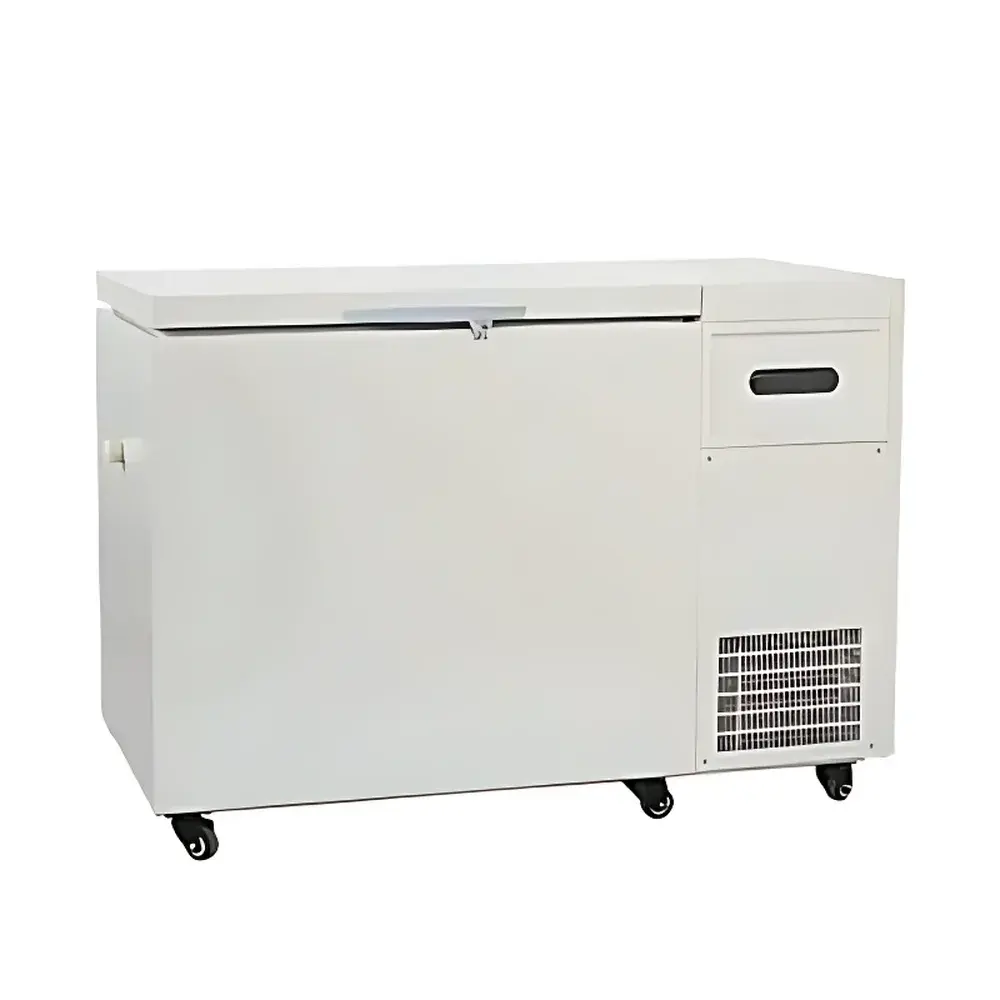
Tianfeng TF-60-458A-WA Ultra-Low Temperature Laboratory Freezer
| Brand | Tianfeng |
|---|---|
| Origin | Shanghai, China |
| Manufacturer Type | Direct Manufacturer |
| Product Category | Domestic |
| Model | TF-60-458A-WA |
| Effective Volume | 458 L |
| Temperature Range | -25 °C to -65 °C |
| Internal Dimensions (mm) | 1380 × 500 × 660 |
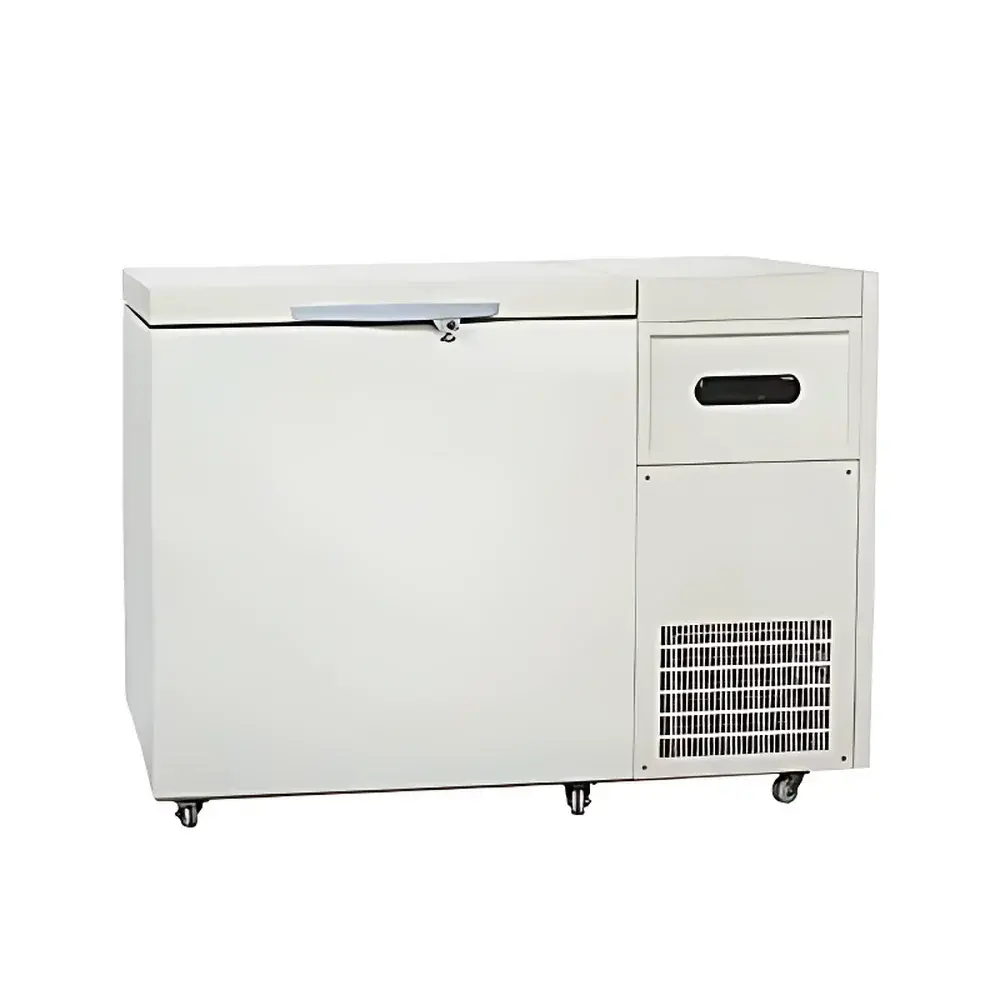
| External Dimensions (mm) | 2110 × 885 × 1095 |
| Power Supply | 220 V / 50 Hz |
| Rated Power | 780 W |
| Noise Level | 57 dB(A) |
| Refrigerant | Eco-friendly non-CFC/HFC blend (R23/R508B or equivalent) |
| Inner Chamber Material | Stainless steel (304) |
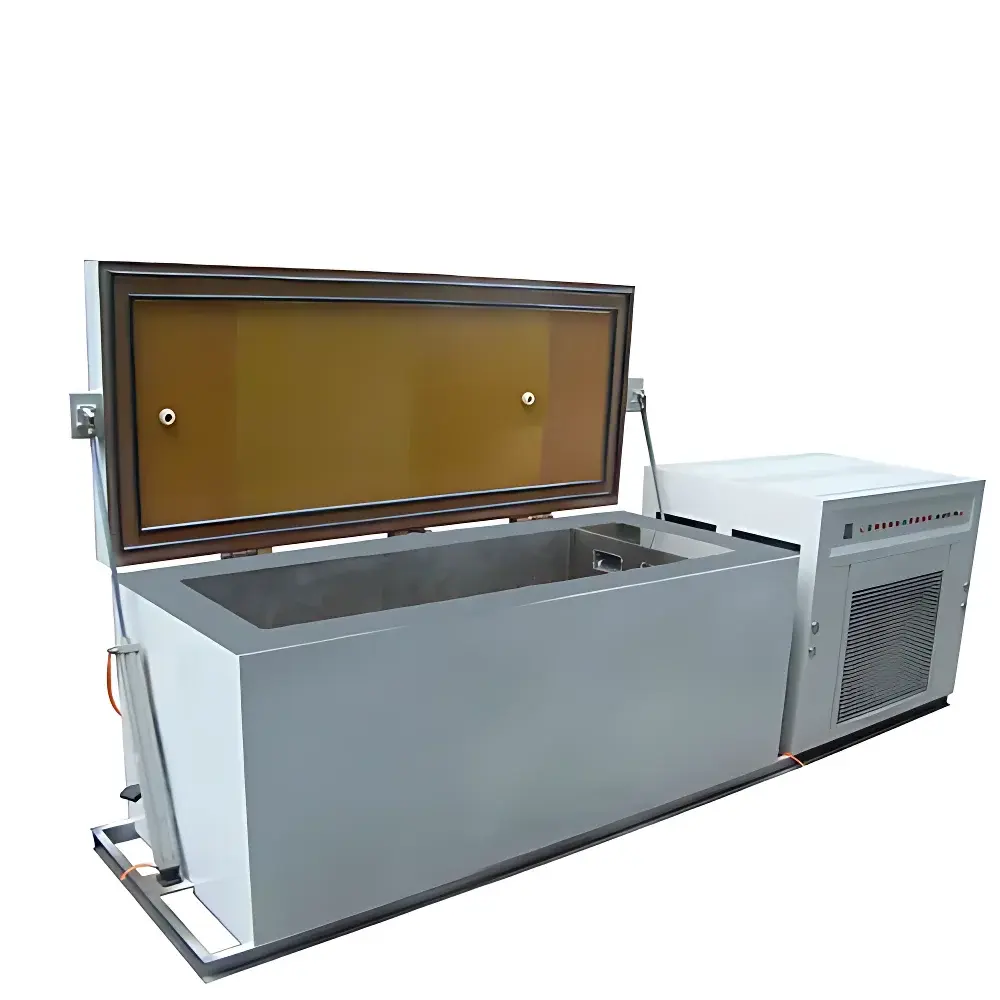
| Door Configuration | Four independent inner doors |
| Cooling Method | Hybrid — partial natural convection + partial forced-air condensation |
| Interface Option | RS-232 (optional) |
| Compliance | ISO 9001:2000 certified manufacturing |
| Safety Features | Dual lock (door + power), adjustable leveling feet, rounded internal corners |
Overview
The Tianfeng TF-60-458A-WA Ultra-Low Temperature Laboratory Freezer is an engineered solution for long-term cryopreservation of biologics, clinical specimens, and temperature-sensitive reagents in regulated research and diagnostic environments. Designed around a dual-stage cascade refrigeration system utilizing environmentally compliant refrigerants (R23/R508B or equivalent), it maintains stable operation across the full range of −25 °C to −65 °C with high thermal uniformity and minimal temperature fluctuation (< ±2 °C at setpoint). Its hybrid heat rejection architecture—combining passive natural convection with active fan-assisted condensation—ensures reliable performance under ambient conditions up to 35 °C and in mechanically challenging laboratory spaces where dust accumulation or spatial constraints limit conventional air-cooled units. The unit complies with ISO 9001:2000 quality management standards throughout design, production, and testing phases, and supports traceability requirements common in GLP and GMP-aligned workflows.
Key Features
- Stainless steel (304) interior chamber and inner doors—corrosion-resistant, non-porous, and compatible with routine decontamination protocols including alcohol-based and quaternary ammonium disinfectants.
- Four independently sealed inner doors minimize cold air loss during frequent access, improving energy efficiency and thermal stability during multi-user operations.
- Rounded internal corners and removable, height-adjustable stainless steel shelving (three tiers) facilitate complete cleaning and reduce microbial retention points—critical for ISO 14644-1 Class 7/8 cleanroom-adjacent applications.
- Hybrid condenser system: 50% natural convection + 50% forced-air cooling ensures continued compressor protection even under partial airflow restriction—a known failure mode in high-dust environments such as pathology labs or industrial R&D facilities.
- Acoustically optimized enclosure achieves ≤57 dB(A) operational noise—meets WHO and EU Directive 2000/14/EC limits for laboratory equipment in shared or adjacent office-lab spaces.
- Integrated dual-lock system (mechanical door lock + master power lock) meets institutional biosafety level (BSL-2/3) access control expectations and aligns with NIH and CDC specimen security guidelines.
- RS-232 serial interface (optional) enables integration into centralized environmental monitoring systems (EMS) for audit-ready temperature logging and alarm forwarding per FDA 21 CFR Part 11 data integrity requirements.
Sample Compatibility & Compliance
The TF-60-458A-WA is validated for storage of primary human tissues (e.g., PBMCs, skin grafts, bone marrow aspirates), viral vectors, monoclonal antibodies, lyophilized enzymes, and reference standards requiring sustained sub-zero stability. It supports compliance with ASTM F2637–22 (Standard Practice for Cryogenic Storage of Biological Materials), ISO 13842:2021 (Medical devices — Requirements for cryopreservation equipment), and ICH Q5C (Quality of Biotechnological Products: Stability Testing of Biotechnological/Biological Products). Its stainless steel construction and smooth internal geometry meet USP analytical instrument qualification criteria for cleanliness verification. Units are supplied with factory calibration certificates traceable to NIM (National Institute of Metrology, China) and include documentation packages suitable for IQ/OQ protocol execution.
Software & Data Management
While the base model operates via analog thermostat and mechanical alarm circuitry, the optional RS-232 interface allows connection to third-party data acquisition platforms (e.g., Siemens Desigo CC, DeltaV, or LabArchives ELN). Users may configure automated temperature logging intervals (1–60 min), threshold-based SMS/email alerts (via external gateway), and CSV export for trend analysis. All digital records generated through connected systems support ALCOA+ principles (Attributable, Legible, Contemporaneous, Original, Accurate, Complete, Consistent, Enduring, Available) when deployed within validated IT infrastructure. No proprietary software is required; configuration uses standard ASCII command sets compliant with Modbus RTU framing.
Applications
This freezer serves core functions across academic, clinical, and industrial life science domains: long-term archiving of genomic DNA/RNA libraries in biobanks; stabilization of thermolabile assay reagents (e.g., restriction enzymes, Taq polymerases); cryopreservation of stem cell lines under cGMP Annex 1 Annex A conditions; cold-chain holding for vaccine distribution validation studies; and low-temperature storage of calibration standards for mass spectrometry and HPLC systems. Its dimensional profile (2110 mm height) accommodates standard laboratory doorways and elevator thresholds without disassembly—reducing installation risk in retrofit facilities. Field deployment includes blood banks (AABB-accredited), contract research organizations (CROs), pharmaceutical QC labs, and marine bioprospecting vessels requiring −65 °C hold capacity for deep-sea microbial isolates.
FAQ
What is the recommended maintenance schedule for optimal performance?
Perform visual inspection of condenser coils and dust filter every 30 days; clean with dry compressed air or soft brush. Verify door gasket integrity quarterly using the “dollar bill test.” Calibrate temperature sensors annually using NIST-traceable dry-block calibrators.
Can this unit be integrated into a facility-wide environmental monitoring system (EMS)?
Yes—via optional RS-232 interface using standard Modbus RTU protocol. Requires external gateway for TCP/IP translation if connecting to cloud-based EMS platforms.
Is the unit suitable for storing infectious agents classified under BSL-3 containment?
The physical design (dual-lock, stainless steel, sealed inner doors) supports BSL-3 procedural requirements, but final approval must be granted by the institution’s Biosafety Officer based on site-specific risk assessment.
Does the freezer comply with energy efficiency regulations such as EU Ecodesign Directive 2019/2023?
It meets Tier 2 efficiency benchmarks for ultra-low temperature freezers under GB/T 20154–2018 (Chinese national standard), which references EN 60068-2-1 and EN 60068-2-2 test methods. Full EU Ecodesign alignment requires optional variable-speed compressor upgrade.
What documentation is provided for regulatory submissions (e.g., FDA IND, CE technical file)?
Standard package includes Declaration of Conformity (DoC), Factory Calibration Report, ISO 9001:2000 Certificate, Electrical Safety Test Report (IEC 61010-1), and Material Declarations (RoHS/REACH). Customized URS/IQ/OQ templates available upon request.