
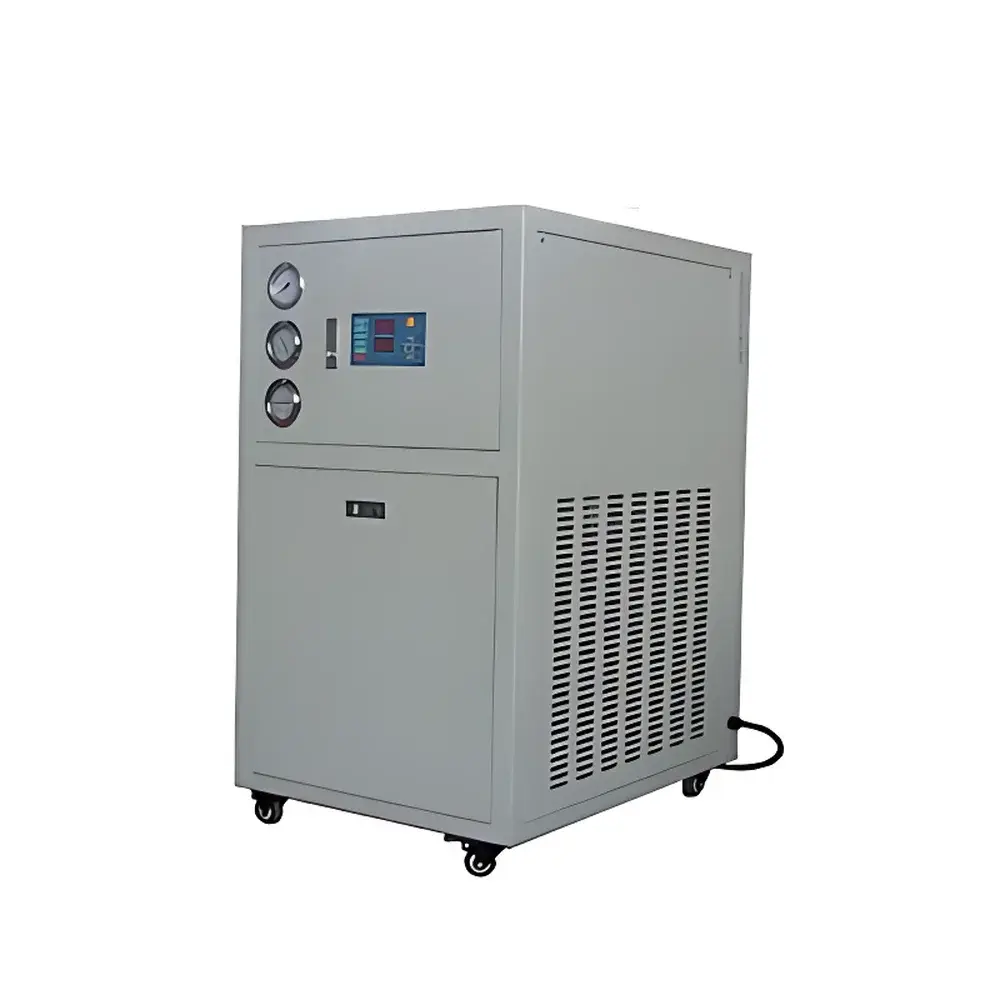
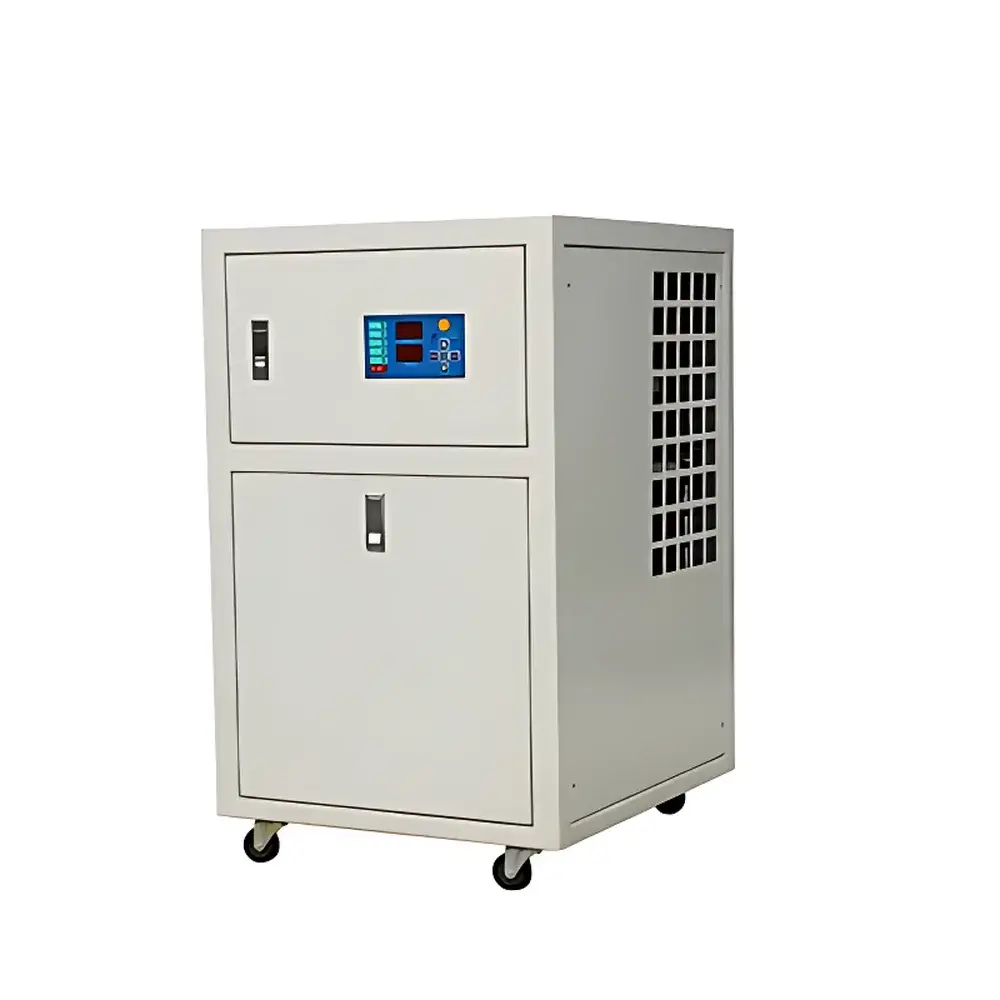
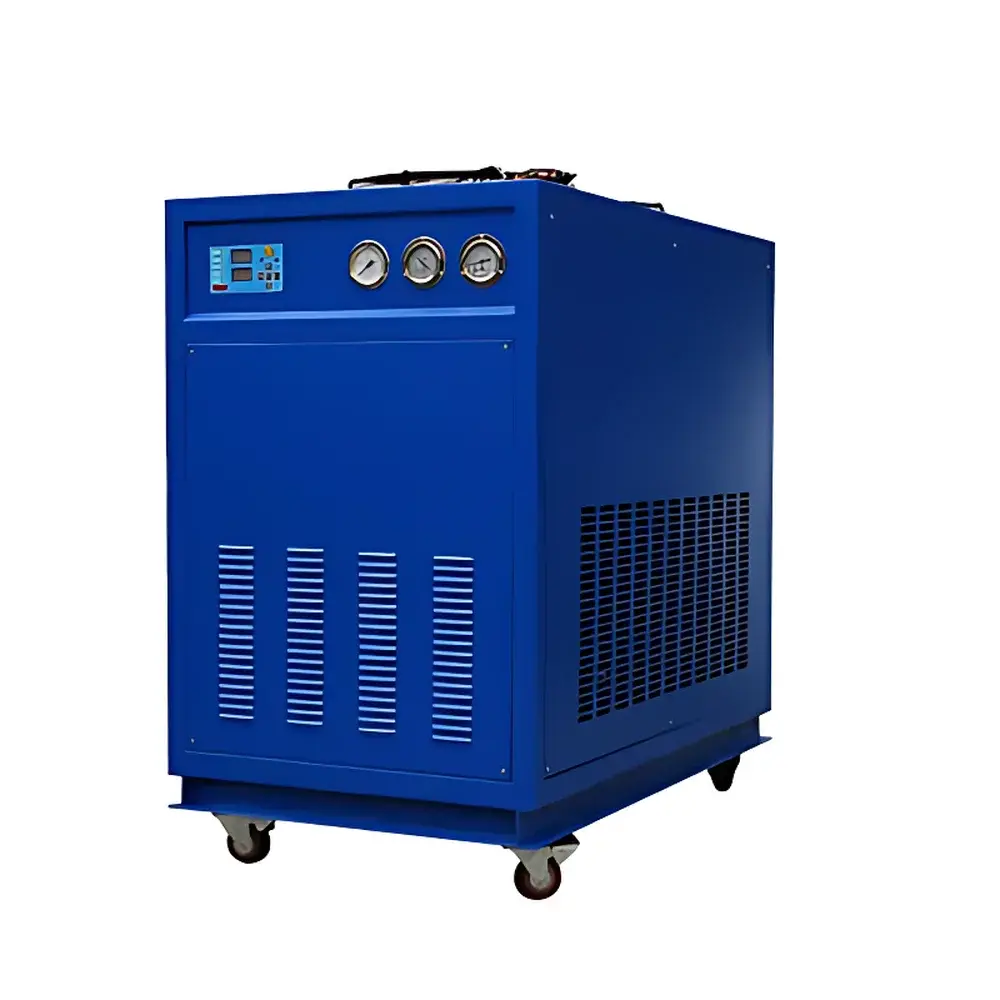
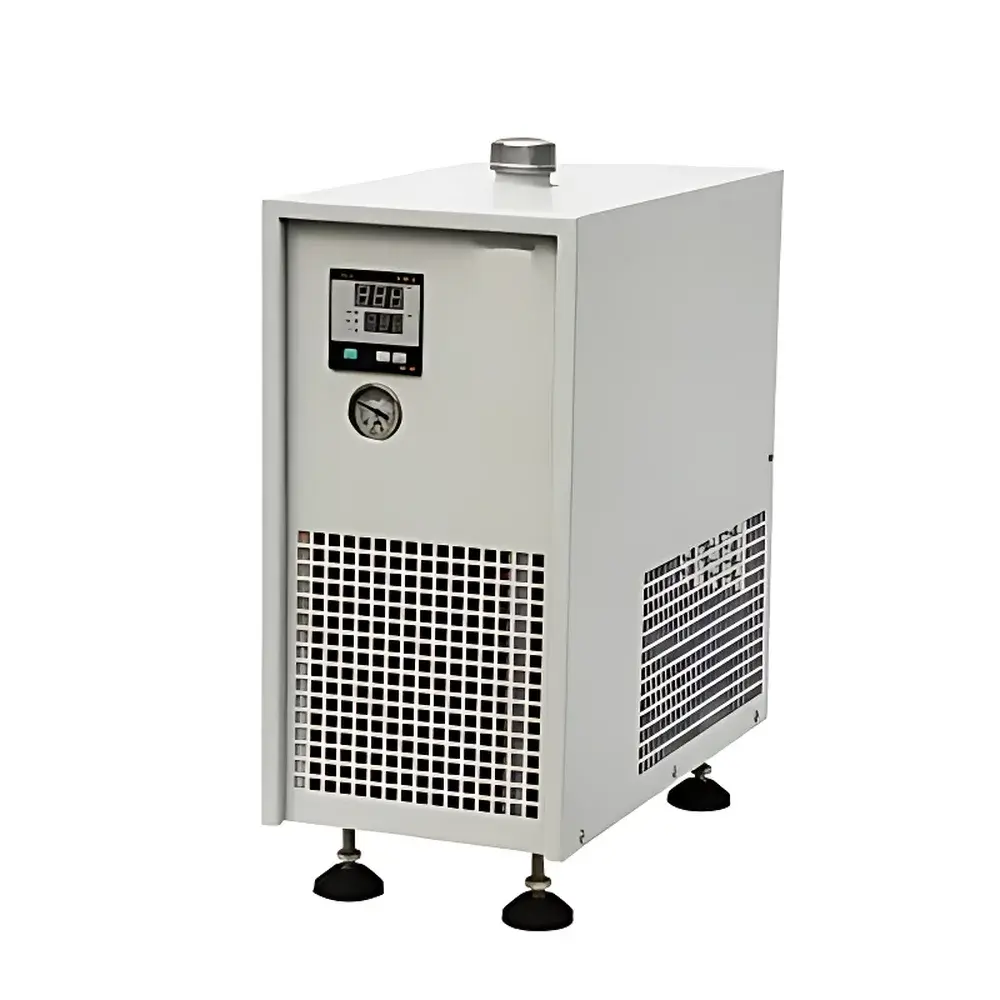
Tianfeng TF-LS-3500W Integrated Circulating Chiller
| Brand | Tianfeng |
|---|---|
| Origin | Shanghai, China |
| Manufacturer Type | Direct Manufacturer |
| Instrument Type | Integrated Circulating Chiller |
| Cooling Method | Water-Cooled |
| Temperature Control Range | 0–40 °C |
| Refrigeration Capacity | 300–9000 W |
| Temperature Stability | ±0.1 °C |
| Circulating Pump Pressure | 2.0 bar |
| Circulating Flow Rate | 38 L/min |
| Reservoir Volume | 5–550 L |
| Operating Mode | Continuous Duty |
| Compressor Type | Scroll Compressor |
| Safety Protections | Compressor Overheat Protection, High/Low Pressure Switches, Overcurrent Protection, Overtemperature Alarm |
| Power Supply | 220 V, 50 Hz |
| Dimensions (L×W×H) | 800×600×1065 mm |
| Weight | Approx. 125 kg |
| Construction | Stainless Steel Reservoir & Pump |
| Controller | PID-Based Digital Temperature Controller (Optional RKC Unit Available) |
| Compliance | ISO 9001:2000 Certified Manufacturing Process |
Overview
The Tianfeng TF-LS-3500W Integrated Circulating Chiller is an engineered thermal management solution designed for precision temperature stabilization of heat-generating laboratory and industrial equipment. It operates on a closed-loop refrigeration cycle utilizing a high-efficiency scroll compressor, copper-aluminum finned condenser with water-cooled heat rejection, and a thermostatically regulated circulation system. The chiller maintains stable coolant temperatures between 0 °C and 40 °C with a tight stability of ±0.1 °C—critical for applications demanding thermal consistency over extended continuous operation. Unlike air-cooled alternatives, its water-cooled architecture enables higher heat dissipation efficiency in confined or temperature-sensitive environments, making it particularly suitable for integration with analytical instrumentation where ambient noise, vibration, or thermal drift must be minimized.
Key Features
- Integrated design with compact footprint (800 × 600 × 1065 mm) optimized for laboratory benchtop or utility space installation
- Stainless steel reservoir and pump housing ensure corrosion resistance and long-term fluid compatibility with deionized water, ethylene glycol/water mixtures, and other common heat transfer fluids
- Digital PID temperature controller with real-time display of setpoint, actual outlet temperature, and system status; optional upgrade to RKC programmable controller for enhanced ramp-soak profiling and alarm logging
- High-flow, low-pulsation centrifugal circulation pump delivering up to 38 L/min at 2.0 bar pressure—sufficient to support multi-instrument distribution manifolds or high-pressure cooling jackets
- Comprehensive safety suite including high/low refrigerant pressure switches, compressor winding overtemperature detection, phase-loss monitoring, and emergency thermal cutoff
- Energy-efficient scroll compressor with low acoustic emission (<65 dB(A) at 1 m), compliant with EU ErP Directive requirements for sound power level reporting
- Modular internal layout facilitating field serviceability: accessible refrigerant service valves, removable condenser coil, and tool-free electrical panel access
Sample Compatibility & Compliance
The TF-LS-3500W is routinely deployed as a thermal interface for high-precision analytical systems requiring active cooling, including graphite furnace atomic absorption spectrometers (GFAAS), inductively coupled plasma optical emission spectrometers (ICP-OES), ICP-mass spectrometers (ICP-MS), X-ray fluorescence (XRF) and X-ray diffraction (XRD) systems, scanning electron microscopes (SEM), and transmission electron microscopes (TEM). Its flow and pressure specifications meet the inlet requirements of most OEM instrument cooling interfaces per ASTM E2912-21 (Standard Guide for Selection of Laboratory Chillers). All electrical components conform to IEC 61000-6-3 (EMC Emission Standard) and IEC 61000-6-2 (Immunity Standard). The unit is manufactured under an ISO 9001:2000–certified quality management system, with full traceability of critical components—including expansion valves and solenoid valves sourced from European suppliers—and documented calibration records for factory-set temperature sensors (PT100 Class B, ±0.3 °C tolerance).
Software & Data Management
While the base model features standalone hardware control, the optional RKC controller supports RS-485 Modbus RTU communication for integration into centralized laboratory infrastructure management platforms. This enables remote setpoint adjustment, real-time temperature and flow telemetry, event-triggered email/SNMP alerts, and audit-trail-capable data logging aligned with GLP and FDA 21 CFR Part 11 principles when paired with validated third-party SCADA software. Local data retention includes 30 days of minute-interval temperature history stored in non-volatile memory, accessible via front-panel navigation or USB export. No proprietary cloud services or vendor-hosted platforms are required—ensuring full data sovereignty and compliance with institutional IT security policies.
Applications
This chiller serves as a thermally stable heat sink across multiple domains: In analytical laboratories, it stabilizes plasma torches, detector housings, and X-ray tube anodes to minimize spectral drift and improve signal-to-noise ratio. In materials science facilities, it regulates sample-stage temperatures during in-situ TEM experiments or controls laser diode junction temperatures in ultrafast spectroscopy setups. Industrial users apply it to maintain die temperature in plastic injection molding, stabilize hydraulic oil in precision machining centers, and manage vacuum chamber wall temperature in PVD/CVD thin-film deposition systems. Its continuous-duty rating and robust protection logic make it appropriate for unattended overnight operation in regulated environments—provided local facility water supply meets ASHRAE Guideline 12-2020 microbiological control standards for closed-loop cooling systems.
FAQ
What is the recommended coolant composition for long-term use?
Deionized water is standard; for sub-10 °C operation or freeze protection, a 30% v/v ethylene glycol–water mixture is approved—verified for compatibility with stainless steel wetted parts and silicone-based seals.
Can the chiller be integrated into a building management system (BMS)?
Yes, via optional Modbus RTU interface; discrete I/O terminals also support dry-contact alarm outputs and remote start/stop commands compatible with Siemens Desigo, Honeywell Experion, and Schneider EcoStruxure platforms.
Is validation documentation available for GxP-regulated labs?
Factory-assembled IQ/OQ protocols are provided upon request, including temperature mapping reports (per ISO 14644-3 Annex B), sensor calibration certificates (NIST-traceable), and refrigerant charge verification logs.
What maintenance intervals are recommended?
Condenser cleaning every 6 months (or per local water hardness), refrigerant circuit leak check annually, and controller firmware update verification during biannual preventive maintenance visits.
Does the unit comply with RoHS and REACH directives?
Yes—full material declarations and SVHC screening reports are included in the technical dossier supplied with each unit.



