
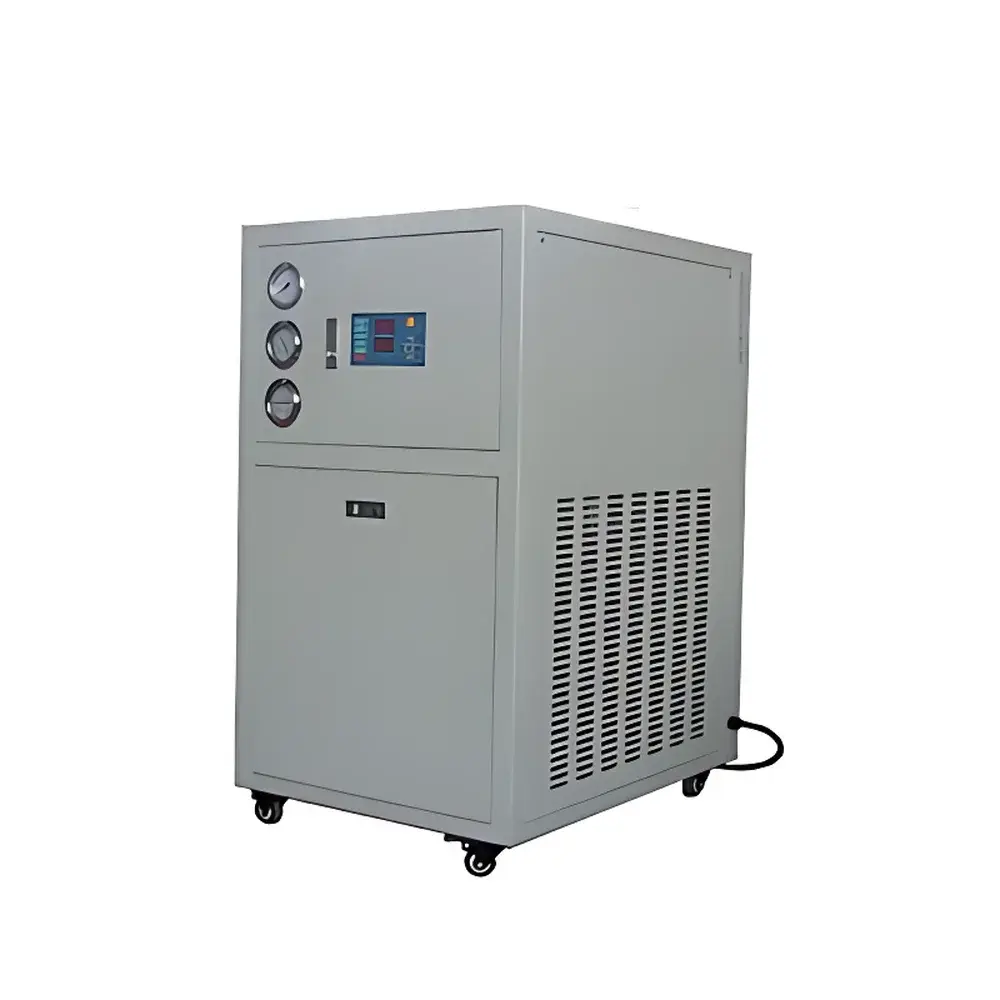
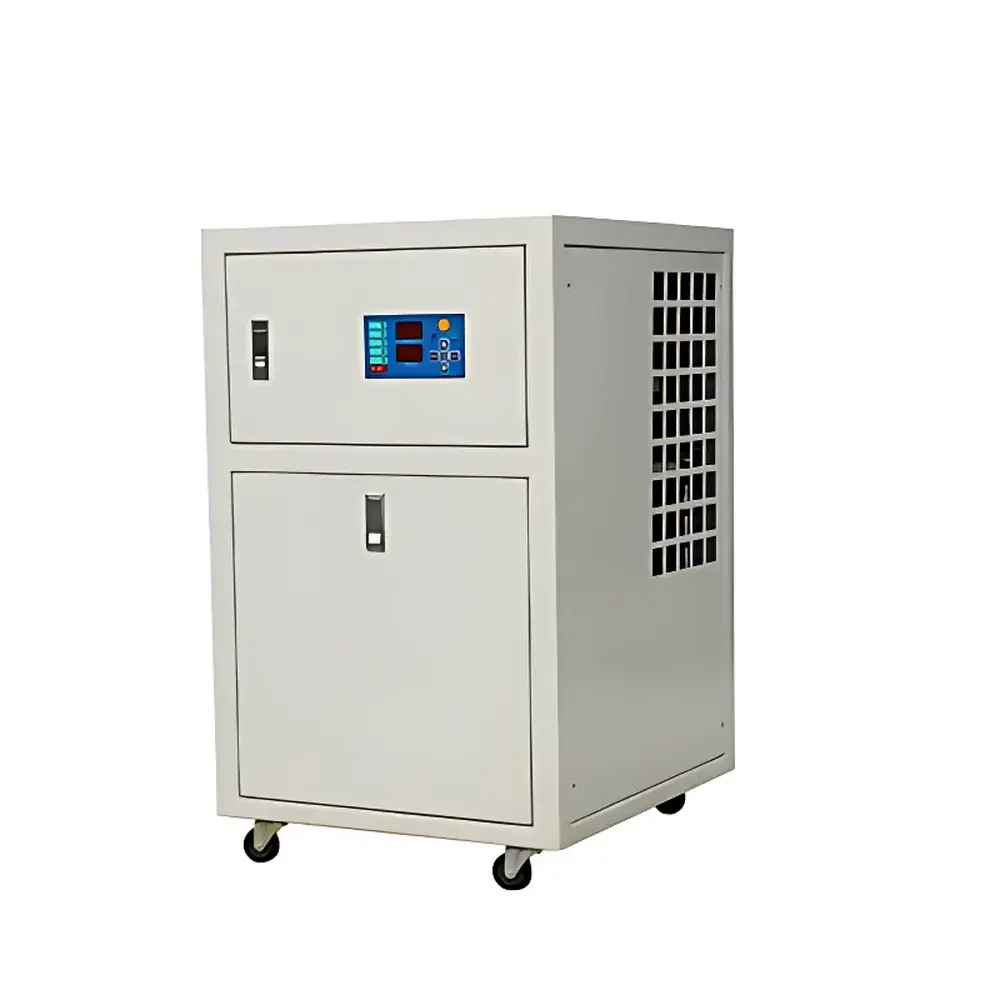
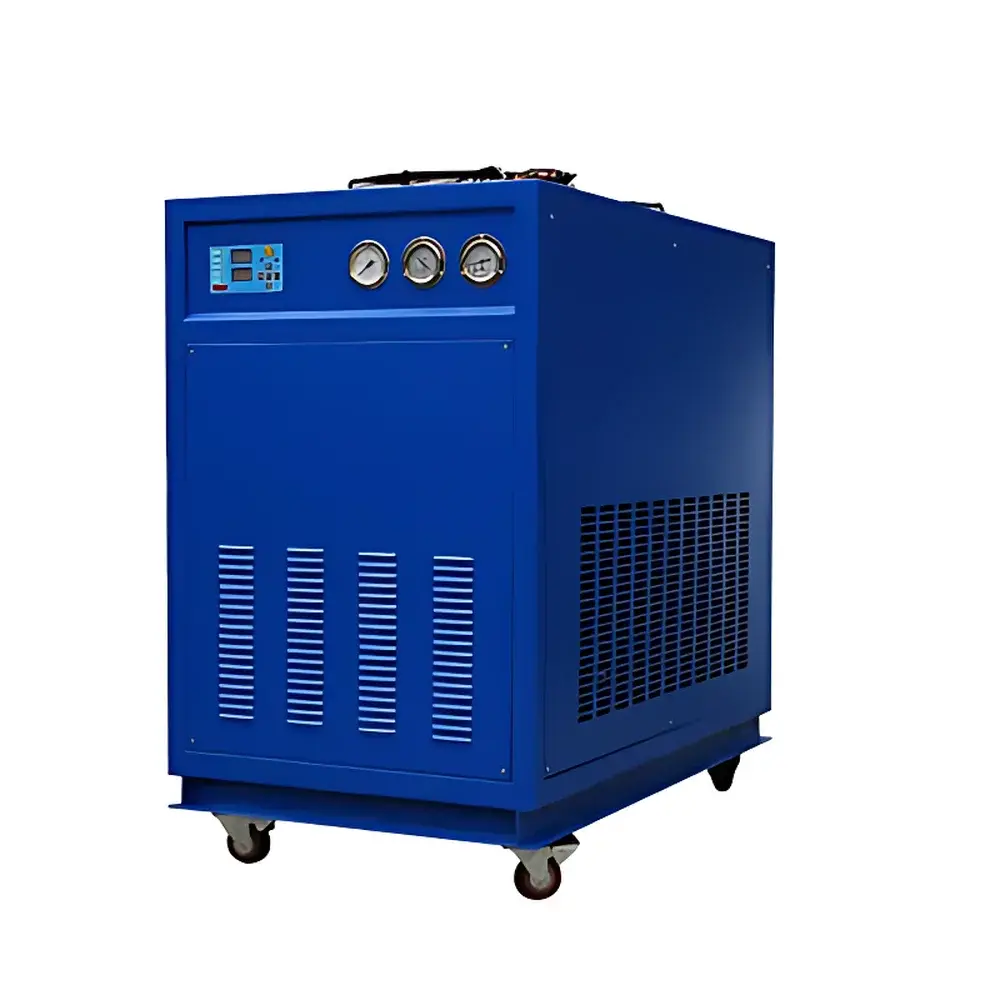
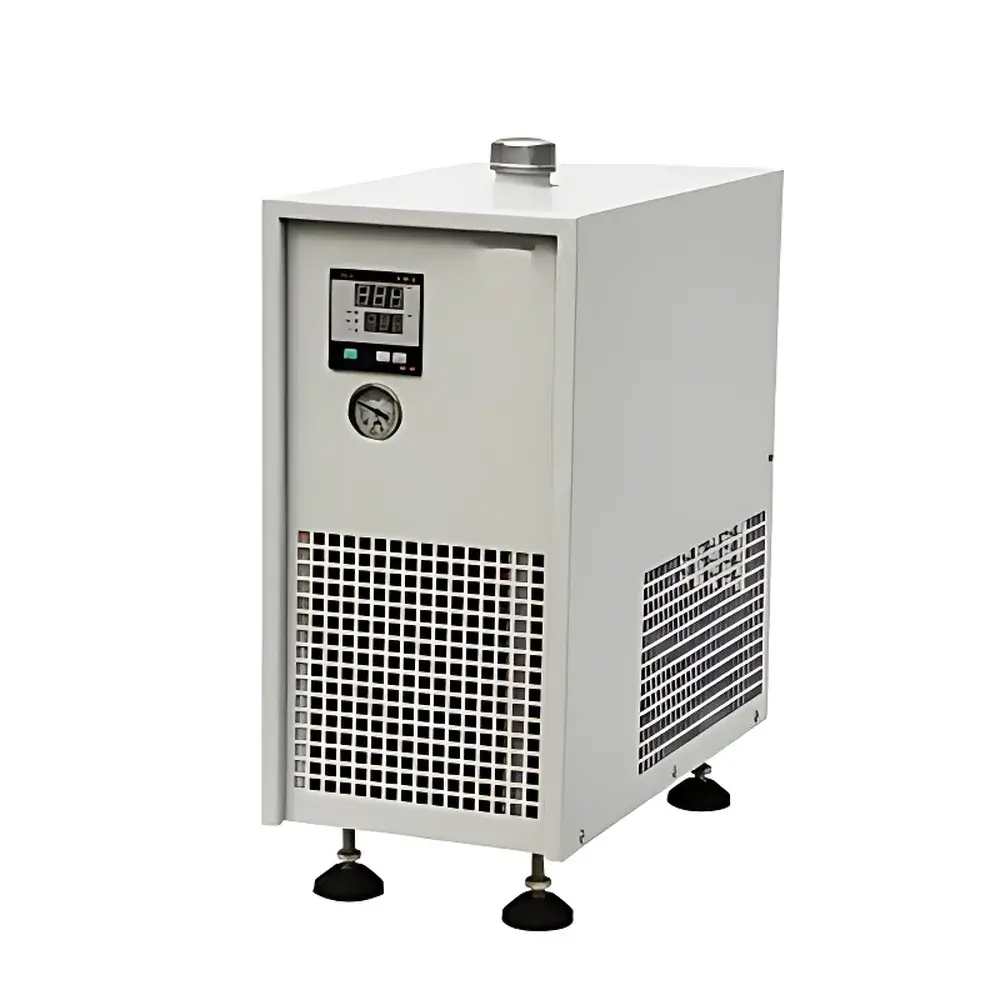
Tianfeng TF-LS-3KW Air-Cooled Circulating Chiller
| Brand | Tianfeng |
|---|---|
| Origin | Shanghai, China |
| Manufacturer Type | Direct Manufacturer |
| Instrument Type | Integrated Air-Cooled Circulating Chiller |
| Cooling Capacity | 3.0 kW (2580 kcal/h) |
| Water Tank Volume | 45 L |
| Circulating Pump Flow Rate | 0–60 L/min |
| Circulating Pump Pressure | 0–2 kgf/cm² |
| Input Power | 1.8 kW |
| Temperature Control Range | 5–30 °C |
| Temperature Stability | ±0.3 °C (typical) |
| Power Supply | 220 V, 50 Hz |
| Dimensions (L×W×H) | 800 × 600 × 1065 mm |
| Compressor Type | Scroll Compressor |
| Safety Protections | Compressor overheat, overcurrent, high/low pressure, and overtemperature protection |
| Construction | Stainless steel water tank and pump |
| Control System | Digital PID temperature controller (standard Chinese unit |
| Certifications | ISO 9001:2000 compliant |
Overview
The Tianfeng TF-LS-3KW Air-Cooled Circulating Chiller is an integrated, precision-engineered thermal management system designed for continuous, stable cooling of laboratory and industrial instrumentation requiring precise temperature regulation. Unlike water-cooled chillers that depend on external cooling towers or facility-supplied chilled water, this unit employs a self-contained air-cooled condensing system—making it ideal for laboratories with limited infrastructure, mobile setups, or locations where water supply is restricted or subject to quality variability. Its core thermodynamic architecture utilizes a high-efficiency scroll compressor, thermostatic expansion valve (TEV), and copper-aluminum finned condenser optimized for ambient air dissipation at ≤35 °C ambient conditions. The chiller operates on a closed-loop recirculation principle: chilled water is delivered to the connected instrument via a stainless-steel centrifugal pump, absorbs heat from critical components (e.g., laser diodes, X-ray tubes, plasma sources, or analytical detectors), and returns to the chiller’s evaporator for recooling. This design ensures consistent thermal load balancing, minimizes thermal drift in sensitive measurements, and supports uninterrupted operation for up to 24/7 duty cycles under rated conditions.
Key Features
- Integrated air-cooled architecture eliminates dependency on external cooling water infrastructure
- High-reliability scroll compressor with low vibration, extended service life, and stable refrigerant mass flow
- Digital PID temperature controller with real-time display of outlet water temperature (range: 5–30 °C, resolution: 0.1 °C)
- Stainless steel water reservoir (45 L capacity) and corrosion-resistant pump housing ensure long-term fluid integrity and compatibility with deionized or inhibited coolant solutions
- Adjustable flow rate (0–60 L/min) and pressure (0–2 kgf/cm²) via calibrated bypass and impeller control, enabling optimization for varying hydraulic resistance across instruments
- Comprehensive safety suite: compressor overheat protection, high/low refrigerant pressure cutoffs, motor overcurrent detection, and water temperature over-limit alarm
- Robust electrical architecture featuring CE-compliant contactors, overload relays, and control logic modules from Siemens, Schneider, and Omron
- Low-noise operation (<65 dB(A) at 1 m) achieved through acoustic insulation, anti-vibration mounts, and optimized fan blade geometry
- Compact footprint (800 × 600 × 1065 mm) and castor-mounted base support flexible placement within constrained lab environments
Sample Compatibility & Compliance
The TF-LS-3KW is engineered to interface with a broad spectrum of analytical, materials science, and life science instrumentation requiring active liquid cooling—including graphite furnace atomic absorption spectrometers (GFAAS), inductively coupled plasma optical emission spectrometers (ICP-OES), ICP-mass spectrometers (ICP-MS), X-ray fluorescence (XRF) analyzers, X-ray diffractometers (XRD), scanning electron microscopes (SEM), and transmission electron microscopes (TEM). It also supports industrial applications such as laser marking, cutting, and welding systems, as well as CNC spindles and vacuum deposition equipment. All wetted components comply with ASTM A240 Type 304 stainless steel specifications. The unit meets electromagnetic compatibility (EMC) requirements per IEC 61000-6-3 and safety standards per IEC 61000-6-2. While not FDA 21 CFR Part 11 certified out-of-the-box, its digital controller supports audit-trail-ready configurations when paired with validated data acquisition software—facilitating GLP/GMP-aligned thermal validation protocols in pharmaceutical and clinical research settings.
Software & Data Management
The standard controller provides local setpoint adjustment, real-time temperature readout, and status indicators for operational faults (e.g., low-flow, high-temperature, or compressor lockout). Optional RS485 Modbus RTU or Ethernet TCP/IP interfaces enable integration into centralized building management systems (BMS) or laboratory information management systems (LIMS). When configured with third-party SCADA platforms (e.g., Ignition, LabVIEW, or Siemens Desigo), users can log time-stamped temperature, flow, and pressure data at configurable intervals, generate trend reports, trigger automated shutdown sequences upon thermal excursion, and export CSV-formatted records for regulatory review. Firmware updates are performed via USB port without hardware modification, ensuring long-term adaptability to evolving compliance frameworks.
Applications
This chiller delivers thermally stable coolant to instruments where even minor temperature fluctuations compromise measurement repeatability or component longevity. In elemental analysis labs, it maintains optimal detector and plasma source temperatures—reducing spectral noise and drift in ICP-MS quantitation. For electron microscopy, it stabilizes filament and detector temperatures, minimizing thermal lensing effects and improving spatial resolution consistency. In laser-based manufacturing and metrology, it mitigates thermal expansion in optical mounts and focusing optics, preserving beam alignment accuracy over extended runs. Within polymer and materials testing, it enables controlled mold cooling during rheological characterization or DSC sample preparation—ensuring reproducible crystallization kinetics. Its modular design also supports cascade cooling configurations for ultra-low-temperature applications when paired with secondary cryogenic circulators.
FAQ
What is the recommended maximum return water temperature?
For optimal compressor longevity and system efficiency, the return water temperature should not exceed 40 °C. Sustained inlet temperatures above this threshold increase discharge pressure and accelerate refrigerant oil degradation.
Can this chiller operate continuously at full load?
Yes—the unit is rated for continuous duty (IEC 60034-1 S1 rating) provided ambient temperature remains ≤35 °C and airflow around the condenser is unobstructed.
Is deionized water required for use with analytical instruments?
While tap water may be used for non-critical applications, deionized or inhibited glycol-water mixtures (≤30% concentration) are strongly recommended for GFAAS, ICP, and SEM cooling loops to prevent scaling, galvanic corrosion, or particulate generation.
Does the chiller support remote monitoring and alarms?
With optional communication modules, real-time status, fault codes, and analog outputs (4–20 mA) for temperature and flow can be transmitted to PLCs or networked dashboards.
What maintenance intervals are recommended?
Condenser coil cleaning every 3 months (more frequently in dusty environments), annual refrigerant pressure verification, and biannual inspection of pump seals and electrical connections constitute the baseline preventive maintenance schedule.



