
Tianfeng TF-PA-III Programmable Rate Controlled Freezer for Cell and Embryo Cryopreservation
| Brand | Tianfeng |
|---|---|
| Origin | Shanghai, China |
| Manufacturer Type | OEM Manufacturer |
| Region of Origin | Domestic (China) |
| Model | TF-PA-III |
| Price | USD 34,500 (FOB Shanghai) |
| Temperature Control Range | 40 °C to −180 °C |
| Temperature Accuracy | ±0.5 °C |
| Cooling Rate | 0.1–50 °C/min (adjustable in 0.1 °C/min increments) |
| Heating Rate | 0.1–30 °C/min (adjustable in 0.1 °C/min increments) |
| Chamber Dimensions | ≥200 × 200 × 200 mm |
| Sample Capacity | Up to 160 cryovials (2 mL) or 8 blood bags (standard 450 mL) |
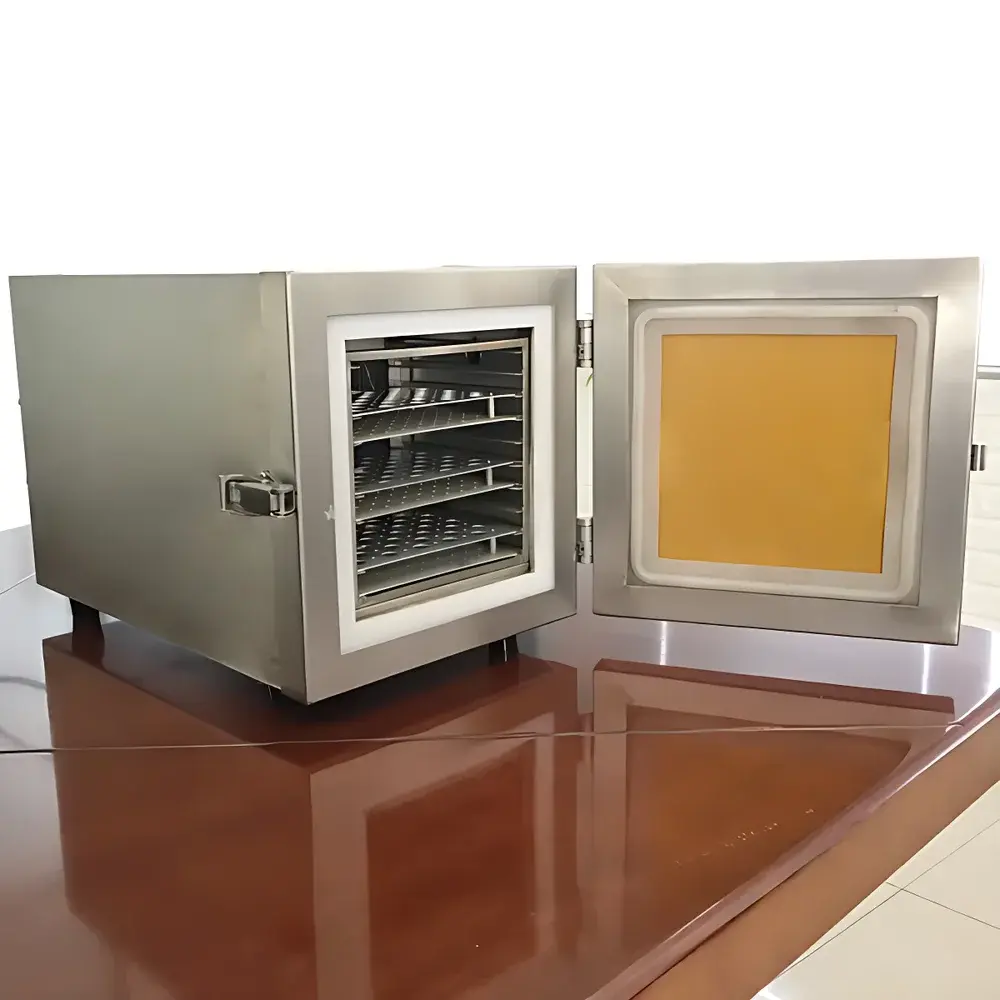
| Construction | Fully stainless steel interior and exterior |
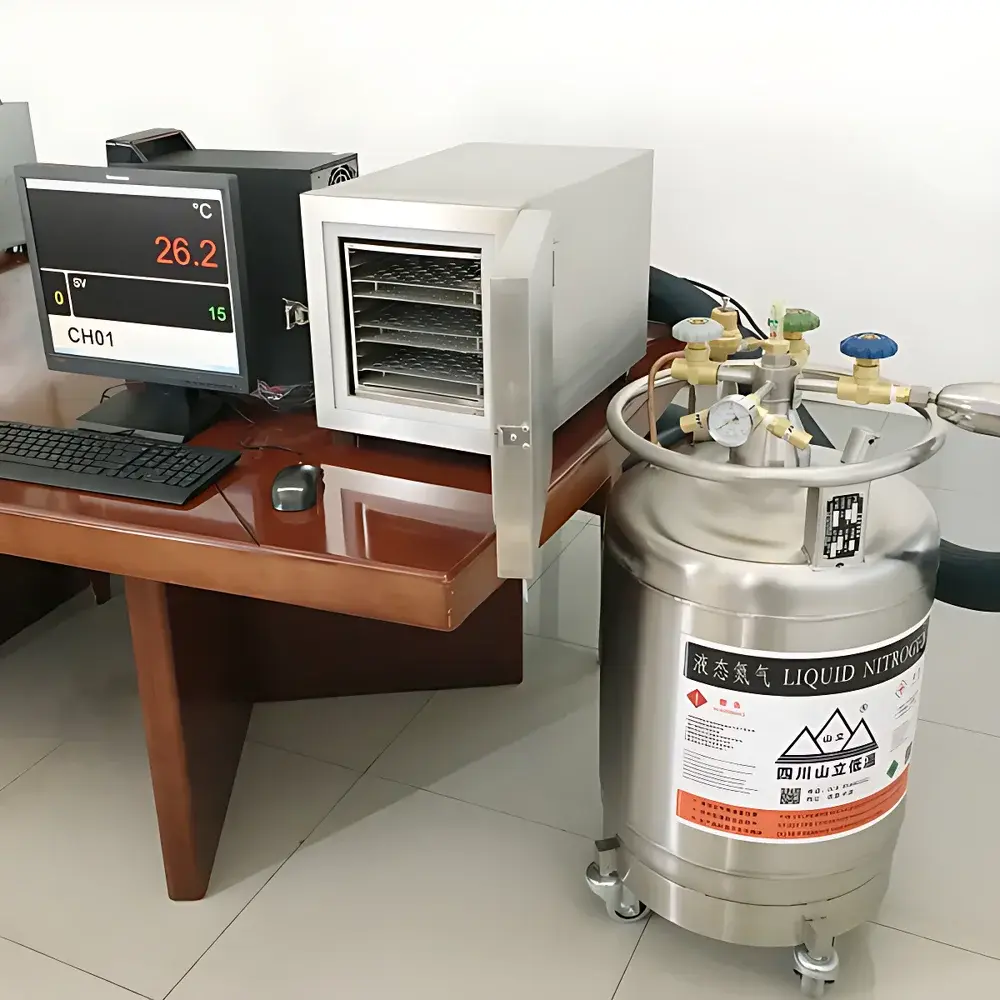
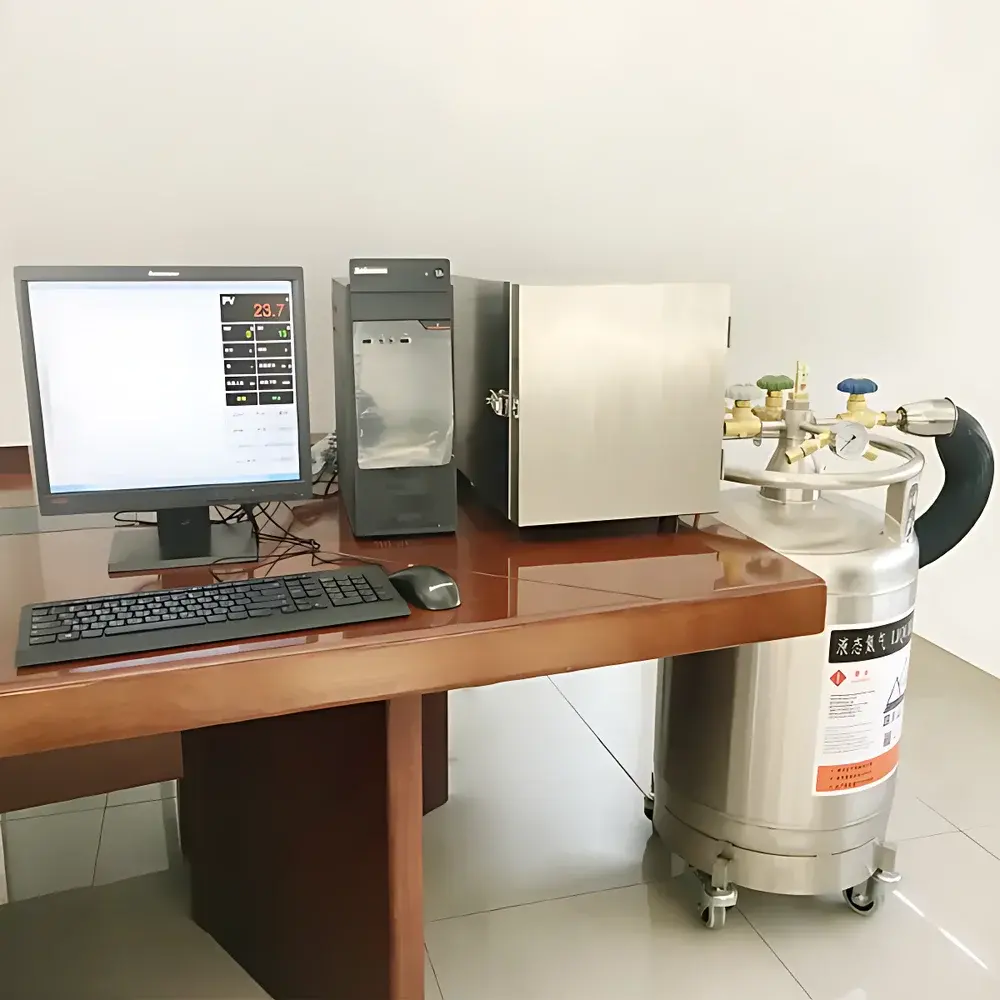
| Nitrogen Delivery System | Integrated self-pressurized 30 L liquid nitrogen dewar with precision pressure-regulated LN₂ valve actuation |
| Control Architecture | Embedded industrial PC with dedicated cryo-control card |
| Software Compliance | Audit trail enabled |
Overview
The Tianfeng TF-PA-III Programmable Rate Controlled Freezer is an engineered solution for reproducible, protocol-driven cryopreservation of sensitive biological specimens—including human oocytes, embryos, stem cells, peripheral blood mononuclear cells (PBMCs), and primary tissue isolates. It operates on the principle of precisely regulated liquid nitrogen (LN₂) vapor-phase cooling, where thermodynamic control is achieved through real-time modulation of LN₂ flow into a stainless-steel chamber via a pressure-stabilized, solenoid-actuated delivery system. Unlike passive freezing or mechanical freezers, the TF-PA-III delivers deterministic thermal profiles by dynamically balancing heat transfer kinetics against specimen-specific nucleation and ice growth constraints—critical for minimizing intracellular ice formation, osmotic shock, and cryoinjury. Its operational range spans from +40 °C (pre-cooling equilibration) down to −180 °C (deep cryogenic hold), enabling full compliance with established cryobiological protocols such as those defined in ISO 20417 (medical devices — general requirements for labeling), ASTM F1980 (accelerated aging of sterile barrier systems), and clinical guidelines issued by the American Society for Reproductive Medicine (ASRM) and European Society of Human Reproduction and Embryology (ESHRE).
Key Features
- High-fidelity temperature control with ±0.5 °C accuracy across the full −180 °C to +40 °C range, verified per IEC 61000-4-30 Class A instrumentation standards.
- Adjustable cooling rates from 0.1 to 50 °C/min and heating rates from 0.1 to 30 °C/min—each programmable in 0.1 °C/min steps for granular protocol alignment.
- Dual-mode operation: fully automated program execution or manual override with keyboard-based real-time rate adjustment and on-demand isothermal hold activation.
- Modular software architecture supporting multi-segment programming (unlimited step count), segment skip, coordinate axis inversion, and dynamic parameter interpolation during runtime.
- Stainless-steel cryochamber (≥200 × 200 × 200 mm) rated for repeated thermal cycling between ambient and −180 °C without dimensional drift or surface condensation accumulation.
- Integrated 30 L self-pressurizing liquid nitrogen dewar with closed-loop pressure regulation (<20 kPa setpoint stability), eliminating external compressors or high-pressure gas infrastructure.
Sample Compatibility & Compliance
The TF-PA-III accommodates standard cryogenic formats including 0.5 mL, 1.0 mL, and 2.0 mL externally threaded cryovials (Nunc, Corning, Greiner), cryobags (MACS, CryoSure), and custom stainless-steel canes. Chamber geometry permits uniform thermal exposure across all positions, validated using calibrated PT100 sensors at nine spatial points per cycle (per ISO 13485 Annex C). The system meets essential requirements for Good Manufacturing Practice (GMP) and Good Laboratory Practice (GLP) environments: it supports user-level access control, electronic audit trails (with timestamped event logging for all parameter changes, start/stop commands, and alarm triggers), and data export in CSV and XML formats compatible with LIMS integration. Optional 21 CFR Part 11 compliance package includes role-based authentication, biometric or PKI-enabled digital signatures, and immutable record retention for FDA-regulated biobanking and ART (Assisted Reproductive Technology) applications.
Software & Data Management
Tianfeng’s proprietary CryoControl v4.2 software provides a deterministic, deterministic real-time operating environment built on a deterministic RTOS kernel. All thermal data—including three independent PT100 sensor channels, LN₂ flow rate estimates, and chamber pressure—are sampled at 10 Hz and stored with microsecond-resolution timestamps. Each freeze cycle generates a self-contained binary archive containing raw sensor logs, user-defined protocol metadata, operator ID, and environmental context (e.g., ambient temperature, dewar fill level). Post-acquisition tools enable curve overlay comparison across batches, localized zoom on critical transition zones (e.g., −5 °C to −15 °C for water eutectic phase change), and statistical deviation analysis per ASQ CQE guidelines. Software updates are delivered via encrypted USB key or TLS 1.3–secured network push, with version rollback capability and SHA-256 integrity verification.
Applications
- Clinical embryology labs performing vitrification and slow-freezing of human embryos and oocytes under ESHRE/ASRM practice guidelines.
- Cell therapy manufacturing facilities freezing CAR-T, NK, and mesenchymal stromal cells (MSCs) in accordance with ISCT minimal criteria and FDA IND submission requirements.
- Biobanks implementing ISO 20387-compliant long-term storage of PBMCs, tumor tissue, and induced pluripotent stem cell (iPSC) lines.
- Academic research groups studying cryoprotectant toxicity thresholds, ice nucleation kinetics, and post-thaw functional recovery assays (e.g., CFU assays, flow cytometry viability staining, metabolic flux analysis).
- Pharmaceutical QC labs validating cryopreservation stability of reference standards and working cell banks per ICH Q5D and USP .
FAQ
Does the TF-PA-III require external liquid nitrogen supply lines or high-pressure gas infrastructure?
No. It integrates a 30 L self-pressurizing dewar with internal pressure regulation—only standard LN₂ refills are needed.
Can the system be validated for GxP environments?
Yes. IQ/OQ documentation templates are provided. Optional PQ support includes thermocouple mapping, rate accuracy verification per ASTM E2865, and alarm response testing.
Is remote monitoring supported?
Standard Ethernet (RJ45) and optional Wi-Fi modules enable secure read-only status viewing and alert notifications via SNMP or MQTT protocols.
What maintenance intervals are recommended?
Quarterly calibration of PT100 sensors (traceable to NIST standards) and annual inspection of solenoid valves and pressure regulators per manufacturer service bulletin SB-TF-PA-III-2024-01.
How is data integrity ensured during power interruption?
The embedded controller retains active program state and sensor history in non-volatile FRAM memory; resume-from-interrupt functionality restores thermal trajectory within ±0.2 °C of pre-failure setpoint.



