
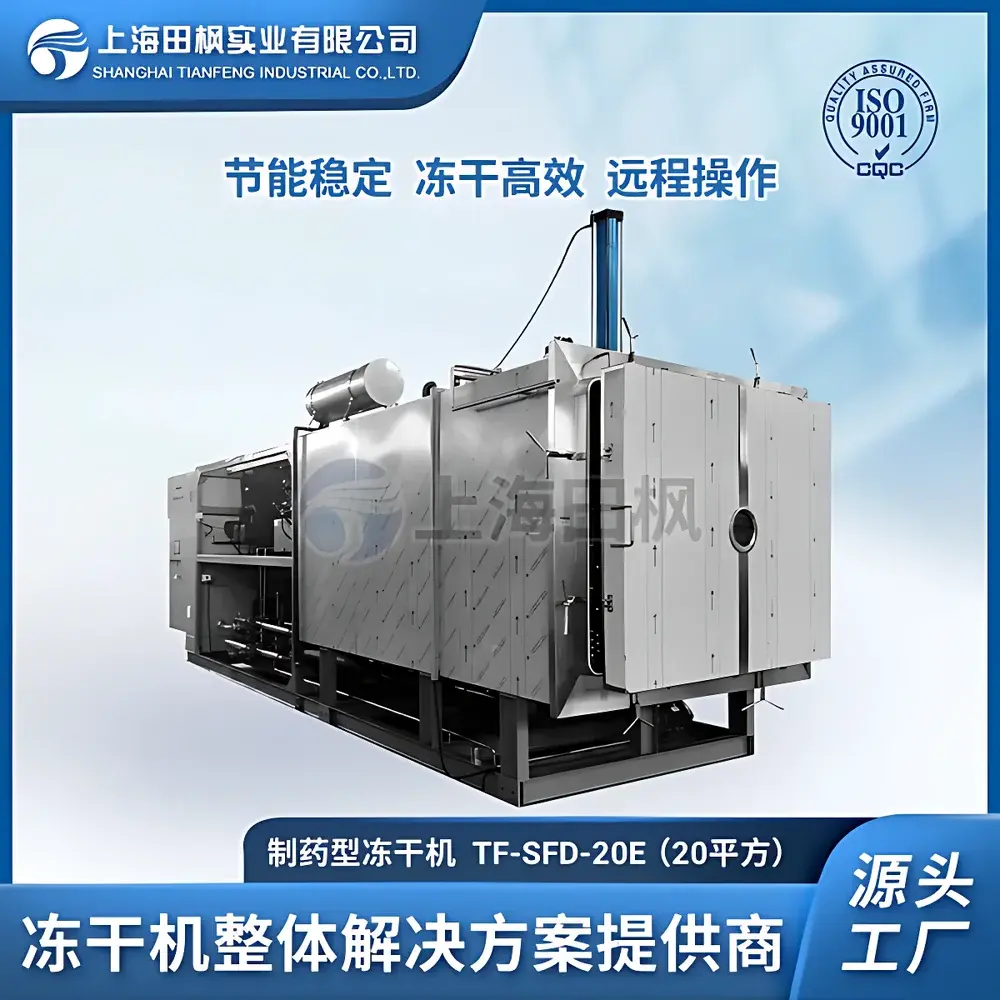
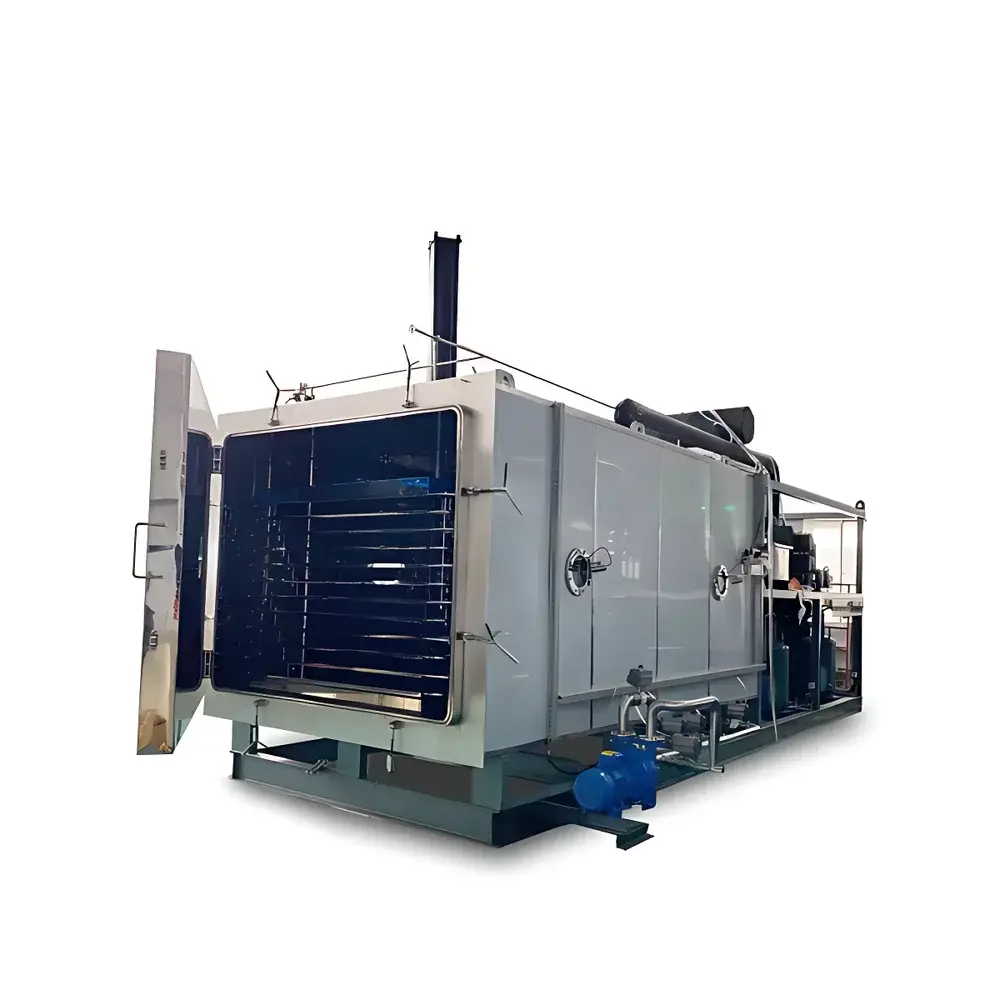
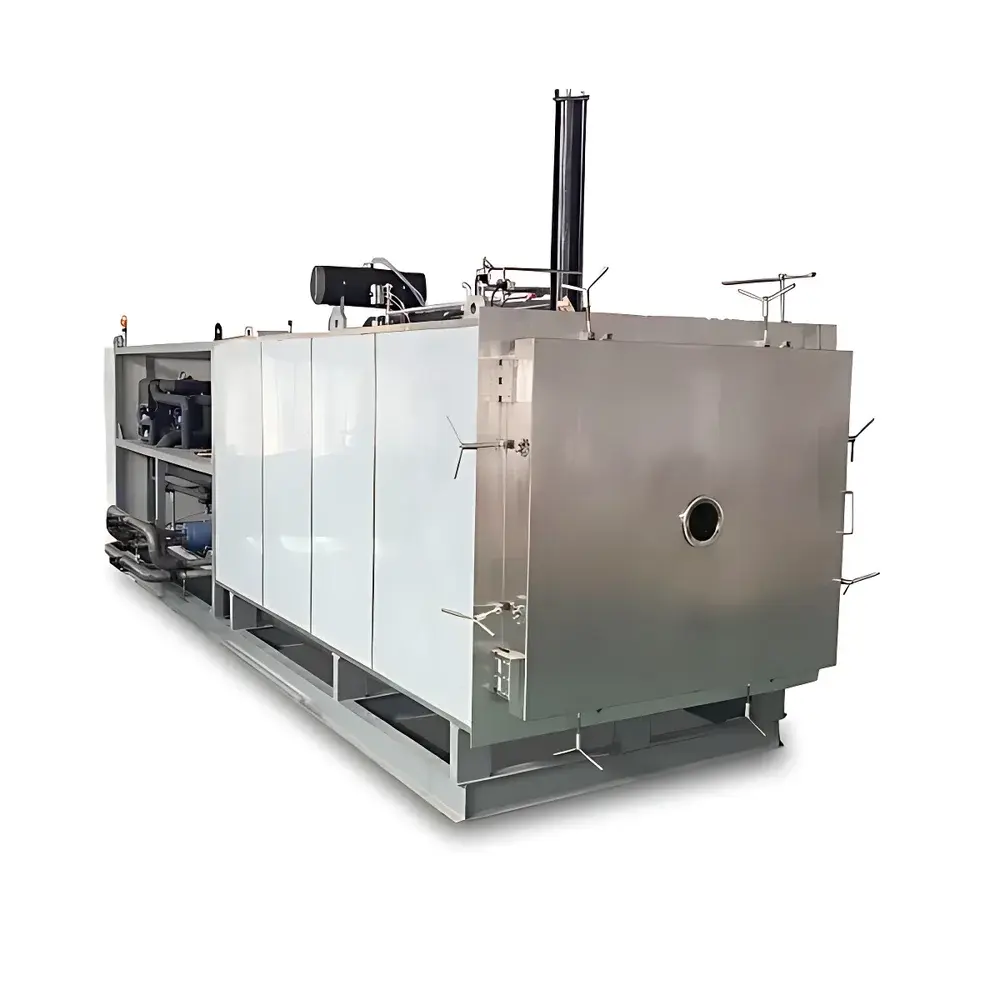
Tianfeng TF-SFD-25E Industrial-Scale Pharmaceutical Freeze Dryer
| Brand | Tianfeng |
|---|---|
| Origin | Shanghai, China |
| Manufacturer Type | Direct Manufacturer |
| Origin Category | Domestic (China) |
| Model | TF-SFD-25E |
| Instrument Type | Standard Shelf-Type Freeze Dryer |
| Application Scope | Production-Scale |
| Lyophilization Area | 24.38 m² |
| Ultimate Vacuum | 2.7 Pa |
| Condensate Capacity (24 h) | 530 kg |
| Condenser Temperature | −75 °C |
| Overall Dimensions | 7700 × 2720 × 4300 mm |
| Chamber Volume | ~11.5 m³ |
| Shelf Configuration | 11+1 shelves (AISI 304 stainless steel, 1500 × 1495 × 20 mm each) |
| Shelf Temp Range | −55 °C to +70 °C (heat transfer oil circuit) |
| Condenser Frosting Capacity | 400 kg/batch |
| Final Vacuum (Chamber) | ≤1.0 Pa |
| Total Electrical Load | 101 kW (380 V, 50 Hz, 3-phase, 5-wire) |
| Cooling Water Requirement | 50 m³/hr (pressure 1.5–2.0 bar, inlet temp ≤25 °C) |
| Unit Weight | ~16,000 kg |
| Max. Load Capacity (Suggested) | 400 kg/batch (lyophilizable material) |
| Construction | Monolithic AISI 304 stainless steel chamber with fully polished, zero-dead-angle internal geometry |
| Thermal Medium | Low-viscosity silicone oil |
| Control System | PLC-based cGMP-compliant automation with recipe storage, audit trail, and real-time parameter logging |
| Compliance | Designed and manufactured per ISO 9001:2015 |
| Qualification Support | Full 3Q documentation package (DQ/IQ/OQ) available upon request |
Overview
The Tianfeng TF-SFD-25E is an industrial-scale, shelf-type pharmaceutical freeze dryer engineered for robust, reproducible lyophilization of thermolabile biologics, active pharmaceutical ingredients (APIs), probiotic cultures, botanical extracts (e.g., ginseng), and cosmetic actives. It operates on the fundamental principle of sublimation—removing water from frozen product under deep vacuum while maintaining product integrity through precise thermal control. Unlike ambient-temperature drying methods, lyophilization preserves molecular conformation, enzymatic activity, and microbiological viability—critical for live probiotics, heat-sensitive peptides, and unstable phytochemicals such as ginsenosides. The system integrates a high-capacity condenser (−75 °C), wide-range shelf temperature control (−55 °C to +70 °C), and a large lyophilization area (24.38 m²) to support batch processing of up to 400 kg of raw material per cycle. Its monolithic AISI 304 stainless steel construction, fully polished internal surfaces, and zero-dead-angle chamber geometry meet stringent cGMP design criteria for sterile and non-sterile pharmaceutical manufacturing environments.
Key Features
- Monolithic AISI 304 stainless steel chamber with electropolished interior and radiused corners—eliminating microbial harborage zones and enabling effective CIP/SIP validation.
- 11+1 precision-machined shelves (1500 × 1495 × 20 mm), uniformly heated/cooled via low-viscosity silicone oil circulation—ensuring ±0.5 °C shelf-to-shelf temperature uniformity across full load.
- High-efficiency dual-stage refrigeration system with −75 °C condenser and 530 kg/24h condensate capacity—capable of handling high-moisture botanicals (e.g., fresh ginseng root) and viscous probiotic suspensions.
- PLC-based control architecture compliant with FDA 21 CFR Part 11: includes user-level access control, electronic signature capability, full audit trail, and encrypted recipe storage with version history.
- Integrated vacuum system achieving ≤1.0 Pa ultimate pressure in chamber and ≤2.7 Pa operational range—optimized for primary drying kinetics of crystalline and amorphous formulations.
- Full qualification readiness: DQ/IQ/OQ documentation templates provided; design supports PQ execution per ICH Q5C and ISO 20957 standards for lyophilized product stability.
Sample Compatibility & Compliance
The TF-SFD-25E accommodates diverse sample formats including vials (2R–100R), trays (up to 1200 mm × 800 mm), and bulk containers—ideal for ginseng extract concentrates, lyophilized lactic acid bacteria (Lactobacillus spp., Bifidobacterium spp.), and cosmetic hydrogels or enzyme powders. All wetted surfaces comply with USP Class VI biocompatibility and ASME BPE-2021 surface finish specifications (Ra ≤ 0.4 µm). The system conforms to ISO 9001:2015 quality management protocols and is designed to satisfy EU GMP Annex 1 requirements for aseptic processing environments. Structural integrity and leak integrity are verified per ASTM E493 helium mass spectrometry testing. Documentation packages include material traceability certificates (EN 10204 3.1), weld maps, and FAT/SAT reports.
Software & Data Management
The embedded HMI-PLC platform runs proprietary lyophilization control software supporting multi-step ramp-soak profiles, pressure rise tests (PRT), and endpoint determination via product temperature trending and capacitance manometry. All process data—including shelf temperature, chamber pressure, condenser temperature, and vacuum pump status—are timestamped, digitally signed, and stored locally with redundant backup. Data export complies with ASTM E2500-13 for raw data archival and supports CSV, PDF, and XML formats for integration into LIMS or MES systems. Electronic records retain full ALCOA+ attributes (Attributable, Legible, Contemporaneous, Original, Accurate, Complete, Consistent, Enduring, Available) per regulatory expectations.
Applications
- Pharmaceutical: Lyophilization of monoclonal antibodies, vaccines, and small-molecule APIs requiring strict residual moisture control (<1.0% w/w).
- Biotechnology: Stabilization of probiotic strains for clinical-grade supplements—maintaining ≥90% viable cell recovery post-reconstitution.
- Botanical Processing: Preservation of ginseng saponins (Rb1, Rg1) without thermal degradation; validated for aqueous extracts with total solids 8–12%.
- Cosmetic R&D: Production of stable, water-dispersible enzyme complexes (e.g., superoxide dismutase), hyaluronic acid microspheres, and plant stem cell powders.
- Contract Manufacturing: Scalable from lab-scale development (via process mapping) to commercial batches—enabling seamless tech transfer under ICH Q5A and Q5C guidelines.
FAQ
Does the TF-SFD-25E support automatic cycle optimization based on product resistance or collapse temperature?
Yes—the system supports optional PAT integration (e.g., tunable diode laser absorption spectroscopy or Pirani/capacitance manometry) for real-time product characterization and adaptive drying control.
Can the unit be validated for sterile processing under Grade A conditions?
The chamber and door sealing system are qualified for SIP at 121 °C/30 min; full aseptic validation requires integration with isolator or RABS infrastructure, which is supported via interlock I/O and steam-in-place interface.
Is remote monitoring and alarm notification available?
Standard Ethernet/IP connectivity enables SCADA integration; optional cloud-based dashboard provides SMS/email alerts for critical deviations (e.g., vacuum loss >5 Pa, shelf temp excursion >±2 °C).
What utility connections are required beyond electrical supply?
In addition to 380 V/3-phase power, the system requires chilled water (50 m³/hr, ≤25 °C, 1.5–2.0 bar) and compressed air (6 bar, oil-free, ISO 8573-1 Class 2) for valve actuation and door sealing.
Is engineering support available for facility integration (HVAC, clean utilities, exhaust)?
Tianfeng provides mechanical, electrical, and piping (MEP) interface drawings and participates in URS review, FAT execution, and site commissioning—aligned with ISPE Baseline Guide Vol. 5 (Commissioning & Qualification).



