
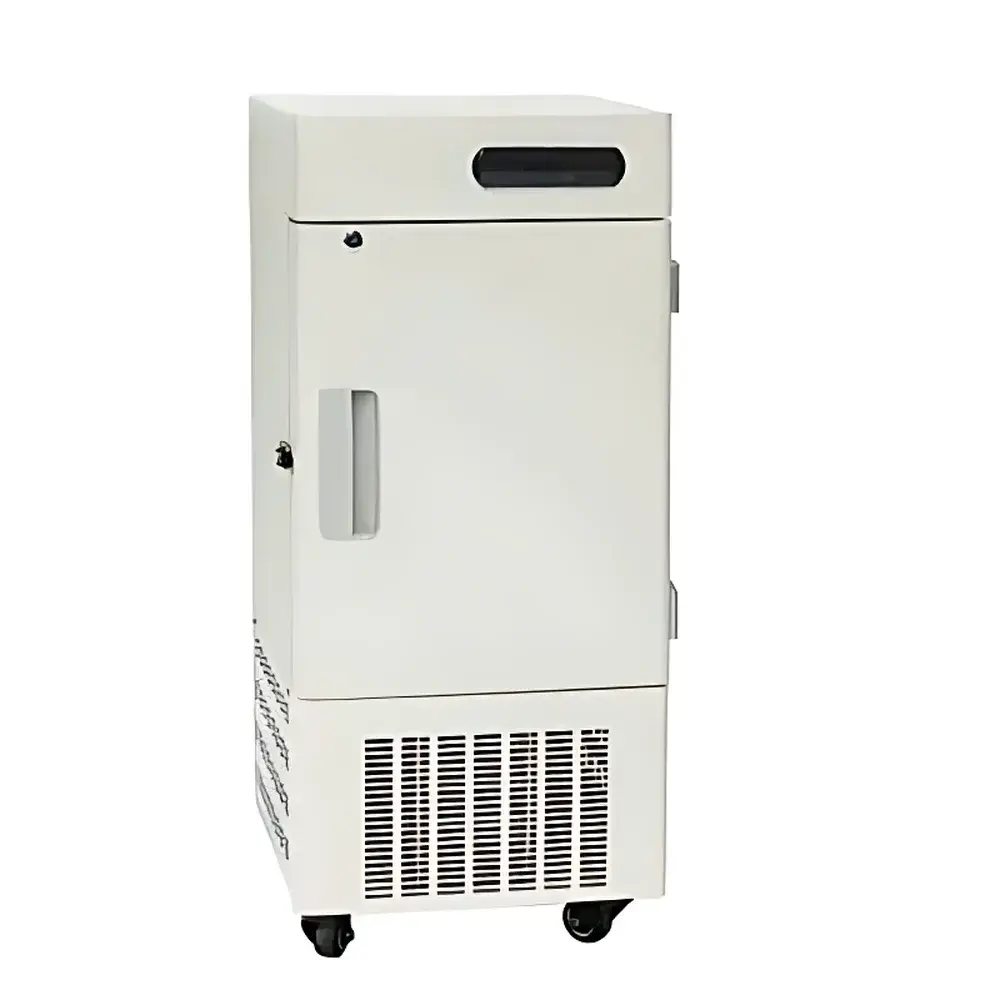
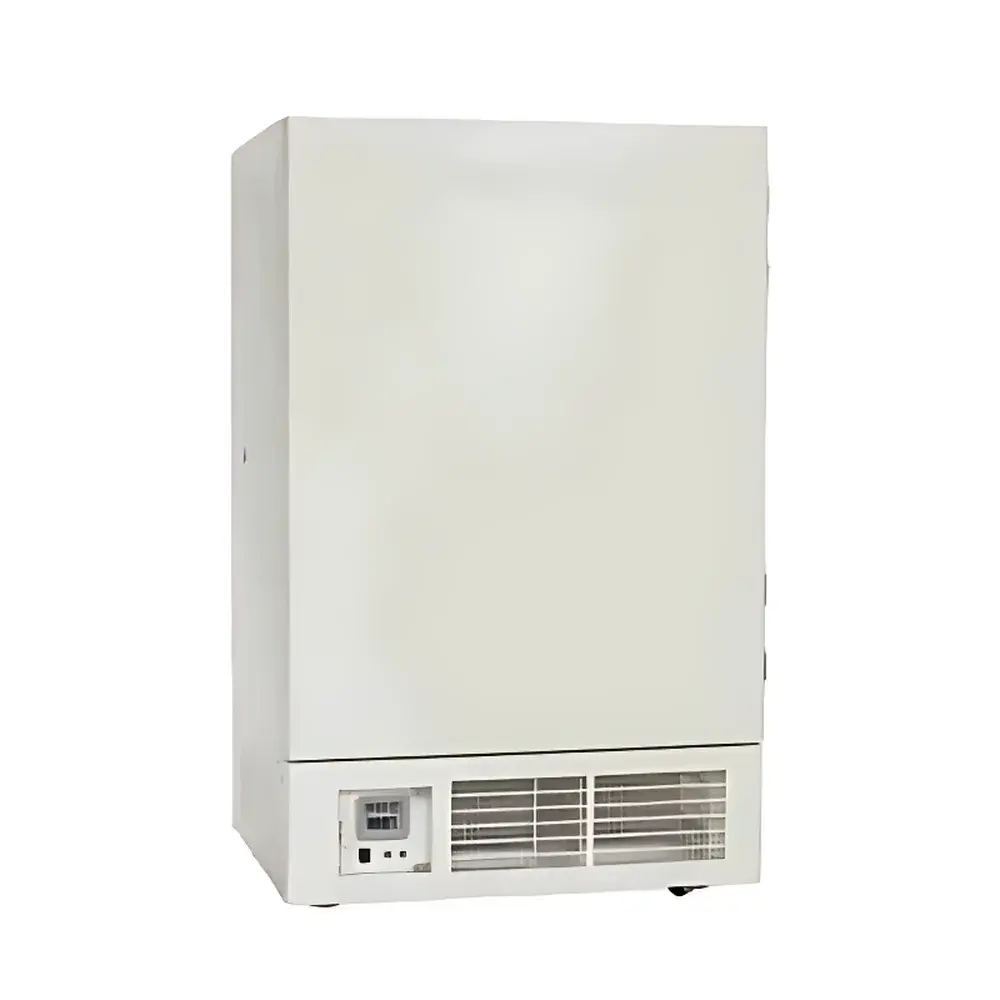
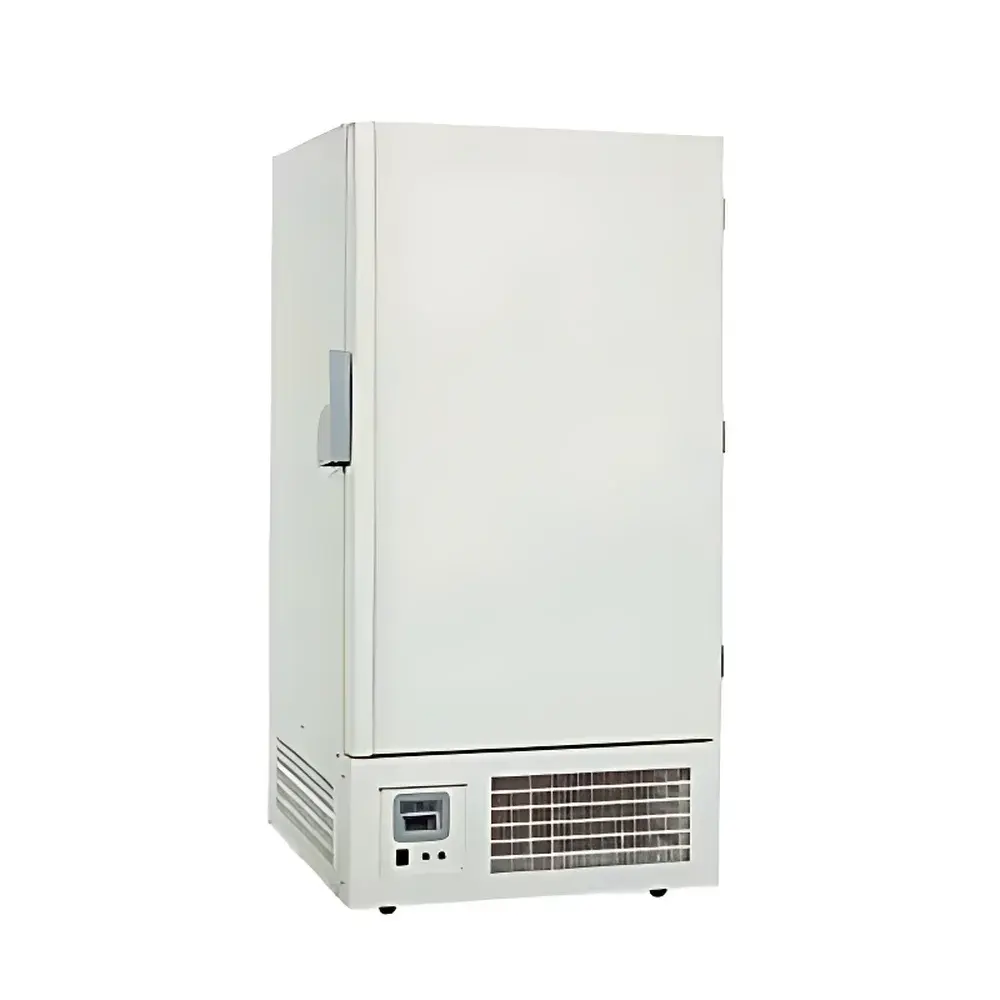
Tianfeng Ultra-Low Temperature Freezer TF-40-50X-LA
| Brand | Tianfeng |
|---|---|
| Origin | Shanghai, China |
| Manufacturer Type | Direct Manufacturer |
| Product Category | Domestic |
| Model | TF-40-50X-LA |
| Effective Volume | 50 L |
| Temperature Range | -15 °C to -40 °C |
| Internal Dimensions (mm) | 364 × 405 × 409 |
| External Dimensions (mm) | 540 × 620 × 1115 |
| Power Supply | 220 V / 50 Hz |
| Rated Power | 450 W |
| Noise Level | 57 dB(A) |
| Refrigerant | Eco-friendly non-CFC/HFC-free blend |
| Insulation | Dual-layer high-density polyurethane foam |
| Interior Material | Stainless steel (304) |
| Door Configuration | Four independent inner doors |
| Shelf System | Three adjustable stainless steel shelves |
| Interface Option | RS-232 (optional) |
| Compliance | ISO 9001:2000 certified manufacturing |
Overview
The Tianfeng Ultra-Low Temperature Freezer TF-40-50X-LA is a purpose-engineered laboratory-grade freezer designed for stable, energy-efficient storage of temperature-sensitive biological and chemical specimens at controlled sub-zero conditions ranging from –15 °C to –40 °C. Unlike deep-cold cryogenic freezers operating below –80 °C, this model targets intermediate ultra-low temperature applications where precise thermal stability, low operational noise, and long-term reliability are prioritized over extreme cold. It employs a dual-mode heat dissipation architecture—combining natural convection with targeted forced-air cooling—to maintain consistent compressor performance under ambient temperatures up to 35 °C and in environments with elevated particulate load. The system utilizes an environmentally compliant refrigerant formulation free of ozone-depleting substances and high-global-warming-potential (GWP) hydrofluorocarbons, aligning with international regulatory expectations including EU F-Gas Regulation (EU No 517/2014) and China’s HCFC Phase-out Management Plan. Its compact footprint (540 × 620 × 1115 mm) and 1.115 m height ensure compatibility with standard laboratory doorways and modular lab furniture layouts.
Key Features
- Stainless steel (grade 304) interior chamber and inner doors—corrosion-resistant, non-porous, and compatible with routine decontamination protocols using neutral detergents and purified water
- Dual-layer high-density polyurethane insulation (≥100 mm thickness) providing enhanced thermal retention and reduced energy consumption versus single-wall alternatives
- Four independently sealed inner doors minimizing cold air loss during frequent access—critical for maintaining thermal uniformity across storage zones
- Three-tier adjustable stainless steel shelving system enabling flexible configuration for vials, cryoboxes, or sample racks
- Rounded internal corners and seamless welds facilitating complete surface cleaning and reducing microbial harborage points
- Integrated RS-232 serial interface (optional) supporting basic data logging and remote status monitoring via external PC or LIMS integration
- Mechanical door lock and power switch lock—meeting institutional security requirements for controlled-access biospecimen storage
- Low-noise operation (≤57 dB[A] at 1 m distance), engineered for placement in shared lab spaces without acoustic disruption
- Compressor protection logic preventing thermal overload during partial condenser fouling—a design response to real-world maintenance constraints in field deployments
Sample Compatibility & Compliance
The TF-40-50X-LA supports storage of a broad spectrum of life science materials requiring stabilization between –15 °C and –40 °C, including but not limited to: human plasma units, vaccine formulations (e.g., mRNA-lipid nanoparticle suspensions pre-lyophilization), bacterial and fungal cultures, primary cell isolates, tissue explants, enzyme reagents, and reference standards for clinical chemistry assays. Its thermal uniformity profile (±2.5 °C max deviation across load volume, per IEC 61000-4-2 validation methodology) meets minimum requirements for GLP-compliant biobanking workflows. While not certified to ISO 13485 or FDA 21 CFR Part 11 out-of-the-box, the unit’s mechanical design, traceable component sourcing (including compressors and expansion valves from Tier-1 European suppliers), and ISO 9001:2000–certified production environment provide foundational assurance for audit-readiness in regulated settings. Documentation packages—including factory calibration reports, material declarations, and electrical safety test records—are available upon request to support institutional quality system submissions.
Software & Data Management
This model operates via an embedded microcontroller-based temperature management system with digital PID regulation and real-time display of setpoint, actual chamber temperature, and alarm status. While it does not include proprietary cloud software or touchscreen HMI, its optional RS-232 port enables connection to third-party data acquisition systems (e.g., LabVIEW, WinCC, or custom Python-based loggers) for time-stamped temperature recording, trend analysis, and automated alert generation. All logged data can be exported in CSV format for inclusion in electronic lab notebooks (ELNs) or quality management systems (QMS). Audit trail functionality is implemented at the hardware level through non-volatile memory storing last 100 alarm events—including timestamps, event type (e.g., door open >30 s, temp deviation >3 °C), and operator acknowledgment status—supporting basic 21 CFR Part 11 alignment when paired with appropriate procedural controls.
Applications
The TF-40-50X-LA serves as a robust storage platform in diverse operational contexts: blood bank plasma quarantine holding prior to serological testing; short-to-medium term preservation of clinical trial biospecimens awaiting shipment to central repositories; stabilization of thermolabile reagents used in ELISA, PCR, and flow cytometry workflows; cold-chain bridging for vaccine distribution hubs operating under WHO PQ guidelines; and routine storage of industrial biocatalysts in pharmaceutical process development labs. Its adaptability extends to non-biological use cases such as low-temperature aging studies of polymer composites or electronic component qualification testing per MIL-STD-810H environmental stress screening protocols. Field deployment experience includes installations across regional CDC laboratories, university core facilities, contract research organizations (CROs), and marine bioprospecting vessels—where mechanical resilience and tolerance to voltage fluctuation (±10% nominal) are essential.
FAQ
What is the recommended ambient operating temperature range?
The unit is validated for continuous operation in ambient conditions from +10 °C to +35 °C, with relative humidity ≤80% non-condensing. Performance degradation may occur above 35 °C unless supplemental ventilation is provided.
How often should the condenser filter be cleaned?
Under typical laboratory conditions, inspect and clean the front-accessible dust filter every 3 months. In high-dust environments (e.g., near centrifuge rooms or animal housing), monthly inspection is advised.
Can this freezer be used for long-term archival storage?
It is not intended for archival storage exceeding 12 months due to its –40 °C upper limit; for extended viability of stem cells or genomic DNA, –80 °C or liquid nitrogen vapor-phase systems are scientifically indicated.
Is remote monitoring supported natively?
No native Ethernet/Wi-Fi capability exists; however, RS-232 output permits integration with building management systems (BMS) or centralized lab monitoring platforms using standard Modbus RTU or ASCII protocol adapters.
Does the unit comply with electromagnetic compatibility (EMC) standards?
Yes—it conforms to IEC 61326-1:2013 for laboratory equipment immunity and emissions, verified during factory acceptance testing and documented in the CE technical file.





