

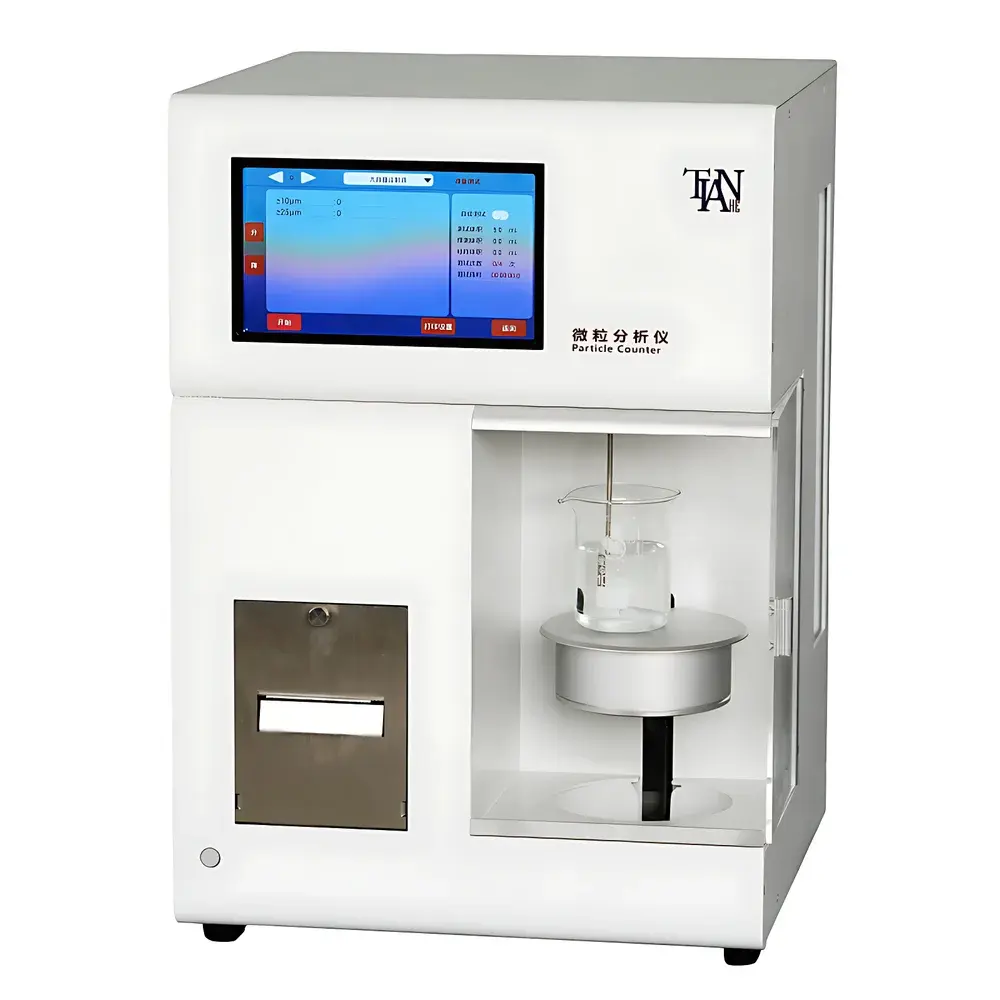
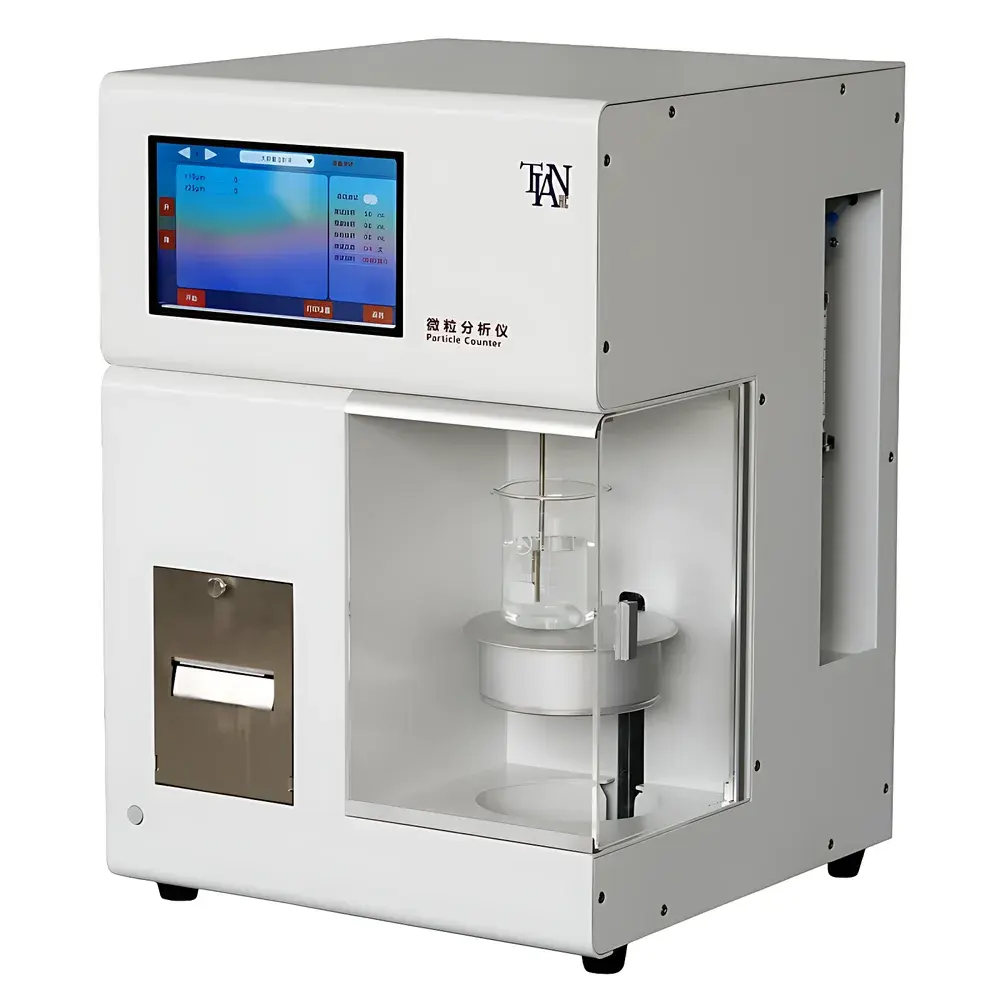
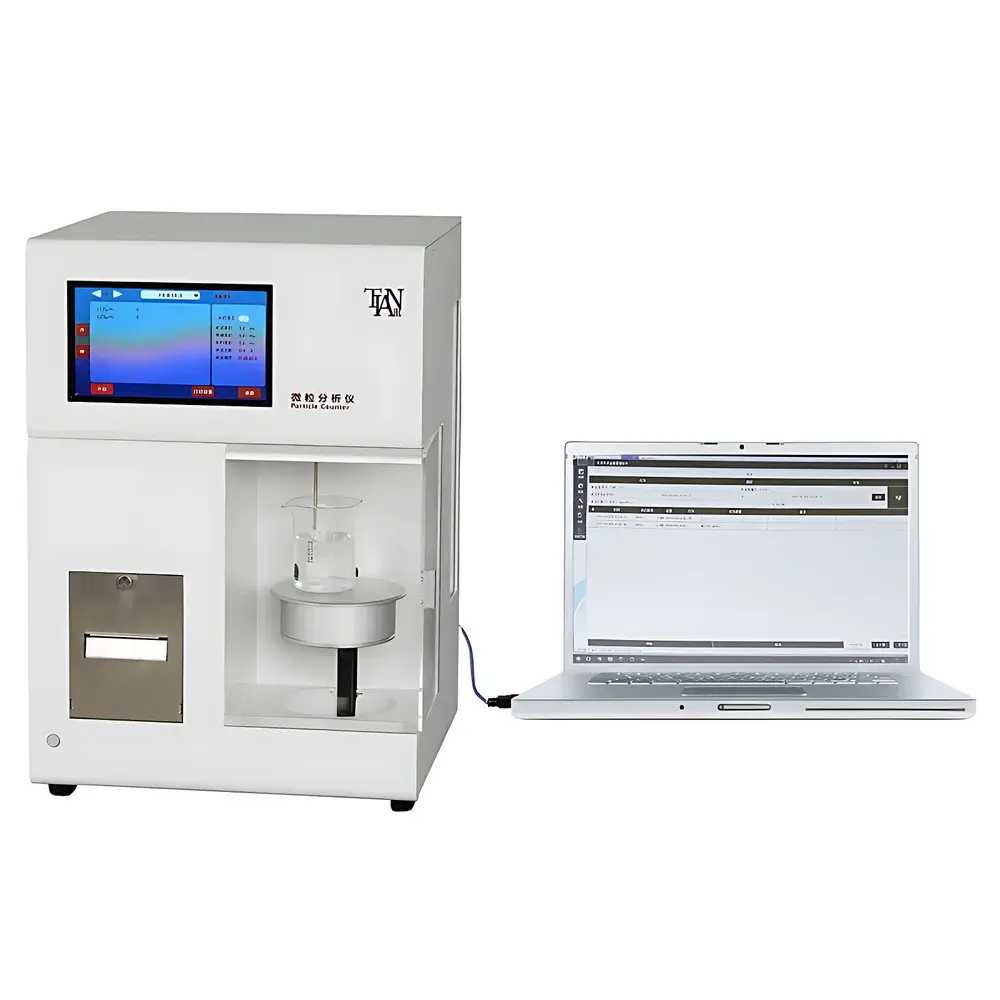
Tianhe GWF-R Optical Particle Counter for Insoluble Microparticle Analysis
| Brand | Tianhe |
|---|---|
| Origin | Tianjin, China |
| Manufacturer Type | Authorized Distributor |
| Product Category | Domestic |
| Model | GWF-R |
| Instrument Type | Optical Particle Counter |
| Operating System | Android-based embedded platform |
| Compliance | USP <788>, USP <789>, ChP 2025 (General Chapter 0903), ISO 21510, FDA 21 CFR Part 11 |
| Calibration Standards | NIST-traceable latex particle suspensions |
| Sample Compatibility | Aqueous & non-aqueous injectables, sterile powders, infusion devices, lipid emulsions |
| Detection Principle | Light Blockage (Light Obscuration) |
| Particle Size Channels | 64 fixed + user-definable (down to 0.1 µm resolution) |
| Size Range | 1–500 µm (segmented sensor configuration) |
| Count Range | 0–9,999,999 particles per sample |
| Sample Volume | 0.2–1000 mL (±0.1 mL resolution) |
| Volume Accuracy | < ±0.5% |
| Flow Rate | 5–80 mL/min |
| Counting Accuracy | ±5% of reference value |
| Channel Resolution | >95% (per ISO 21501-4) |
| RSD | <1.5% (for ≥1000 particles/mL standard suspension) |
| Max Detectable Concentration | 18,000 particles/mL |
| Stirring Speed | 0–1000 rpm |
| Ambient Operating Temperature | 10–40 °C |
| Power Supply | 100–240 VAC, 50/60 Hz, <80 W |
| Data Interfaces | RS232, USB host/device, thermal printer port |
| Storage | Internal database with timestamped audit trail, GLP-compliant metadata tagging |
| Software Features | Batch management, statistical reporting (mean, SD, CV, histogram, cumulative distribution), trend analysis, electronic signature support |
Overview
The Tianhe GWF-R Optical Particle Counter is a regulatory-grade light obscuration (LO) instrument engineered for quantitative detection and size-resolved enumeration of insoluble microparticles in parenteral pharmaceuticals and medical device extracts. Designed in strict alignment with pharmacopoeial requirements—including the 2025 edition of the Chinese Pharmacopoeia (ChP) General Chapter 0903, United States Pharmacopeia (USP) and , and ISO 21510—the GWF-R delivers traceable, reproducible particle counts across the 1–500 µm range. Its core measurement principle relies on single-particle light blockage: as particles suspended in liquid pass through a precisely defined flow cell aperture, they transiently attenuate a collimated laser beam; the magnitude of signal reduction correlates directly with particle cross-sectional area, enabling calibrated size binning. The system employs a stabilized high-intensity laser source coupled with real-time optical energy compensation circuitry—ensuring consistent sensitivity across colorless, amber, or lightly pigmented solutions without manual gain adjustment. Unlike generic particle counters, the GWF-R integrates dedicated lipid emulsion test protocols validated against ChP and Ministry of Health standards, accommodating high-refractive-index, scattering-prone dispersions while maintaining counting fidelity.
Key Features
- Pharmacopoeia-compliant optical architecture: Dual-wavelength detection optional; primary 650 nm laser optimized for LO response in aqueous and oil-based matrices.
- Chemically inert fluidic path: Sample manifold constructed from electropolished ASTM F899 316L stainless steel and PTFE-lined tubing—validated for compatibility with ethanol, isopropanol, soybean oil, medium-chain triglycerides, and pH 2–12 aqueous buffers.
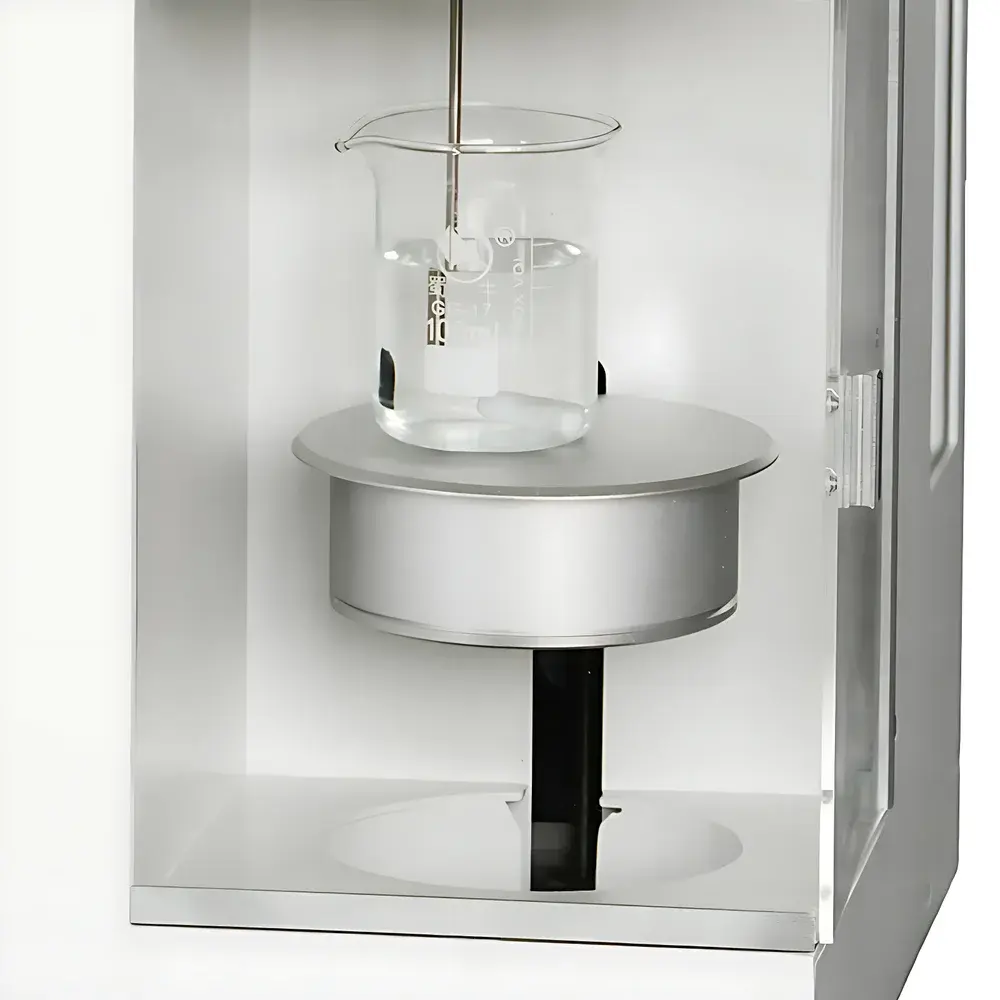
- Adaptive sample handling: Motorized Z-axis stage with programmable lift height (0–120 mm) accommodates vials, ampoules, IV bags, and irregularly shaped containers without adapter reconfiguration.
- High-fidelity data acquisition: 10,000-count-per-second throughput with 64 factory-calibrated size channels and sub-micron binning flexibility (0.1 µm increments).
- Automated calibration workflow: Onboard calibration routine executes full-channel verification using NIST-traceable polystyrene latex standards (e.g., 10.0 ± 0.12 µm, 25.0 ± 0.25 µm); results logged with digital signature and time-stamped audit trail.
- FDA 21 CFR Part 11 readiness: Role-based user access control, electronic signatures, immutable raw data storage, and operation logs meeting ALCOA+ principles.
Sample Compatibility & Compliance
The GWF-R supports direct analysis of sterile injectables (solution, suspension, emulsion), lyophilized powder reconstitutes, prefilled syringes, IV administration sets, and filter eluates. Its fluidic design eliminates carryover risk via positive-displacement piston pumping and integrated rinse cycles. Regulatory alignment extends beyond ChP and USP to include ISO 21501-4 (calibration and verification of light extinction particle counters) and EP 2.9.19. All firmware and software modules undergo periodic verification per ICH Q5A and Annex 11 requirements. Device qualification documentation (DQ/IQ/OQ/PQ) templates are provided, supporting GMP environments subject to MHRA, PMDA, or EMA inspection.
Software & Data Management
Running on a hardened Android 11 OS, the GWF-R’s interface features intuitive touch navigation, multilingual support (English, Simplified Chinese, Japanese), and context-aware help overlays. Raw count data, histograms, and statistical summaries are stored locally in encrypted SQLite databases compliant with 21 CFR Part 11 Annex A. Export options include CSV (with metadata headers), PDF reports (including calibration certificates and QC logs), and direct transfer via USB mass storage or RS232 to LIMS. Audit trail entries record operator ID, method name, timestamp, parameter changes, and result approvals—retained for minimum 15 years per internal retention policy.
Applications
- Final container testing of small-volume parenterals (SVPs) and large-volume parenterals (LVPs) per USP .
- Quality control of intravenous fat emulsions (e.g., propofol, lipid injectables) per ChP 2025 Section 0903.2 and WS/T 590–2018.
- Extractables and leachables assessment from polymeric IV bags, tubing, and stoppers.
- Filter integrity validation via challenge testing with certified particle suspensions.
- Stability-indicating monitoring of particulate formation during accelerated and real-time storage studies.
FAQ
Does the GWF-R meet FDA 21 CFR Part 11 requirements for electronic records and signatures?
Yes—the system implements role-based authentication, electronic signatures with biometric or PIN options, and immutable audit trails covering all critical actions.
Can it analyze samples containing organic solvents such as ethanol or DMSO?
Yes—its 316L/PTFE fluid path is chemically resistant to common pharmaceutical solvents; compatibility testing data available upon request.
Is method transfer supported between laboratories using different GWF-R units?
Yes—inter-unit reproducibility is verified per ISO 21501-4 using identical calibration standards; method equivalence protocols included in user manual.
What validation documentation is supplied with the instrument?
Factory acceptance test (FAT) report, IQ/OQ protocol templates, calibration certificate traceable to NIST SRM 1963, and software verification summary per GAMP 5.
How is compliance with pharmacopoeial limits enforced during analysis?
Predefined test methods embed ChP/USP acceptance criteria (e.g., “NMT 25 particles ≥10 µm per mL”); results display PASS/FAIL status with highlighted deviations.



