
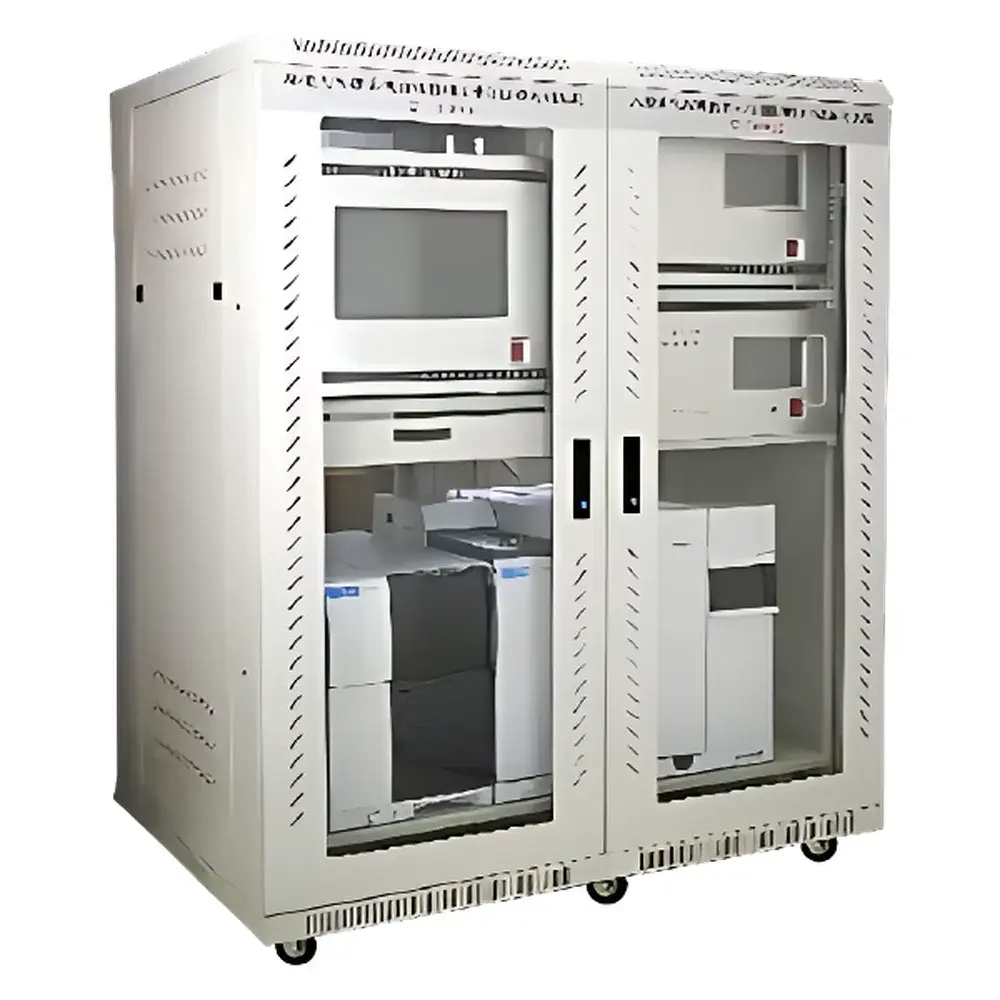
Tianhong TH-300F Online Ambient Air VOC Monitoring System for ODS and HFC Compounds
| Brand | Tianhong |
|---|---|
| Origin | Hubei, China |
| Manufacturer Type | Authorized Distributor |
| Country of Origin | China |
| Model | TH-300F Online Ambient Air VOC Monitoring System (ODS/HFC) |
| Sampling Method | Negative-Pressure Cryogenic Preconcentration |
| Detection Principle | Gas Chromatography–Mass Spectrometry (GC-MS) |
| Enrichment Temperature Range | –190 °C to –40 °C (adjustable) |
| Water Removal Temperature Range | –60 °C to 0 °C (adjustable) |
| Minimum Sampling Duration | ≥30 min |
| Typical LOD | <0.3 ppt (for most target compounds) |
| Precision (RSD at 50 ppt) | ≤2% |
| Target Analytes | 36 ODS and HFC compounds (e.g., CFC-11, CFC-12, HCFC-22, HFC-134a, HFC-152a, Halon-1211, etc.) |
Overview
The Tianhong TH-300F Online Ambient Air VOC Monitoring System is a fully automated, laboratory-grade analytical platform engineered for continuous, unattended quantification of 36 regulated ozone-depleting substances (ODS) and hydrofluorocarbon (HFC) compounds in ambient air. It operates on a dual-stage cryogenic preconcentration principle—first employing patented ultra-low-temperature empty-tube trapping at programmable temperatures down to –190 °C to selectively adsorb volatile analytes from large-volume air samples, followed by rapid thermal desorption into a gas chromatograph coupled with a mass spectrometer (GC-MS). This architecture ensures high-fidelity separation and identification under real-world atmospheric conditions, supporting long-term trend analysis, regulatory compliance reporting, and source apportionment studies. The system is designed for deployment in fixed-site monitoring networks where trace-level sensitivity, method reproducibility, and operational robustness are critical.
Key Features
- Ultra-low-temperature cryogenic enrichment using an empty-tube trap capable of stable operation at –190 °C, with precise temperature control across a range of –190 °C to –40 °C
- Dedicated cryogenic water removal stage operating at –60 °C to 0 °C, minimizing matrix interference without chemical scrubbers or consumables
- Negative-pressure sampling configuration eliminates contamination risks associated with positive-pressure pumps and prevents condensate formation in sample lines
- Minimum 30-minute integrated sampling cycle ensures statistically representative time-weighted average concentrations with no temporal blind spots
- Method detection limits (MDLs) below 0.3 ppt for the majority of target ODS and HFC compounds, validated per EPA TO-15 and ISO 16017-1 protocols
- High analytical precision: relative standard deviation (RSD) ≤2% at 50 ppt concentration level across repeated injections
- Automated calibration verification via internal standard addition and multi-point external standard calibration sequences
Sample Compatibility & Compliance
The TH-300F is optimized for ambient air matrices, including urban background, industrial fence-line, residential zones, and tourist areas. Its cryogenic preconcentration module accommodates variable humidity (5–95% RH) and particulate loadings typical of outdoor environments without performance degradation. The system supports compliance with international regulatory frameworks including the Montreal Protocol reporting requirements, EU F-Gas Regulation (EU No 517/2014), and China’s “Technical Specification for Monitoring of ODS and HFCs in Ambient Air” (HJ 1248–2022). Data integrity features align with GLP principles, including full audit trails, electronic signatures, and instrument state logging—facilitating readiness for regulatory audits and third-party verification.
Software & Data Management
The embedded control software provides real-time system diagnostics, method scheduling, remote status monitoring, and automated report generation in PDF and CSV formats. Raw GC-MS data are stored in vendor-neutral netCDF format, enabling post-acquisition reprocessing and spectral library matching against NIST/EPA databases. All analytical events—including calibration runs, maintenance alerts, and environmental parameter logs—are timestamped and archived with cryptographic hashing to ensure data provenance. Optional integration with central environmental data platforms (e.g., EPA AIRNow, China MEP national air quality network) is supported via standardized RESTful API and MQTT protocols.
Applications
- Continuous ODS/HFC monitoring at national and provincial air quality stations for Montreal Protocol compliance reporting
- Fence-line monitoring in refrigerant manufacturing, foam-blowing, and semiconductor fabrication facilities
- Background assessment in ecologically sensitive zones such as nature reserves and UNESCO World Heritage sites
- Long-term trend analysis of atmospheric halocarbon concentrations for climate modeling input
- Source identification and emission quantification through correlation with meteorological and co-located pollutant data (e.g., CO, NOx, PM2.5)
FAQ
What ODS and HFC compounds does the TH-300F quantify?
The system is validated for 36 priority compounds including CFC-11, CFC-12, CFC-113, HCFC-22, HCFC-141b, HCFC-142b, Halon-1211, Halon-1301, methyl chloroform, carbon tetrachloride, and HFCs such as HFC-134a, HFC-152a, HFC-227ea, and HFC-245fa.
Is the system compliant with EPA or ISO methods?
Yes—the TH-300F implements core principles of EPA Method TO-15 (Determination of Volatile Organic Compounds in Ambient Air Using Active Sampling Onto Sorbent Tubes) and ISO 16017-1 (Indoor, Ambient and Workplace Air — Sampling and Analysis of Volatile Organic Compounds), adapted for continuous online operation with cryogenic preconcentration.
How often does the system require maintenance?
Routine maintenance includes quarterly GC column conditioning, biannual MS detector tuning, and annual cryogenic trap regeneration—all tracked automatically and scheduled via the software interface.
Can the TH-300F be integrated into existing air quality data management systems?
Yes—via configurable Ethernet connectivity, it supports MODBUS TCP, OPC UA, and HTTP-based data export, enabling seamless ingestion into SCADA, LIMS, or national environmental information platforms.
Related Products







