
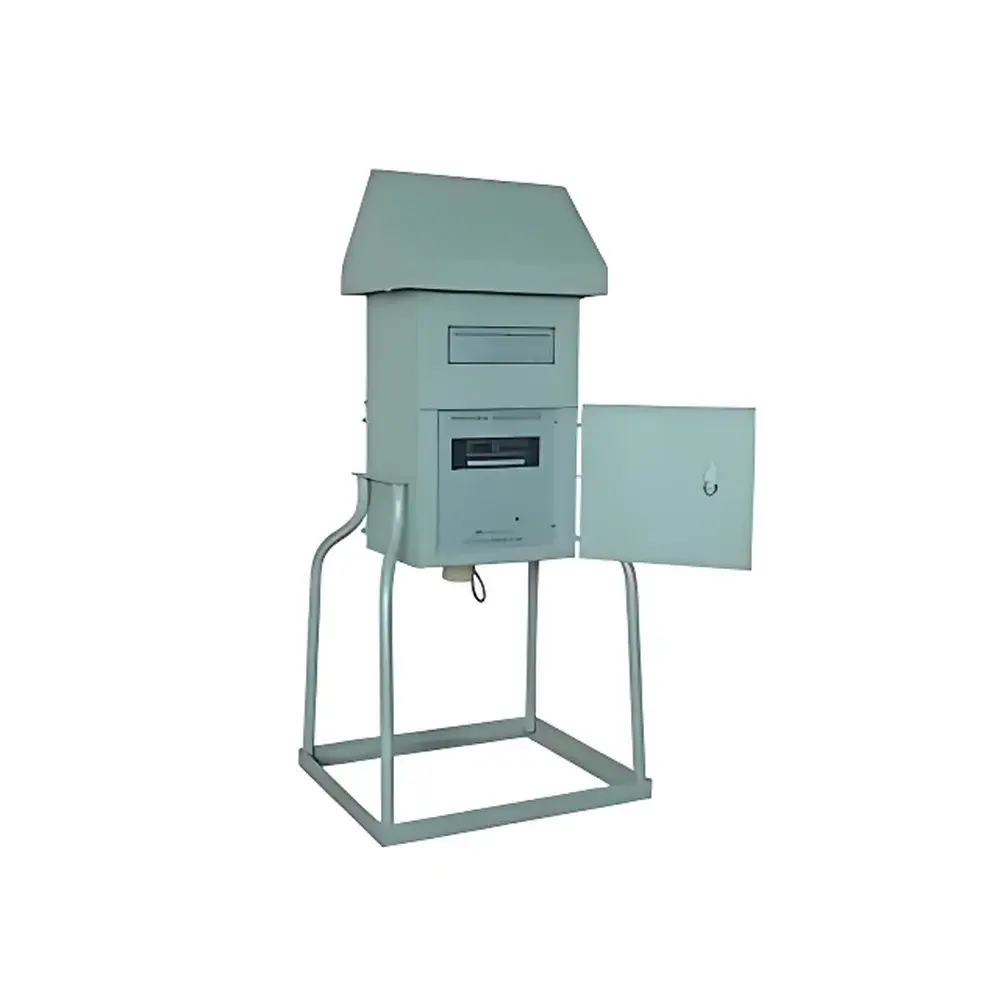
Tianhong TH-1000 Series Total Suspended Particulates (TSP) Sampler
| Brand | Tianhong |
|---|---|
| Origin | Hubei, China |
| Model | TH-1000 |
| Compliance | HJ/T 374–2007 (formerly HB3-2001) |
| Flow Control | Constant-flow sampling with <5 s response time |
| Power Resilience | Auto-resume after power interruption |
| Environmental Rating | All-weather, rain-resistant enclosure |
| Optional Configuration | PM₁₀ inlet compatible (with certified PM₁₀ cyclone separator) |
| Data Logging | Real-time temperature, flow rate, cumulative standard-volume (at 273.15 K, 101.325 kPa), elapsed time, and self-calibrated error compensation |
Overview
The Tianhong TH-1000 Series Total Suspended Particulates (TSP) Sampler is a field-deployable, microprocessor-controlled ambient air monitoring instrument engineered for regulatory-compliant collection of airborne particulate matter with aerodynamic diameters ≤100 µm. Designed in strict adherence to the Chinese national standard HJ/T 374–2007 (the successor to HB3-2001, “Technical Requirements for Environmental Protection Products: TSP Samplers”), the TH-1000 implements constant-flow volumetric sampling using closed-loop feedback control of a brushless DC pump. Its operational principle relies on gravimetric analysis: air is drawn at a stabilized volumetric flow rate through a pre-weighed glass fiber filter housed in a standardized 203 mm (8-inch) cassette; mass gain post-sampling—corrected to standard temperature and pressure (STP: 273.15 K, 101.325 kPa)—yields TSP concentration in µg/m³. The system supports both continuous and timed-interval sampling protocols, making it suitable for fixed-site monitoring networks, mobile environmental surveys, and long-term trend analysis in urban, industrial, and rural settings.
Key Features
- Constant-flow control architecture with dynamic response time <5 seconds to inlet resistance fluctuations or AC line voltage variation (±15% of nominal 220 VAC), ensuring metrological stability per HJ/T 374–2007 Section 5.3.
- Integrated low-power 32-bit microcontroller unit (MCU) managing real-time acquisition from high-accuracy silicon piezoresistive pressure transducers and PT1000 temperature sensors, enabling automatic flow compensation across ambient conditions (−20 °C to +50 °C).
- All-weather enclosure rated IP54, featuring corrosion-resistant aluminum alloy housing, gasket-sealed electronics compartment, and downward-facing inlet geometry to minimize rainwater ingress during outdoor deployment.
- Foldable stainless-steel tripod mount with quick-release clamping mechanism, reducing transport footprint and enabling rapid site setup without tools.
- Non-volatile memory (EEPROM) preserves all sampling parameters—including start/stop timestamps, interval programming, flow setpoint, and STP-corrected cumulative volume—even during unexpected power loss; auto-resume functionality restores operation at pre-interruption state upon power restoration.
Sample Compatibility & Compliance
The TH-1000 accepts standard 203 mm × 254 mm (8″ × 10″) glass fiber filters (e.g., Pallflex® E70-207 or Whatman® GF/F), compliant with ISO 9060:2018 Annex B and US EPA Method IO-3.1 requirements for TSP gravimetric analysis. When equipped with the optional factory-certified PM₁₀ inertial impactor (cut-point D₅₀ = 10 ± 0.5 µm at 1.13 m³/min, tested per ISO 25541-1:2021), the instrument meets the performance criteria for 24-hour PM₁₀ monitoring under HJ 618–2011 and EU EN 12341:2014. All firmware and calibration logic are traceable to NIM (National Institute of Metrology, China) reference standards. The device supports GLP-aligned data integrity through immutable timestamping, parameter logging, and audit-ready event records (e.g., flow deviation alarms, filter change notifications).
Software & Data Management
Data export is supported via USB 2.0 interface to PC-based configuration and reporting software (Windows 10/11 compatible). The application enables full parameter programming—including multi-stage sampling schedules, flow setpoint validation, and STP correction coefficient input—as well as graphical review of historical flow/temperature profiles. Export formats include CSV (for integration with LIMS or statistical packages such as R or Python pandas) and PDF summary reports compliant with CNAS-CL01:2018 documentation requirements. Firmware updates preserve backward compatibility and include cryptographic signature verification to ensure integrity per IEC 62443-3-3 security guidelines.
Applications
- Regulatory ambient air quality monitoring networks operated by provincial and municipal ecological environment bureaus.
- Source apportionment studies requiring parallel TSP and PM₁₀ datasets under identical meteorological conditions.
- Industrial stack emission characterization where coarse particulate fraction (e.g., dust from quarrying, cement production, or metal grinding) must be quantified separately from fine-mode aerosols.
- Long-term baseline studies in protected natural areas, where low-maintenance reliability and weather resilience are critical for unattended operation over extended periods.
- Educational and research laboratories conducting method validation exercises aligned with GB/T 15432–1995 and ISO 7996:1985.
FAQ
Does the TH-1000 meet U.S. EPA equivalency requirements for TSP monitoring?
No—this instrument is designed and certified exclusively for compliance with Chinese national standards (HJ/T 374–2007, HJ 618–2011). It has not undergone EPA Reference or Equivalent Method designation testing.
Can the TH-1000 operate on battery power for remote deployments?
The standard configuration requires 220 VAC ±15%, 50 Hz input. An external 24 VDC auxiliary power module (sold separately) enables operation with deep-cycle lead-acid or LiFePO₄ battery banks when paired with an appropriate inverter.
Is filter weighing data automatically synchronized with sample metadata?
No—the TH-1000 logs only instrument-derived parameters (flow, temperature, time, STP volume). Gravimetric data must be manually entered into the reporting software post-laboratory analysis.
What maintenance intervals are recommended for field use?
Pump oil replacement every 3,000 operating hours; annual calibration verification of pressure and temperature sensors against NIST-traceable references; biannual inspection of gasket integrity and inlet diffuser cleanliness.
How is flow accuracy verified during routine operation?
Users perform daily or pre-sampling calibrations using a primary-standard dry gas meter (e.g., Brooks 5850E) or electronic bubble flowmeter meeting ISO 6145-2:2016 Class 1.0 tolerance, recording results in the device’s internal log.
Related Products







