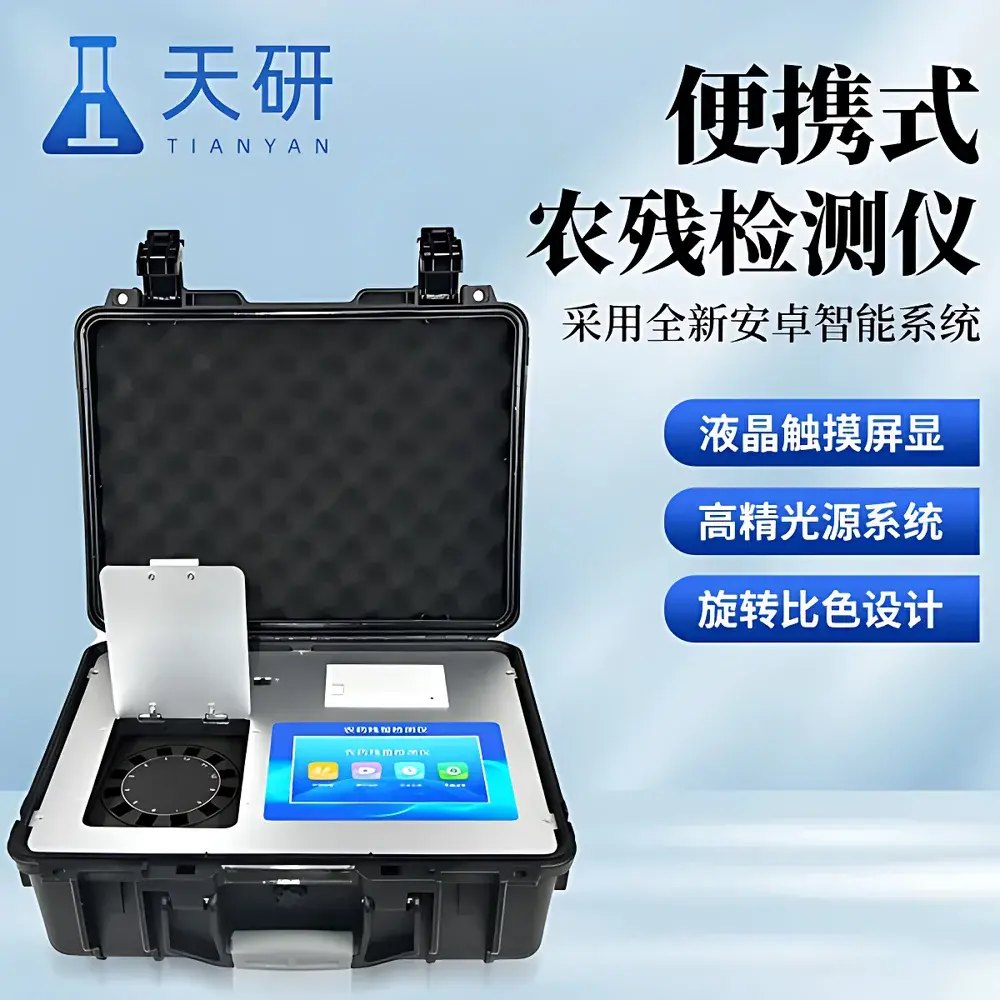
Tianyan TY-NY1 2C Agricultural Product Comprehensive Analyzer
| Brand | Tianyan (Shandong) |
|---|---|
| Origin | Shandong, China |
| Manufacturer Type | Direct Manufacturer |
| Country of Origin | China |
| Model | TY-NY1 2C |
| Price Range | USD 175 – 1,100 (FOB) |
| Detection Method | Enzyme Inhibition Assay (Spectrophotometric Measurement at 410 nm) |
| Number of Channels | 12 |
| Wavelength | 410 nm |
| Inhibition Rate Range | 0–100% |
| Inhibition Rate Accuracy | ≤ ±10% |
| Inhibition Rate Repeatability | ≤ 5% |
| Transmittance Accuracy | ±1.5% |
| Transmittance Repeatability | ≤ 0.5% |
| Absorbance Drift | ≤ 0.005 Abs / 3 min |
| Dimensions | 43 × 35 × 20 cm |
| Net Weight | 5.1 kg |
| Power Supply | DC 12 V (with optional 6 Ah rechargeable Li-ion battery and vehicle adapter) |
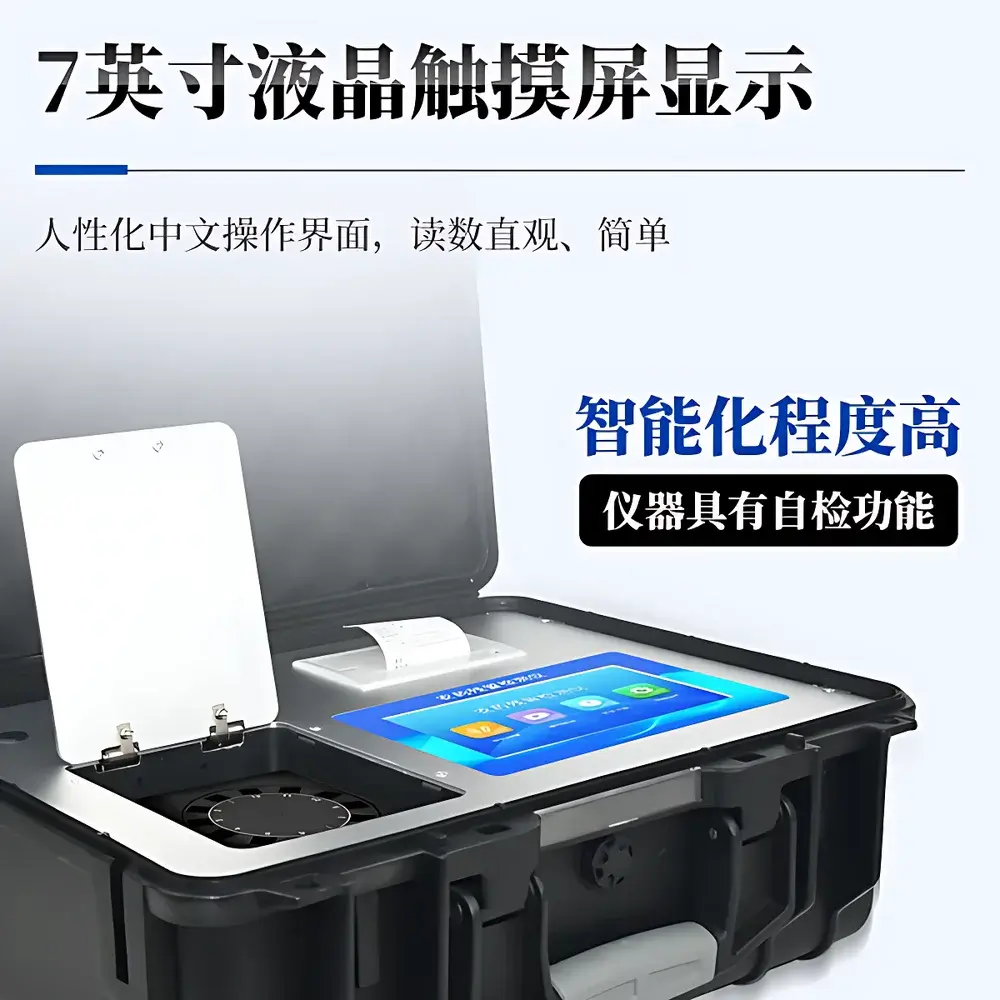
| Display | 7-inch capacitive touchscreen (Android OS, ARM Cortex-A7 RK3288 quad-core @ 1.88 GHz) |
| Data Storage | 200,000 test records (exportable as Excel via USB 2.0) |
| Connectivity | Built-in Wi-Fi & wireless upload module |
| Calibration | NIM-certified (National Institute of Metrology, China) |
| Enclosure | Industrial-grade ABS polymer housing |
Overview
The Tianyan TY-NY1 2C Agricultural Product Comprehensive Analyzer is a field-deployable, spectrophotometric enzyme inhibition instrument engineered for rapid, on-site screening of organophosphate and carbamate pesticide residues in fresh produce. It operates on the principle of acetylcholinesterase (AChE) inhibition assay—where residual pesticides suppress enzymatic activity in a standardized reaction, resulting in quantifiable changes in absorbance at 410 nm. This method aligns with GB/T 5009.199–2003, the Chinese national standard for pesticide residue detection in vegetables and fruits, and serves as a validated pre-screening tool compliant with international food safety surveillance frameworks including Codex Alimentarius guidelines for rapid analytical methods. Designed for decentralized use, the analyzer supports real-time decision-making at farm gates, wholesale markets, school cafeterias, catering facilities, and municipal food safety inspection units—enabling early intervention before contaminated commodities enter distribution channels.
Key Features
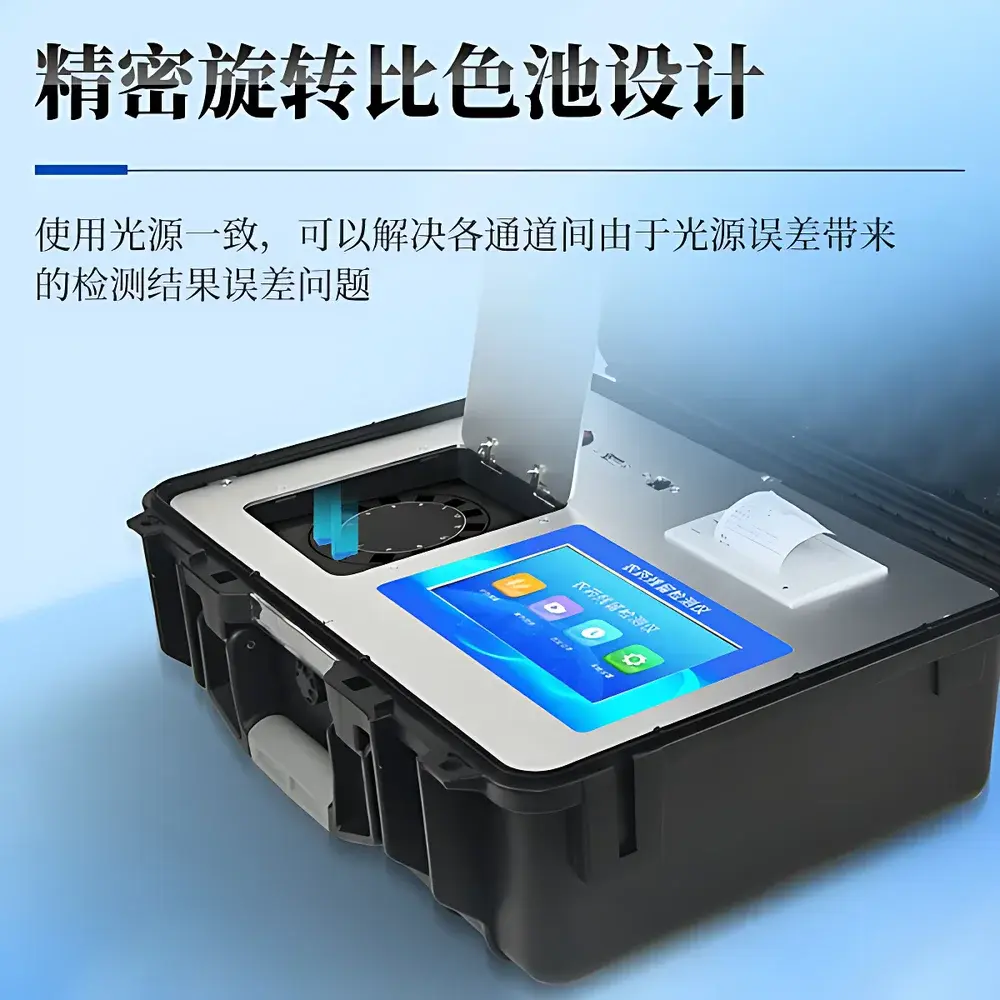
- 12 independent optical detection channels with precision rotating cuvette carousel—ensures uniform illumination across all positions and eliminates inter-channel photometric variance.
- Auto-cuvette recognition system: detects insertion of sample cuvettes and initiates channel-specific measurement without manual assignment.
- High-stability optical architecture: features imported high-brightness LEDs with intelligent constant-current regulation and automatic intensity calibration—eliminates thermal drift during extended operation (>8 hours continuous).
- Industrial-grade ABS enclosure (43 × 35 × 20 cm, 5.1 kg) optimized for portability and shock resistance in mobile lab and roadside inspection scenarios.
- Dual-power capability: operates on 12 V DC input, compatible with vehicle power systems and optional 6 Ah Li-ion battery—supports >6 hours of uninterrupted field testing.
- Integrated Android platform (RK3288 quad-core, 1.88 GHz) with intuitive Chinese-English bilingual UI, responsive 7-inch capacitive touchscreen, and on-device data management tools.
- Onboard database supporting >100 preloaded vegetable/fruit names—editable and expandable with custom entries for regional crops or proprietary cultivars.
Sample Compatibility & Compliance
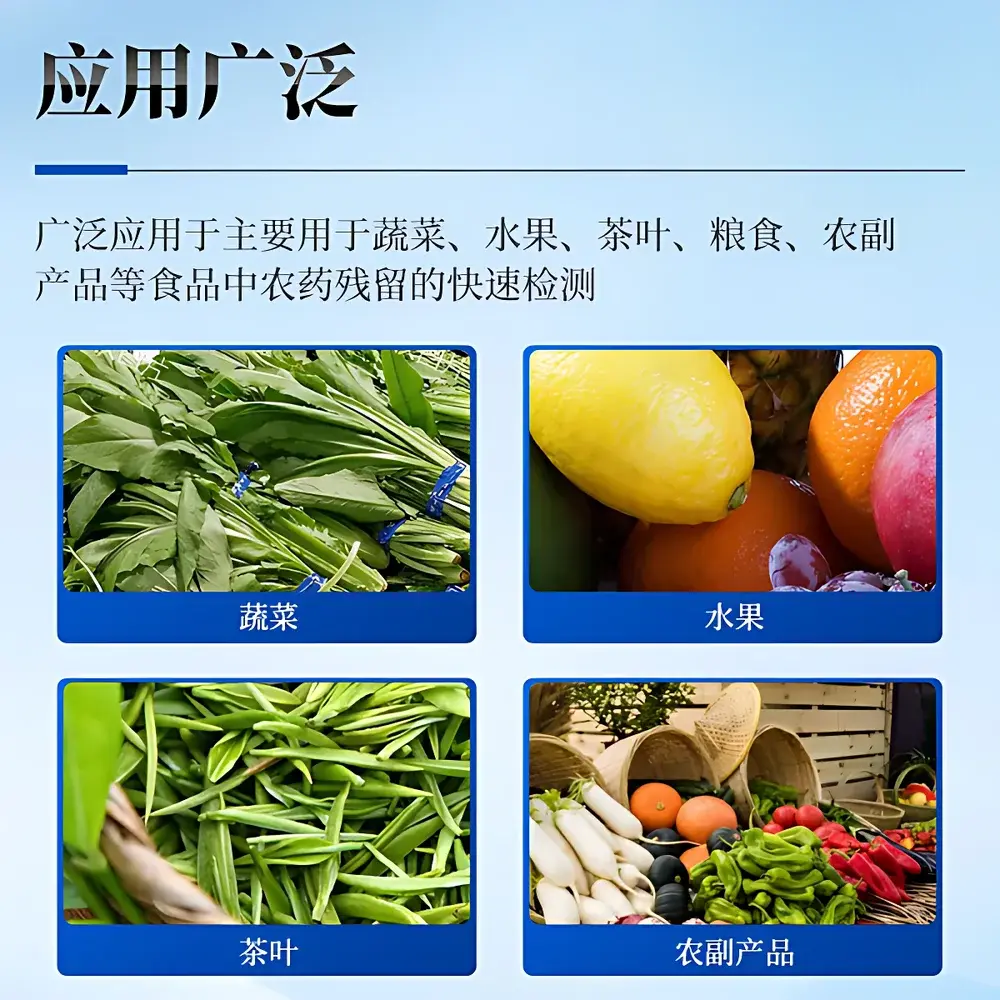
The TY-NY1 2C is validated for homogenized aqueous extracts from leafy greens (e.g., spinach, cabbage), fruit pulps (e.g., apple, pear), tea infusions, cereal grains, and dried agricultural commodities. Sample preparation follows standardized homogenization, centrifugation, and supernatant dilution protocols per GB/T 5009.199–2003. Instrument performance meets metrological traceability requirements under NIM (National Institute of Metrology, China) calibration certification. While not intended for quantitative LC-MS/MS confirmation, its qualitative/semi-quantitative output satisfies regulatory pre-screening thresholds defined by China’s SAMR (State Administration for Market Regulation) and aligns with FAO/WHO JMPR provisional MRL screening criteria. Data logs include operator ID, timestamp, sample ID, inhibition rate, and pass/fail determination against embedded national limit values—supporting GLP-aligned recordkeeping.
Software & Data Management
Data acquisition, storage, and reporting are fully integrated within the embedded Android environment. Each test generates a structured record containing absorbance differential (ΔA), calculated inhibition rate (%), and compliance status relative to configurable MRL thresholds. Up to 200,000 results are retained locally and exportable in native Excel (.xlsx) format via USB 2.0 interface. Optional wireless modules enable batch upload to centralized food safety dashboards—including provincial regulatory platforms compliant with China’s “Internet + Food Safety Supervision” initiative. All data transfers adhere to TLS 1.2 encryption standards. Audit trails capture user login events, calibration actions, firmware updates, and result modifications—meeting foundational requirements for 21 CFR Part 11–aligned electronic records in GMP-adjacent environments.
Applications
- Pre-harvest monitoring at cooperative farms and GAP-certified production bases.
- Rapid triage in wholesale markets and cold-chain logistics hubs prior to wholesale distribution.
- Frontline verification in school meal programs, hospital kitchens, and corporate cafeterias.
- Mobile food safety patrols conducted by municipal market supervision bureaus.
- Internal QC screening for food processors handling raw agricultural inputs.
- Training and capacity-building in rural extension centers and agricultural vocational schools.
FAQ
What regulatory standards does the TY-NY1 2C comply with?
It conforms to GB/T 5009.199–2003 and supports alignment with Codex Alimentarius rapid method validation principles. Calibration is traceable to NIM (China National Institute of Metrology).
Can inhibition rate data be exported for third-party statistical analysis?
Yes—results are stored in Excel-compatible format and support direct USB transfer or encrypted Wi-Fi upload for integration into LIMS or enterprise analytics platforms.
Is remote firmware update supported?
Yes—over-the-air (OTA) updates are enabled via authenticated Wi-Fi connection, ensuring continued compliance with evolving national detection protocols.
Does the device support multi-language interfaces beyond Chinese?
The system includes English language support for menu navigation, report generation, and error prompts—facilitating cross-border technical deployment and training.
How is photometric accuracy maintained during prolonged field use?
The LED light source incorporates closed-loop intensity feedback and auto-calibration routines triggered at startup and every 2 hours during active operation—guaranteeing <±0.5% transmittance repeatability per ISO 10993-12 verification protocols.