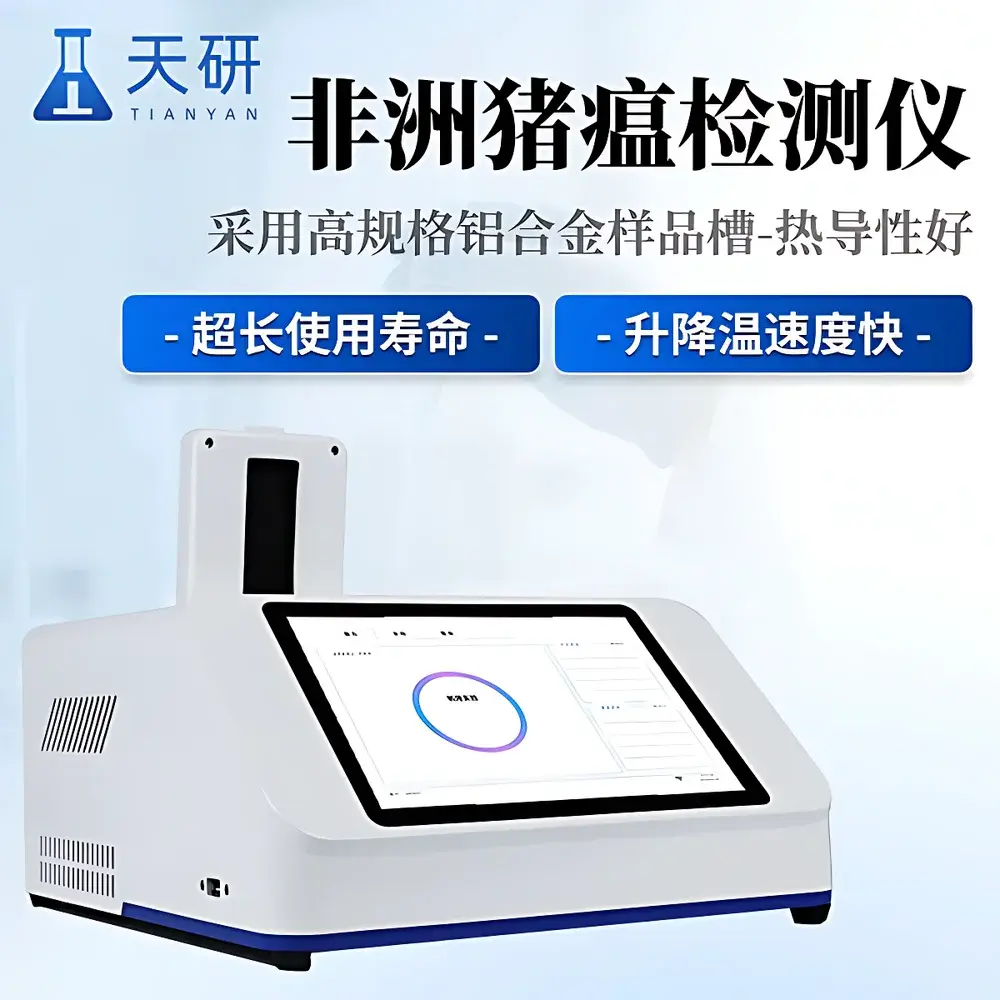


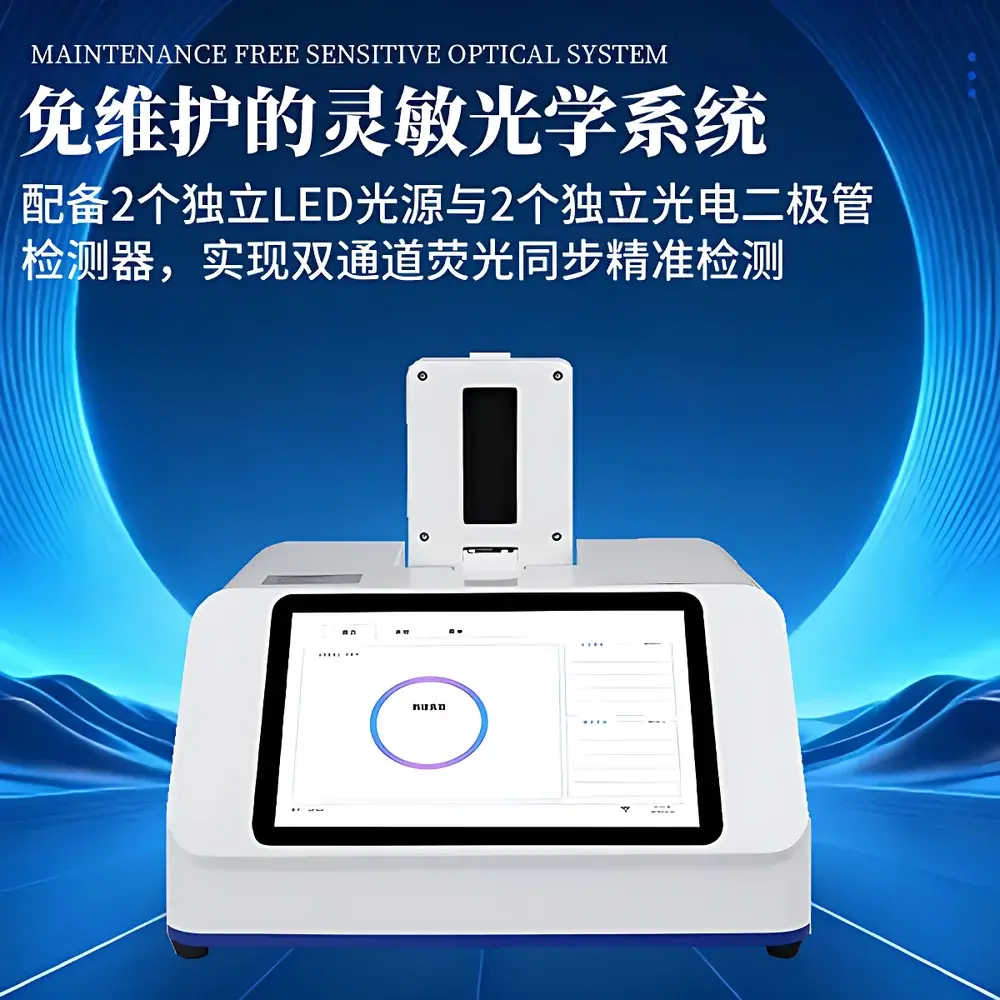
Tianyan TY-ZW216 Dual-Channel 16-Well Real-Time Fluorescent Quantitative PCR System for African Swine Fever Virus Detection
| Brand | Tianyan |
|---|---|
| Origin | Shandong, China |
| Model | TY-ZW216 |
| Detection Principle | Real-Time Fluorescent Quantitative PCR (qPCR) |
| Channel Configuration | Dual-channel (FAM/VIC compatible) |
| Sample Capacity | 16 × 0.2 mL wells (supports single tubes & 8-tube strips) |
| Temperature Range | 4–99 °C |
| Thermal Accuracy | ±0.1 °C |
| Well-to-Well Uniformity | ≤±0.25 °C |
| Max Heating/Cooling Rate | 6 °C/s / 4 °C/s |
| Optical System | Dual high-intensity LED excitation sources (460–480 nm & 525–545 nm), dual photodiode detectors with narrow-band interference filters |
| Sensitivity | Single-copy DNA detection capability |
| Dynamic Range | 10 orders of magnitude (1–10¹⁰ copies/µL) |
| Linearity | R² ≥ 0.999 |
| Reproducibility | CV < 2% (fluorescence), CV < 2% (sample), CV < 3% (precision) |
| Data Output Formats | PDF, XLS, CSV, DOCX |
| Connectivity | USB 2.0, Wi-Fi (optional), Android-based onboard OS |
| Dimensions | 350 × 384 × 184.5 mm |
| Weight | 5.4 kg |
| Power | 220 V AC, max 300 W |
| Operating Environment | 18–35 °C, 0–85% RH (non-condensing) |
Overview
The Tianyan TY-ZW216 is a compact, dual-channel real-time fluorescent quantitative PCR system engineered specifically for field-deployable and laboratory-based nucleic acid detection of African Swine Fever virus (ASFV). It operates on the principle of sequence-specific amplification coupled with real-time fluorescence monitoring—enabling precise quantification and qualitative identification of ASFV genomic DNA in swine tissue, blood, serum, or environmental samples. Designed to meet the stringent performance requirements outlined in China’s Ministry of Agriculture and Rural Affairs (MARA) regulatory framework—including mandatory use of MARA-approved diagnostic reagents—the TY-ZW216 supports compliance with national surveillance protocols for ASF control. Its portable form factor (5.4 kg), integrated Android operating system, and battery-compatible operation mode make it suitable for deployment at farms, slaughterhouses, border inspection posts, and mobile veterinary laboratories—without compromising analytical rigor expected in fixed-site molecular diagnostics.
Key Features
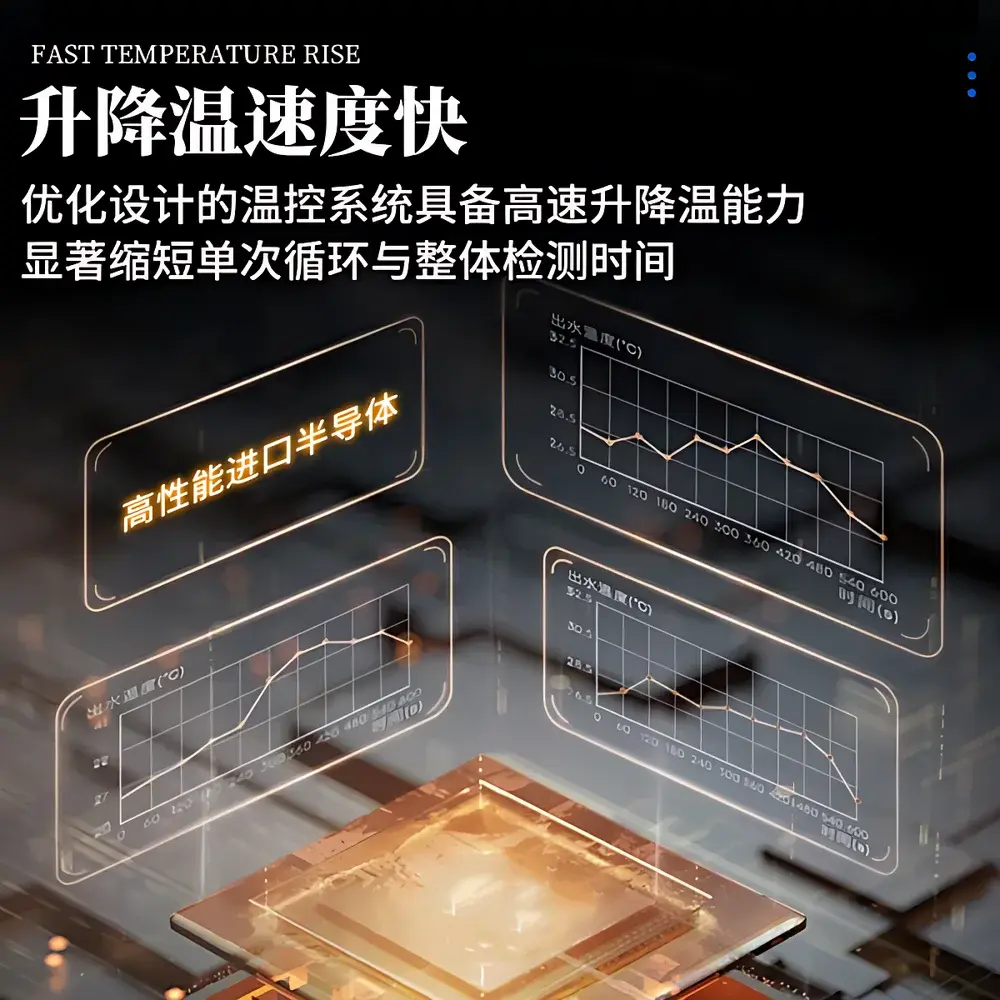
- High-Fidelity Thermal Control: Utilizes industrial-grade Peltier modules with PT1000 precision temperature sensing, delivering thermal accuracy of ±0.1 °C and inter-well uniformity ≤±0.25 °C across the full 4–99 °C range. Thermal ramp rates reach up to 6 °C/s (heating) and 4 °C/s (cooling), enabling rapid cycling without sacrificing reproducibility.
- Dual-Channel Optical Architecture: Employs two independent high-output LEDs (460–480 nm and 525–545 nm) paired with matched photodiode detectors and ultra-narrow bandpass filters (FWHM < 10 nm). This configuration minimizes spectral crosstalk (<0.5% typical) and eliminates the need for optical calibration—ensuring long-term signal stability over instrument lifetime.
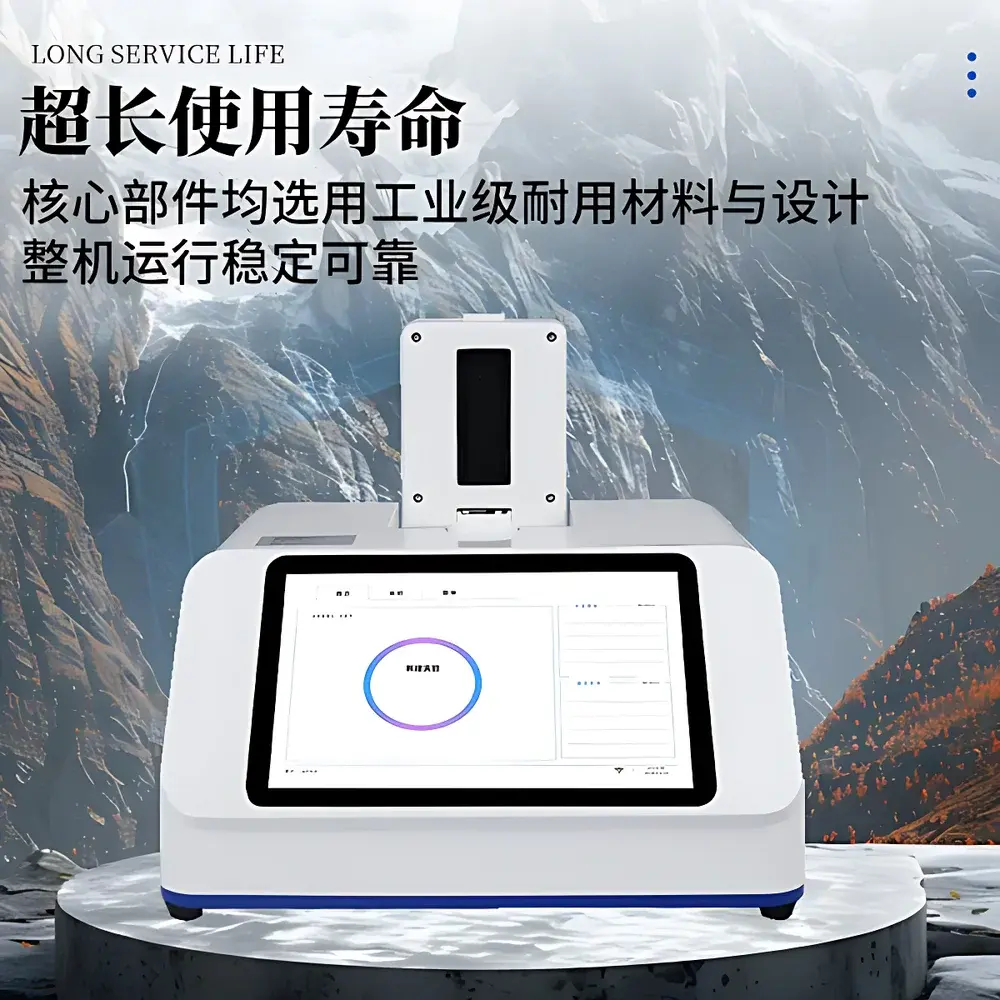
- Robust Sample Handling Design: Features a corrosion-resistant aluminum reaction block with hermetic sealing between the thermal module and electronics. Condensation and liquid ingress are physically isolated from Peltier elements and circuitry, extending service intervals and supporting sustained operation under variable ambient conditions (18–35 °C, 0–85% RH).
- Intuitive Onboard Workflow Management: Runs a dedicated Android-based qPCR OS with preloaded assay templates for ASFV, Classical Swine Fever (CSF), Porcine Reproductive and Respiratory Syndrome (PRRS), Avian Influenza (AI), and Pseudorabies Virus (PRV). Supports post-run sample assignment, automated baseline/threshold calculation, and HRM (High-Resolution Melting) analysis for variant discrimination.
- Regulatory-Ready Data Integrity: Implements audit-trail logging for all user actions, program edits, and result exports. Exported reports include full experimental metadata (thermal profile, cycle thresholds, amplification efficiency, melt curves), traceable to instrument serial number and firmware version—facilitating GLP/GMP-aligned documentation practices.
Sample Compatibility & Compliance
The TY-ZW216 accepts standard 0.2 mL single tubes and 8-tube strips, accommodating input volumes of 15–100 µL per well. It is fully compatible with MARA-registered ASFV detection kits based on TaqMan probe chemistry (e.g., FAM-labeled probes with VIC internal controls), as well as SYBR Green I–based assays. The system meets technical specifications referenced in GB/T 38577-2020 (“Technical Requirements for Real-Time PCR Instruments Used in Veterinary Diagnostics”) and aligns with ISO/IEC 17025:2017 clauses related to equipment verification and measurement uncertainty estimation. While not FDA 21 CFR Part 11–certified out-of-the-box, its data export architecture (encrypted PDF/XLS with embedded timestamps and digital signatures via optional network integration) supports validation pathways for regulated environments requiring electronic record integrity.
Software & Data Management
The onboard software provides full-cycle qPCR analysis without external PC dependency. Key capabilities include automatic Cq determination using second-derivative maximum algorithms, multi-curve overlay visualization, efficiency-corrected relative quantification (ΔΔCq), and melt curve deconvolution. Data can be exported via USB flash drive in PDF (print-ready reports), XLS (raw fluorescence values per cycle), CSV (machine-readable tabular format), or DOCX (narrative summaries). Optional Wi-Fi connectivity enables secure transfer to local LIMS servers or cloud-hosted repositories. All exported files retain immutable metadata—including operator ID, date/time stamps, instrument firmware revision, and calibration history—supporting retrospective audit readiness.
Applications
Primary applications include frontline ASFV surveillance in commercial swine operations, rapid differential diagnosis during suspected outbreaks, and routine monitoring at abattoirs and cold-chain logistics hubs. Secondary uses extend to detection of other economically significant porcine pathogens including CSFV, PRRSV, PRV, and Mycoplasma hyopneumoniae. The instrument also supports research-grade applications such as viral load kinetics studies, vaccine efficacy assessment, and environmental swab testing in biosecurity-critical zones. Its open reagent architecture permits method development using non-MARA kits under validated in-house protocols, provided analytical sensitivity and specificity meet ISO 13790:2021 criteria for veterinary molecular assays.
FAQ
Is the TY-ZW216 approved for official ASFV testing under Chinese regulatory mandates?
Yes—it is designed to operate exclusively with MARA-registered ASFV qPCR kits, satisfying the requirement in MARA Announcement No. 325 (2020) that all official ASF diagnostics must employ approved reagents and instruments meeting defined performance thresholds.
Can the system be validated for GxP-compliant environments?
While the base configuration does not include 21 CFR Part 11–compliant electronic signature modules, its firmware architecture supports IQ/OQ/PQ documentation packages; third-party validation services are available through authorized Tianyan partners.
What maintenance is required for the optical system?
None—the dual LED light sources and photodiode detectors are rated for >50,000 hours of continuous operation and require no periodic recalibration or alignment.
Does the instrument support multiplex detection beyond two targets?
No—hardware is configured for dual-channel detection only. Multiplex assays must use spectrally resolvable dyes (e.g., FAM + VIC) within this two-channel constraint.
How is temperature uniformity verified during installation qualification?
Each unit ships with a NIST-traceable calibration certificate referencing block temperature mapping performed at three points (low/mid/high) across all 16 wells using calibrated thermistors per ISO/IEC 17025 Annex A.3 guidelines.