
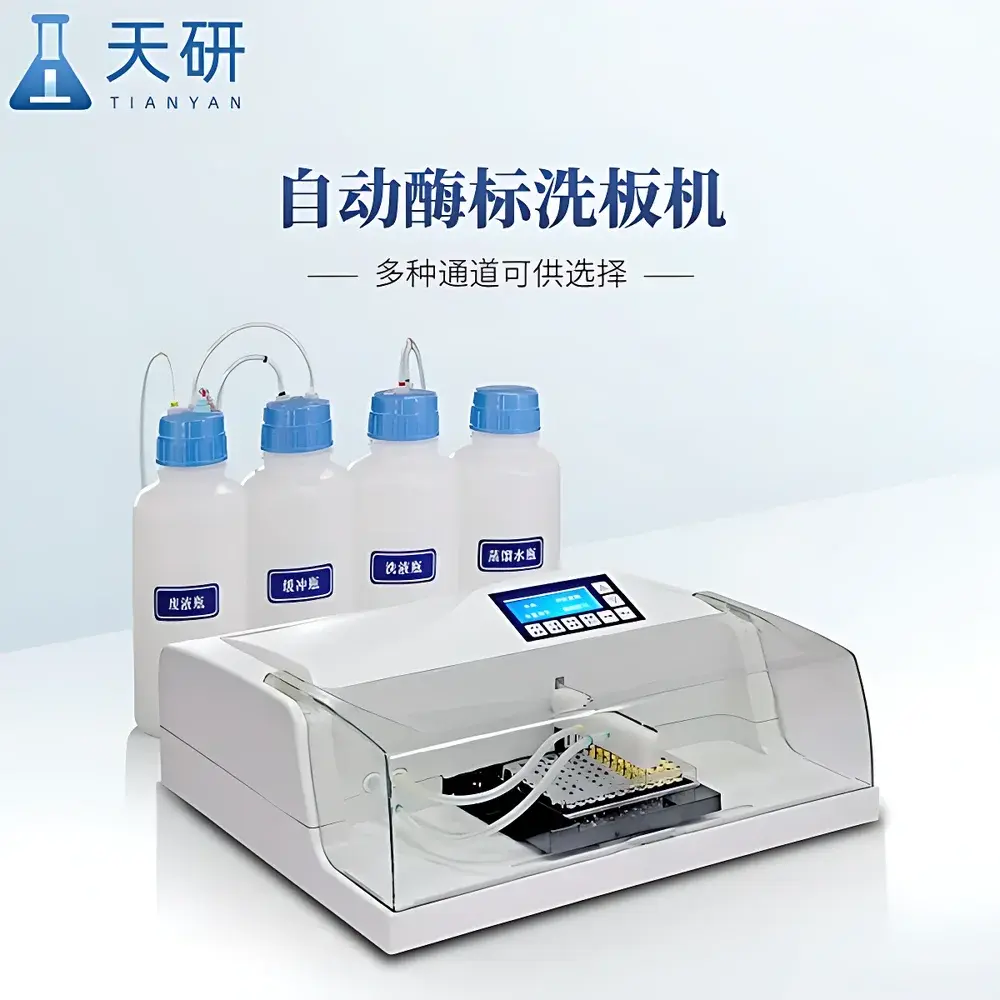
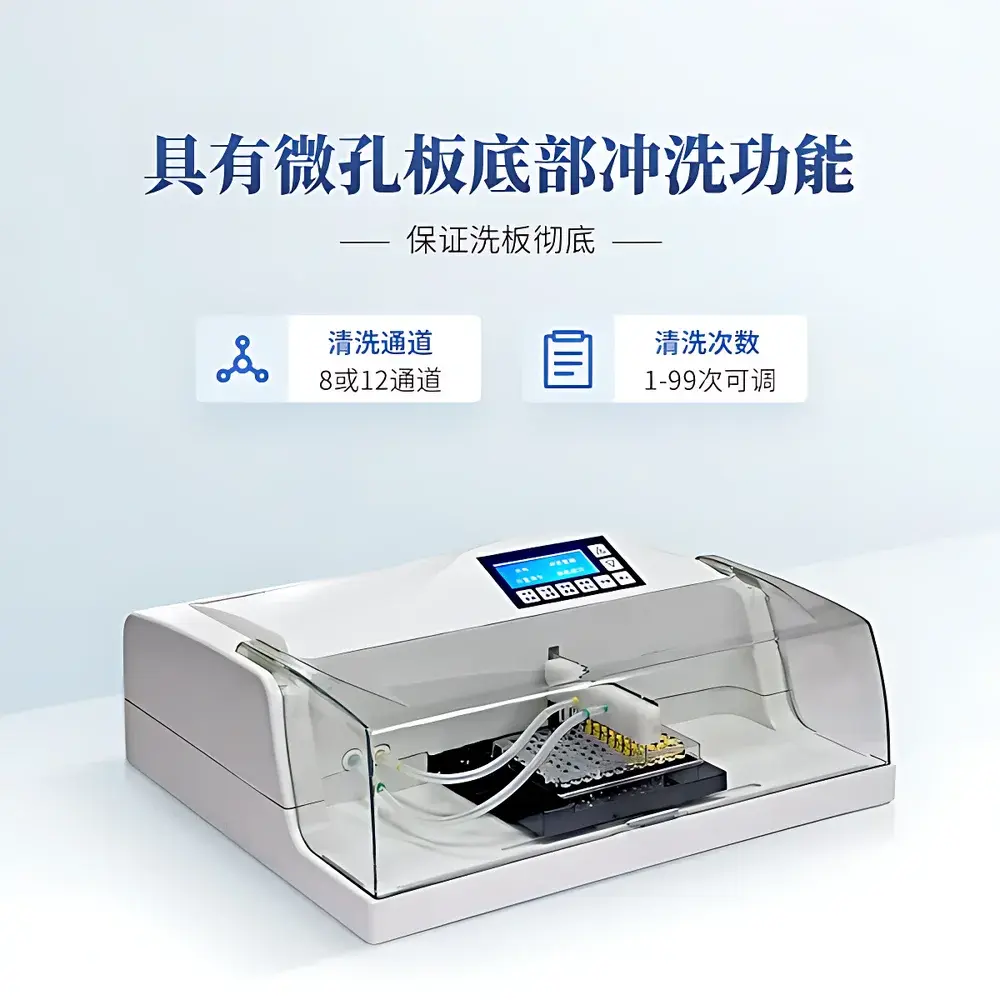
Tianyan TY-ZX01 Automated Microplate Washer
| Brand | Tianyan |
|---|---|
| Origin | Shandong, China |
| Manufacturer Type | Direct Manufacturer |
| Model | TY-ZX01 |
| Wash Head Configuration | 8-channel or 12-channel selectable |
| Number of Wash Fluid Channels | 8 or 12 |
| Wash Cycles Adjustable | 1–99 |
| Residual Volume per Well | ≤1 µL |
| Wash Volume Range | 50–3000 µL (adjustable in 10-µL increments) |
| Dispensing Accuracy | ≤2.0% |
| Soak Time | 0–24 h |
| Shake Duration | 0–600 s |
| Wash Time per Cycle | 0.1–9.9 s |
| Programmable Protocols Stored | ≥100 user-defined methods |
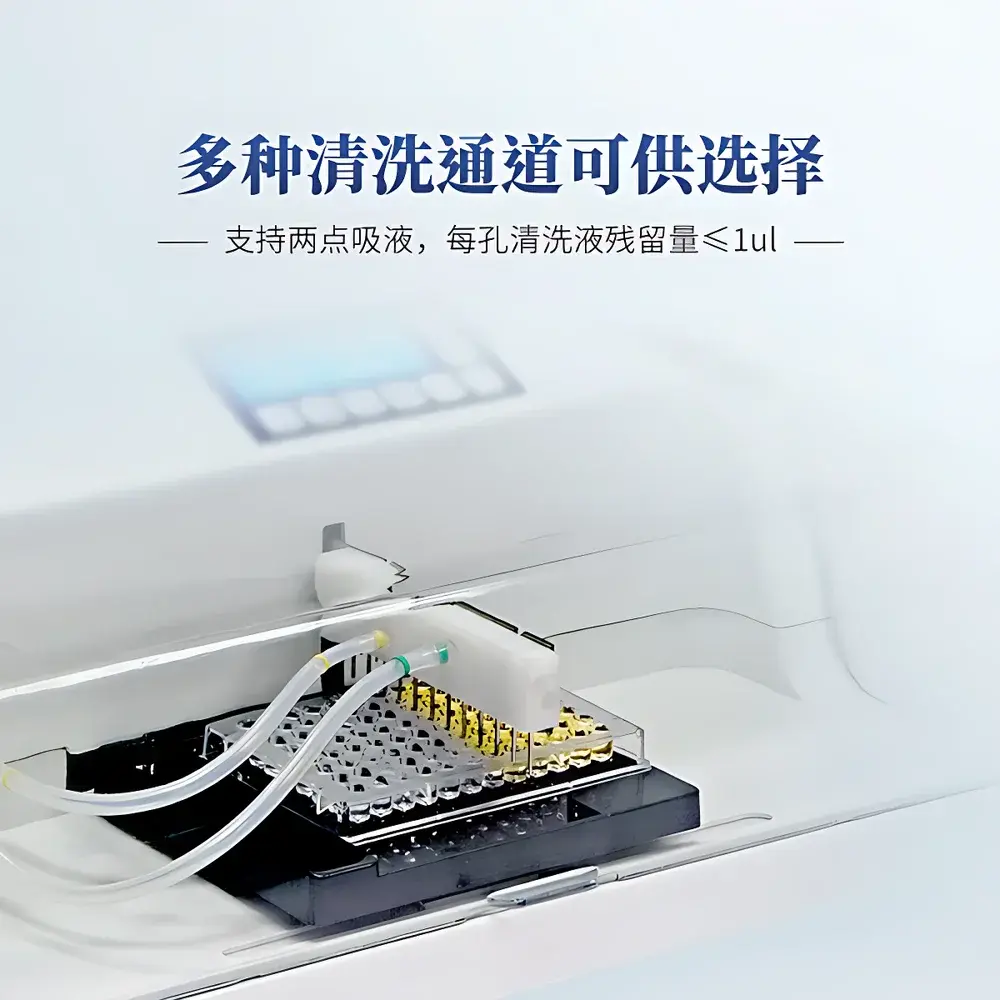
| Dual Aspiration Mode | Enabled |
| Bottom-Flush Function | Integrated |
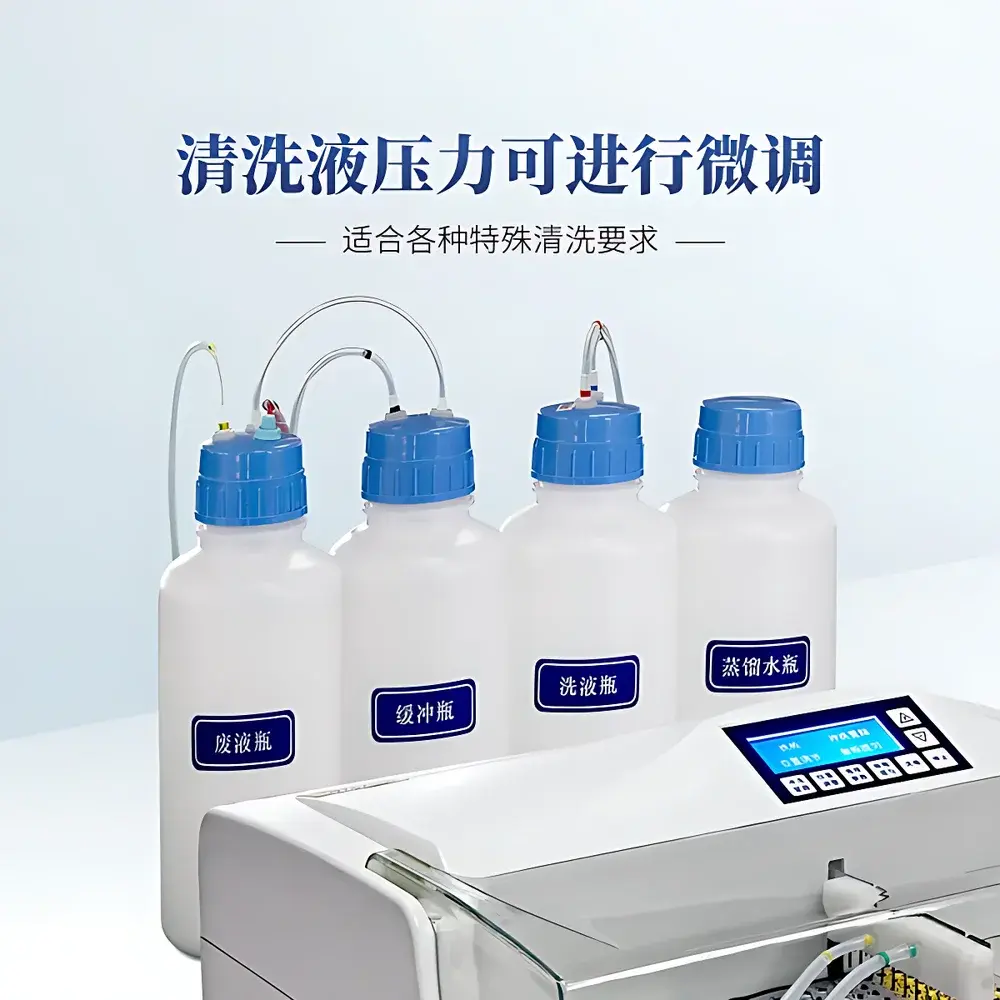
| Pressure-Adjustable Wash Fluid Delivery | Supported |
| Plate Compatibility | Flat-bottom, U-bottom, V-bottom microplates |
| Optional Feature | Overflow sensor for waste/residual liquid detection |
Overview
The Tianyan TY-ZX01 Automated Microplate Washer is a precision-engineered laboratory instrument designed for high-reproducibility washing of ELISA, cell-based assay, and immunoassay microplates. It operates on a dual-aspiration principle combined with bottom-flush fluid dynamics to ensure complete removal of unbound reagents while minimizing cross-contamination and well-to-well carryover. Engineered for compatibility with standard 96-well and 384-well formats—including flat-bottom, U-bottom, and V-bottom configurations—the system supports both full-plate and strip-wise washing protocols. Its modular wash head architecture (selectable 8-channel or 12-channel configuration) enables flexible throughput scaling without compromising wash uniformity or residual volume control. The device meets foundational operational requirements for GLP-compliant environments and serves as a critical preprocessing component in workflows aligned with ISO 15197, CLSI EP06-A, and USP <1033> guidelines for assay robustness.
Key Features
- Dual-point aspiration technology ensures consistent residual volume ≤1 µL per well across all plate geometries.
- Integrated bottom-flush mode directs wash buffer tangentially along the well base to dislodge adherent particulates—critical for low-background immunoassays.
- Programmable wash pressure modulation allows fine-tuning of fluid delivery for sensitive cell monolayers or fragile antibody-coated surfaces.
- Configurable soak time (0–24 h) and orbital shaking (0–600 s, adjustable speed and amplitude) reduce non-specific binding and improve signal-to-noise ratios.
- Wash cycle duration (0.1–9.9 s), volume dispense (50–3000 µL, 10-µL increments), and total cycles (1–99) are independently adjustable per protocol step.
- Onboard memory stores ≥100 user-defined washing programs, supporting version-controlled method archiving and audit-ready parameter logging.
- Optional liquid overflow sensor provides real-time monitoring of waste reservoir levels, preventing spillage and enabling unattended overnight operation.
Sample Compatibility & Compliance
The TY-ZX01 accommodates ANSI/SLAS-standard microplates (SBS format) regardless of well shape or material composition (polystyrene, polypropylene, or treated surfaces). Its non-contact fluid handling architecture eliminates mechanical wear on plate surfaces, preserving surface chemistry integrity over extended use. The system supports traceability via timestamped protocol execution logs and is compatible with laboratory information management systems (LIMS) through RS-232 or USB serial interfaces. While not certified under FDA 21 CFR Part 11 out-of-the-box, its programmable audit trail functionality—including operator ID tagging and parameter change history—facilitates validation for GMP-aligned QC laboratories conducting ELISA, lateral flow, or multiplex cytokine assays.
Software & Data Management
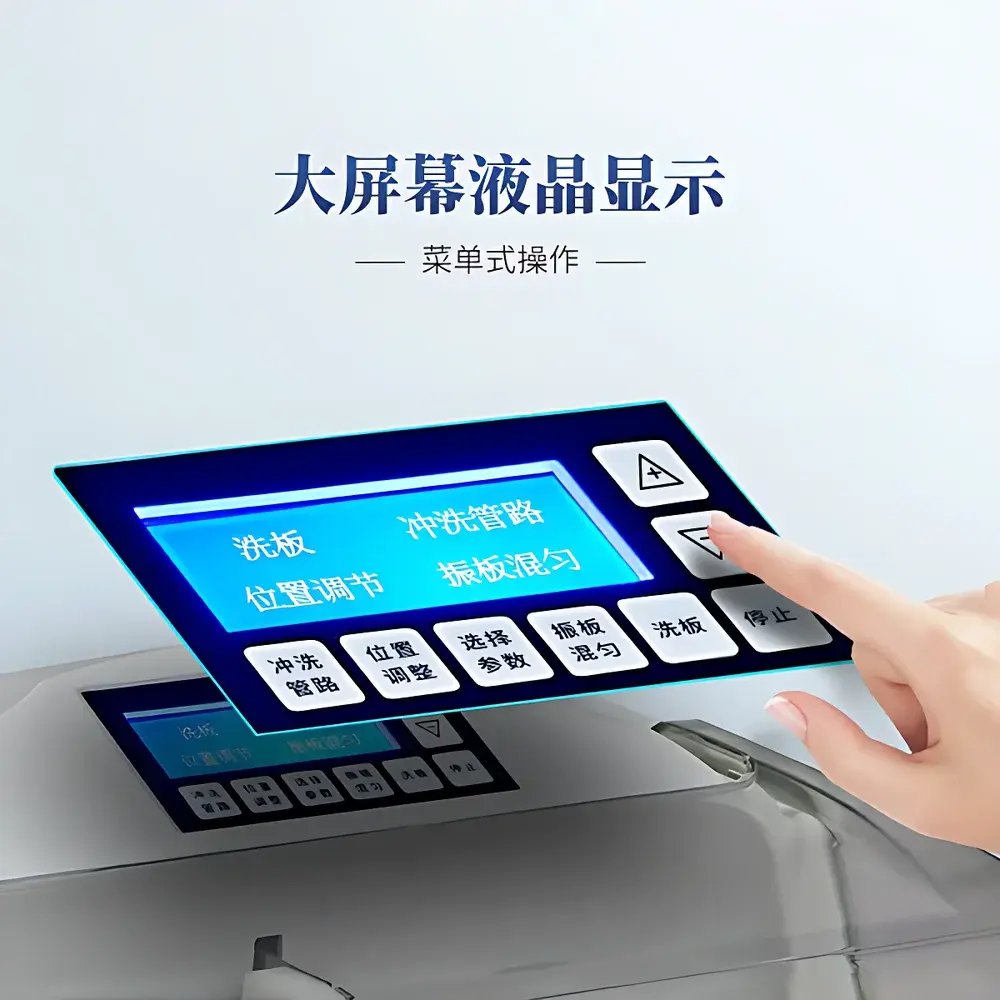
A dedicated embedded firmware interface—accessible via large-format LCD with intuitive menu navigation—enables rapid protocol setup without external PC dependency. All parameters (dispense volume, aspiration delay, shake profile, rinse sequence) are editable at the instrument level and persist across power cycles. Protocol export/import via USB flash drive supports centralized method distribution across multi-instrument labs. Data output includes CSV-formatted wash logs containing cycle count, actual residual volume estimates (based on calibrated aspiration curves), and error codes for failed steps—enabling root-cause analysis during assay troubleshooting.
Applications
- ELISA plate washing prior to substrate addition in clinical diagnostics and biopharmaceutical development.
- Removal of unbound antibodies in sandwich immunoassays requiring ultra-low background (e.g., anti-drug antibody detection).
- Cell-based assay preparation, including removal of serum proteins prior to staining or lysis.
- High-throughput screening (HTS) workflows where reproducible washing directly impacts Z’-factor stability.
- Validation studies requiring documented wash consistency across batches, operators, and instruments.
FAQ
What plate formats does the TY-ZX01 support?
It accepts all SBS-compliant 96-well and 384-well plates, including flat-bottom, U-bottom, and V-bottom designs, with automatic height calibration for variable plate thickness.
Can the washer be integrated into automated liquid handling platforms?
Yes—its RS-232 port supports TTL-level handshake signals for synchronization with robotic arms or stacker modules in walk-away workflows.
Is calibration documentation provided for regulatory submissions?
Factory calibration certificates covering dispensing accuracy (≤2.0%), residual volume verification (≤1 µL), and timing repeatability are available upon request for IQ/OQ documentation packages.
How is maintenance performed on the fluidic path?
The system includes an automated tube-rinse function that circulates ethanol or detergent solution through all channels after each run, reducing biofilm accumulation and extending valve service life.
Does the instrument comply with electrical safety standards for international use?
It conforms to IEC 61010-1:2010 for laboratory equipment and carries CE marking; voltage input is auto-ranging (100–240 VAC, 50/60 Hz).



