
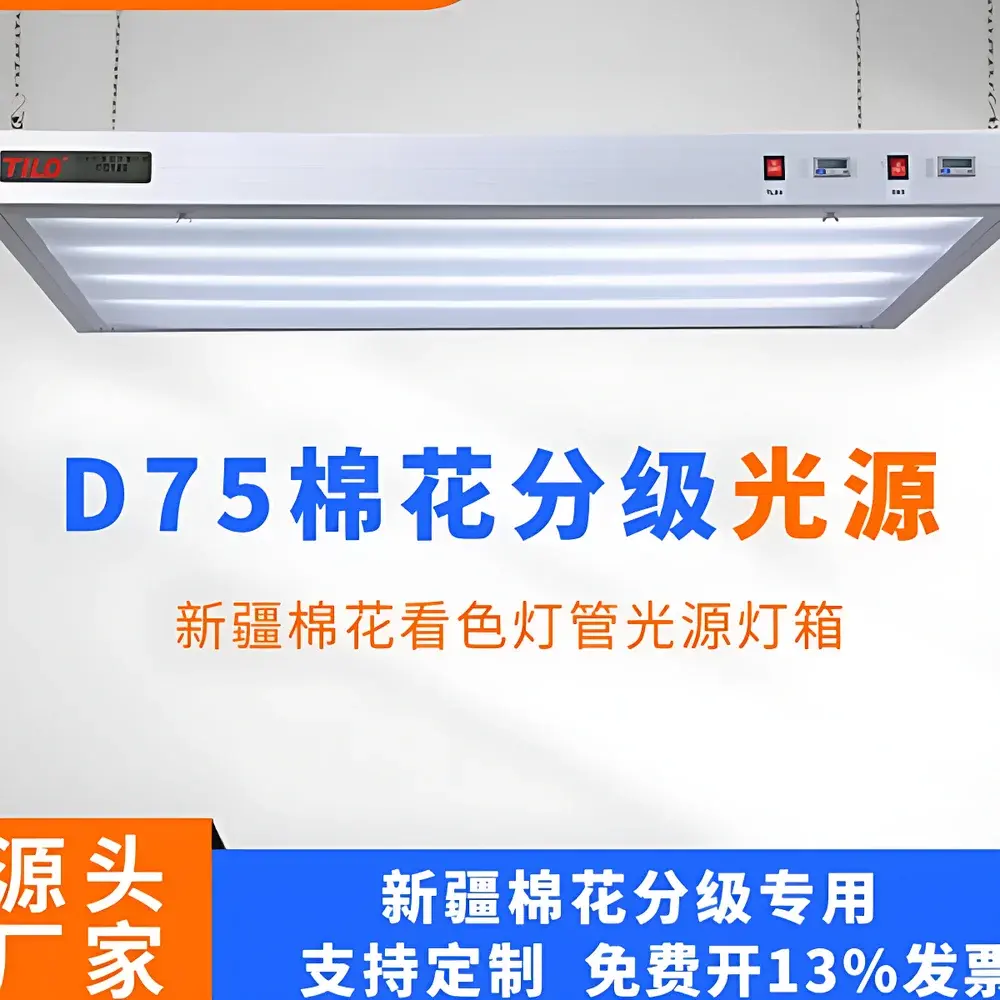
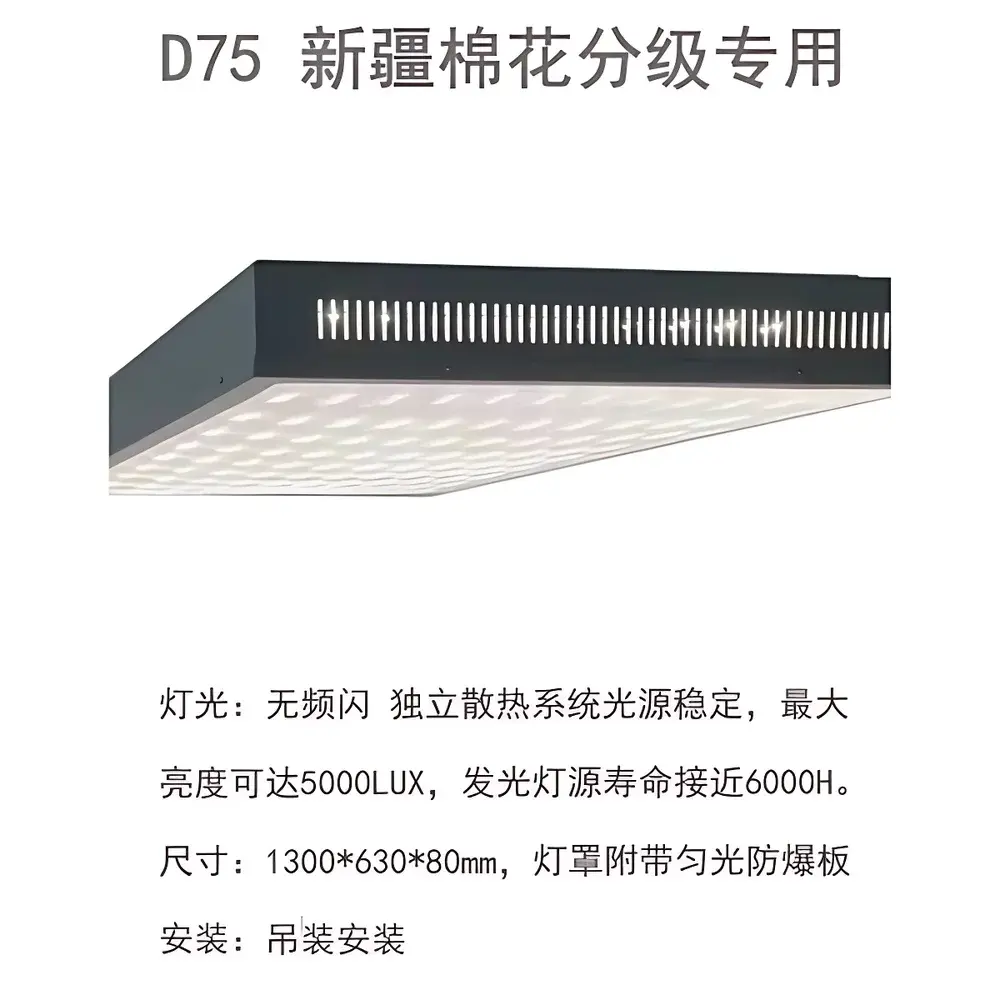
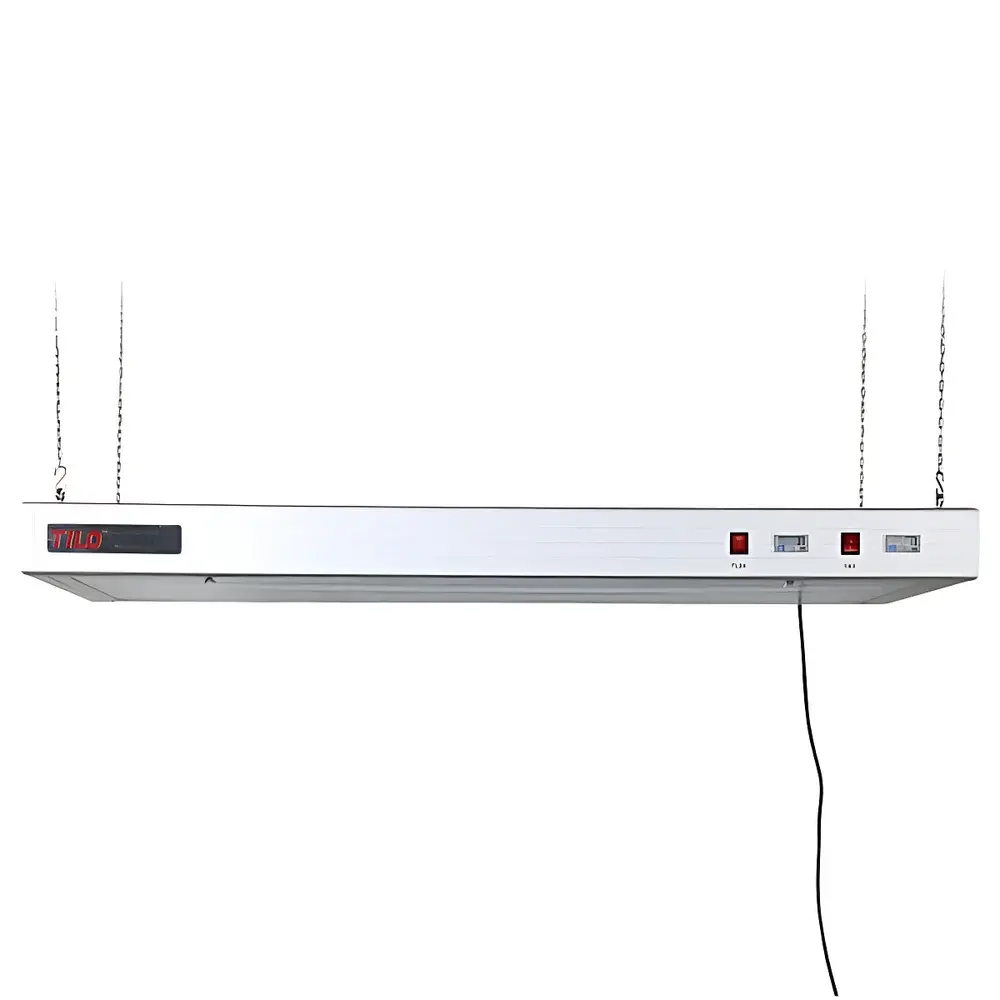
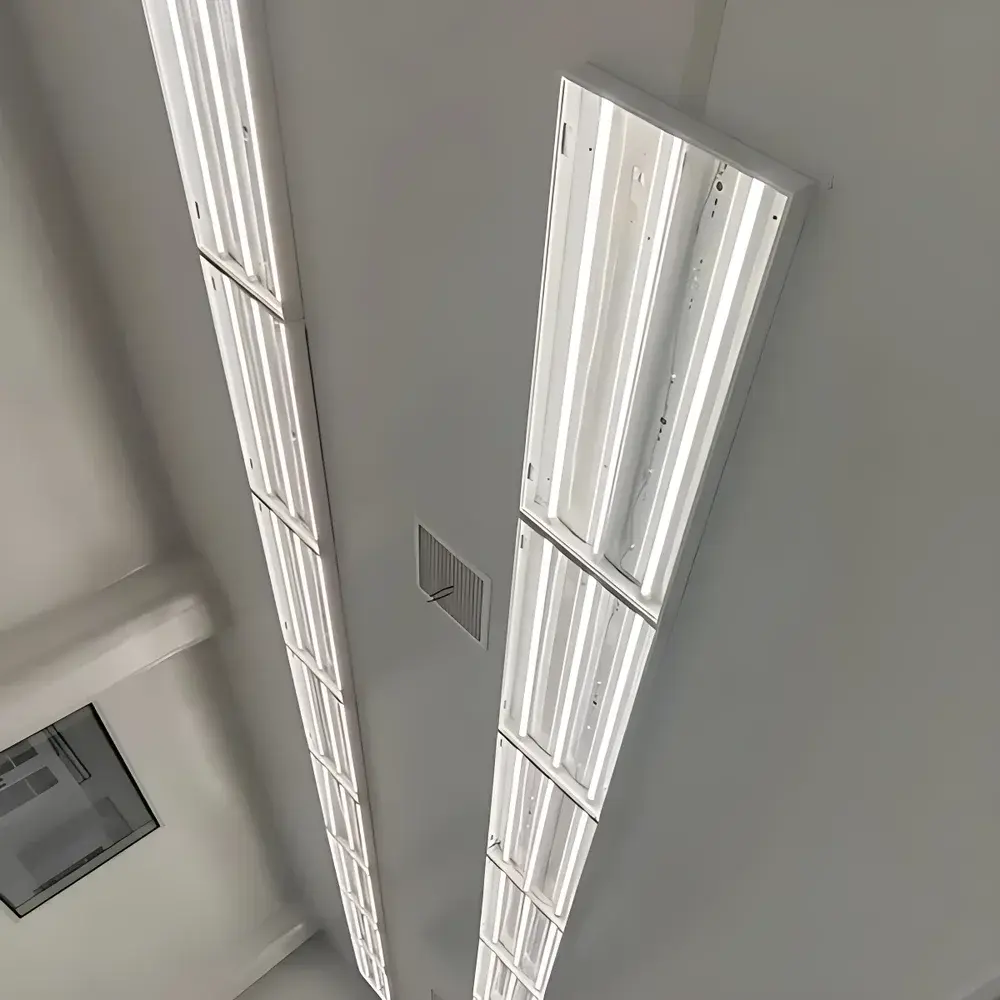
TILO CC120-75-4 Cotton Grading Standard Light Source Cabinet
| Brand | TILO |
|---|---|
| Origin | Guangdong, China |
| Model | CC120-75-4 |
| Light Source | D75 Daylight Simulation (CIE D75) |
| Compliance | ISO 4911, GB/T 13786–2022 |
| Illuminance Range | 750–1600 lx (adjustable) |
| CRI (Ra) | ≥95 |
| Light Source Type | High-Stability LED Array |
| Rated Service Life | ≥13,000 hours |
| Power Supply | DC, flicker-free operation |
| Enclosure Construction | CNC-machined aluminum alloy frame |
| Viewing Area Dimensions | 1200 mm × 750 mm × 400 mm (W×H×D) |
Overview
The TILO CC120-75-4 Cotton Grading Standard Light Source Cabinet is an engineered optical evaluation system designed specifically for cotton classification laboratories and textile quality control environments. It replicates the spectral power distribution (SPD) of CIE standard illuminant D75 — a daylight reference condition optimized for cotton grading under controlled indoor settings. Unlike natural north-facing daylight, which varies significantly with latitude, season, time of day, and atmospheric conditions, the CC120-75-4 delivers photometrically stable, spectrally accurate illumination independent of external environmental variables. This enables consistent, repeatable visual assessment of cotton color grade, yellowness, whiteness, and surface reflectance characteristics across shifts and seasons. The cabinet meets the metrological requirements defined in ISO 4911 and the national standard GB/T 13786–2022, which specify spectral fidelity, uniformity, and spatial irradiance distribution for cotton grading facilities.
Key Features
- High-fidelity D75 simulation using calibrated multi-channel LED arrays, achieving a general color rendering index (CRI Ra) ≥95 and minimizing spectral metamerism in cotton fiber evaluation.
- Digitally adjustable illuminance output from 750 to 1600 lux at the viewing plane, enabling standardized brightness selection per ASTM D1729 or internal QC protocols without manual lamp replacement or mechanical dimming.
- Flicker-free DC-driven LED architecture eliminates temporal light modulation, reducing observer visual fatigue during extended inspection sessions — critical for compliance with ISO 9241-305 ergonomic guidelines.
- CNC-machined aluminum enclosure ensures dimensional repeatability (±0.3 mm tolerance), thermal stability, and long-term structural integrity; surface finish resists oxidation and cleaning agent degradation.
- Integrated remote-control interface for real-time adjustment of intensity and pre-set lighting modes (e.g., D75-only, D75 + UV, D75 + A), supporting multi-standard comparative assessments as required by USDA, ICAC, or national cotton boards.
Sample Compatibility & Compliance
The CC120-75-4 accommodates standard cotton lint samples (ASTM D1440–22), bale cross-sections, and laboratory-scale carded webs up to 1200 mm wide. Its viewing chamber geometry conforms to GB/T 13786–2022’s specified depth-to-width ratio and diffuse reflection wall treatment (matte white Munsell N9.5 coating). All optical components are certified traceable to NIM (National Institute of Metrology, China) calibration standards. The device supports audit-ready documentation for GLP-compliant cotton testing labs and satisfies lighting validation criteria referenced in ISO/IEC 17025:2017 Clause 6.4.4 (environmental conditions) and FDA 21 CFR Part 11 when paired with validated software logging.
Software & Data Management
While the CC120-75-4 operates as a standalone optical platform, it integrates with TILO’s optional LightLog Pro v3.2 software suite via USB-C or Ethernet. This application records timestamped illuminance values, LED drive current, thermal sensor readings (ambient and heatsink), and user-selected mode configurations. Audit trails include operator ID, session start/end times, and deviation alerts if measured illuminance falls outside ±5% of setpoint for >30 seconds. Data exports comply with CSV and XML formats compatible with LIMS systems and support full traceability per ISO/IEC 17025 Annex A.2 requirements.
Applications
- Cotton classing and grade determination in national ginning laboratories and USDA-approved cotton testing facilities.
- Comparative color matching of raw cotton lots prior to spinning or blending operations.
- Validation of bleaching and optical brightener efficacy on processed cotton fibers.
- Calibration reference for spectrophotometers and colorimeters used in textile QA workflows.
- Educational demonstration of CIE daylight metameric effects in fiber optics and color science curricula.
FAQ
Does the CC120-75-4 meet international cotton grading regulatory requirements?
Yes — it complies with ISO 4911 and GB/T 13786–2022, and its D75 spectral output has been verified against CIE Publication 15:2018 reference data.
Can this cabinet be used for non-cotton materials such as wool or synthetic fibers?
While optimized for cotton, its D75 spectrum is applicable to any material assessed under daylight conditions; however, users must validate suitability per ISO 11664-2 for specific substrate reflectance profiles.
Is UV component included in the D75 simulation?
A selectable UV channel (365 nm peak) is available as an optional module for detecting optical brightening agents (OBAs); default D75 mode excludes UV unless explicitly activated.
What maintenance intervals are recommended for long-term photometric stability?
Annual verification of illuminance uniformity and spectral output is advised using a NIST-traceable spectroradiometer; no lamp replacement is required within the first 13,000 operating hours.
How is thermal management handled during continuous operation?
Passive aluminum heat sinking combined with low-thermal-resistance LED packaging maintains junction temperature below 65°C at maximum output, ensuring <0.5% lumen depreciation per 1,000 hours.




