
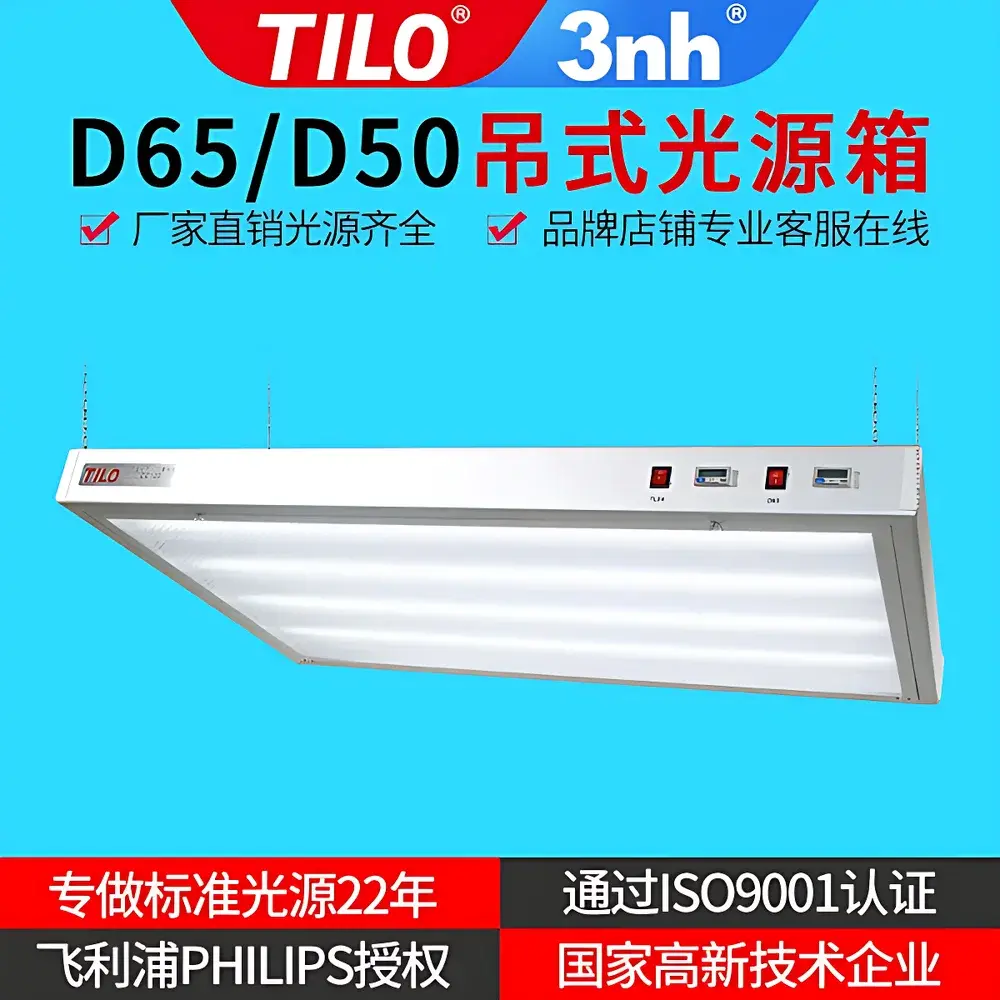
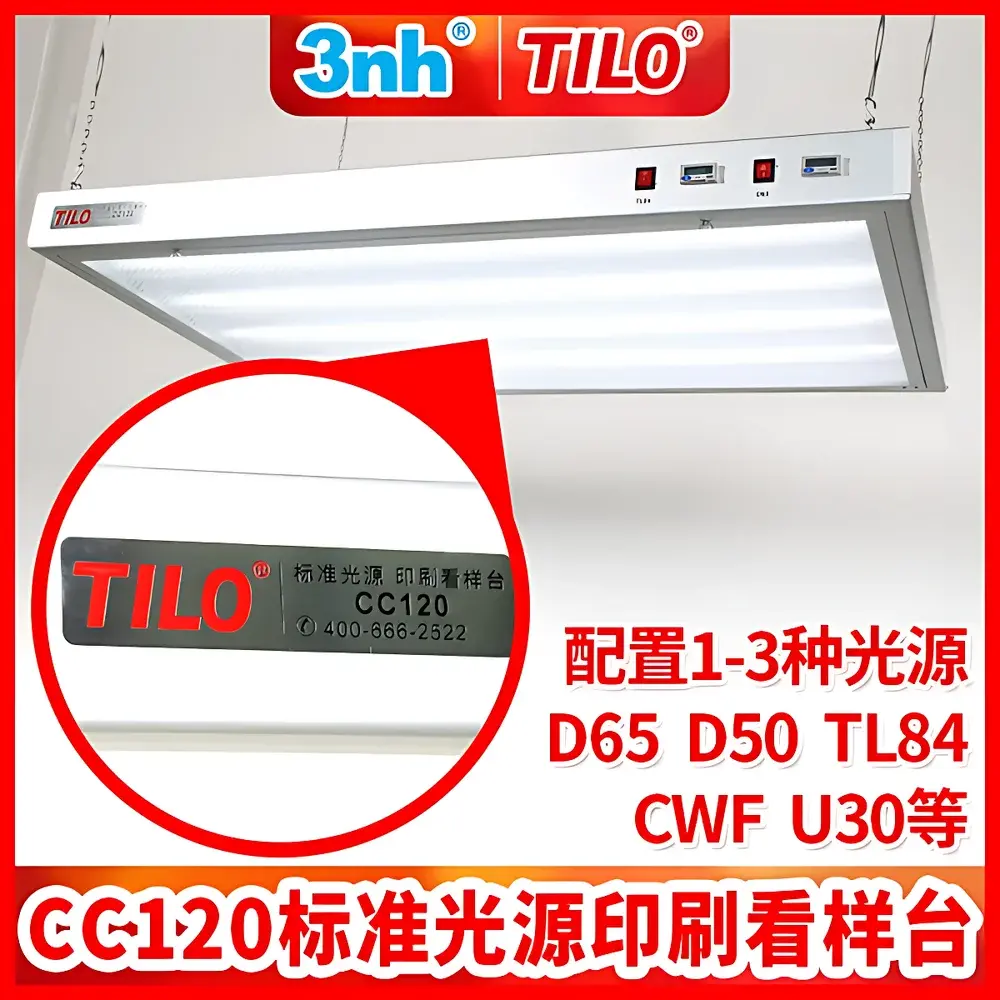
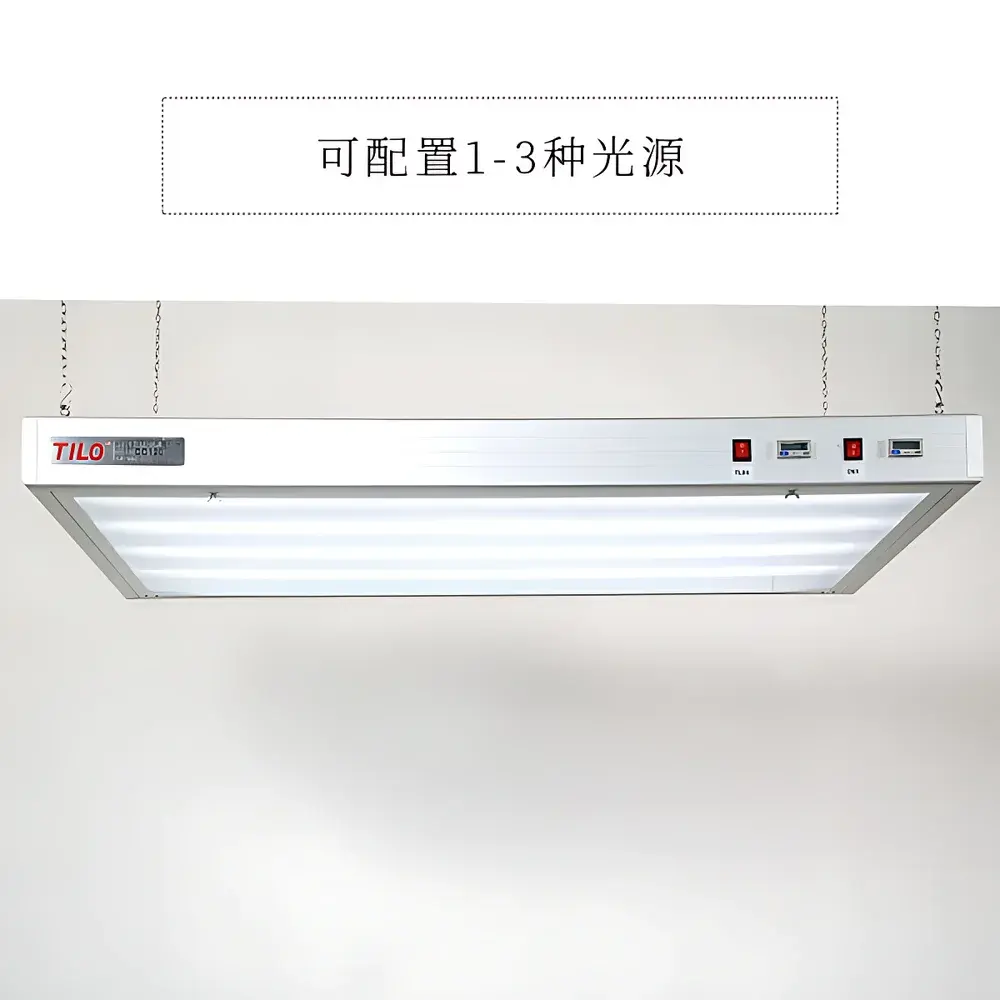
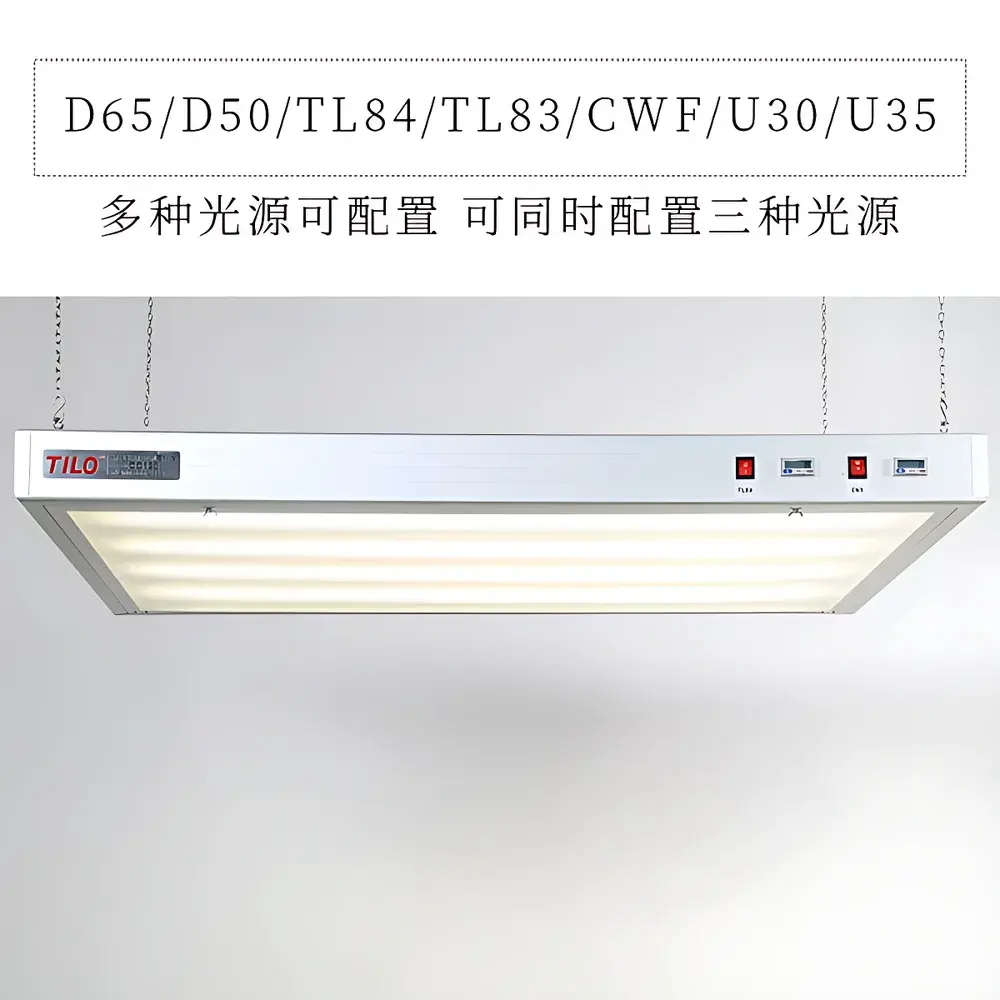
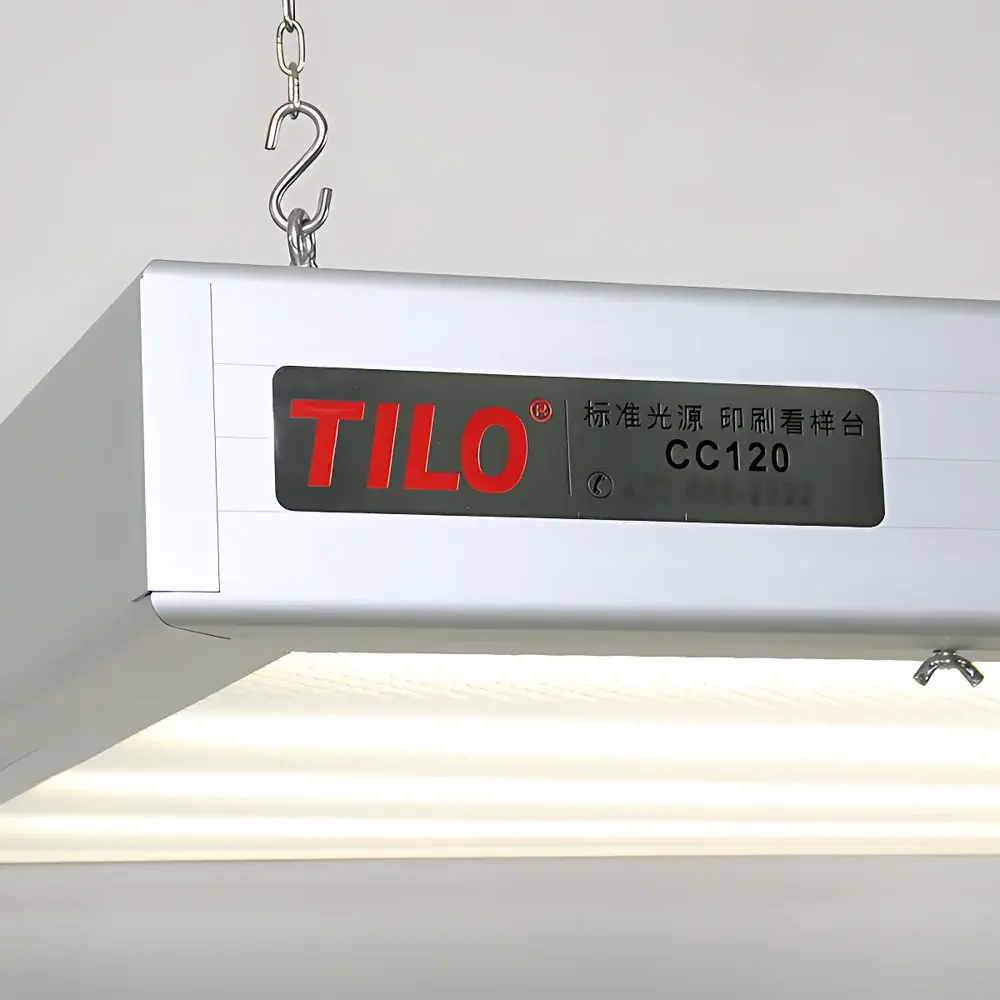
TILO CC120-W Suspended Standard Light Booth
| Brand | TILO |
|---|---|
| Model | CC120-W |
| Light Sources | D65, D50, TL84, CWF |
| Mounting Type | Suspended (Ceiling-Mounted) |
| Compliance | ISO 3664:2009, ASTM D1729, ISO 9001 |
| Lamp Life | 2000–3000 h |
| Power Input | AC 220 V ±10%, 50/60 Hz |
| Dimensions (W×D×H) | 1200 × 600 × 150 mm |
| Weight | ~28 kg |
| Origin | Guangdong, China |
| Price | USD 420 (FOB) |
Overview
The TILO CC120-W Suspended Standard Light Booth is an engineered optical evaluation system designed for precise color assessment under controlled, standardized illumination conditions. It operates on the fundamental principle that human color perception is highly dependent on spectral power distribution (SPD) of incident light—variations in illuminant type (e.g., daylight vs. fluorescent) induce metamerism and perceptual color shifts. This booth eliminates subjective lighting variables by delivering stable, spectrally calibrated light sources compliant with international standards including ISO 3664:2009 (graphic technology and photography), ASTM D1729 (standard practice for visual appraisal of colors), and ISO 9001 quality management requirements. Its suspended ceiling-mount configuration optimizes floor space utilization in production labs, QC rooms, and prepress studios while ensuring uniform vertical illumination geometry—critical for minimizing shadow artifacts and angular reflectance bias during side-by-side sample comparison.
Key Features
- Suspended architectural integration: Recessed or surface-mounted ceiling installation enables unobstructed workflow and consistent 45°/0° viewing geometry per ISO 3664.
- Multi-standard light source selection: Independently switchable D65 (simulated noon daylight, 6500 K), D50 (printing standard daylight, 5000 K), TL84 (European retail fluorescent), and CWF (cool white fluorescent) lamps—each certified to meet CIE-defined spectral power distributions.
- Metamerism detection capability: Simultaneous dual-source activation allows real-time observation of spectral sensitivity—essential for identifying same-appearance-different-spectrum (metameric) matches in textiles, packaging, and automotive coatings.
- Stabilized photometric performance: Lamps reach thermal and spectral equilibrium within 30 minutes; integrated electronic ballasts suppress flicker and ensure ±5% irradiance stability over rated lifetime.
- Durable optical chamber: Anodized aluminum housing with anti-reflective, UV-stable white interior surfaces (L* > 95, matte finish) minimizes stray light and ensures Munsell N9.5 neutral background compliance.
- Integrated digital timer: Automatic elapsed-time tracking per light source aids in lamp life monitoring and GLP-compliant usage logging.
Sample Compatibility & Compliance
The CC120-W accommodates flat, rigid, or flexible samples up to 1200 mm wide × 600 mm deep, with optimal viewing area centered at 900 × 450 mm. It supports comparative evaluation of printed substrates (paper, film, foil), coated panels, fabric swatches, plastic injection-molded parts, and painted automotive trim. All installed lamps are traceably calibrated against NIST-traceable reference spectroradiometers and conform to ISO 3664:2009 luminance uniformity (±20% across viewing area) and chromaticity tolerance (Δu’v’ ≤ 0.005). The system meets factory audit requirements for ISO 9001-certified printing and packaging facilities and supports FDA-regulated color verification workflows where documented illumination consistency is required under 21 CFR Part 11–aligned SOPs.
Software & Data Management
While the CC120-W is a hardware-only visual assessment tool, its operational protocol integrates seamlessly into digital color management ecosystems. Lamp usage logs (via built-in timer) can be manually entered into LMS (Laboratory Management Systems) or ERP modules for preventive maintenance scheduling. When paired with spectrophotometers (e.g., X-Rite Ci7800, Konica Minolta CM-3700A), the booth serves as the physical reference environment for instrument calibration validation and pass/fail threshold verification per AATCC Evaluation Procedure 1, ISO 105-J03, or GMW14872. Audit trails—including lamp replacement dates, operator IDs, and session timestamps—can be maintained in accordance with GLP/GMP documentation practices.
Applications
- Prepress proof verification against contract proofs under D50 illumination.
- Final QC inspection of packaging print runs under D65 and TL84 to simulate end-user retail and daylight viewing conditions.
- Textile dye lot approval using simultaneous D65/CWF comparison to detect metamerism before bulk shipment.
- Automotive interior component color matching in Tier-1 supplier labs adhering to OEM-specific lighting protocols (e.g., Ford WSS-M99P1111-A, VW TL 226).
- Regulatory submission support for cosmetic product labeling where color consistency across batches must be demonstrated under multiple illuminants.
FAQ
What is the recommended warm-up time before conducting critical color evaluations?
The lamp system achieves photometric stability after 30 minutes of continuous operation. For ISO 3664-compliant assessments, this equilibration period is mandatory.
How often should the lamps be replaced to maintain measurement integrity?
Lamp output degrades after 2000–3000 hours of cumulative use. Replacement is advised when measured CIE u’v’ coordinates deviate beyond ±0.005 from initial calibration or when illuminance falls below 2000 lux at the center of the viewing area.
Can the CC120-W be integrated into a networked quality management system?
It does not feature native Ethernet or USB connectivity; however, manual timer logs and maintenance records can be imported into QMS platforms via CSV or Excel templates aligned with ISO/IEC 17025 documentation requirements.
Is the suspended mounting hardware included with the unit?
Yes—universal ceiling suspension brackets, adjustable drop rods, and vibration-damping mounting plates are supplied as standard equipment.
Does the booth support UV-emitting illumination for fluorescent material assessment?
No. The CC120-W does not include F/A or UV-A sources. For UV-reactive applications, TILO offers the separate CC120-UV variant with 365 nm peak emission and filtered quartz optics.






