
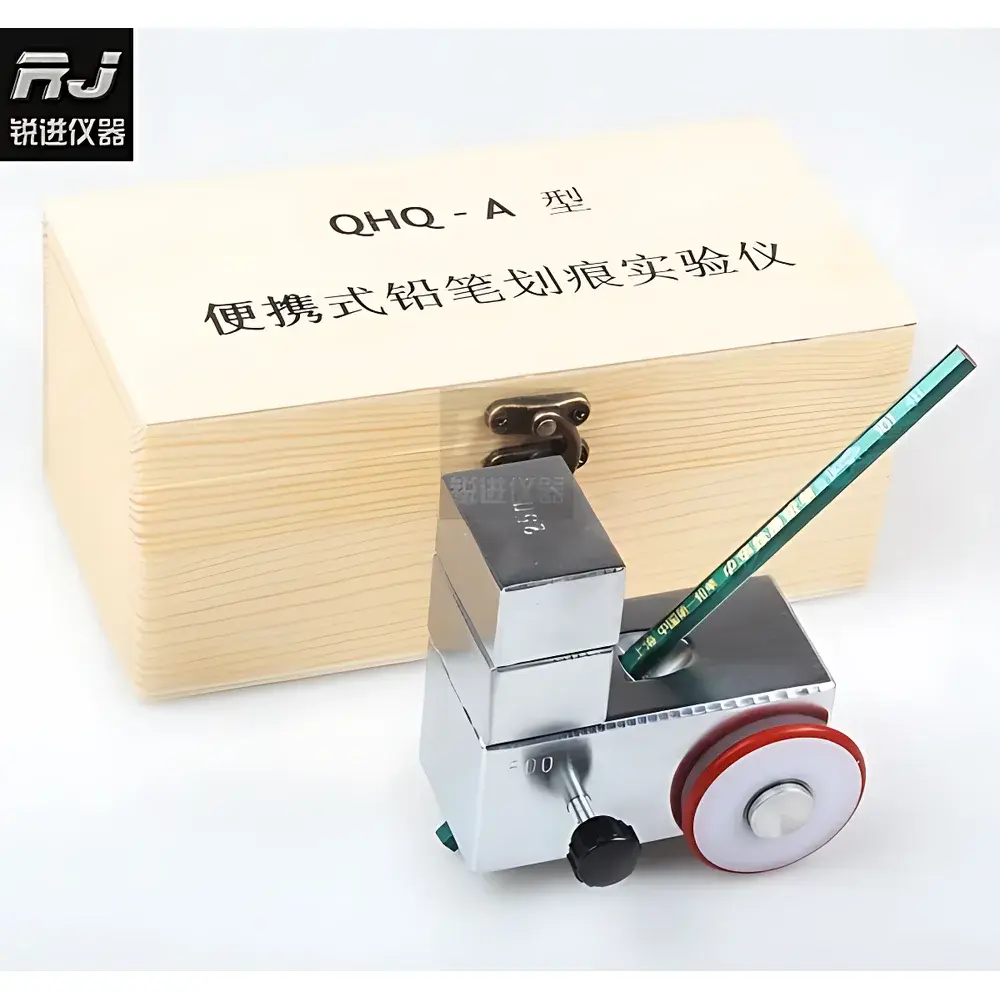
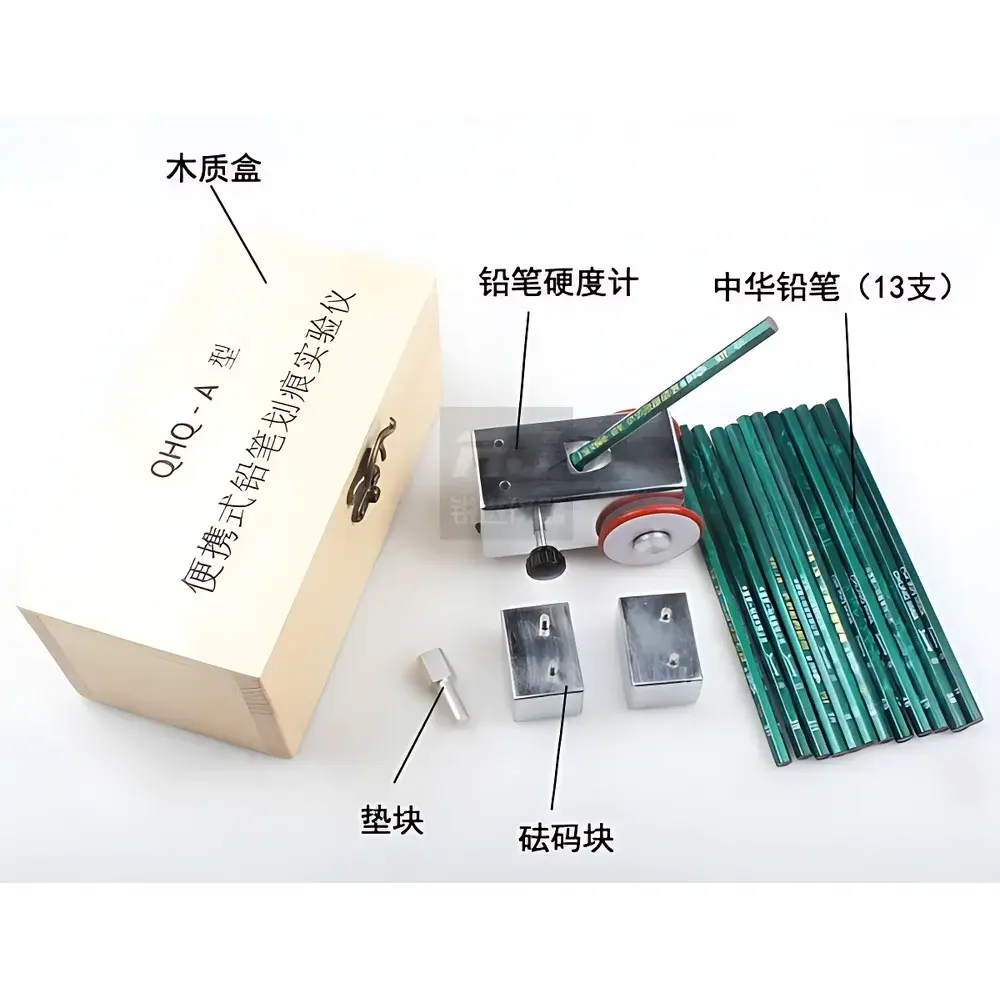
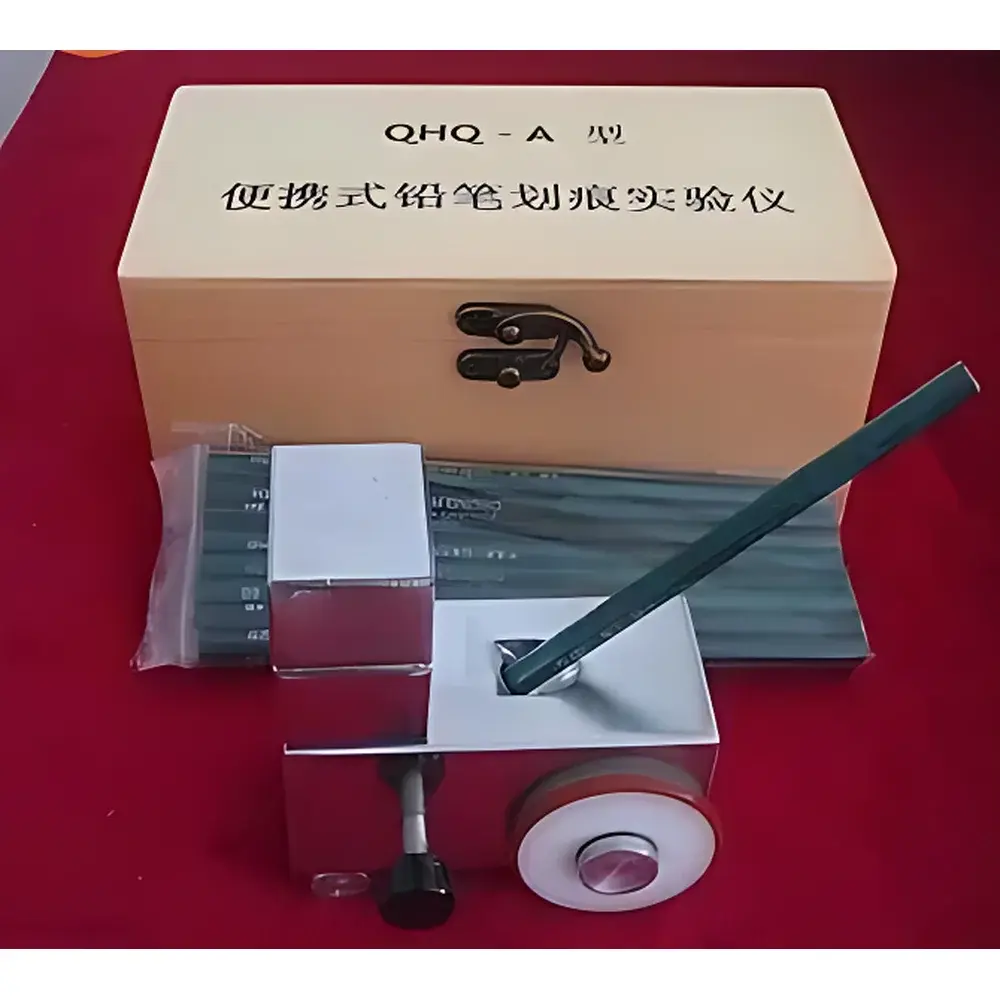
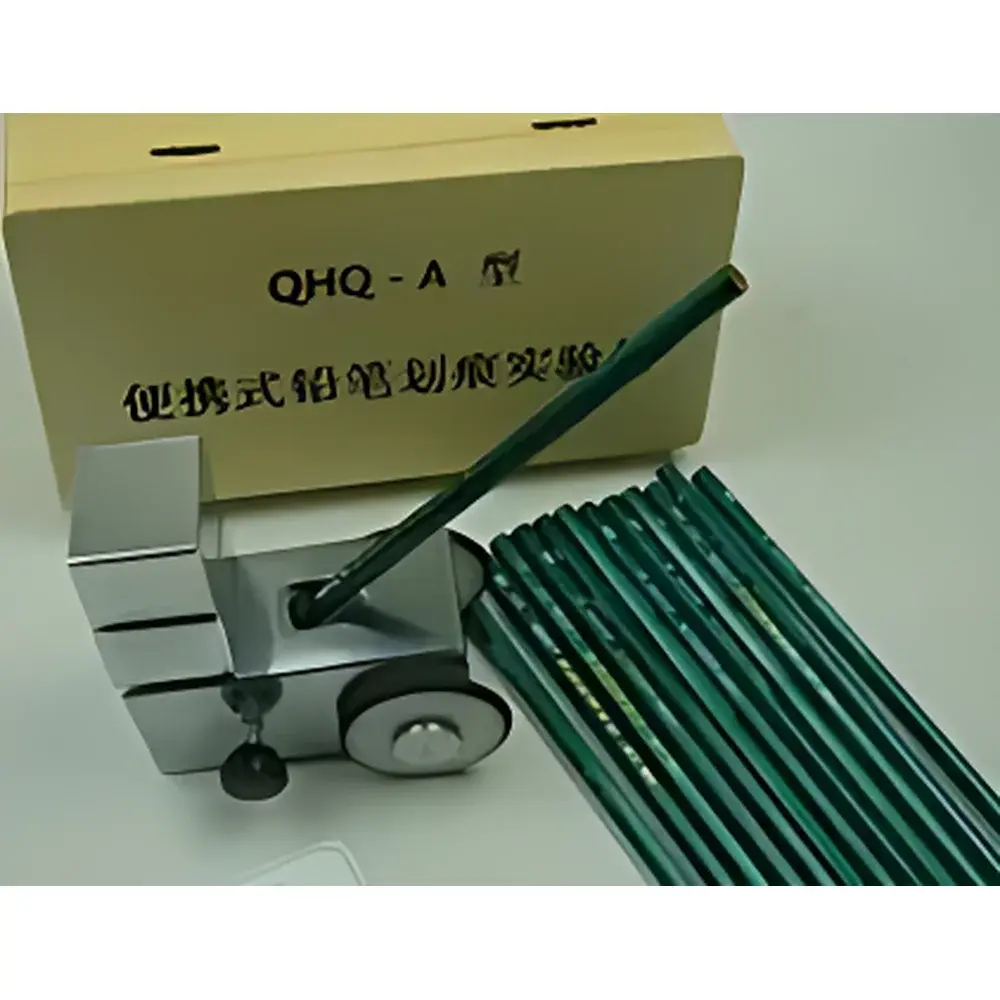
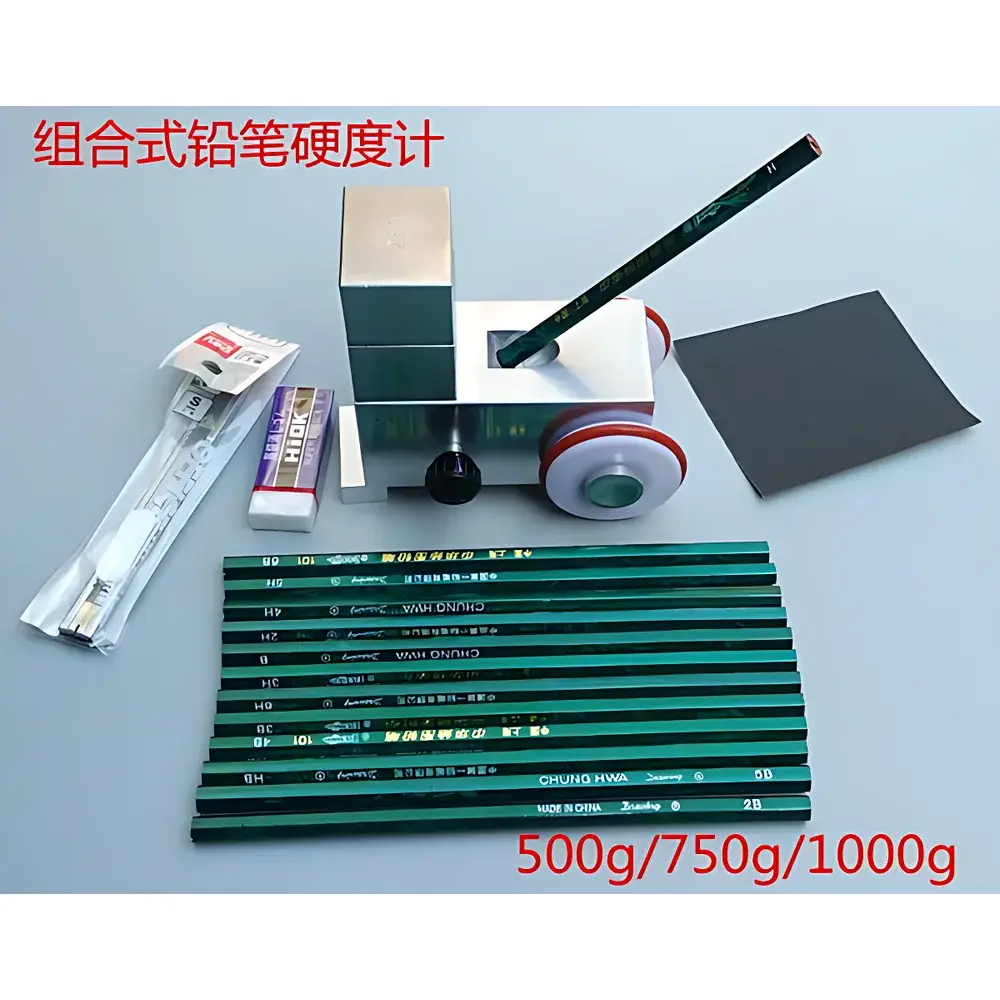
TILO QA-A-H Pencil Hardness Tester (Triple-Function Coating Scratch Hardness Tester)
| Brand | TILO |
|---|---|
| Model | QA-A-H |
| Origin | Guangdong, China |
| Instrument Type | Universal Hardness Tester |
| Compliance | ASTM D3363, ISO 15184, GB/T 6739 |
| Test Angle | 45° ± 0.5° |
| Pencil Feed Depth Control | Fixed mechanical loading via gravity-assisted carriage |
| Stroke Length | 3–6 mm |
| Travel Speed | ~10 mm/s (manual push) |
| Sample Thickness Compatibility | Up to 10 mm |
| Base Plate Material | Anodized aluminum alloy |
| Weight | 1.2 kg |
| Dimensions (L×W×H) | 180 × 85 × 80 mm |
Overview
The TILO QA-A-H Pencil Hardness Tester is a manually operated, gravity-driven mechanical instrument engineered for standardized evaluation of the scratch resistance and relative hardness of organic coatings—including paints, varnishes, lacquers, and polymer films—applied on rigid substrates. It operates on the principle defined in ASTM D3363 and ISO 15184:2022, where a series of standardized graphite pencils (ranging from 6B to 9H) are drawn across a coated surface under controlled geometry (45° angle) and consistent normal force (achieved via fixed mass and lever geometry). The hardness rating is determined as the hardest pencil grade that produces no visible scratch or film removal under 10× magnification after gentle cleaning with soft tissue; the result is reported as the highest non-damaging grade (e.g., “H” if H shows no damage but 2H does). Unlike indentation-based hardness testers (e.g., Rockwell or Vickers), this device assesses surface cohesion and binder integrity under tangential shear stress—a critical parameter for quality control in automotive OEM finishing, architectural coatings, and industrial powder coating lines.
Key Features
- Mechanically stable 45° fixed-angle guidance system ensures repeatable test geometry per ASTM/ISO requirements.
- Integrated precision-machined aluminum base plate with anti-slip rubber feet provides vibration-damped horizontal alignment during manual traverse.
- Quick-release pencil holder accommodates standard hexagonal pencils (2 mm core diameter); allows rapid grade switching without recalibration.
- No external power supply or electronic components—ideal for cleanroom environments, field audits, or production-line QC stations with limited infrastructure.
- Calibration traceability supported via certified reference pencils (NIST-traceable hardness grading per ISO 8503-2 Annex B).
- Modular design enables optional integration with digital displacement sensors or high-speed imaging modules for automated pass/fail analysis (OEM upgrade path available).
Sample Compatibility & Compliance
The QA-A-H accepts flat, rigid specimens up to 10 mm thick and ≥150 × 70 mm in planar dimension—compatible with standard drawdown bars, Leneta charts, and ASTM D609 cold-rolled steel panels. Substrate rigidity is essential: deflection >0.1 mm under 1 N load invalidates results. Test conditions require ambient temperature (23 ± 2°C) and relative humidity (50 ± 5% RH) per ISO 2889 and ASTM D609. Results comply with regulatory reporting frameworks for ISO 9001:2015 clause 8.5.1 (control of production), IATF 16949 section 8.5.1.1 (process validation), and FDA 21 CFR Part 11 when paired with TILO’s optional GLP-compliant data logging software (v3.2+). All test records include operator ID, timestamp, pencil lot number, substrate ID, and environmental log—supporting full audit trails.
Software & Data Management
While the QA-A-H operates independently as a standalone mechanical tester, TILO offers the optional HardnessLink™ v3.2 software suite for digital documentation. This Windows-based application captures test sequences via USB-connected linear encoders and HD macro-cameras, automatically annotating scratch morphology using edge-detection algorithms trained on ISO 15184 reference images. Data exports conform to ASTM E1447 (standard practice for electronic record retention) and support CSV, PDF/A-2, and XML formats. Audit logs meet FDA 21 CFR Part 11 requirements—including electronic signatures, role-based access control, and immutable change history—enabling deployment in GMP-regulated pharmaceutical packaging or medical device coating facilities.
Applications
- Automotive refinish and OEM paint line qualification (e.g., clear coat hardness verification pre-baking).
- Architectural coating R&D: comparing cross-link density effects of different curing agents or UV stabilizers.
- Packaging industry: validating scratch resistance of inkjet-printed PET films and aluminum foil laminates.
- Electronics: assessing hardness of conformal coatings (acrylic, silicone, urethane) on PCB assemblies.
- Academic research: correlating pencil hardness grades with nanoindentation modulus (Er) and adhesion energy (Gc) measured via pull-off tests.
FAQ
What standards does the QA-A-H comply with?
ASTM D3363–22, ISO 15184:2022, GB/T 6739–2006, and JIS K 5600–5–4:2019.
Is calibration required before each test?
No—mechanical alignment is factory-verified and stable. However, pencil tip geometry must be renewed before every test cycle using the supplied 400-grit silicon carbide paper.
Can the QA-A-H test curved surfaces?
No. Only flat, rigid substrates meeting ISO 2889 flatness tolerance (≤0.05 mm deviation over 100 mm) are valid per standard protocol.
How is hardness value interpreted when partial scratching occurs?
Per ISO 15184 Section 7.3: “Visible scratch” means continuous groove ≥0.1 mm in width under 10× magnification with oblique lighting; intermittent marks or pigment displacement without substrate exposure are not considered failures.
Does TILO provide certified reference pencils?
Yes—NIST-traceable pencils (lot-certified per ISO 8503-2) are supplied with serial-numbered calibration certificates and shelf-life tracking (24 months unopened).



