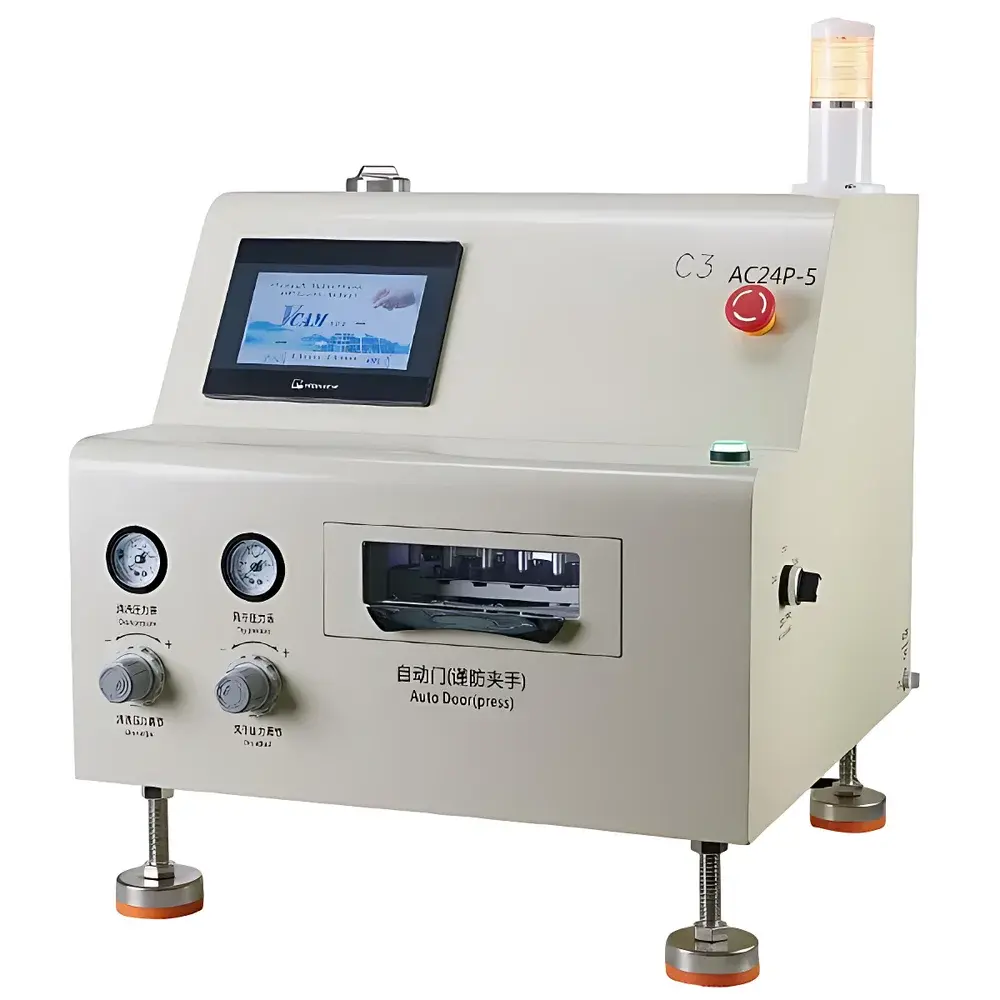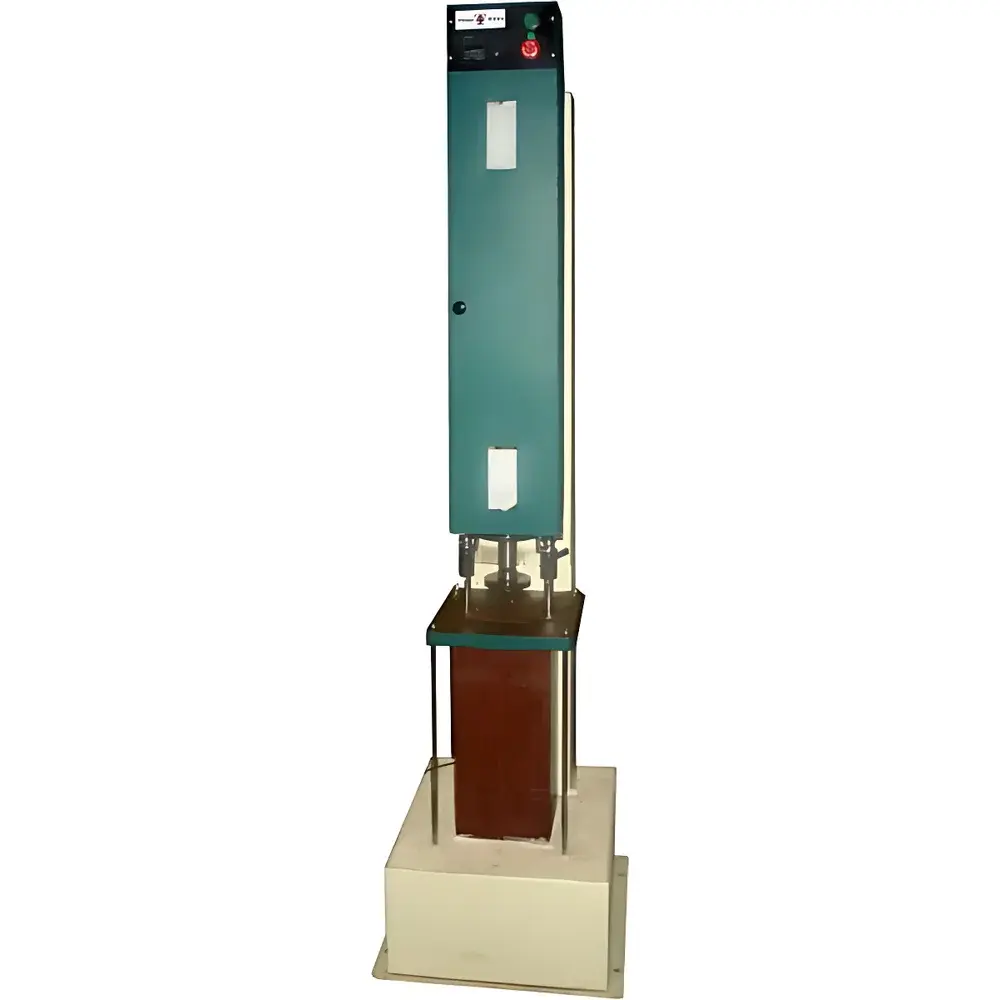
Tinius Olsen TO-553 Automatic Asphalt Compactor
| Brand | Tinius Olsen |
|---|---|
| Origin | USA |
| Model | TO-553 |
| Compaction Hammer Mass (Light) | 4.5 kg |
| Drop Height | 457 mm |
| Compaction Hammer Mass (Heavy) | 10.2 kg |
| Sample Diameter Options | 100 mm (TO-553-1-03) or 152.4 mm (TO-553-2-03) |
| Power Supply | 220 V, 50 Hz |
| Compliance Standards | BS 598-107, EN 12697-10 & -30, AASHTO T245, ASTM D5581–1996, ASTM D6926 |
Overview
The Tinius Olsen TO-553 Automatic Asphalt Compactor is an electromechanically actuated compaction system engineered for precise, repeatable preparation of asphalt mix specimens in accordance with internationally recognized civil engineering and materials testing standards. It operates on the principle of controlled vertical impact compaction—utilizing a guided free-fall hammer mechanism—to replicate the densification behavior observed during field roller compaction. Unlike manual or semi-automatic methods, the TO-553 eliminates operator-induced variability in blow energy, stroke consistency, and timing, thereby ensuring high reproducibility across sample batches. The system supports two primary configurations: the light-duty TO-553-1 variant (4.5 kg hammer, 457 mm drop height, 100 mm diameter molds) and the heavy-duty TO-553-2 variant (10.2 kg hammer, same drop height, 152.4 mm diameter molds), enabling compliance with both European and North American specification requirements for Marshall and Superpave specimen preparation.
Key Features
- Robust cast-iron frame and precision-machined guide columns ensure long-term dimensional stability and minimal mechanical drift under repeated cyclic loading.
- Electromechanical lifting mechanism with position-sensing feedback guarantees consistent hammer release at exactly 457 mm above the specimen surface—critical for adherence to EN 12697-10 and AASHTO T245 energy calibration protocols.
- Interchangeable compaction feet with integrated preheating capability maintain thermal equilibrium between the hammer face and asphalt specimen surface, minimizing thermal shock and adhesion artifacts during hot-mix compaction.
- Digital programmable counter with non-volatile memory records and enforces user-defined blow counts (e.g., 35, 50, or 75 blows per side), automatically halting operation upon completion without manual intervention.
- Modular base assembly includes standardized sample clamping fixtures compatible with Tinius Olsen’s TO-55002 mold sets, TO-55003 base plates, and TO-55004 extension collars—ensuring full traceability and interchangeability within the TO-55x compaction platform family.
Sample Compatibility & Compliance
The TO-553 accommodates cylindrical asphalt specimens conforming to standard dimensions defined in ASTM D1559 (Marshall), ASTM D6926 (Superpave Gyratory), and EN 12697-10 (impact compaction). Mold diameters of 100 mm and 152.4 mm are supported via dedicated configurations, each validated against the corresponding energy-per-blow requirement (e.g., 522 J ± 2.5 J for EN 12697-10 using the 4.5 kg hammer). All mechanical components—including hammer mass, drop height, and guide clearance—are subject to annual verification per ISO/IEC 17025 accredited calibration procedures. The system meets essential safety and electromagnetic compatibility requirements under IEC 61000-6-2 and IEC 61000-6-4, and its operational documentation supports GLP-compliant audit trails when integrated into laboratory quality management systems.
Software & Data Management
While the TO-553 operates as a standalone electromechanical instrument, its digital control unit provides RS-232 and optional Ethernet connectivity for integration into centralized test data management platforms. Blow count logs, start/stop timestamps, and error codes (e.g., “hammer jam”, “mold misalignment”) are stored in internal memory and exportable in CSV format. When deployed alongside Tinius Olsen’s Bluehill Universal software suite (v5.5+), users may configure automated test sequences, link compaction events to associated Marshall stability or flow measurements, and generate PDF reports compliant with ASTM E141 and ISO/IEC 17025 reporting clauses—including electronic signatures and revision-controlled metadata.
Applications
- Preparation of Marshall stability test specimens per ASTM D1559 and EN 12697-30.
- Production of gyratory-compacted specimens for volumetric analysis (VMA, VFA, air voids) under AASHTO TP67 and EN 12697-31.
- Calibration verification of laboratory compaction energy delivery in asphalt research laboratories accredited to ISO/IEC 17025.
- Quality assurance workflows in asphalt binder and aggregate supplier labs requiring strict adherence to contract specifications referencing BS 598-107 or ASTM D5581.
- Teaching and demonstration applications in civil engineering curricula where repeatability and metrological transparency are pedagogical priorities.
FAQ
What standards does the TO-553 comply with for asphalt compaction?
It complies with BS 598-107, EN 12697-10 and -30, AASHTO T245, ASTM D5581–1996, and ASTM D6926.
Can the same base unit accept both 100 mm and 152.4 mm molds?
No—TO-553-1-03 and TO-553-2-03 are mechanically distinct configurations optimized for their respective mold diameters and hammer masses; interchangeability is not supported.
Is preheating of the compaction foot mandatory?
Yes—thermal conditioning of the foot to match specimen temperature (typically 135–163 °C) is required per EN 12697-10 Clause 6.2 and ASTM D6926 Section 7.3 to prevent premature surface cooling and density gradient formation.
How is calibration maintained over time?
Annual verification of hammer mass, drop height, and counter accuracy must be performed by an ISO/IEC 17025-accredited service provider using traceable mass standards and laser displacement sensors.
Does the system support 21 CFR Part 11 compliance?
The standalone TO-553 does not include audit trail or electronic signature functionality; however, when interfaced with Bluehill Universal v5.5+, full Part 11 compliance—including role-based access control and immutable event logs—is achievable.