
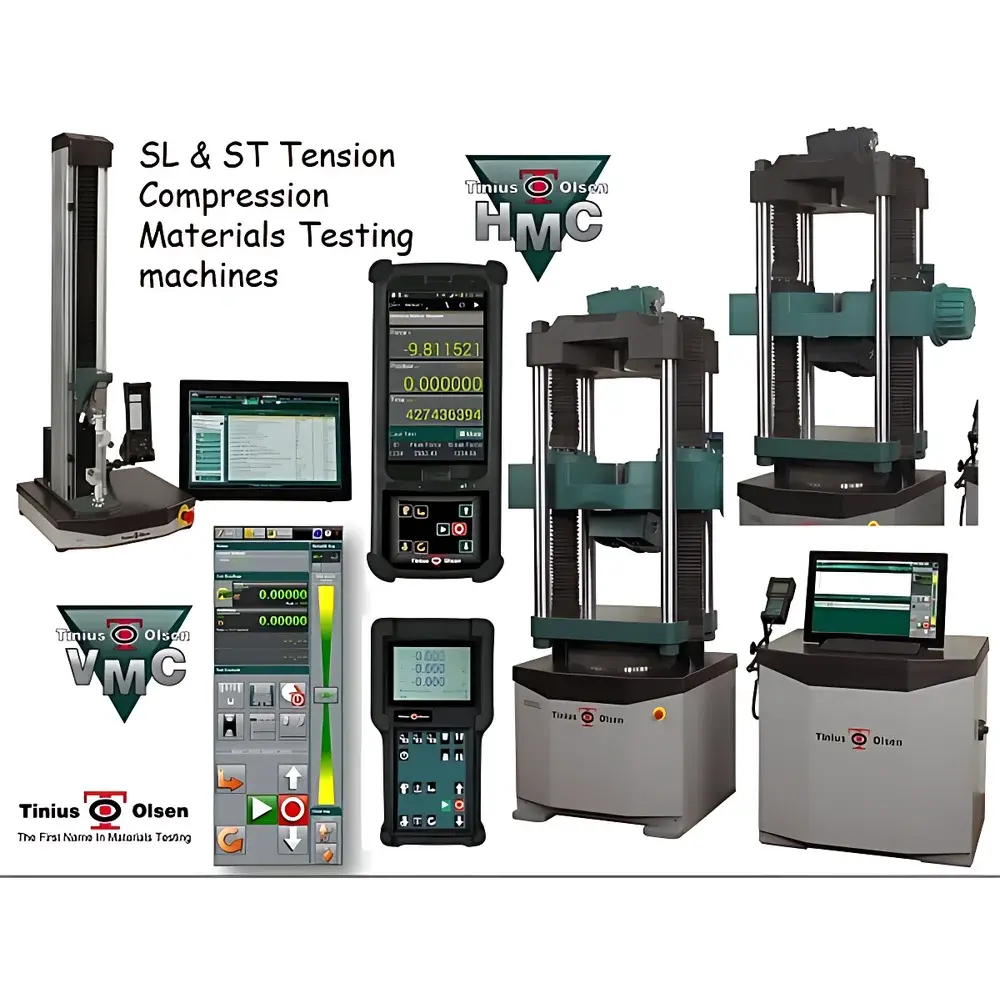
Tinius Olsen SL Series Hydraulic Universal Testing Machine
| Brand | Tinius Olsen |
|---|---|
| Origin | USA |
| Model | SL Series |
| Load Capacity Range | 150 kN – 3000 kN |
| Accuracy | ±0.1% of indicated load (0.2–100% full scale) |
| Compliance | ASTM E4, ASTM E8/E21, ISO 7500-1, ISO 6892-1, GB/T 228.1 |
| Calibration Traceability | NIST-traceable |
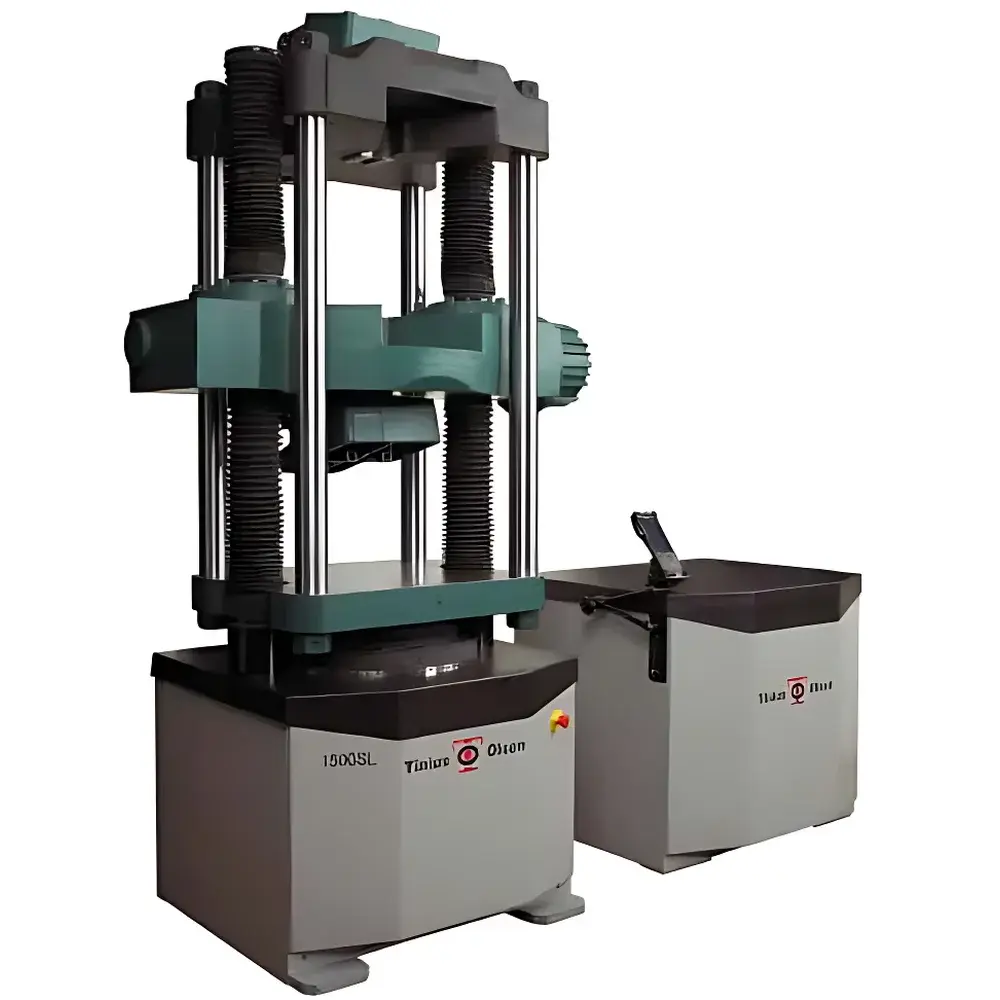
| Frame Architecture | Four-column, dual-pressure hydraulic loading system |
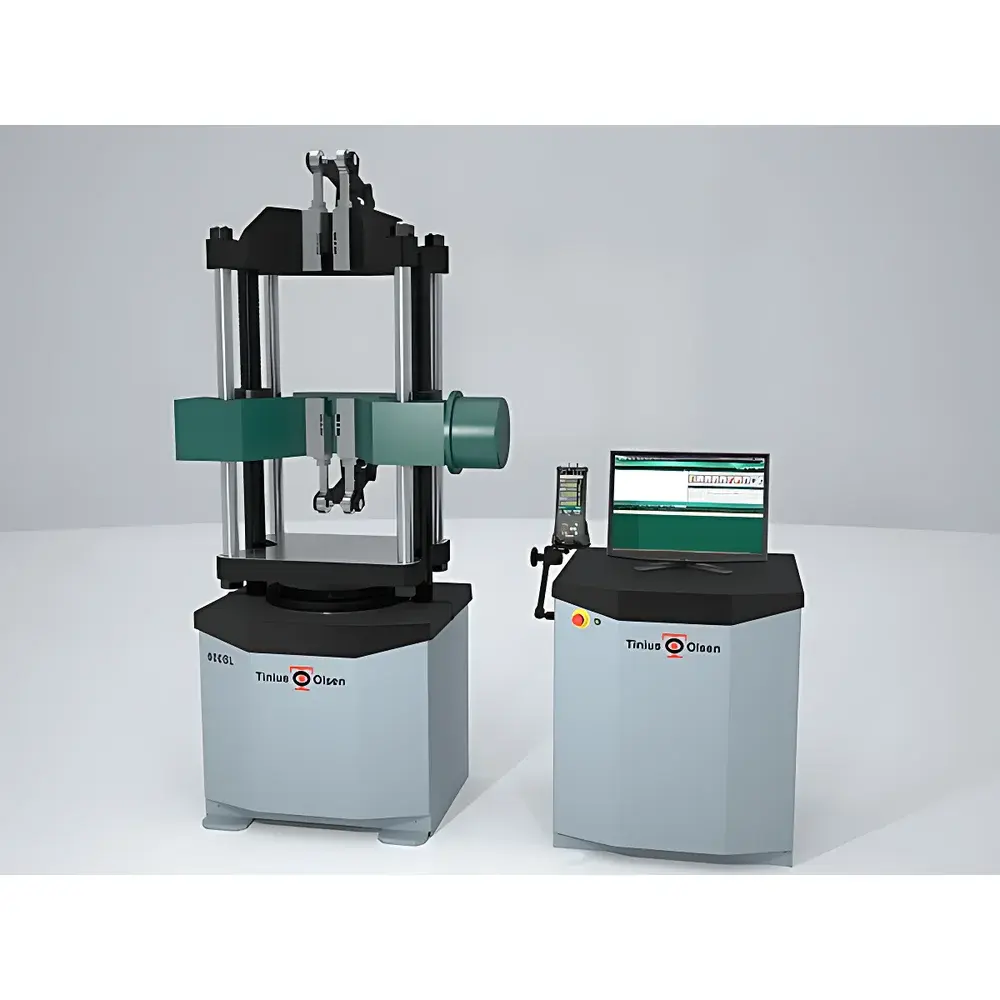
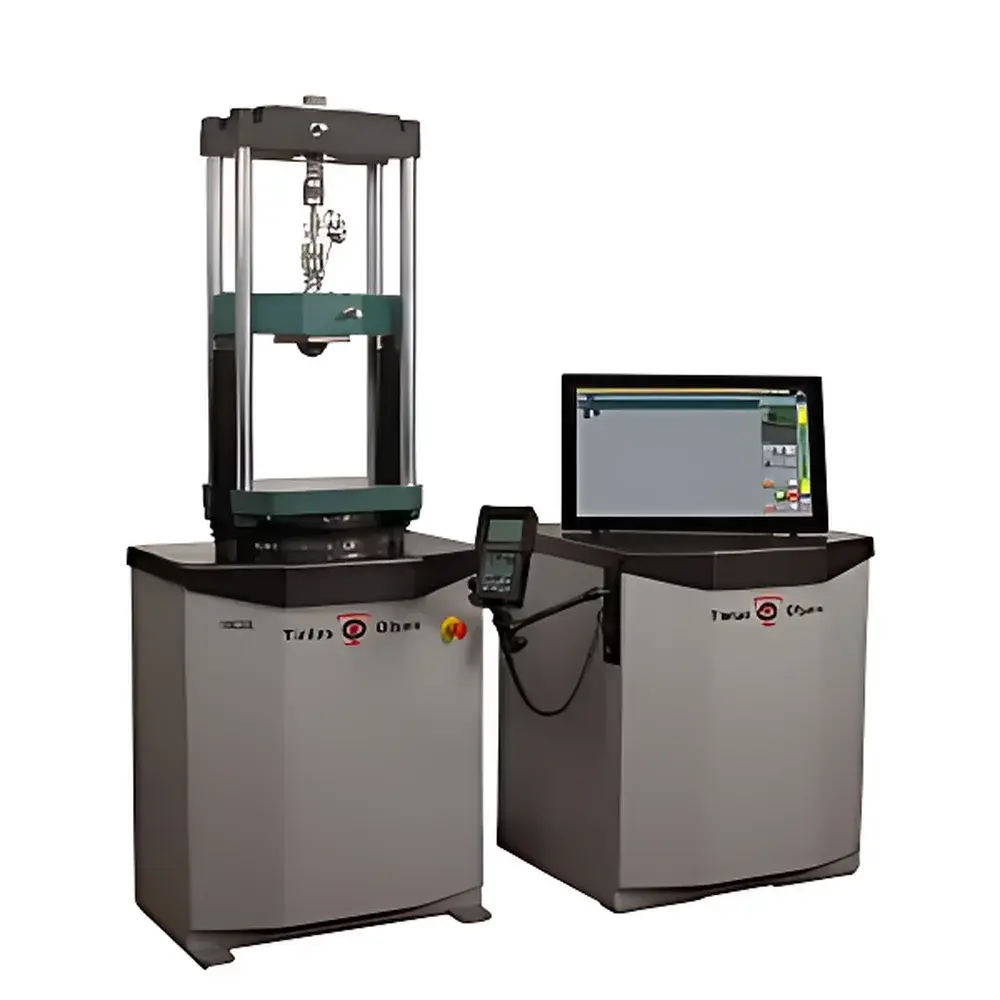
| Control Options | ProTerm wired controller, HMC handheld Bluetooth controller, PC-based virtual controller |
| Software | Horizon Materials Testing Software |
| Frame Configurations | Fully enclosed, semi-open front, fully open front, adjustable or fixed crosshead |
| Optional Accessories | Extended columns & lead screws (up to +914 mm), environmental chambers (–185 °C to 1200 °C), hydraulic wedge grips, T-slot test tables, high-temperature furnaces, custom tooling kits |
Overview
The Tinius Olsen SL Series Hydraulic Universal Testing Machine is an engineered platform for high-force mechanical characterization of metals, composites, polymers, concrete, and advanced structural materials under tension, compression, bending, shear, and cyclic loading conditions. Built upon a robust four-column monolithic frame architecture and featuring a patented dual-pressure hydraulic actuation system, the SL Series delivers exceptional load train stiffness (>1.5 × 10⁶ N/mm typical), minimal deflection under peak load, and long-term dimensional stability—critical prerequisites for achieving repeatable, standards-compliant mechanical property measurements. Unlike electromechanical systems constrained by motor torque and screw limitations, the SL Series leverages high-bandwidth servo-hydraulic control to maintain precise force-rate and displacement-rate profiles across its full 150 kN to 3000 kN capacity range. Each machine is factory-calibrated using NIST-traceable reference standards, ensuring measurement uncertainty remains within ±0.1% of indicated load over 0.2–100% of full-scale capacity—a performance benchmark aligned with ISO 7500-1 Class 0.5 and ASTM E4 requirements for verification of force-measuring instruments.
Key Features
- Four-column rigid frame with preloaded tie rods and hardened steel guide surfaces, minimizing lateral deflection and ensuring axial alignment during high-load testing.
- Dual-pressure hydraulic loading system enabling independent control of piston extension and retraction pressures—enhancing response linearity, reducing hysteresis, and improving low-force resolution at sub-1% full scale.
- Modular crosshead configurations: fully enclosed (standard), semi-open front (for rapid sample insertion), fully open front (for oversized or irregular specimens), adjustable-height (with motorized lead screws), and fixed-position (optimized for high-throughput production QA).
- Expandable column height: standard columns can be extended in 305 mm increments up to +914 mm, accommodating elongated specimens such as piping, composite laminates, or reinforced concrete beams.
- Horizon Materials Testing Software integration supporting method-driven test sequencing, real-time data acquisition at up to 10 kHz sampling rate, automated compliance correction (e.g., ISO 527-1 Annex D), and customizable reporting per ASTM, ISO, or internal SOP templates.
- Multi-controller ecosystem: ProTerm wired console for benchtop operation; HMC handheld Bluetooth controller for ergonomic remote positioning; PC-hosted virtual controller for lab-wide network deployment and audit-ready session logging.
Sample Compatibility & Compliance
The SL Series accommodates specimens ranging from miniature coupons (5 mm gauge length) to full-scale structural components (up to 3 m tall with extended columns). Its configurable grip interfaces—including manual wedge, pneumatic, and hydraulic wedge grips with flat, serrated, or V-notch jaw inserts—support standardized tensile bars (ASTM E8, ISO 6892-1), threaded fasteners (ISO 898-1), sheet metal (ASTM E345), and castings (ASTM A370). Optional environmental enclosures enable testing across –185 °C (liquid nitrogen) to 1200 °C (resistance-heated furnace), compliant with ASTM E23, ISO 14554, and EN 10002-5 for elevated-temperature mechanical properties. All systems are supplied with documentation packages suitable for GLP/GMP validation, including IQ/OQ protocols, calibration certificates traceable to NIST SRMs, and 21 CFR Part 11–compliant electronic signature support within Horizon software.
Software & Data Management
Horizon Materials Testing Software serves as the central interface for test definition, execution, analysis, and archival. It supports ISO/IEC 17025–aligned workflows through role-based user permissions, encrypted audit trails, automatic metadata tagging (operator ID, timestamp, calibration status), and tamper-proof PDF report generation with embedded digital signatures. Real-time curve overlays allow comparative analysis across batches or material grades. Advanced modules include strain-controlled fatigue sequencing (per ASTM E466), creep rupture extrapolation (ISO 204), and fracture mechanics parameter derivation (KIc, J-integral per ASTM E1820). Raw data exports comply with ASTM E1434 and ISO 10360-5 formats, enabling third-party statistical process control (SPC) integration and LIMS interoperability via OPC UA or RESTful API.
Applications
- Metallic materials certification: tensile yield strength (Rp0.2), ultimate tensile strength (Rm), total elongation (A50), reduction of area (Z), and modulus of elasticity per ASTM E8 and ISO 6892-1.
- Composite qualification: interlaminar shear strength (ILSS), flexural modulus (ASTM D7264), and compression-after-impact (CAI) per ASTM D7137.
- Civil engineering validation: compressive strength of concrete cylinders (ASTM C39), flexural strength of asphalt beams (ASTM D7460), and bond strength of reinforcing bars (ASTM A944).
- Aerospace component verification: bearing strength of titanium alloys (ASTM D5961), fastener pull-through resistance (SAE AMS4050), and thermal-cycle fatigue of turbine disk materials (ISO 1099).
- Energy sector testing: pipe burst pressure evaluation (API RP 5L3), weld joint toughness (ASTM E813), and creep deformation of superalloys at 700–1000 °C (ISO 204).
FAQ
What standards does the SL Series comply with for force verification?
The SL Series meets ISO 7500-1 Class 0.5 and ASTM E4 requirements for verification of universal testing machines, with factory calibration performed using NIST-traceable deadweight standards and verified annually per ISO/IEC 17025 procedures.
Can the SL Series perform closed-loop strain control testing?
Yes—when equipped with an extensometer interface module and compatible clip-on or video-based extensometers, Horizon software enables true closed-loop strain control per ASTM E83 and ISO 9513 specifications.
Is Horizon software 21 CFR Part 11 compliant?
Yes—Horizon supports electronic signatures, audit trail logging, user access controls, and data integrity safeguards required for FDA-regulated environments, with optional validation support packages available.
What is the maximum usable test height with extended columns?
Standard SL frames offer ~1200 mm test height; with three 305 mm column extensions (+914 mm total), maximum usable height reaches 2114 mm, accommodating specimens up to 2 m in length while maintaining full load capacity and alignment fidelity.
Does Tinius Olsen provide application-specific tooling design services?
Yes—engineering teams collaborate with customers to develop custom fixtures, heating/cooling interfaces, multi-axis load trains, and specialized gripping solutions validated against ISO 14731 and ASME B&PV Code Section VIII requirements.



