
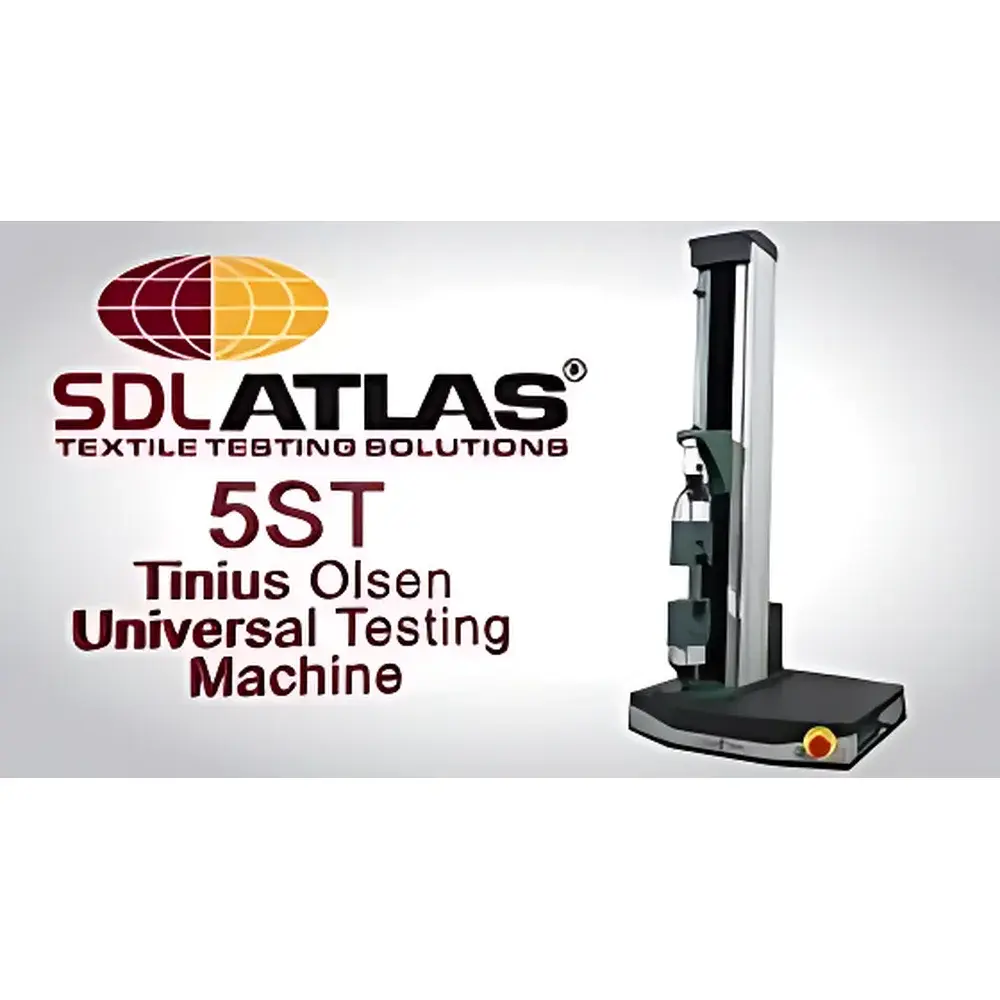
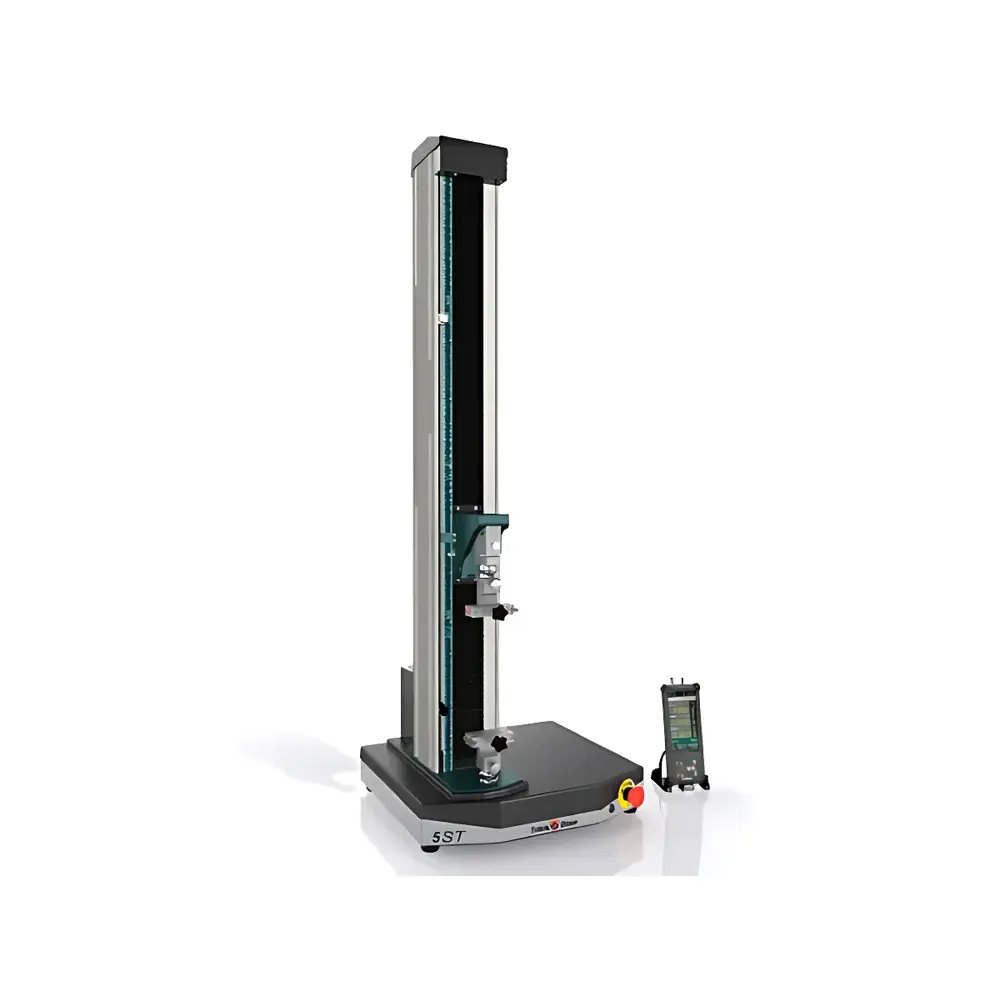
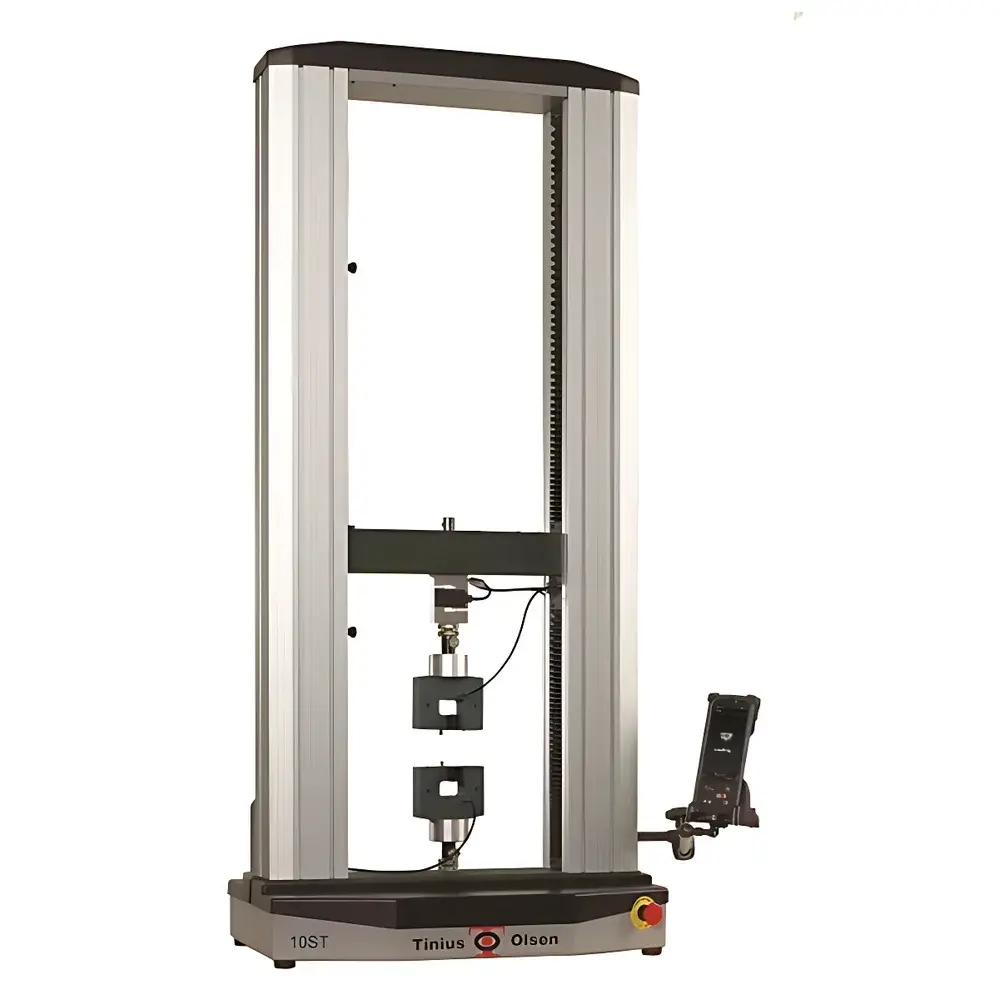
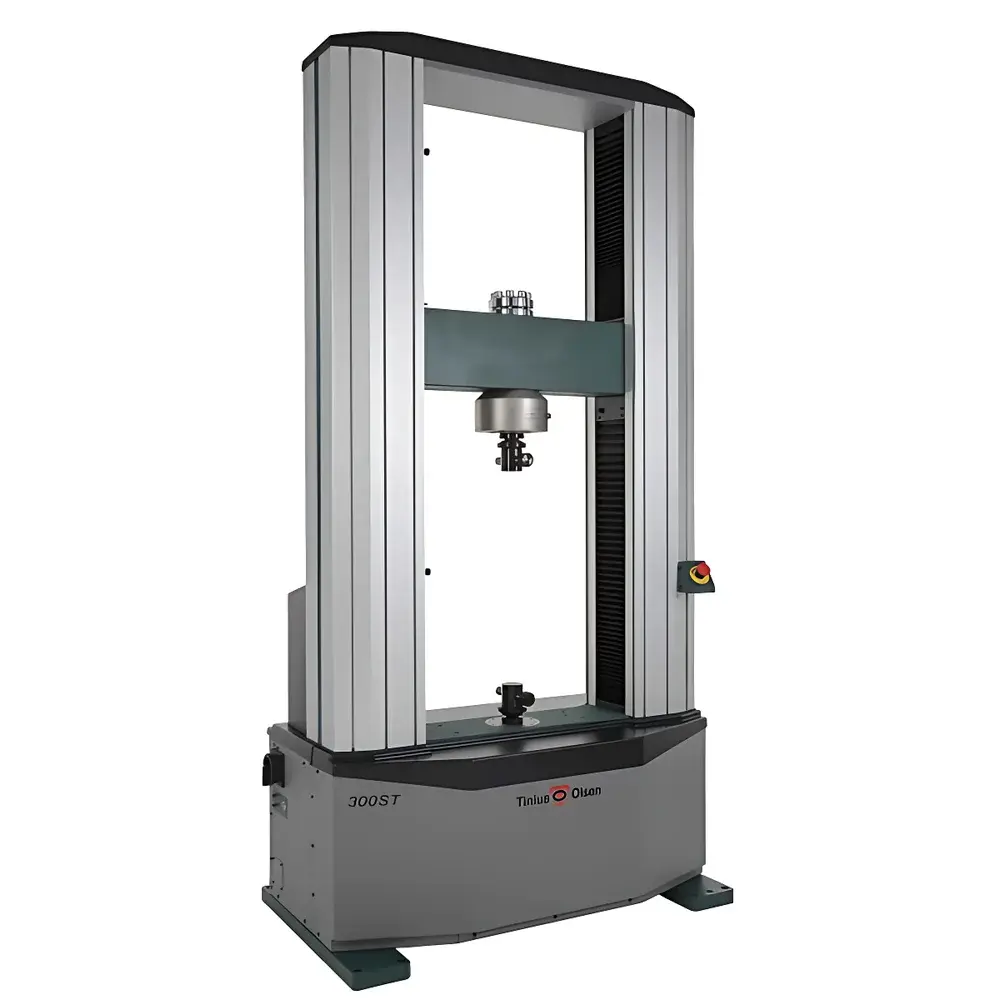
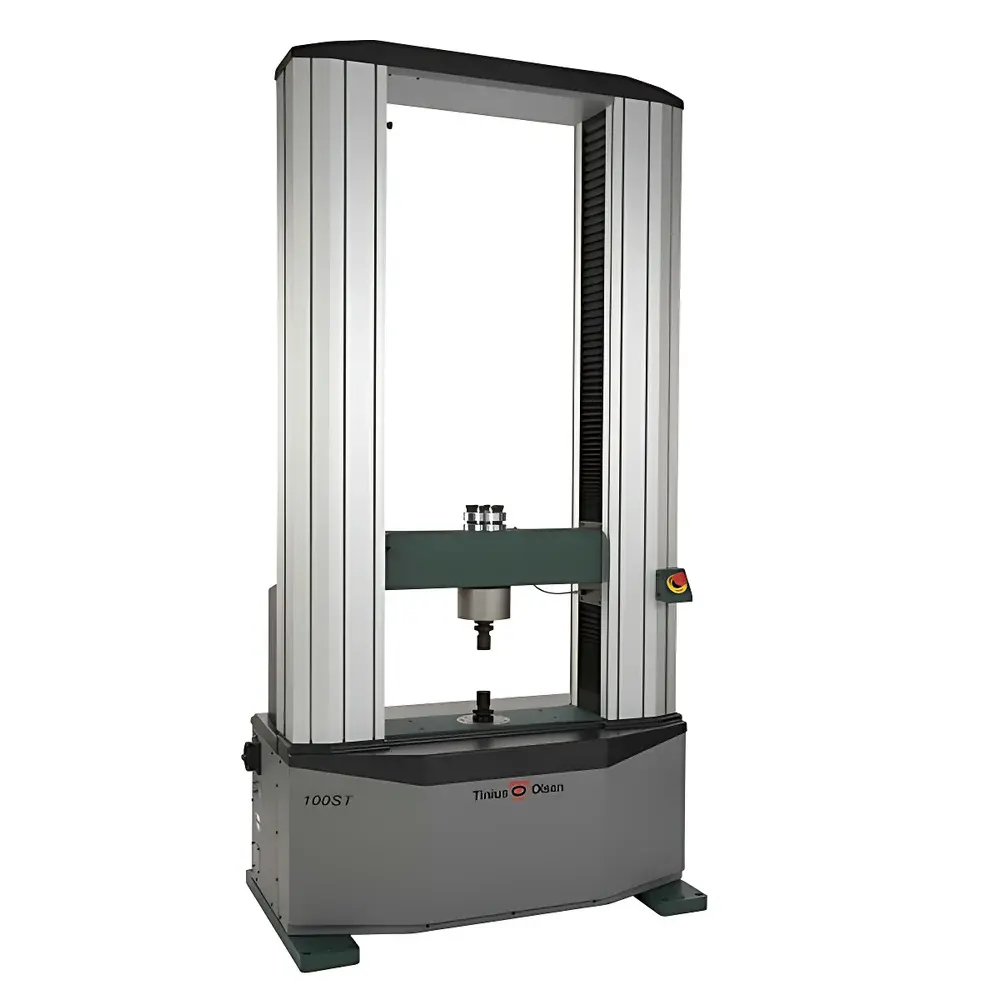
Tinius Olsen ST Series Electromechanical Universal Testing Machine
| Brand | Tinius Olsen |
|---|---|
| Origin | United Kingdom |
| Model | ST Series |
| Instrument Type | Electromechanical Universal Testing Machine |
| Load Capacity Range | 1 kN to 300 kN (0.2%–100% load cell accuracy) |
| Crosshead Speed Range | 0.001–1000 mm/min (model-dependent) |
| Load Cell Accuracy | ±0.2% of reading from 0.2% to 100% of capacity |
| Sampling Rate | Up to 2.73 kHz per channel (software-limited to 1 kHz via USB 2.0) |
| Compliance | ASTM E4, ASTM E8/E8M, ISO 7500-1, ISO 527, ISO 6892-1, EN 10002-1, USP <1041>, FDA 21 CFR Part 11 (audit trail & electronic signature enabled) |
Overview
The Tinius Olsen ST Series Electromechanical Universal Testing Machine is an engineered platform for static mechanical property characterization of materials and components under controlled uniaxial loading conditions. Based on servo-controlled electromechanical actuation and high-fidelity force-displacement transduction, the ST Series implements closed-loop control algorithms compliant with international standard test methods—including tensile, compression, flexure, shear, tear, and peel testing. Its rigid monolithic or dual-column frame architecture minimizes deflection under full-load conditions (<0.01% frame deformation at rated capacity), ensuring measurement integrity across the entire operational range. Designed for laboratory, quality control, and R&D environments, the ST Series delivers traceable, repeatable, and reproducible results in accordance with ISO/IEC 17025-accredited testing practices.
Key Features
- Rigid, low-deflection frame construction—monolithic single-column (1–5 kN) and dual-column (10–50 kN) benchtop models; floor-standing configurations (100–300 kN) with enhanced vertical clearance (up to 400 mm extension available)
- High-resolution load measurement using interchangeable strain-gauge-based load cells, certified to ISO 7500-1 Class 0.5 (±0.2% accuracy from 0.2% to 100% of full scale)
- Precise crosshead motion control across a wide speed range: 0.001–1000 mm/min (benchtop) or 0.001–500 mm/min (floor-standing), programmable in 0.001 mm/min increments
- T-slot column design enabling modular attachment of controllers, video extensometers, environmental chambers, LVDTs, protective enclosures, and automated grips without vibration coupling
- Integrated pneumatic interface for seamless operation of air-actuated grips—reducing cable clutter and improving workspace ergonomics
- Multi-channel data acquisition system with native sampling up to 2.73 kHz per channel; synchronized USB 2.0 output at 1 kHz per channel to ensure signal fidelity and noise immunity
- Four-channel auxiliary port panel supporting simultaneous connection of external devices including optical extensometers, thermal chambers, furnaces, and digital displacement sensors
Sample Compatibility & Compliance
The ST Series accommodates specimens ranging from micro-scale electronic components (e.g., solder joints, MEMS structures) to large-format composite laminates and structural metal plates. Its modular gripping and fixturing ecosystem supports standardized geometries per ASTM D638, ISO 527, ASTM D790, ISO 178, ASTM D1876 (peel), and ISO 11339 (adhesive shear). Environmental compatibility extends to −70 °C to +350 °C via integrated thermal chambers and high-temperature furnaces equipped with ceramic-insulated extensometry. All systems are supplied with factory calibration certificates traceable to NPL (UK) and NIST standards. Software configuration supports 21 CFR Part 11 compliance—including role-based access control, electronic signatures, audit trails, and immutable raw data archiving—meeting GLP and GMP requirements for regulated industries including medical device manufacturing and pharmaceutical packaging validation.
Software & Data Management
Horizon Materials Testing Software serves as the unified control, analysis, and reporting environment for the ST Series. Built on a Windows 10/11-native architecture with touchscreen optimization, Horizon provides real-time graphical feedback, multi-axis plotting, and customizable dashboards. It includes over 200 pre-validated test methods aligned with ASTM, ISO, EN, and JIS standards, with automatic parameter derivation (e.g., modulus, yield point, elongation at break, secant modulus). Advanced features include batch test sequencing, multi-instrument synchronization (up to 8 machines on one network), method versioning, and hierarchical user permissions. Data export supports CSV, XML, PDF, and proprietary .HOR formats—with embedded metadata for full chain-of-custody documentation. Horizon’s database engine enables relational storage of specimen metadata, test logs, operator IDs, instrument calibrations, and environmental conditions—facilitating trend analysis, SPC charting, and CAPA integration within enterprise QMS platforms.
Applications
The ST Series is routinely deployed in polymer science laboratories evaluating tensile strength retention after UV aging; in packaging R&D centers measuring seal integrity and puncture resistance of multilayer films; in aerospace QA labs verifying interlaminar shear strength of carbon fiber prepregs; in biomedical engineering facilities characterizing suture tensile failure modes and stent radial force profiles; and in automotive Tier-1 suppliers validating weld joint ductility in aluminum alloys. Its adaptability to non-standard fixtures also supports custom applications such as crimp pull-off testing of electrical connectors, compression testing of foam cushions for seating ergonomics, and cyclic fatigue evaluation of elastomeric dampers—each executed with metrological rigor and full regulatory documentation support.
FAQ
What load capacities are available in the ST Series?
The ST Series offers benchtop models from 1 kN to 50 kN and floor-standing models up to 300 kN, with load cells calibrated to ISO 7500-1 Class 0.5.
Is Horizon software compatible with LIMS or ERP systems?
Yes—Horizon supports ODBC-compliant database connectivity and configurable REST API endpoints for bidirectional integration with LabWare, Thermo Fisher SampleManager, and SAP QM modules.
Can the ST Series perform dynamic or cyclic testing?
While primarily designed for quasi-static tests per ISO 6892-1 Annex A, optional high-speed controllers enable controlled ramp-hold cycles and low-frequency fatigue protocols (≤5 Hz) with position/force waveform logging.
How is traceability maintained during sensor interchange?
Each load cell and extensometer carries a unique digital ID; Horizon auto-detects and applies corresponding calibration coefficients stored in encrypted firmware, eliminating manual entry errors.
Does the system support automated pass/fail decision logic?
Yes—Horizon allows definition of acceptance criteria per test step (e.g., “Elongation at break ≥ 250%”), triggering alerts, email notifications, and automatic report flagging upon deviation.
Related Products



