
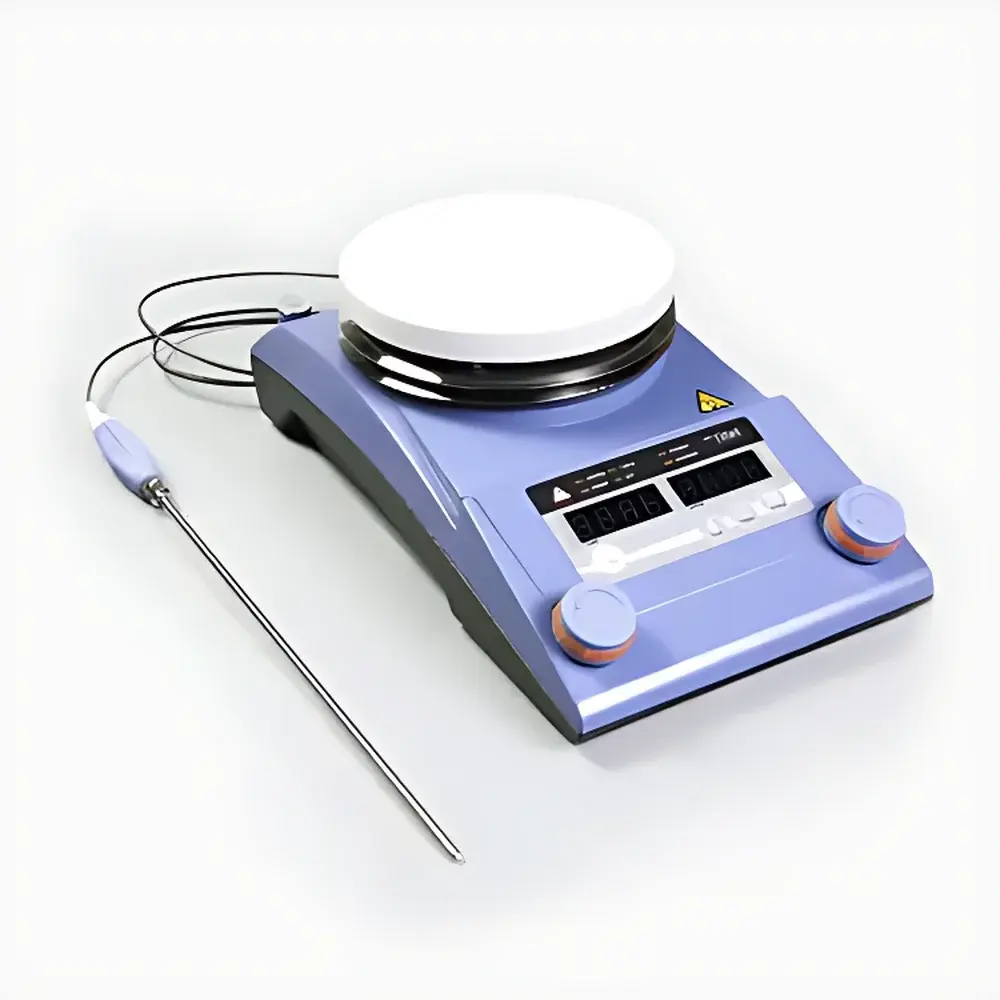
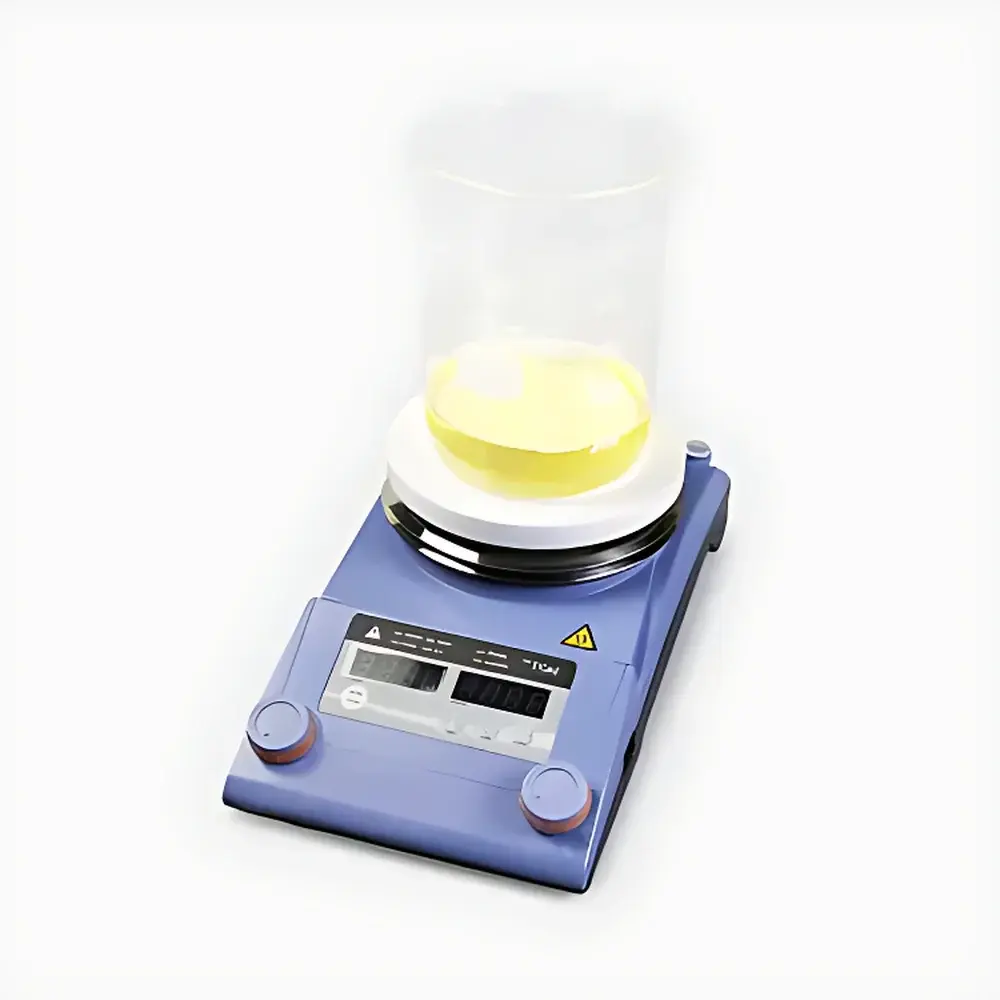
Titan HMS-14 Digital Heating Magnetic Stirrer
| Brand | Titan |
|---|---|
| Origin | Shanghai, China |
| Manufacturer Type | Direct Manufacturer |
| Product Category | Domestic (China) |
| Model | HMS-14 |
| Instrument Type | Magnetic Stirrer |
| Maximum Stirring Volume | 20 L |
| Speed Range | 30–2000 rpm |
| Temperature Control Range | 50–350 °C |
Overview
The Titan HMS-14 Digital Heating Magnetic Stirrer is an integrated benchtop laboratory instrument engineered for precise, reproducible mixing and temperature-controlled sample processing in chemical synthesis, materials preparation, quality control, and routine analytical workflows. It operates on the principle of magnetic coupling: a rotating permanent magnet beneath the ceramic-coated aluminum heating plate generates a rotating magnetic field that drives a PTFE- or glass-coated stir bar immersed in the vessel. Simultaneously, a PID-regulated resistive heating system maintains stable thermal conditions across the plate surface. Unlike hotplate-only units, the HMS-14 delivers synchronized speed and temperature control—enabling users to perform reactions requiring both vigorous agitation and elevated thermal stability, such as polymer dissolution, catalyst activation, or buffer equilibration.
Key Features
- Digital dual-control interface with independent LED displays for real-time monitoring of stirring speed (rpm) and plate surface temperature (°C)
- Ceramic-coated aluminum heating plate offering uniform heat distribution, chemical resistance, and mechanical durability
- High-torque motor capable of sustaining consistent rotation up to 2000 rpm—even under viscous load conditions typical of solutions >1000 mPa·s
- Precise PID temperature regulation with ±2 °C accuracy across the full 50–350 °C operating range; ramp-and-hold functionality supports multi-step thermal protocols
- Robust cast-aluminum housing with non-slip rubber feet and integrated thermal cut-off protection for overtemperature safety
- Stir bar detection logic prevents unintended high-speed operation when no bar is present, reducing mechanical wear and noise
Sample Compatibility & Compliance
The HMS-14 accommodates standard laboratory glassware including beakers (up to 20 L capacity), Erlenmeyer flasks, and jacketed reactors—provided vessels are non-magnetic and thermally stable within the specified temperature range. Compatibility extends to aqueous, organic, and mildly corrosive media when using chemically inert stir bars (e.g., PTFE-coated or encapsulated samarium-cobalt). The unit complies with IEC 61010-1:2010 for electrical safety in laboratory equipment and meets CE marking requirements for electromagnetic compatibility (EMC Directive 2014/30/EU). While not certified for use in explosion-proof environments, its design adheres to general good laboratory practice (GLP) guidelines for traceable parameter logging when paired with external data acquisition systems.
Software & Data Management
The HMS-14 operates as a standalone analog-digital hybrid device without embedded firmware-based data logging. However, it supports external integration via optional RS-232 or analog 0–5 V output modules (sold separately), enabling connection to programmable logic controllers (PLCs), SCADA systems, or PC-based LabVIEW or MATLAB environments. When used in regulated environments—including those governed by FDA 21 CFR Part 11 or ISO/IEC 17025—the operator must implement procedural controls (e.g., written SOPs, manual logbooks, or third-party validated acquisition software) to ensure audit-trail integrity for speed and temperature setpoints. Firmware updates are not applicable; calibration verification is recommended annually using NIST-traceable thermometer and tachometer standards.
Applications
- Controlled heating and homogenization during reagent preparation, titrant standardization, and stock solution dilution
- Accelerated dissolution testing of pharmaceutical excipients and active ingredients under USP and conditions
- Preparation of nanoparticle dispersions, colloidal suspensions, and polymer blends requiring extended thermal-mechanical energy input
- Supporting ASTM D2196 (viscosity of paints) and ISO 2557-2 (plasticizer extraction) sample conditioning steps
- General-purpose heating/stirring in teaching laboratories, QC labs, and pilot-scale R&D facilities where reliability and ease of operation are prioritized over automated protocol sequencing
FAQ
What is the maximum viscosity this stirrer can handle effectively?
While rated for up to 20 L volume, practical viscosity limits depend on stir bar geometry and vessel shape; stable operation has been verified with aqueous glycerol solutions up to ~5,000 mPa·s at 1000 rpm and 80 °C.
Is the heating plate compatible with glass-bottomed reactors?
Yes—provided the glass thickness does not exceed 12 mm and the bottom surface is flat and free of scratches; thermal transfer efficiency decreases with increased thickness or curvature.
Can the HMS-14 be used under inert atmosphere conditions?
It may be placed inside gloveboxes or sealed enclosures, but the unit itself is not rated for inert gas purging; users must ensure adequate ventilation around the electronics housing to prevent condensation or overheating.
Does Titan provide calibration certificates with shipment?
No factory-issued calibration certificate is included; however, Titan supplies a calibration procedure document and tolerance specifications aligned with ISO/IEC 17025 traceability frameworks for user-performed verification.
What maintenance is required for long-term reliability?
Annual inspection of the heating element continuity, cleaning of the plate surface with ethanol or isopropanol, and visual check of stir bar coating integrity are recommended; motor lubrication is sealed-for-life and non-serviceable.



