
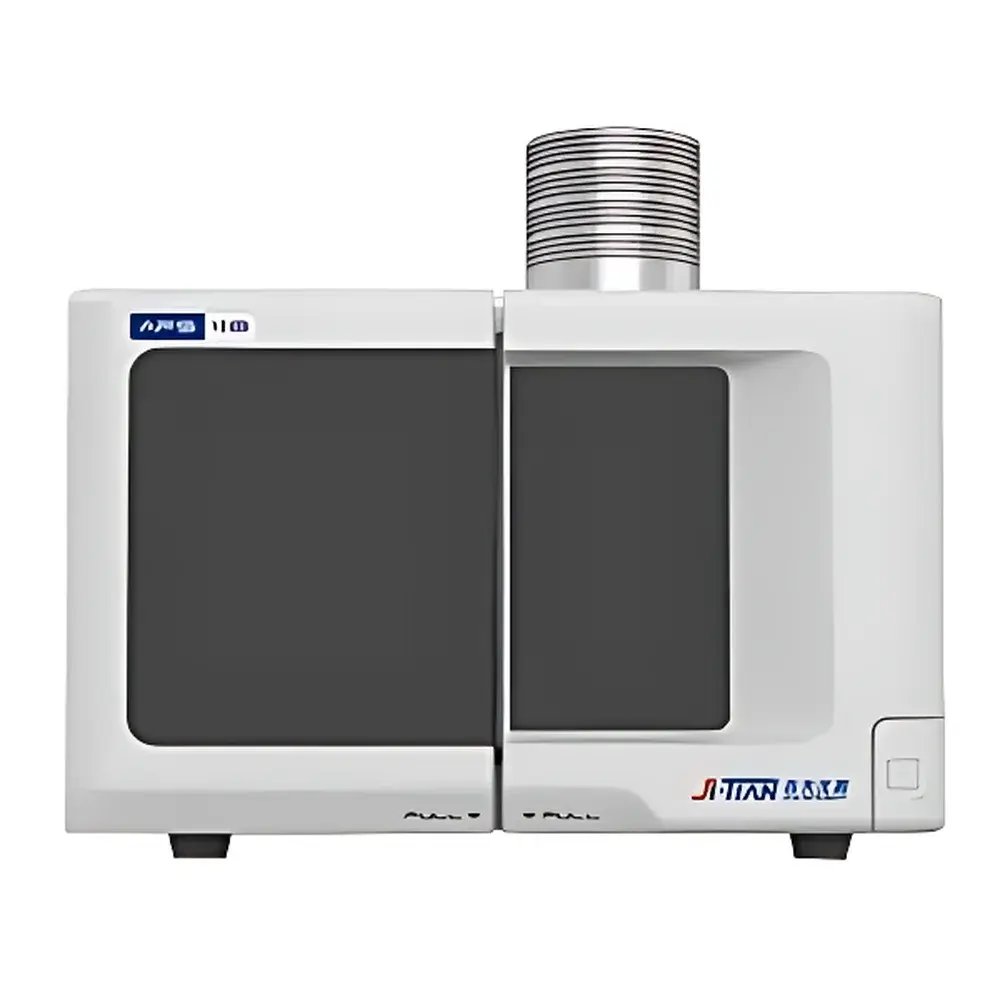
Titan Instruments AFS-10B Intermittent Pump Atomic Fluorescence Spectrometer
| Brand | Titan Instruments |
|---|---|
| Origin | Beijing, China |
| Model | AFS-10B |
| Instrument Type | Multi-channel Atomic Fluorescence Spectrometer |
| Sample Introduction | Peristaltic Pump |
| Waste Disposal | Rear Exhaust Design |
| Hydride Generation Mode | Vapor Generation / Hydride Generation |
| Pneumatic Control | Valve Island System |
| Detectable Elements | As, Sb, Bi, Sn, Se, Te, Pb, Ge, Hg, Cd, Zn |
| Relative Standard Deviation (RSD) | <0.6% |
| Linear Dynamic Range | >3 orders of magnitude |
| Detection Limits | As, Sb, Se, Bi, Te, Hg, Sn, Pb < 0.01 µg/L |
| Photomultiplier Tube Wavelength Range | 160–320 nm |
| Atomizer Temperature Control | Yes |
Overview
The Titan Instruments AFS-10B Intermittent Pump Atomic Fluorescence Spectrometer is a high-performance, multi-channel analytical instrument engineered for trace-level quantification of hydride-forming and cold-vapor elements in environmental, food, clinical, and industrial matrices. It operates on the principle of atomic fluorescence spectroscopy (AFS), where analyte atoms—generated in situ via hydride generation (HG) or cold vapor (CV) techniques—are excited by a high-intensity hollow cathode lamp (HCL) or electrodeless discharge lamp (EDL), and their characteristic fluorescent emission at specific UV wavelengths is measured with high signal-to-noise ratio using a sealed photomultiplier tube (PMT) detector. The AFS-10B integrates a proprietary intermittent six-roller peristaltic pump system with monolithic pressure-block design to ensure precise, pulse-free reagent delivery and reproducible hydride formation kinetics—critical for achieving sub-ppt detection sensitivity and long-term measurement stability across routine QC and regulatory-compliant workflows.
Key Features
- Intermittent six-roller peristaltic pump with integrated pressure-block architecture for consistent flow control, reduced carryover, and enhanced hydride generation efficiency.
- Dual-channel synchronized detection capability with independent optical paths and PMT detectors, enabling simultaneous analysis of two elements without spectral interference.
- Valve island–based pneumatic control system for precise, low-dead-volume gas/liquid switching—minimizing memory effects and improving method robustness.
- ARM + FPGA dual-core main controller with distributed MCU modules managing lamp power, atomizer heating, signal acquisition, and pump timing—ensuring deterministic real-time operation and thermal/electrical stability.
- Drift-compensated soft calibration algorithm that dynamically adjusts baseline and gain during analysis, maintaining accuracy over extended run times and varying ambient conditions.
- High-speed sampling circuitry with 500 Hz acquisition rate, reducing inter-channel crosstalk and enabling rapid transient signal capture during hydride burst events.
Sample Compatibility & Compliance
The AFS-10B supports sample introduction via standard hydride generation protocols following established digestion and pre-reduction procedures—including microwave-assisted acid digestion (per HJ 680-2013, HJ 702-2014), alkaline leaching, and direct aqueous reduction. Its validated performance meets or exceeds requirements of multiple national and industry standards, including GB 5009.11-2014 (total and inorganic arsenic in food), GB 5009.17-2021 (total and organic mercury in food), HJ 694-2014 (As, Hg, Se, Bi, Sb in water), HJ 1133-2020 (As, Se, Bi, Sb in ambient particulate matter), and HJ 680-2013 (soil and sediment analysis). The system’s hardware and firmware architecture support audit-ready operation under GLP and GMP environments, with optional 21 CFR Part 11–compliant software modules available for electronic signatures, secure user authentication, and immutable audit trails.
Software & Data Management
Titan’s proprietary AFS Control Suite provides a modular, role-based interface with configurable dashboards, method wizards, and sequence-driven automation. Users can define custom workflows—including auto-dilution, internal standard correction, and multi-point calibration with forced zero intercepts. The software includes full audit trail logging (user actions, parameter changes, data exports), hierarchical permission management (admin/operator/analyst levels), real-time instrument status monitoring, and scheduled wake-up with automatic pre-heating and lamp warm-up routines. Data files are stored in vendor-neutral formats (CSV, XML) and support direct export to LIMS platforms via ODBC or REST API. Optional add-ons include automated report generation compliant with ISO/IEC 17025 documentation templates.
Applications
The AFS-10B delivers reliable quantification in diverse regulated and research applications: determination of total and speciated arsenic in rice and infant formula; mercury speciation screening in fish tissue after derivatization; selenium monitoring in drinking water per WHO guidelines; antimony and bismuth analysis in catalyst residues; lead and cadmium screening in cosmetics per EU Cosmetics Regulation (EC No. 1223/2009); and routine monitoring of geological samples for exploration geochemistry. Its expandability supports integration with 160- or 212-position autosamplers for unattended batch processing, and its dedicated serial port enables future upgrade to hyphenated HG-AFS systems for elemental speciation (e.g., As(III)/As(V), MeHg/EtHg, Se(IV)/Se(VI)) when coupled with HPLC or CE separation modules.
FAQ
What hydride-forming elements can the AFS-10B quantify with certified detection limits?
The instrument achieves sub-0.01 µg/L detection limits for arsenic, antimony, selenium, bismuth, tellurium, mercury, tin, and lead under optimized HG-AFS conditions per EPA Method 200.9 and ISO 17294-2.
Is the AFS-10B compatible with existing laboratory information management systems (LIMS)?
Yes—data export supports CSV, XML, and PDF formats; optional ODBC drivers and RESTful API endpoints enable bidirectional integration with major LIMS platforms.
Can the instrument be upgraded for elemental speciation analysis?
Yes—the rear-panel RS-232 port is pre-wired for HPLC/CE interfacing, and Titan offers validated application packages for arsenic, mercury, and selenium species separation and quantification.
Does the software support 21 CFR Part 11 compliance?
Standard software includes audit trail, user roles, and electronic signature capabilities; full 21 CFR Part 11 validation packages—including IQ/OQ documentation and change control logs—are available as optional licensed modules.
What maintenance intervals are recommended for routine operation?
Pump tubing replacement every 3 months under continuous use; quartz atomizer cleaning weekly; lamp alignment verification monthly; annual PM service includes PMT gain calibration, gas line leak check, and valve island performance validation.
Related Products





