
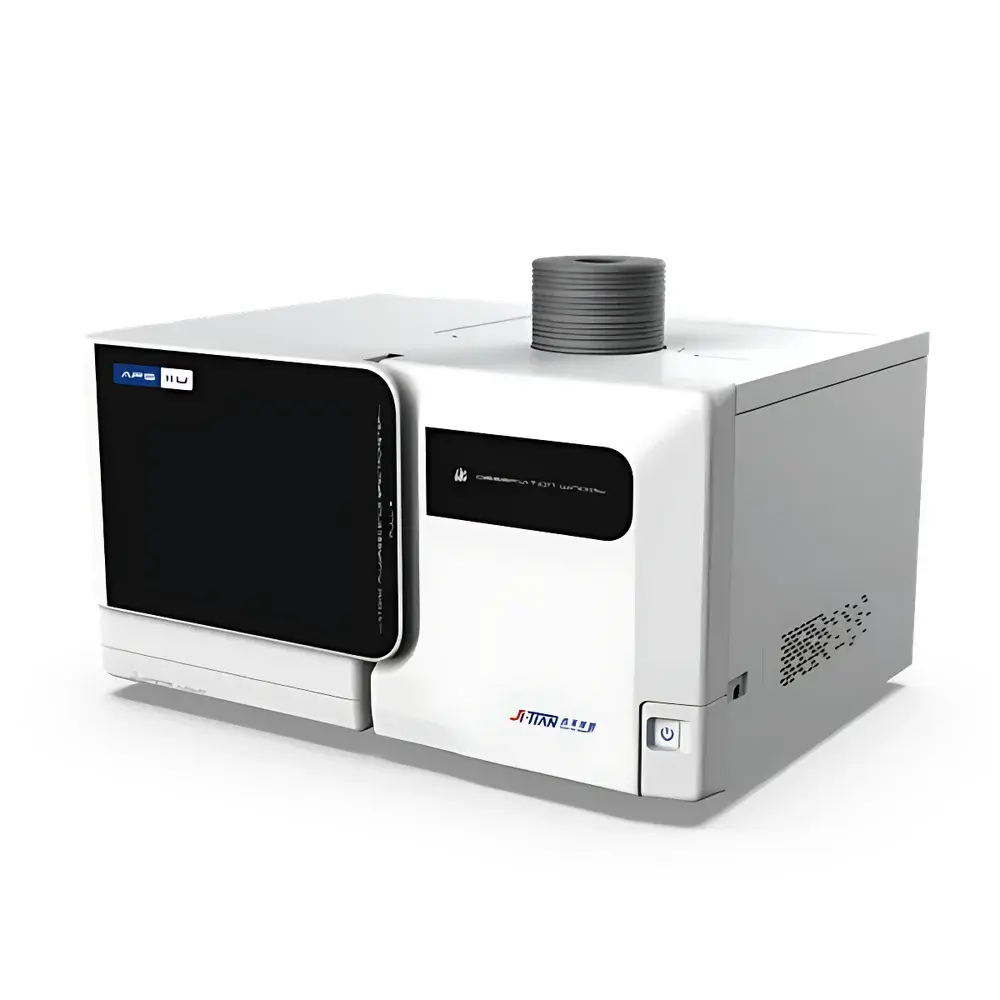
Titan Instruments AFS-11U Atomic Fluorescence Spectrometer
| Brand | Titan Instruments |
|---|---|
| Origin | Beijing, China |
| Manufacturer Type | Authorized Distributor |
| Country of Origin | China |
| Model | AFS-11U |
| Pricing | Available Upon Request |
Overview
The Titan Instruments AFS-11U Atomic Fluorescence Spectrometer is a high-performance, multi-channel hydride-generation atomic fluorescence instrument engineered for trace-level quantification of hydride-forming elements—including arsenic (As), mercury (Hg), selenium (Se), antimony (Sb), bismuth (Bi), tellurium (Te), lead (Pb), tin (Sn), cadmium (Cd), and zinc (Zn)—in complex liquid matrices. Operating on the principle of atomic fluorescence spectroscopy (AFS), the system atomizes analyte species via quartz tube electrothermal atomization or flame-in-gas-phase atomization, followed by excitation using element-specific hollow cathode lamps (HCLs) and highly sensitive detection of characteristic fluorescence emission at defined wavelengths. Designed for laboratory environments requiring regulatory compliance and long-term measurement stability, the AFS-11U integrates dual-channel optical path architecture with synchronized signal acquisition to enable simultaneous or sequential multi-element analysis—reducing inter-run variability and enhancing throughput in routine QC/QA workflows.
Key Features
- Dual-flow sequential injection system with independent control of sample, carrier solution, and reducing agent—ensuring precise reagent metering, minimized cross-contamination, and reproducible hydride generation kinetics.
- Integrated pneumatic manifold with pressure-regulated gas circuitry and bubble-trap design in the dual-injection pathway—effectively eliminating air entrainment in the reductant stream to maintain signal baseline integrity.
- Six-roller peristaltic pump with compact pump head and uniform compression block—enabling stable, pulse-free fluid delivery and automatic carrier replenishment during continuous operation.
- Intelligent lamp management: automatic HCL ignition, dual-channel lamp recognition, and real-time filament current monitoring with status feedback for predictive maintenance.
- Drift compensation algorithm (Soft Calibration) and Quality Control Protocol (QCP) support—facilitating automated recalibration against reference standards and enabling dynamic correction of instrumental drift over extended analytical sessions.
- Programmable low-power mode: scheduled auto-standby after run completion and timed wake-up with pre-heating sequence—optimizing energy use without compromising readiness or thermal equilibrium.
- Adjustable lamp holder with eccentricity-compensating mechanism—compatible with industry-standard HCLs exhibiting variable axial alignment tolerances.
Sample Compatibility & Compliance
The AFS-11U accommodates aqueous samples across diverse matrices—ranging from acid-digested environmental extracts (e.g., EPA Method 200.9), food homogenates, clinical biofluids, and pharmaceutical filtrates—to soil leachates and industrial effluents. Sample introduction supports discrete vial-based batch analysis, continuous flow-through configurations, and optional autosampler integration. The instrument meets foundational requirements for GLP-compliant laboratories and supports audit-ready operation under ISO/IEC 17025:2017 frameworks. Software functionality includes full 21 CFR Part 11–compliant audit trails, role-based user authentication, electronic signature capability, and immutable data archiving—ensuring traceability and data integrity for regulated submissions.
Software & Data Management
Titan’s proprietary AFS Control Suite provides a modular, customizable interface built on a deterministic real-time acquisition engine. It delivers synchronized dual-channel spectral visualization, interactive calibration curve construction (linear, quadratic, or weighted least-squares), and dynamic interference correction algorithms. Workflow automation includes guided method setup, batch sample queueing, auto-report generation (PDF/CSV/XLSX), and direct import of sample metadata from LIMS via ODBC or CSV mapping. All raw signal data, processing parameters, and operator actions are timestamped and cryptographically logged—supporting retrospective review, deviation investigation, and regulatory inspection preparedness.
Applications
The AFS-11U serves as a core analytical platform in accredited testing laboratories performing statutory monitoring per national and international standards—including GB 5009 series (China), US EPA 1631/200.9, ISO 17294-2, and EN 16268. Primary application domains include: heavy metal screening in drinking water and wastewater; speciation-ready analysis of As(III)/As(V) and methylmercury precursors; residue testing in agricultural commodities and animal feed; quality control of raw materials and finished products in cosmetics and pharmaceutical manufacturing; geochemical profiling of ore concentrates and tailings; and method validation studies in academic and governmental research institutions.
FAQ
Does the AFS-11U support elemental speciation analysis?
Yes—the instrument features a dedicated RS-232 port and hardware synchronization interface to integrate with HPLC modules, enabling upgrade to a hyphenated HPLC-AFS system for As, Hg, and Se species separation and quantification.
Is the software compliant with FDA 21 CFR Part 11 requirements?
Yes—audit trail logging, electronic signatures, user access tiers, and data immutability controls are fully implemented and configurable per Part 11 Annex A guidance.
What lamp types are supported?
Standard single- and multi-element hollow cathode lamps (HCLs) conforming to IEC 61000-4-3 mechanical and electrical specifications; no external power supply required.
Can the system be operated remotely?
Remote desktop access and secure VPN-based instrument control are supported through IT-administered network policies; however, local physical presence is recommended for maintenance and calibration verification.
What maintenance intervals are recommended?
Quarterly quartz tube cleaning and annual pneumatic valve inspection are advised; peristaltic tubing replacement every 6 months under continuous operation is typical.



