
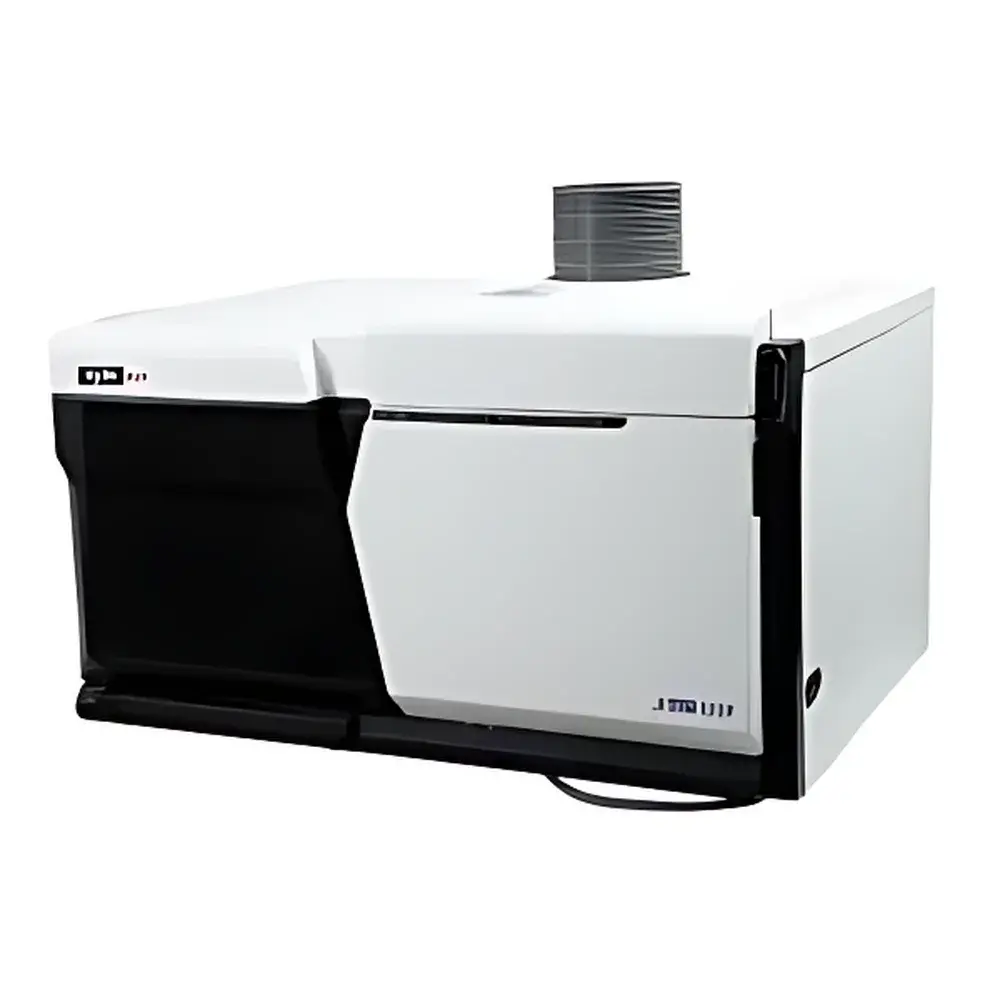
Titan Instruments Kylin A18 Quadruple-Channel Atomic Fluorescence Spectrometer
| Brand | Titan Instruments |
|---|---|
| Origin | Beijing, China |
| Model | Kylin A18 |
| Instrument Type | Multi-channel Atomic Fluorescence Spectrometer |
| Sample Introduction | Dual Sequential Injection Pumps |
| Waste Disposal | Rear Exhaust Configuration |
| Hydride Generation Mode | Vapor Generation / Hydride Generation |
| Gas Flow Control | Mass Flow Controller (MFC) |
| Detectable Elements | As, Sb, Bi, Sn, Se, Te, Pb, Ge, Hg, Cd, Zn, Au |
| Relative Standard Deviation (RSD) | <0.6% |
| Linear Dynamic Range | >3 orders of magnitude |
| Detection Limits | As, Sb, Se, Bi, Te, Hg, Sn, Pb < 0.01 µg/L |
| Photomultiplier Tube Wavelength Range | 160–320 nm |
| Atomizer Temperature Control Range | 100–350 °C |
Overview
The Titan Instruments Kylin A18 Quadruple-Channel Atomic Fluorescence Spectrometer is a high-performance, multi-element analytical instrument engineered for trace-level quantification of hydride-forming and cold-vapor elements in environmental, food, clinical, geological, and industrial matrices. It operates on the principle of atomic fluorescence spectroscopy (AFS), wherein analyte atoms—generated in situ via chemical vapor generation (CVG) or hydride generation (HG)—are excited by a high-intensity, element-specific hollow cathode lamp (HCL), and the resulting fluorescence emission at characteristic wavelengths is measured with a low-noise photomultiplier tube (PMT). The Kylin A18 employs a fully orthogonal dual-beam optical architecture to suppress stray light and enhance signal-to-noise ratio, enabling sub-ppt detection sensitivity and long-term measurement stability. Its quadruple-channel configuration allows simultaneous, independent detection of up to four elements without spectral interference, significantly improving throughput in regulated multi-analyte workflows.
Key Features
- Quadruple-channel synchronous detection with full-channel dual-beam symmetry, ensuring exceptional inter-channel reproducibility and enabling real-time reference drift correction.
- Automated dual sequential injection system with optional 160-position or 212-position polar-coordinate autosampler for unattended operation and precise reagent delivery.
- Pneumatic syringe injection module delivering constant-pressure reaction kinetics, minimizing carryover and enhancing wash efficiency; reagents stored in sealed, pressurized bottles with integrated liquid-level sensing and alarm.
- Modular, plug-and-play intelligent hollow cathode lamps with auto-identification and built-in usage hour tracking; lamp current and ignition status monitored in real time.
- High-stability lamp power supply with mercury-specific automatic pre-ignition and current regulation precision ≤0.1%.
- Atomizer temperature programmable from 100 °C to 350 °C, optimized per element to maximize atomization efficiency and minimize background interference.
- EFC-controlled gas flow system with continuous pressure and mass flow monitoring, integrated fault diagnostics, and audible/visual alerts for out-of-spec conditions.
- PTFE-coated carbon-fiber sampling probes replace fragile quartz capillaries—improving mechanical durability and reducing maintenance frequency.
- Comprehensive self-diagnostic suite covering optical alignment, HG reaction unit integrity, atomizer thermal profile, gas flow consistency, liquid handling accuracy, and lamp operational health.
- Graphical user interface with real-time hardware status dashboard, intuitive parameter visualization, and embedded method validation tools.
Sample Compatibility & Compliance
The Kylin A18 is validated for use across solid, liquid, and semi-solid sample types following standardized digestion and pre-reduction protocols—including microwave-assisted acid digestion (EPA Method 3052, HJ 680-2013, HJ 702-2014) and open-vessel wet digestion (GB/T 22105-2008). It meets performance criteria specified in multiple international and national regulatory methods: ASTM D6729 (petroleum), USP / (elemental impurities in pharmaceuticals), ISO 17294-2 (water), and Chinese National Standards GB 5009.11-2014, GB 5009.17-2014, HJ 694-2014, and HJ 1133-2020. Its software architecture supports 21 CFR Part 11-compliant audit trails, role-based access control, electronic signatures, and method versioning—ensuring full traceability for GLP and GMP environments.
Software & Data Management
The Kylin A18 is operated via a bilingual (English/Chinese) software platform compliant with modern laboratory data management requirements. Core functionalities include method library management, automated calibration curve generation (linear, quadratic, weighted), QC sample scheduling, spike recovery calculation, and customizable reporting templates exportable to PDF, Excel, and CSV. All data changes—including method edits, calibration updates, and result overrides—are timestamped and attributed to user ID with immutable audit logs. Raw spectral data, instrument parameter sets, and diagnostic event records are stored in a relational database with configurable retention policies and backup integration.
Applications
- Environmental Monitoring: Quantification of As, Hg, Se, Sb, and Bi in drinking water (EPA 1631E), wastewater, soil, sediment, and airborne particulate matter (PM2.5/PM10).
- Food & Agriculture Safety: Routine screening of inorganic arsenic in rice, mercury in fish, lead in dairy products, and cadmium in animal feed per EU Commission Regulation (EU) No 1881/2006 and China GB 2762-2022.
- Clinical & Toxicological Analysis: Measurement of selenium in serum, mercury in whole blood, and arsenic in hair/nail tissues for exposure assessment and biomonitoring studies.
- Geological & Metallurgical Testing: Determination of Ge, Te, Au, and Sn in ore concentrates, slag, and high-purity metals using matrix-matched calibration and internal standardization.
- Pharmaceutical Quality Control: Elemental impurity testing of excipients, active pharmaceutical ingredients (APIs), and container-closure systems per ICH Q3D guidelines.
- Petrochemical Analysis: Trace mercury and lead speciation in crude oil, gasoline, and lubricants following ASTM D5191 and D7039 protocols.
FAQ
What hydride-forming elements can the Kylin A18 quantify simultaneously?
The instrument supports concurrent detection of up to four elements from the following group: As, Sb, Bi, Se, Te, Sn, Pb, Ge, Cd, Zn, and Au—subject to spectral non-interference and compatible reaction chemistry.
Is the system compatible with EPA or ISO regulatory methods?
Yes—the Kylin A18 meets performance specifications outlined in EPA Method 1631E (Hg), ISO 17294-2 (multi-element water analysis), and numerous Chinese national standards (e.g., HJ 694-2014, GB 5009.17-2014), with documented method validation reports available upon request.
Does the software support electronic signatures and audit trail compliance?
Yes—the embedded software provides full 21 CFR Part 11 functionality including user authentication, electronic signatures, immutable audit logs, and role-based permissions for data review, approval, and archival.
How is atomizer temperature controlled during analysis?
The atomizer heater is PID-regulated with ±1 °C accuracy across a 100–350 °C range; temperature profiles are method-defined and automatically loaded per element sequence.
What maintenance intervals are recommended for the pneumatic injection system?
Under normal operating conditions (8 h/day, aqueous samples), the pneumatic syringe seals require inspection every 6 months; the carbon-fiber sampling probe has no scheduled replacement interval but is inspected during quarterly performance verification.




