
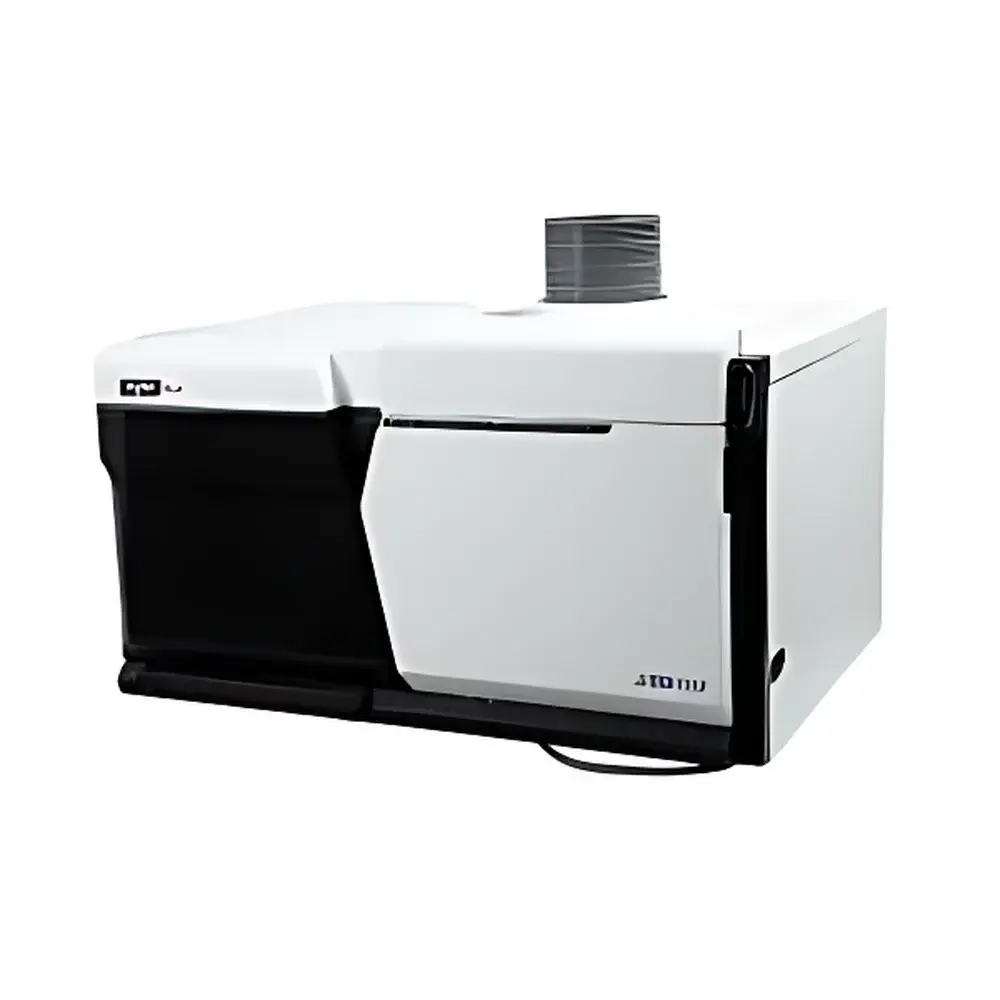
Titan Instruments Kylin S12 Dual-Channel Atomic Fluorescence Spectrometer
| Brand | Titan Instruments |
|---|---|
| Origin | Beijing, China |
| Model | Kylin S12 |
| Instrument Type | Multi-channel Atomic Fluorescence Spectrometer |
| Sample Introduction | Dual Sequential Injection Pump |
| Waste Disposal | Rear Exhaust Configuration |
| Hydride Generation Mode | Vapor Generation / Hydride Generation |
| Gas Flow Control | Mass Flow Controller (MFC) |
| Detectable Elements | As, Sb, Bi, Sn, Se, Te, Pb, Ge, Hg, Cd, Zn, Au |
| Relative Standard Deviation (RSD) | <0.6% |
| Linear Dynamic Range | >3 orders of magnitude |
| Detection Limits | As, Sb, Se, Bi, Te, Hg, Sn, Pb < 0.01 µg/L |
| Photomultiplier Tube Wavelength Range | 160–320 nm |
| Atomizer Temperature Control Range | 100–350 °C |
Overview
The Titan Instruments Kylin S12 Dual-Channel Atomic Fluorescence Spectrometer is a high-performance, hydride-generation-based analytical instrument engineered for trace-level quantification of hydride-forming and cold-vapor elements in complex environmental, food, clinical, and industrial matrices. It operates on the principle of atomic fluorescence spectroscopy (AFS), where analyte atoms—generated in situ via chemical reduction (e.g., NaBH4 reduction in acidic medium)—are atomized in a quartz furnace or flameless graphite tube and excited by a sharp-line hollow cathode lamp (HCL) or electrodeless discharge lamp (EDL). The resulting element-specific fluorescence emission is collected at right angles to the excitation beam, minimizing background scatter and enabling exceptional signal-to-noise ratios. The Kylin S12 employs a true dual-channel optical architecture with independent detection paths, allowing simultaneous, real-time measurement of two elements without spectral interference or time multiplexing—critical for regulatory-compliant analysis where co-occurring elements (e.g., As and Se in drinking water per EPA Method 1632 or HJ 694-2014) must be reported concurrently.
Key Features
- Dual-channel parallel detection with full optical isolation: Enables simultaneous, independent quantification of two elements (e.g., As + Hg or Sb + Se) with identical path lengths, detector gain, and signal processing—ensuring channel-to-channel equivalence and eliminating inter-channel calibration drift.
- Integrated dual sequential injection system: Delivers precise, reproducible reagent and sample metering with sub-microliter accuracy; eliminates carryover and supports programmable reaction coil timing for optimized hydride formation kinetics.
- Orthogonal double-beam optical design: Excitation and fluorescence collection axes are spatially separated at 90°, coupled with a high-efficiency ellipsoidal mirror collector and low-noise photomultiplier tube (PMT) operating within 160–320 nm—optimized for resonance lines of As (193.7 nm), Hg (253.7 nm), Se (196.0 nm), and other Group IV–VI elements.
- Intelligent temperature-controlled quartz-trap atomizer: Programmable furnace heating from 100 °C to 350 °C enables element-specific atomization optimization—e.g., lower temperatures for volatile Hg (to prevent premature volatilization) and higher setpoints for refractory Bi or Te.
- Electronic flow control (EFC) gas management: Mass flow controllers regulate Ar carrier gas with real-time pressure and flow monitoring; integrated fault detection triggers audible/visual alerts upon deviation beyond ±2% setpoint.
- Plug-and-play smart HCLs: Direct-insertion hollow cathode lamps with embedded EEPROM store lamp identity, recommended current, lifetime hours, and spectral line data—automatically loaded upon insertion into the multi-lamp turret (up to 8 positions).
- Carbon-fiber-reinforced PTFE sampling probes: Replace fragile quartz capillaries; resistant to acid corrosion and mechanical breakage during high-cycle automated operation with 160- or 212-position polar-coordinate autosamplers.
- Comprehensive self-diagnostic suite: Automated hardware validation across six subsystems—optical alignment, hydride generation module, atomizer thermal profile, gas delivery integrity, liquid level sensing, and lamp operational status—with diagnostic logs timestamped and exportable for GLP audit trails.
Sample Compatibility & Compliance
The Kylin S12 is validated for use with aqueous, digested, and microwave-assisted extracts compliant with internationally recognized standard methods, including ISO 17294-2 (water), USP (pharmaceutical elemental impurities), ASTM D5673 (petroleum products), and multiple Chinese national standards: GB 5009.11-2014 (total and inorganic arsenic in food), GB 5009.17-2014 (mercury speciation), HJ 694-2014 (water), HJ 680-2013 (soil/sediment), and HJ 1133-2020 (ambient particulate matter). Its dual-channel capability satisfies multi-element reporting requirements under EPA 200.9 and EU Directive 2009/54/EC for bottled water certification. All hardware and firmware components conform to IEC 61326-1 (EMC) and IEC 61010-1 (safety); software architecture supports 21 CFR Part 11-compliant electronic signatures, role-based access control, and immutable audit logs.
Software & Data Management
The Kylin S12 is operated via Titan’s AFS-Studio v4.x platform—a dual-language (English/Chinese), Windows-based application built on .NET Framework with SQLite backend. It features method-driven workflow automation, including auto-calibration curve generation (linear/log-linear), QC check integration (spike recovery, duplicate analysis, blank tracking), and customizable report templates aligned with CNAS, CMA, and ISO/IEC 17025 laboratory accreditation requirements. Raw spectral data, instrument parameter logs, and user activity records are stored with SHA-256 hashing; all modifications trigger version-stamped audit entries with operator ID, timestamp, and action type. Data export supports CSV, PDF, and XML formats compatible with LIMS interfaces (HL7, ASTM E1384).
Applications
- Environmental Monitoring: Quantification of As, Hg, Sb, and Se in surface water, groundwater, wastewater effluents, soil leachates, and airborne particulate filters (PM2.5/PM10) per HJ 1133-2020 and EPA 7060A.
- Food & Feed Safety: Routine screening of total inorganic arsenic in rice, mercury in fish tissue, lead in infant formula, and selenium in dietary supplements—fully aligned with EU Commission Regulation (EU) No 2023/915 and China’s GB 2762-2022.
- Clinical Toxicology: Trace metal profiling in whole blood, urine, hair, and nail samples for occupational exposure assessment (e.g., As in smelter workers, Hg in dental personnel) per CLIA and CAP guidelines.
- Geochemical & Metallurgical Analysis: Determination of ultra-trace Ge, Te, and Au in ore concentrates, refinery slags, and semiconductor-grade silicon wafers following ASTM D8259.
- Pharmaceutical Quality Control: Elemental impurity testing of active pharmaceutical ingredients (APIs), excipients, and container-closure systems per ICH Q3D and USP /.
FAQ
What hydride-forming elements can the Kylin S12 quantify simultaneously?
The instrument supports concurrent dual-element analysis for any pair among As, Sb, Bi, Se, Te, Sn, Pb, and Ge. Mercury is measured via cold-vapor AFS mode and may be paired with one hydride-forming element in alternating sequence.
Is the software compliant with FDA 21 CFR Part 11 requirements?
Yes—AFS-Studio implements electronic signatures, audit trail logging, user authentication, and data integrity safeguards required for regulated environments under Part 11 and Annex 11.
How does the dual sequential injection system improve precision over conventional peristaltic pumps?
It eliminates pulsation-induced volume variability and tubing wear artifacts, delivering RSD <0.6% across 10–100 µL injections—critical for achieving sub-0.01 µg/L detection limits in compliance with HJ 694-2014.
Can the Kylin S12 interface with third-party LIMS platforms?
Yes—via standardized ODBC and HL7 v2.x drivers; raw data and metadata export formats include ASTM E1384-compliant XML and tab-delimited CSV with embedded method IDs and QC flags.
What maintenance protocols are recommended for long-term stability?
Daily: Rinse manifold with 5% HNO3; weekly: Clean quartz atomizer trap and inspect EFC calibration; quarterly: PMT dark-current verification and lamp energy profiling—all logged automatically in the maintenance scheduler.
Related Products




