
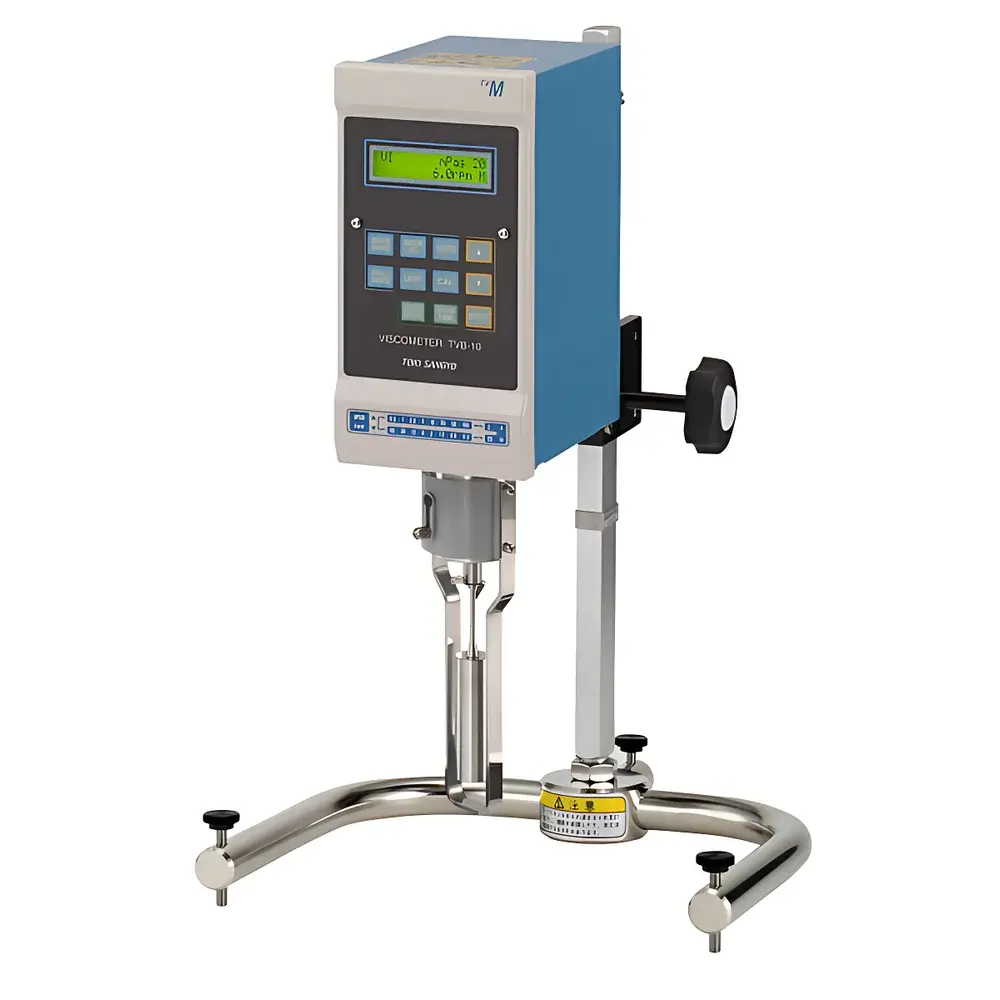
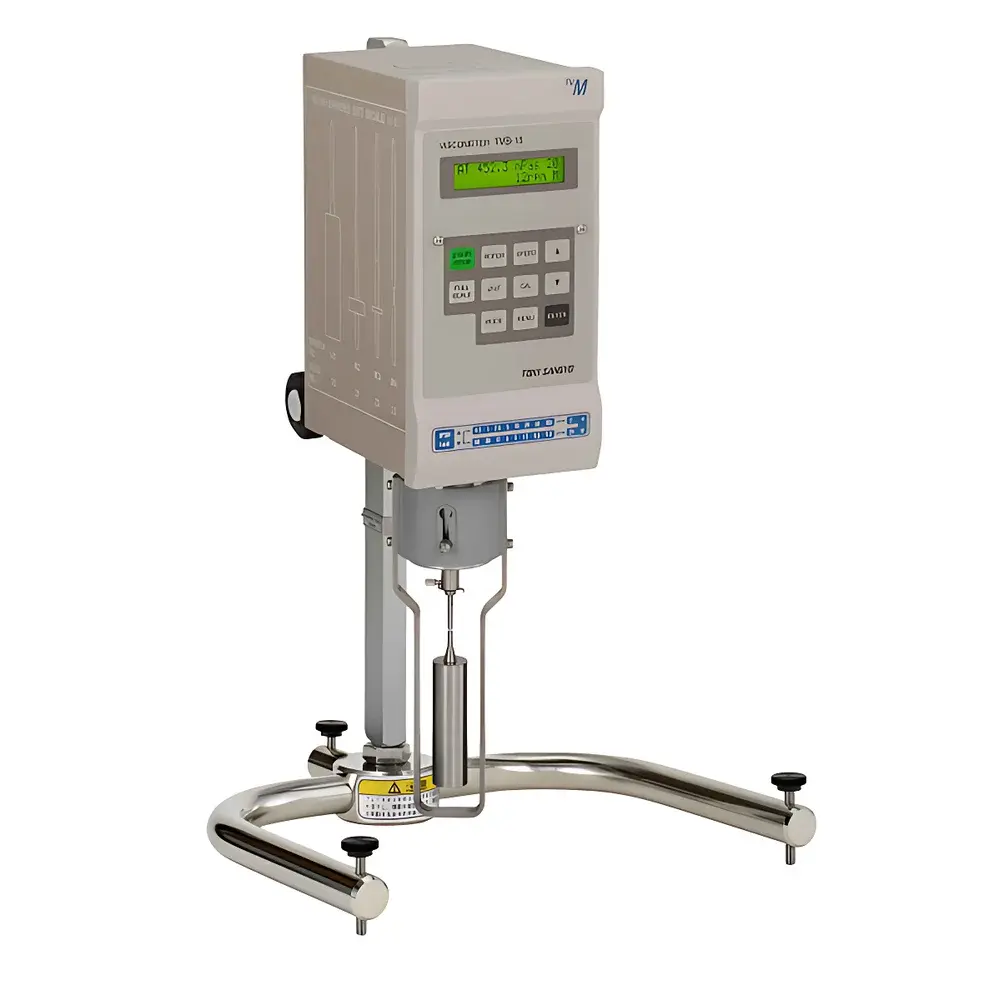
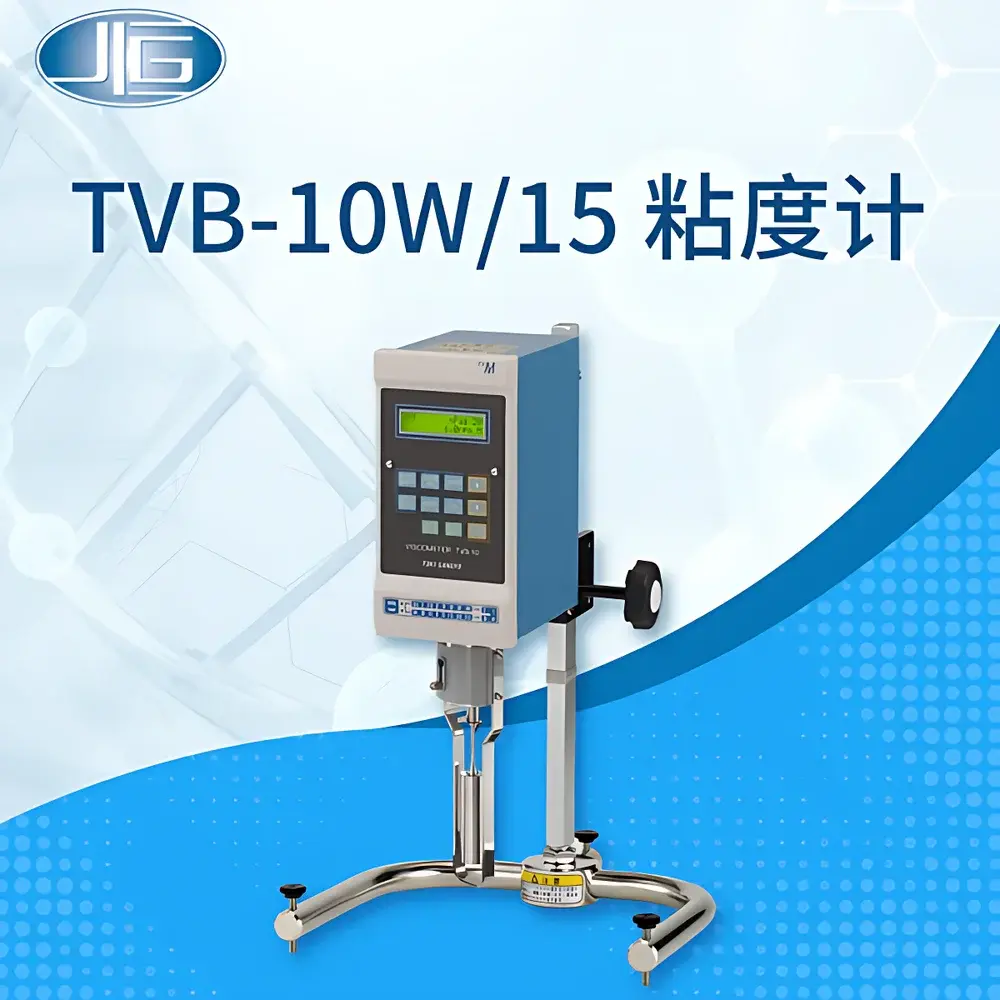
TOKI SANGYO TVB-10 and TVB-15 Cylindrical Viscometers with Magnetic Bearing System
| Brand | TOKI SANGYO |
|---|---|
| Origin | Japan |
| Model | TVB-10, TVB-10W, TVB-15 |
| Viscosity Range | 0.6–64,000,000 mPa·s |
| Torque Range | 67.37–5749.6 μN·m |
| Instrument Type | Fixed Rotational Viscometer |
| Operating Environment | Ambient Temperature |
| Compliance | JIS Z 8803, ISO 2555, ASTM D2196 |
Overview
The TOKI SANGYO TVB-10 and TVB-15 are precision-engineered cylindrical rotational viscometers designed for high-reproducibility viscosity measurements across an exceptionally broad dynamic range—from low-viscosity Newtonian fluids to highly structured non-Newtonian suspensions and polymer melts. These instruments operate on the principle of controlled torque measurement in a coaxial cylinder (Couette) geometry, where sample fluid is sheared between a stationary outer cup and a rotating inner bob driven by a calibrated torsion wire. The defining innovation lies in the contactless magnetic bearing system: eliminating mechanical wear at the rotor suspension point, it removes the need for traditional jewel pivot replacements and ensures long-term dimensional stability of the measuring system. This architecture directly contributes to superior measurement repeatability (±0.2% of reading under controlled conditions), minimal zero drift, and reduced calibration frequency—making the TVB series suitable for both routine QC labs and method-development environments requiring traceable, auditable data.
Key Features
- Magnetic bearing suspension system: Eliminates friction, wear, and associated torque hysteresis; enables maintenance-free operation over extended service life.
- Torsion-wire-driven rotor mechanism: Provides direct, linear torque transduction without gear backlash or motor-induced vibration—critical for low-shear-rate accuracy.
- Multi-range torque capability: Four interchangeable rotor assemblies (TVB-10W/15W, TVB-10H/15H, TVB-10R/15R, TVB-10U/15U) deliver full-scale torques from 67.37 μN·m to 5749.6 μN·m, supporting viscosity coverage from 0.6 mPa·s to 64 × 10⁶ mPa·s.
- Real-time digital display: Simultaneous readout of absolute viscosity (mPa·s or cP), % torque, and rotational speed (rpm); units conform to JIS Z 8803 and ISO 2555 definitions.
- Zero and span calibration functions: Onboard software allows user-performed offset correction and gain adjustment using certified standard oils—essential for inter-instrument comparability and GLP-compliant workflows.
- Programmable auto-stop: Configurable termination criteria include elapsed time, target viscosity threshold, or torque saturation—preventing over-shearing of sensitive samples.
- Quick-connect rotor interface: Tool-free, snap-fit insertion of standardized cylindrical bobs ensures consistent immersion depth and axial alignment per ISO 2555 Annex A.
- RS-232C serial interface: Enables bidirectional communication with PCs for automated data logging, report generation, and integration into LIMS or MES platforms.
Sample Compatibility & Compliance
The TVB series accommodates homogeneous liquids, emulsions, gels, pastes, and thermally stable polymer solutions within standard laboratory temperature ranges (15–35°C). Its rigid stainless-steel cup-and-bob geometry minimizes wall-slip artifacts common in cone-plate systems when measuring filled or particulate-laden materials. All models comply with JIS Z 8803 (Methods for Determination of Apparent Viscosity Using Rotational Viscometers), ISO 2555 (Plastics — Resins in the Liquid State or as Emulsions or Dispersions — Determination of Apparent Viscosity), and ASTM D2196 (Standard Test Methods for Rheological Properties of Non-Newtonian Materials by Rotational Viscometer). For regulated industries, the instrument supports audit-ready data capture when paired with compliant software (e.g., optional TOKI DataMaster v3.2), meeting metadata requirements aligned with FDA 21 CFR Part 11 for electronic records and signatures.
Software & Data Management
While the TVB series operates as a standalone instrument, its RS-232C port supports integration with third-party data acquisition platforms or TOKI’s proprietary DataMaster software. This application provides real-time graphing of viscosity vs. shear rate (for multi-speed sweeps), automatic calculation of flow behavior index (n) and consistency coefficient (K) via Power Law fitting, and export of timestamped datasets in CSV or Excel-compatible formats. Audit trails record operator ID, calibration events, parameter changes, and measurement timestamps—enabling full traceability required under GLP and GMP frameworks. No cloud dependency or subscription model is involved; all processing occurs locally to preserve data sovereignty.
Applications
- Quality control of industrial lubricants, transformer oils, and hydraulic fluids per ASTM D445 protocols.
- Rheological profiling of paint formulations, ink vehicles, and architectural coatings during formulation development.
- Stability assessment of pharmaceutical suspensions and topical gels under low-shear storage conditions.
- Process validation of food products including sauces, dressings, dairy concentrates, and plant-based alternatives.
- Educational laboratories requiring robust, standards-aligned instrumentation for teaching fundamental rheology concepts.
FAQ
What standards does the TVB series comply with?
JIS Z 8803, ISO 2555, and ASTM D2196—covering apparatus specification, test methodology, and reporting conventions for rotational viscosity measurement.
Can the TVB-10 and TVB-15 be used interchangeably in method transfer studies?
Yes—identical geometry, torque calibration traceability to NMIJ (National Metrology Institute of Japan), and shared firmware ensure cross-model data equivalence when using matched rotor/cup sets.
Is temperature control integrated into the instrument?
No—the TVB series is designed for ambient-temperature operation only; external thermostatted baths or Peltier-controlled sample holders must be used for temperature-dependent measurements.
How often does the magnetic bearing require servicing?
None—the magnetic suspension has no consumable parts; only periodic verification of zero-point stability and torque calibration (recommended annually or after 500 operational hours) is required.
Does the instrument support yield stress estimation?
Not natively—the TVB series measures steady-state viscosity at discrete speeds; yield stress determination requires ramped shear-rate protocols available only on advanced rheometers with controlled-stress capability.



