
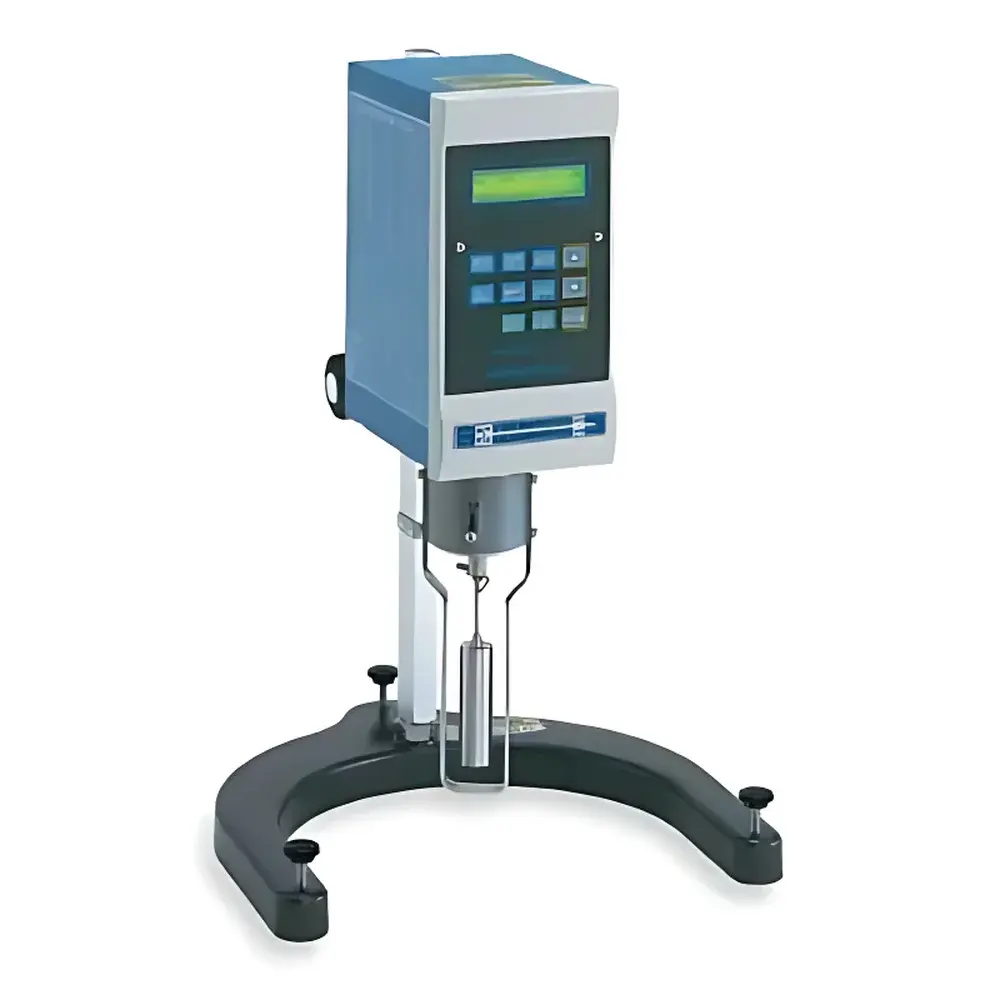
Tokisangyo TVB-10M Torque-Balanced Servo Viscometer
| Brand | AS ONE |
|---|---|
| Origin | Japan |
| Manufacturer | Tokisangyo Co., Ltd. |
| Type | Fixed-Mount Viscometer |
| Operating Environment | Ambient Temperature |
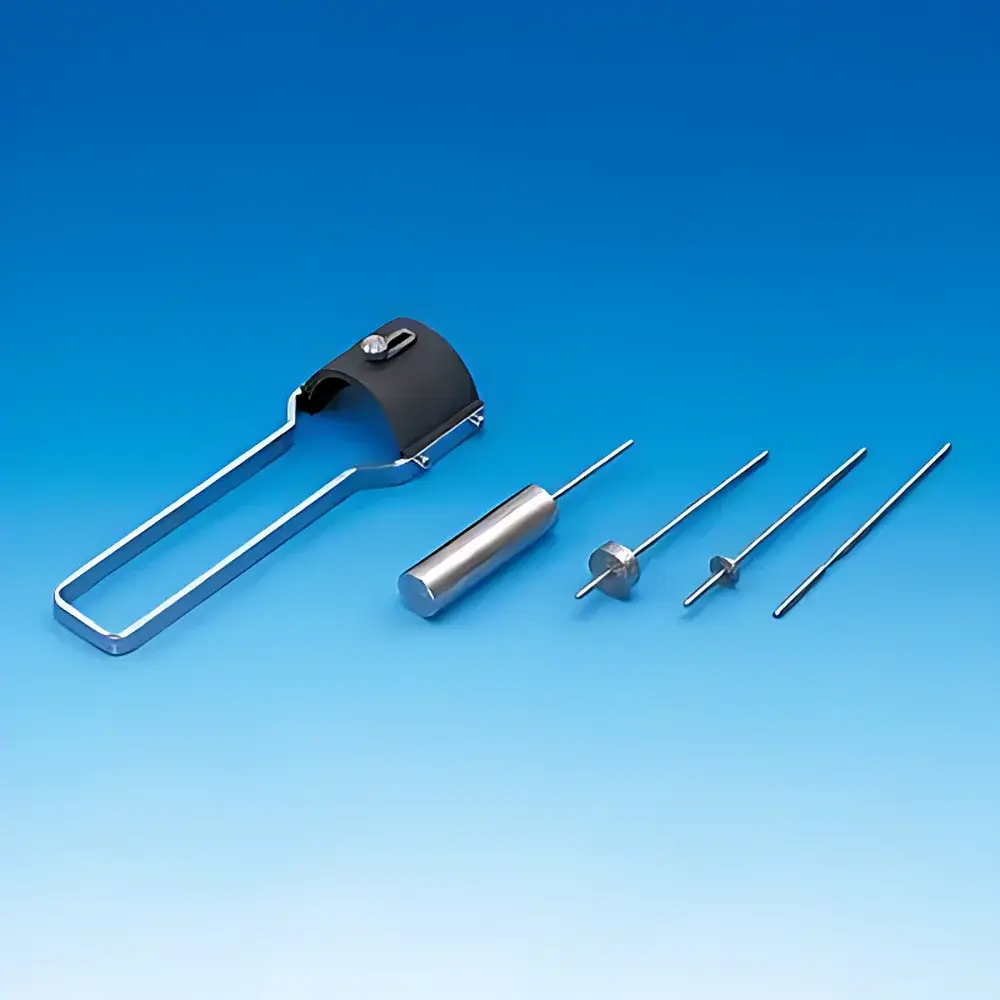
| Compatible Rotors | TH Series (for TVB-10HW/10RW/10UW/15H/15R/15U/25H/35H), TM Series (for TVB-10MW/15M/25/35L) |
| Sample Adapters | THM (low-volume, for TM-series rotors), THH (low-volume, for TH-series rotors), Low-Viscosity Adapter (for TM-series rotors) |
| Standard Axis Stand | TS-20 (compatible with TVB-10/15/25/35 models) |
| Measuring Range | 15–67.4 mPa·s |
| Maximum Torque | 15 μN·m |
| Instrument Category | Specialty Rotational Viscometer |
| Compliance | Designed per JIS Z 8803 and ISO 2555 for solution viscosity measurement |
Overview
The Tokisangyo TVB-10M is a precision-engineered torque-balanced servo viscometer developed by Tokisangyo Co., Ltd. (Japan) and distributed globally under AS ONE’s instrumentation portfolio. It operates on the principle of electromagnetic torque balance—where rotational resistance of a sample is counteracted by a precisely controlled servo motor to maintain zero angular displacement. This closed-loop servo mechanism eliminates mechanical pivot friction and inertia effects inherent in traditional spring-based or analog viscometers, thereby delivering exceptional linearity and repeatability across its defined viscosity range. Unlike conventional coaxial cylinder or cone-and-plate geometries, the TVB-10M employs a proprietary pivotless sensor architecture, ensuring minimal hysteresis and long-term calibration stability. Its fixed-mount configuration makes it suitable for integration into QC laboratories, production-line monitoring stations, and standardized testing environments where ambient temperature operation (15–30 °C) and minimal operator intervention are required.
Key Features
- Torque-balance servo control system with real-time feedback loop for high-resolution viscosity determination
- Pivotless mechanical design eliminating bearing wear, stiction, and drift—critical for long-duration measurements
- Automatic dynamic range adjustment based on instantaneous torque response, enabling seamless multi-step programmed measurements
- Dedicated rotor compatibility matrix supporting both TH-series (high-torque, wide-range) and TM-series (low-viscosity, high-sensitivity) spindles
- Modular adapter ecosystem including THM (1–2 mL sample volume), THH (sub-mL capability with high-shear geometry), and low-viscosity adapters optimized for Newtonian and near-Newtonian fluids
- TS-20 universal axis stand providing rigid vertical alignment and height-adjustable sample cup positioning per JIS Z 8803 requirements
Sample Compatibility & Compliance
The TVB-10M is validated for use with homogeneous liquid samples exhibiting Newtonian or mildly shear-thinning behavior within its specified operating range (15–67.4 mPa·s). It complies with Japanese Industrial Standard JIS Z 8803 (“Methods for Determination of Viscosity of Liquids Using Rotational Viscometers”) and aligns with ISO 2555 (“Plastics — Resins in the Liquid State or as Emulsions or Dispersions — Determination of Apparent Viscosity”). While not designed for non-Newtonian rheological profiling (e.g., yield stress or thixotropy quantification), its torque-balance architecture ensures compliance with GLP documentation standards when paired with audit-trail-capable data acquisition software. The instrument meets CE marking requirements for electromagnetic compatibility (EN 61326-1) and safety (EN 61010-1), and supports traceable calibration using NIST-traceable silicone oil standards.
Software & Data Management
Data acquisition is performed via RS-232 or optional USB interface to PC-based control software (supplied separately). The native application enables programmable test sequences—including ramped speed profiles, dwell-time stabilization, and automatic range switching—while logging torque, rotational speed, temperature (when interfaced with external probe), and calculated viscosity in CSV or XLSX formats. All raw values are timestamped and stored with instrument ID, operator code, and calibration certificate reference. The software architecture supports 21 CFR Part 11-compliant user access control (role-based login), electronic signatures, and immutable audit trails—essential for regulated environments governed by FDA, ISO 17025, or pharmaceutical GMP frameworks.
Applications
The TVB-10M serves as a dedicated viscosity verification tool in quality control workflows for solvents, coatings, adhesives, pharmaceutical suspensions, food emulsions (e.g., syrups, dressings), and polymer solutions. Its narrow but highly precise range makes it especially valuable for comparative batch-to-batch consistency checks in manufacturing settings where deviations >±1.5% from nominal viscosity trigger investigation. It is routinely deployed in R&D labs validating solvent dilution protocols, evaluating surfactant efficacy, and screening formulation stability under accelerated aging conditions. Due to its fixed-speed or stepped-speed operational mode, it does not replace full rheometers for complex fluid characterization but provides metrologically robust endpoint validation aligned with industry-standard test methods.
FAQ
What viscosity standards are recommended for routine calibration?
NIST-traceable silicone oils with certified viscosities at 25 °C (e.g., Cannon N4, N6, N10) are recommended. Calibration should be performed quarterly or after any mechanical service.
Can the TVB-10M measure non-Newtonian samples?
It provides apparent viscosity values at discrete shear rates defined by spindle geometry and rotational speed. For comprehensive flow curve analysis, a controlled-stress rheometer is required.
Is temperature control integrated into the instrument?
No. External Peltier-controlled bath or jacketed sample cups must be used for temperature-dependent measurements; the unit itself operates only at ambient conditions.
How is rotor identification managed during automated testing?
Rotors are manually selected and installed; the software does not auto-detect geometry. Users must input correct rotor code and calibration factor prior to test initiation.
What is the minimum sample volume required with THM adapter?
1.2 mL for standard THM configuration; reduced to 0.8 mL when using THH adapter with TH-series rotors.
Related Products



