
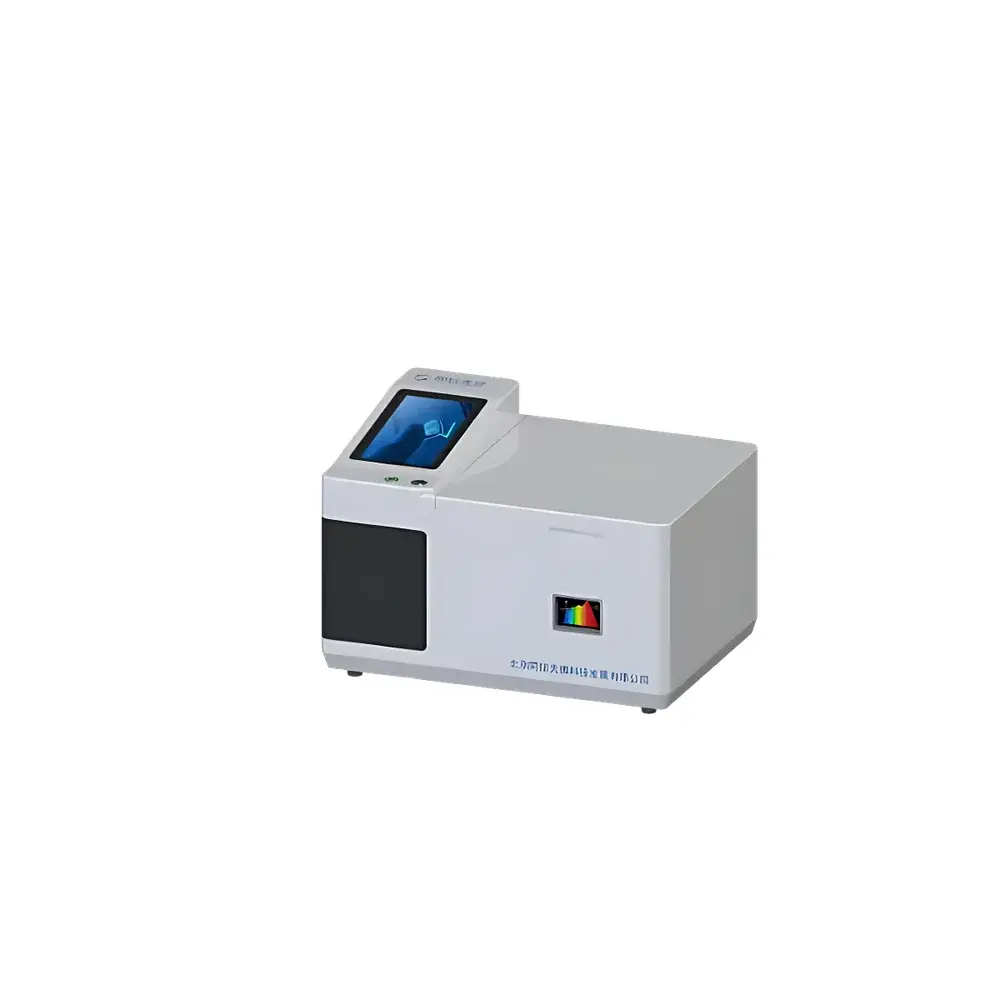
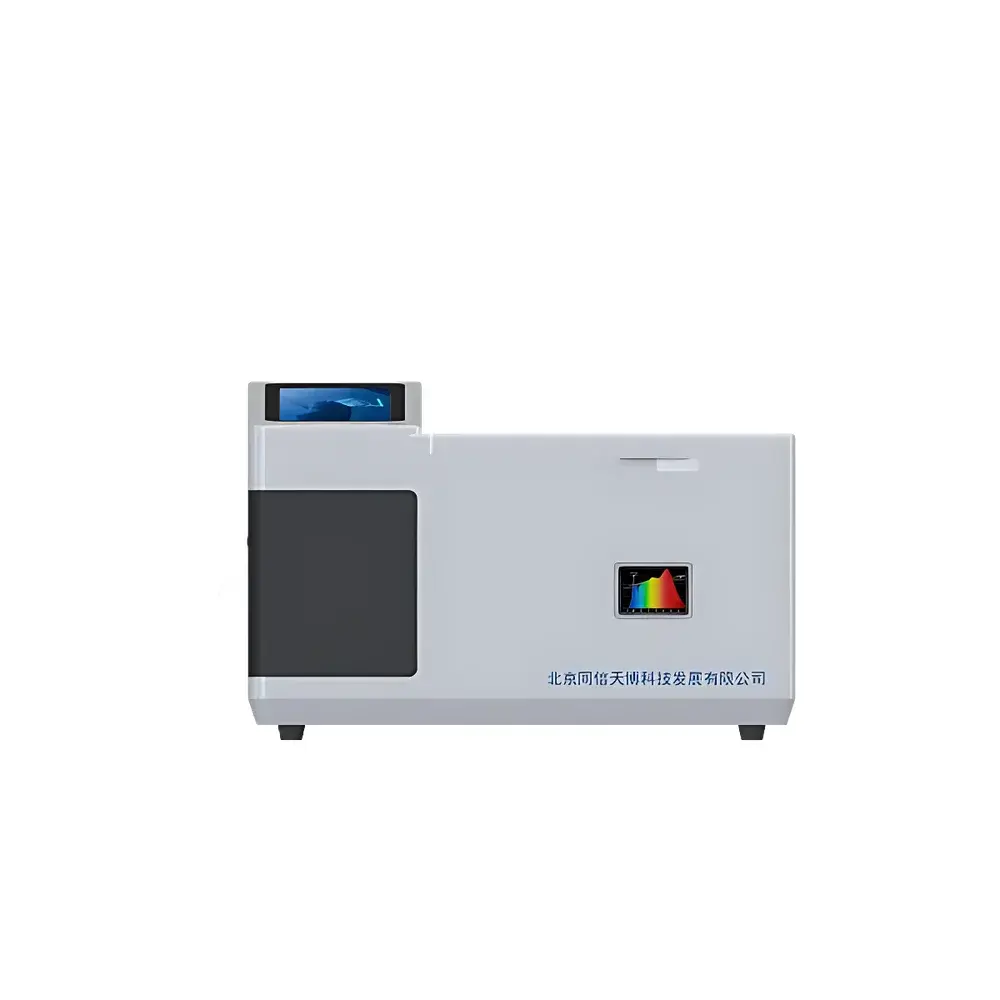
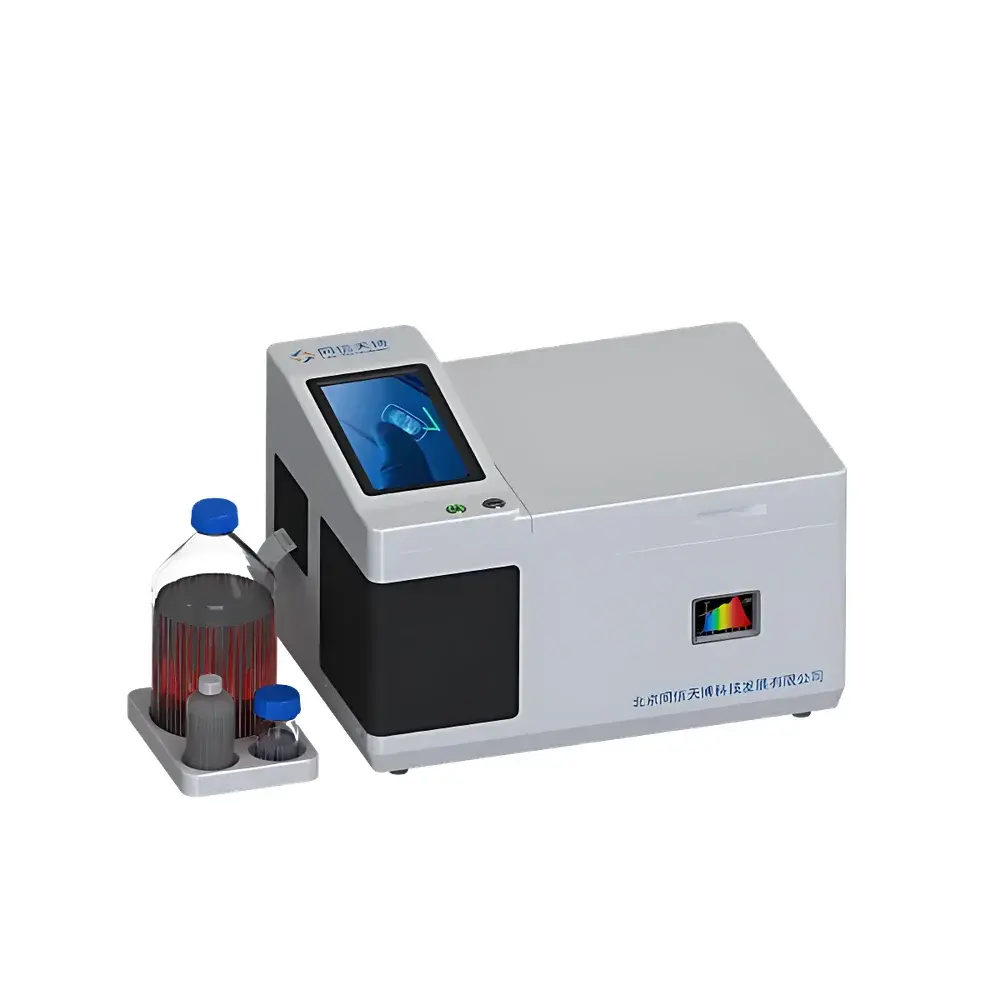
Tongxintianbo TGY-15A Automated Peroxide Value Analyzer
| Brand | Tongxintianbo |
|---|---|
| Origin | Beijing, China |
| Manufacturer Type | Authorized Distributor |
| Country of Origin | China |
| Model | TGY-15A |
| Power Supply | 220 V / 50 Hz |
| Rated Power | 500 W |
| Dimensions (W×D×H) | 630 × 445 × 413 mm |
| Sample Capacity | 15 positions |
| Minimum Dispensing Volume | 20 µL |
| Dispensing Accuracy | ≤0.5% |
| Titration Error | ≤0.25% |
| Color Response Time | ≤10 ms |
| Detection Time (15 samples) | ~40 min (sample-dependent) |
| Temperature Control Range | 30–80 °C |
| Endpoint Detection Method | Non-contact spectrophotometric colorimetry |
| Reagent Auto-selection | Starch indicator, saturated potassium iodide solution, Grade III water |
| Titration Mode | Automatic colorimetric titration with blank correction |
| Stirring | Adjustable-speed magnetic stirring |
| Cleaning | Fully automated fluidic line rinse |
| Calibration | Multi-point user-defined calibration support |
| Data Output | Real-time thermal printing + cloud upload via Wi-Fi or Ethernet |
| Control Interface | 10-inch capacitive touchscreen or remote web-based management |
Overview
The Tongxintianbo TGY-15A Automated Peroxide Value Analyzer is a fully integrated, regulatory-compliant benchtop instrument engineered for precise and reproducible determination of peroxide value (PV) in edible vegetable oils and lipid-containing food matrices. It operates on the principle of standardized iodometric titration—specifically aligned with GB 5009.229–2023, the People’s Republic of China National Food Safety Standard for Determination of Peroxide Value in Foods—and employs non-contact spectrophotometric endpoint detection to eliminate electrode fouling, reagent carryover, and operator-induced variability. Unlike conventional manual or semi-automated titrators, the TGY-15A integrates sample positioning, reagent dispensing, temperature-controlled reaction incubation, real-time color monitoring, endpoint recognition, stoichiometric calculation, and data archival into a single unattended workflow. Its optical architecture utilizes a stabilized LED light source coupled with high-sensitivity photodiodes optimized for the 580–620 nm absorbance band of the iodine–starch complex, ensuring robust discrimination against matrix interference from colored oils or turbid extracts.
Key Features
- Fully automated iodometric titration compliant with GB 5009.229–2023 and technically compatible with AOAC 965.33, ISO 3960:2017, and IDF 133:2000 methodologies
- 15-position rotating carousel enabling batch processing without manual intervention between samples
- Non-contact colorimetric endpoint detection system with ≤10 ms response time and no physical contact between sensor and reaction mixture—eliminating cross-contamination and maintenance of optical windows
- Programmable temperature-controlled reaction chamber (30–80 °C) to ensure consistent iodide oxidation kinetics and prevent solidification of high-melting-point oils (e.g., palm, coconut)
- High-precision microfluidic dispensing modules delivering reagents (KI, starch indicator, deionized water) with ≤0.5% volumetric accuracy at 20 µL minimum step resolution
- Self-diagnostic firmware with automatic zero-point verification, repeatability validation, and system integrity checks at power-on and prior to each assay sequence
- Dual-mode operation: local control via 10-inch industrial-grade capacitive touchscreen or remote orchestration via secure Wi-Fi/Ethernet connection supporting role-based access control
Sample Compatibility & Compliance
The TGY-15A is validated for quantitative PV analysis across a broad spectrum of lipid-rich matrices including soybean oil, peanut oil, sunflower oil, rice bran oil, palm oil, corn oil, and blended cooking oils. It accommodates both clarified liquid oils and solvent-extracted lipid fractions (e.g., hexane extracts), provided samples meet the clarity and viscosity thresholds specified in GB 5009.229–2023 Section 7.1. The system supports mandatory quality assurance protocols including daily system suitability testing, multi-level calibration verification, and full audit trail generation—including timestamps, operator ID, method version, raw absorbance curves, and intermediate calculation logs—enabling compliance with GLP, GMP, and FDA 21 CFR Part 11 requirements when deployed with validated software configuration and networked storage infrastructure.
Software & Data Management
Embedded firmware provides intuitive assay setup, method parameterization (e.g., reaction time, temperature setpoint, titrant concentration), and customizable reporting templates. All measurement data—including raw spectral traces, titration curves, calculated PV (meq O₂/kg), uncertainty estimates, and QC flag status—are stored locally on internal industrial SSD and simultaneously synchronized to configurable cloud endpoints (e.g., AWS S3, private FTPS, or LIMS via HL7/API). Thermal printer output includes QR-coded reports traceable to individual assay runs. Data export formats include CSV, PDF/A-2, and XML for integration with enterprise laboratory information management systems (LIMS) or statistical process control (SPC) platforms. Audit trails are immutable and timestamped to ISO 8601:2019 standards.
Applications
This analyzer serves as a primary quality control tool in national and provincial food safety inspection institutes, edible oil refining facilities, contract testing laboratories, and academic research groups studying lipid oxidation kinetics. Typical use cases include shelf-life prediction modeling, antioxidant efficacy evaluation, raw material acceptance testing, finished-product release verification, and regulatory submission dossier preparation. Its throughput (15 samples in ~40 minutes) and walk-away automation make it suitable for high-volume routine testing environments where traceability, inter-laboratory reproducibility, and method standardization are critical success factors.
FAQ
Does the TGY-15A comply with international peroxide value standards beyond GB 5009.229–2023?
Yes—the optical detection algorithm, reagent delivery tolerances, and titration logic are functionally equivalent to ISO 3960:2017 and AOAC 965.33; method adaptation files can be loaded to match specific procedural variants.
Can the instrument perform blank titrations automatically within each batch?
Yes—integrated blank correction is executed prior to every sample sequence using the same reagent batch and environmental conditions.
Is remote software update supported over the network?
Yes—firmware updates and method library revisions can be deployed securely via HTTPS-managed OTA (over-the-air) protocol with digital signature verification.
What maintenance is required for the color sensor module?
None—the non-contact design eliminates optical path contamination; no cleaning or recalibration is needed during normal operation.
How is data integrity ensured during power interruption?
The system features an embedded supercapacitor-backed memory buffer that preserves active assay state and raw data up to 72 hours, allowing seamless resumption after recovery.




