
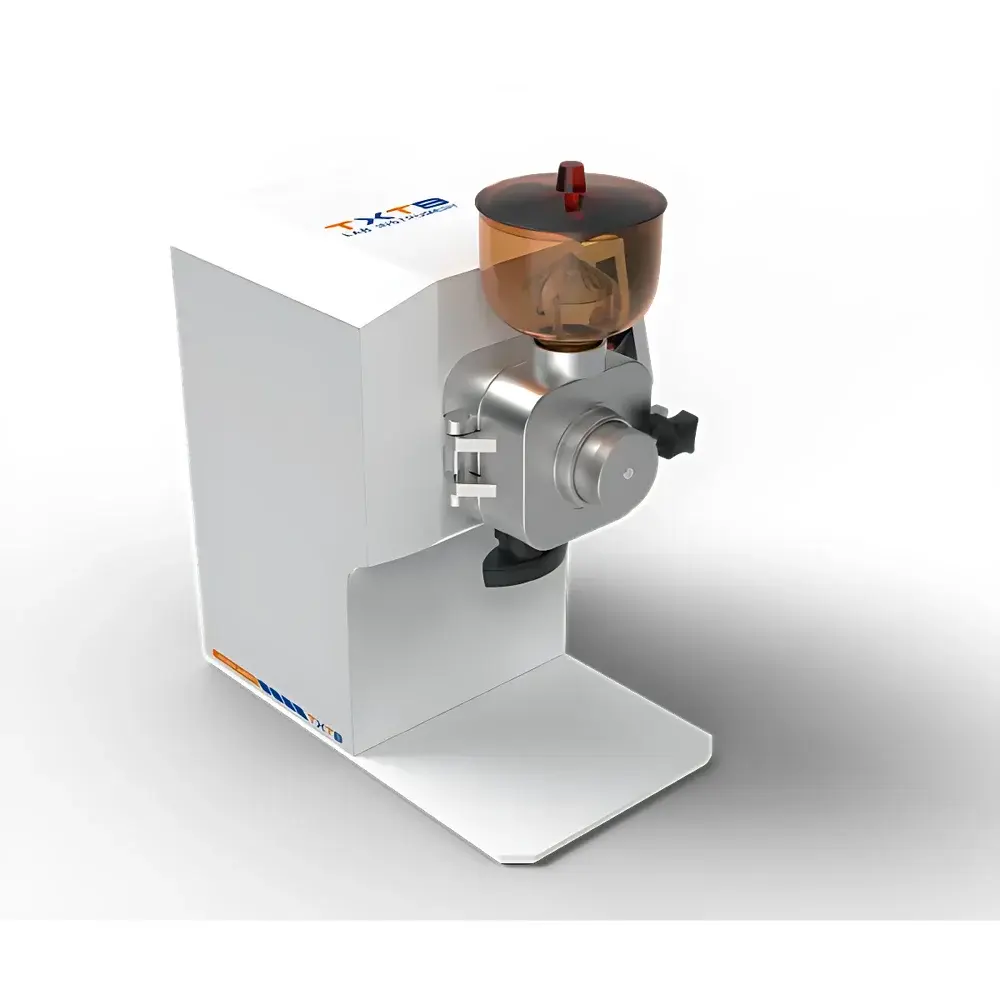
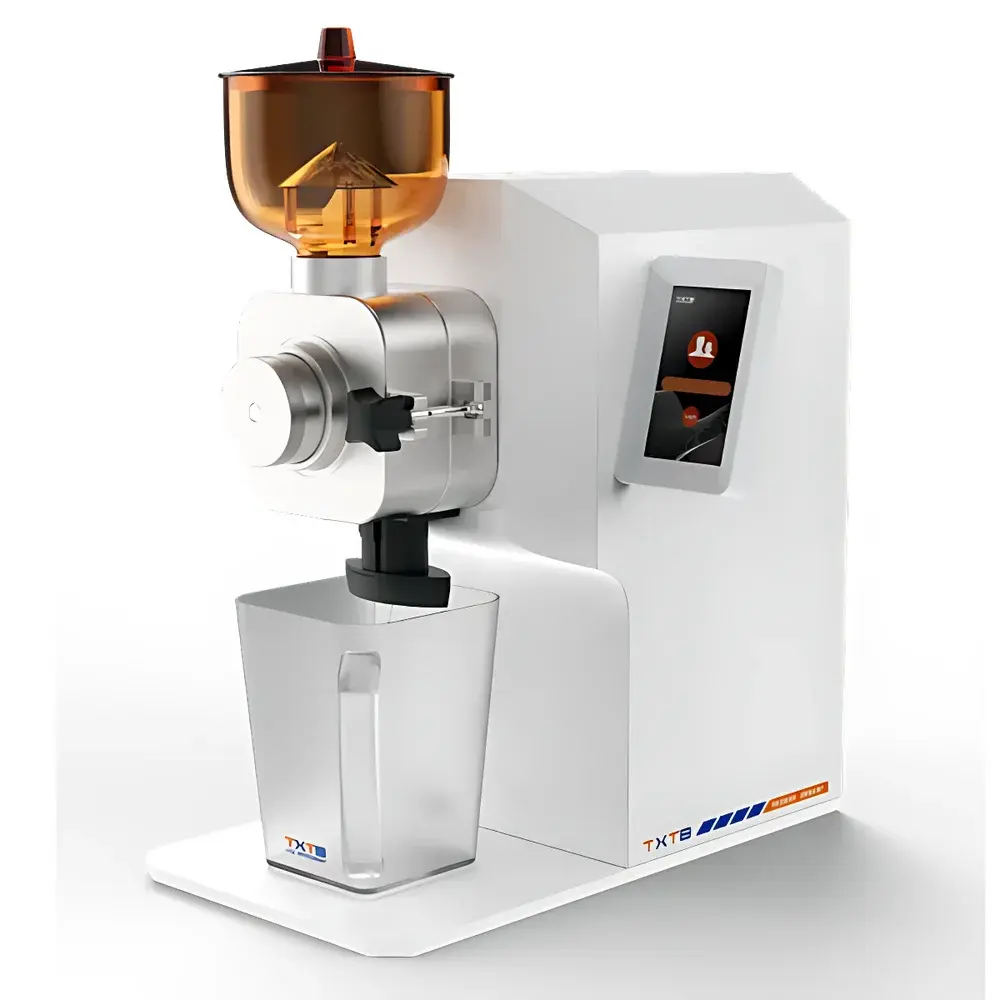
Tongxintianbo TX-1500 Grain Milling Grinder
| Brand | Tongxintianbo |
|---|---|
| Origin | Beijing, China |
| Manufacturer Type | Authorized Distributor |
| Country of Origin | China |
| Model | TX-1500 Grain Milling Grinder |
| Price Range | USD 1,400 – 3,500 |
Overview
The Tongxintianbo TX-1500 Grain Milling Grinder is a laboratory- and pilot-scale mechanical grinding system engineered for consistent, high-throughput size reduction of cereals, oilseeds, legumes, and other dry granular agricultural commodities. It operates on the principle of shear and compressive attrition between two counter-rotating, horizontally oriented abrasive discs — one stationary and one rotating — generating controlled particle fracture through regulated disc gap adjustment and rotational energy input. Unlike impact mills or hammer mills, this disc-type grinder delivers reproducible particle size distributions with minimal thermal degradation, making it particularly suitable for pre-analytical sample preparation in food quality control, nutritional analysis (e.g., proximate analysis, mycotoxin extraction), and feed formulation R&D.
Key Features
- Large-diameter grinding disc (Φ1500 mm) optimized for enhanced surface contact area and uniform load distribution, resulting in up to 100% higher throughput compared to conventional Φ800–Φ1200 mm disc mills under identical feed rate and moisture conditions.
- Adjustable disc clearance mechanism (range: 0.1–3.0 mm) enables precise control over final particle size—facilitating compliance with standardized grinding protocols such as ISO 6571 (cereal grains), AACC Method 26–20A (flour particle size), or AOAC 991.22 (feed grinding).
- Integrated thermal management system featuring passive heat dissipation fins and forced-air cooling channels adjacent to the grinding chamber, maintaining sample temperature rise below +12 °C during continuous operation at rated capacity (≤50 kg/h).
- Hermetically sealed grinding chamber with quick-release clamping and tool-free access, eliminating cross-contamination risk and enabling full residue removal within <90 seconds using standard laboratory brushes and vacuum aspiration.
- Structural frame fabricated from reinforced cast iron with powder-coated carbon steel housing, providing long-term dimensional stability and resistance to vibration-induced misalignment during extended duty cycles.
Sample Compatibility & Compliance
The TX-1500 accepts whole grains (wheat, corn, rice, barley), soybeans, peanuts, oats, and dried pulses with initial moisture content ≤14% (wb). It is not intended for fibrous, oily, or highly elastic materials (e.g., fresh forage, coconut copra, rubbery polymers). All wetted components comply with FDA 21 CFR §177.2600 (food-contact plastics) and GB 4806.7–2016 (Chinese national standard for food-grade stainless steel). The design supports GLP-compliant documentation workflows: batch records, operator ID logging, and grinding parameter archiving are compatible with LIMS integration via RS-232/Modbus RTU interface.
Software & Data Management
While the base model operates via analog controls (rotational speed selector, disc gap indicator dial, manual start/stop), optional digital retrofit kits include a programmable logic controller (PLC) with HMI touchscreen (7″ TFT). This module logs timestamped operational data—including actual RPM, cumulative run time, disc gap setting, and ambient temperature—and exports CSV files compliant with ISO/IEC 17025 clause 7.7 (record control). Audit trail functionality meets FDA 21 CFR Part 11 requirements when paired with user authentication and electronic signature modules.
Applications
- Preparation of homogenized grain samples for NIR calibration modeling and reference method validation (e.g., Kjeldahl nitrogen, Soxhlet fat extraction).
- Standardized milling of feed ingredients prior to particle size analysis (laser diffraction per ISO 13320) or bulk density measurement (ASTM D4718).
- Production of uniformly ground flour fractions for rheological testing (farinograph, alveograph) and dough stability assessment.
- Processing of certified reference materials (CRMs) used in inter-laboratory proficiency testing schemes coordinated by FAPAS or AOAC RI.
- Supporting ISO 22000 and BRCGS Food Safety Standard clause 4.9.2 (control of nonconforming product) through traceable, repeatable sample comminution.
FAQ
What is the maximum recommended feed rate for optimal particle size consistency?
For particles 15% due to transient overload effects.
Can the TX-1500 be validated for GMP environments?
Yes—when equipped with the optional PLC/HMI package and operated under documented SOPs, it supports IQ/OQ protocols aligned with Annex 15 (EU GMP) and ASTM E2500-13 (verification of manufacturing equipment).
Is replacement disc set calibration required after reinstallation?
No—disc parallelism is maintained via precision-ground dowel pins and torque-controlled fasteners; however, gap verification using certified feeler gauges is recommended before each analytical campaign.
Does the mill meet CE marking requirements for export to the European Economic Area?
The base unit complies with EN 61000-6-2 (EMC immunity) and EN 61000-6-4 (EMC emissions); CE declaration is issued upon completion of end-user risk assessment per EN 12982-1 (machinery safety for grain processing).



