
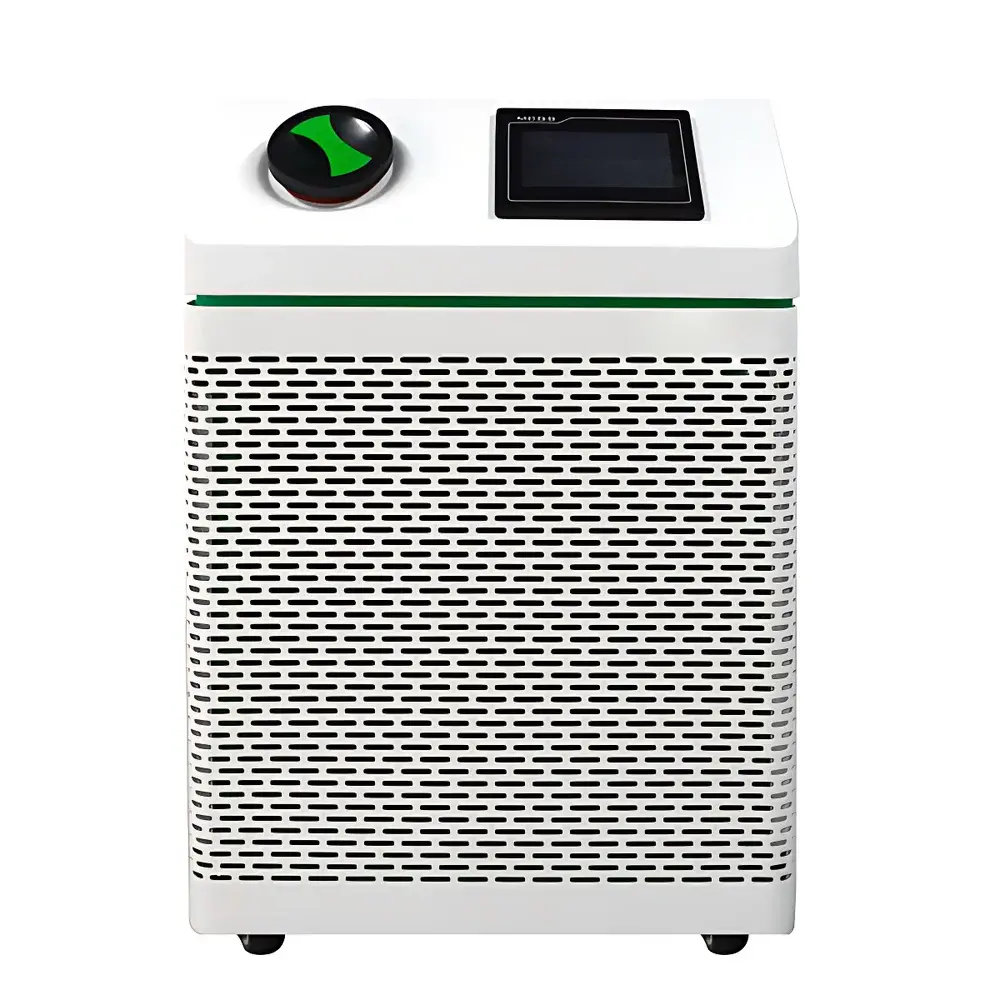
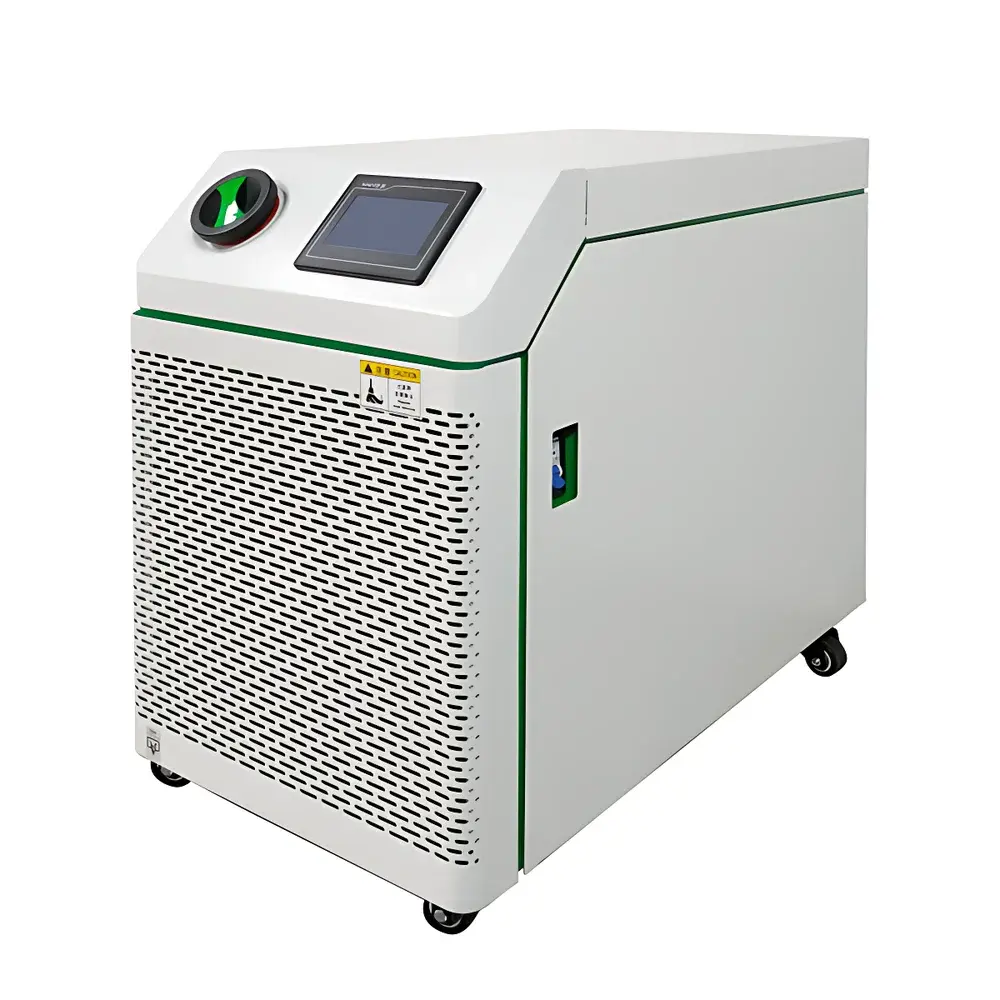
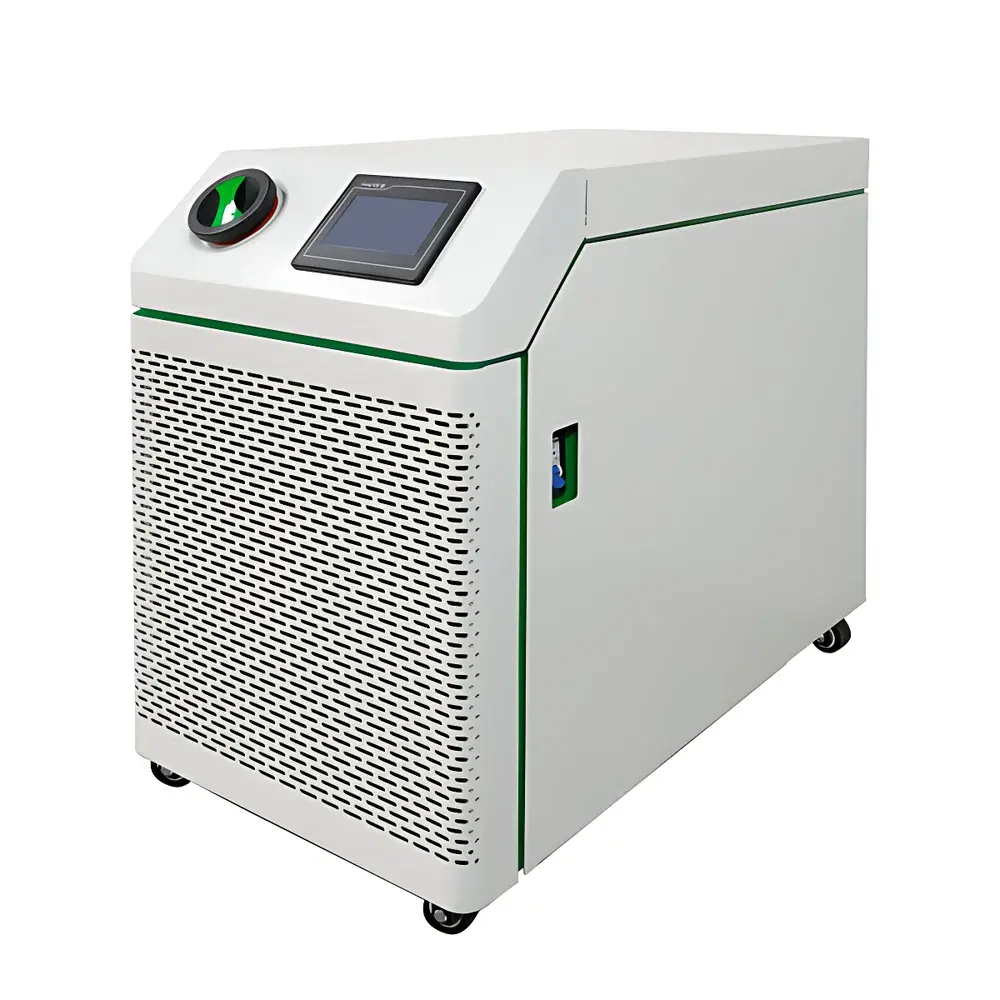
Tongzhou Weipu D2s Integrated Circulating Chiller
| Brand | Tongzhou Weipu |
|---|---|
| Origin | Beijing, China |
| Manufacturer Type | Direct Manufacturer |
| Product Category | Domestic |
| Model | D2s |
| Instrument Type | Integrated Unit |
| Cooling Method | Water-Cooled |
| Temperature Control Range | 5–35 °C |
| Cooling Capacity | 3600 W |
| Temperature Stability | ±0.1 °C |
| Circulation Pump Pressure | 3.6 bar |
| Circulation Flow Rate | 40 L/min |
| Reservoir Volume | 4 L |
| Operating Principle | Phase-Change Refrigeration |
Overview
The Tongzhou Weipu D2s is an integrated, water-cooled circulating chiller engineered for precision thermal management in demanding laboratory environments. It employs a closed-loop phase-change refrigeration cycle—utilizing a compressor-driven vapor-compression system with R410A or equivalent environmentally compliant refrigerant—to deliver stable, controllable cooling across a wide operational range (5–35 °C). Designed specifically for integration with high-sensitivity analytical and materials characterization instruments, the D2s maintains thermal equilibrium under variable heat loads without requiring external cooling towers or dry coolers. Its compact horizontal footprint and self-contained architecture minimize installation complexity while maximizing compatibility with space-constrained benchtop and under-bench configurations.
Key Features
- Stable temperature control with ±0.1 °C fluctuation over extended operation—critical for instruments sensitive to thermal drift, such as ICP-MS and AAS.
- High-flow circulation system delivering up to 40 L/min at 3.6 bar pressure, ensuring sufficient coolant delivery to multi-port or high-resistance fluid paths (e.g., plasma torch cooling jackets or SEM cold stages).
- 4 L stainless-steel reservoir with level sensor and low-level protection, minimizing evaporation loss and enabling long-duration unattended operation.
- Water-cooled condenser design reduces ambient heat rejection into the lab environment—ideal for climate-controlled cleanrooms or shared instrument suites where air-cooled units may compromise HVAC balance.
- Phase-change refrigeration architecture provides higher energy efficiency and more consistent cooling performance than thermoelectric (Peltier) alternatives, particularly above 1 kW cooling capacity.
- Front-panel digital interface with real-time display of setpoint, actual bath temperature, flow status, and fault codes; supports manual setpoint adjustment and basic alarm configuration.
Sample Compatibility & Compliance
The D2s is validated for continuous duty cycles supporting instrumentation requiring stable, low-noise coolant supply—including atomic spectroscopy platforms (AAS, ICP-OES, ICP-MS), electron microscopy systems (SEM, TEM cryo-stages), plasma etching tools, laser-based analyzers, and small-scale reaction calorimeters. Its temperature stability and flow consistency meet baseline thermal requirements specified in ASTM E2918 (Standard Practice for Calibration of Temperature-Controlled Baths) and align with general laboratory infrastructure expectations under ISO/IEC 17025:2017 Clause 6.4 (Environmental Conditions). While not certified to UL 61010-1 or CE by default, the unit complies with Chinese GB 4793.1–2007 safety standards for electrical equipment used in measurement, control, and laboratory applications. Optional RS485 or analog 0–10 V interfaces support integration into centralized facility monitoring systems compliant with GLP/GMP audit trails.
Software & Data Management
The D2s operates as a standalone thermal management subsystem and does not include embedded PC-based software or cloud connectivity. However, its analog and digital I/O options allow integration with third-party laboratory information management systems (LIMS) or building automation platforms via programmable logic controllers (PLCs). Users may log temperature and flow data externally using compatible data acquisition modules that record timestamps and values at user-defined intervals—supporting traceability requirements under FDA 21 CFR Part 11 when paired with validated electronic record systems. No proprietary drivers or vendor-specific software licenses are required for basic operation or peripheral interfacing.
Applications
- Thermal stabilization of plasma sources in ICP-OES and ICP-MS systems to maintain nebulizer gas temperature and reduce matrix-induced signal drift.
- Cooling of X-ray detectors and electron optics in scanning electron microscopes, mitigating thermal noise and improving spatial resolution.
- Heat extraction from RF generators and matching networks in plasma etch and deposition tools used in semiconductor process development.
- Temperature regulation of optical cavities and pump diodes in tunable laser spectrometers and Raman systems.
- Condenser cooling in Kjeldahl digestion and distillation modules, ensuring consistent reflux rates and nitrogen recovery efficiency.
- Support for glovebox inert-atmosphere maintenance by stabilizing purge gas chillers and secondary heat exchangers.
FAQ
What is the maximum ambient temperature at which the D2s can operate reliably?
The unit is rated for continuous operation at ambient temperatures up to 32 °C, provided inlet cooling water remains below 28 °C and maintains ≥2 bar supply pressure.
Can the D2s be used with ethylene glycol–water mixtures?
Yes—compatible with aqueous solutions containing up to 30% v/v inhibited ethylene glycol; viscosity increase must remain within pump specifications (max. 5 cP at operating temperature).
Does the D2s support remote start/stop or temperature setpoint adjustment?
Remote control is available via optional 0–10 V analog input or Modbus RTU over RS485, enabling integration with central lab control systems.
Is the reservoir accessible for cleaning or antifouling treatment?
Yes—the 4 L stainless-steel tank features a removable lid and drain valve, facilitating periodic maintenance and biocide dosing per institutional water treatment protocols.
What safety protections are built into the system?
Standard safeguards include high-pressure cut-off, low-flow shutoff, overtemperature lockout, compressor thermal overload protection, and reservoir low-level shutdown.



