Top Cloud-agri GXY-A Plant Root Image Analysis System
| Brand | Top Cloud-agri |
|---|---|
| Origin | Zhejiang, China |
| Manufacturer Type | OEM/ODM Manufacturer |
| Country of Origin | China |
| Model | GXY-A |
| Price | USD 7,700 (FOB) |
Overview
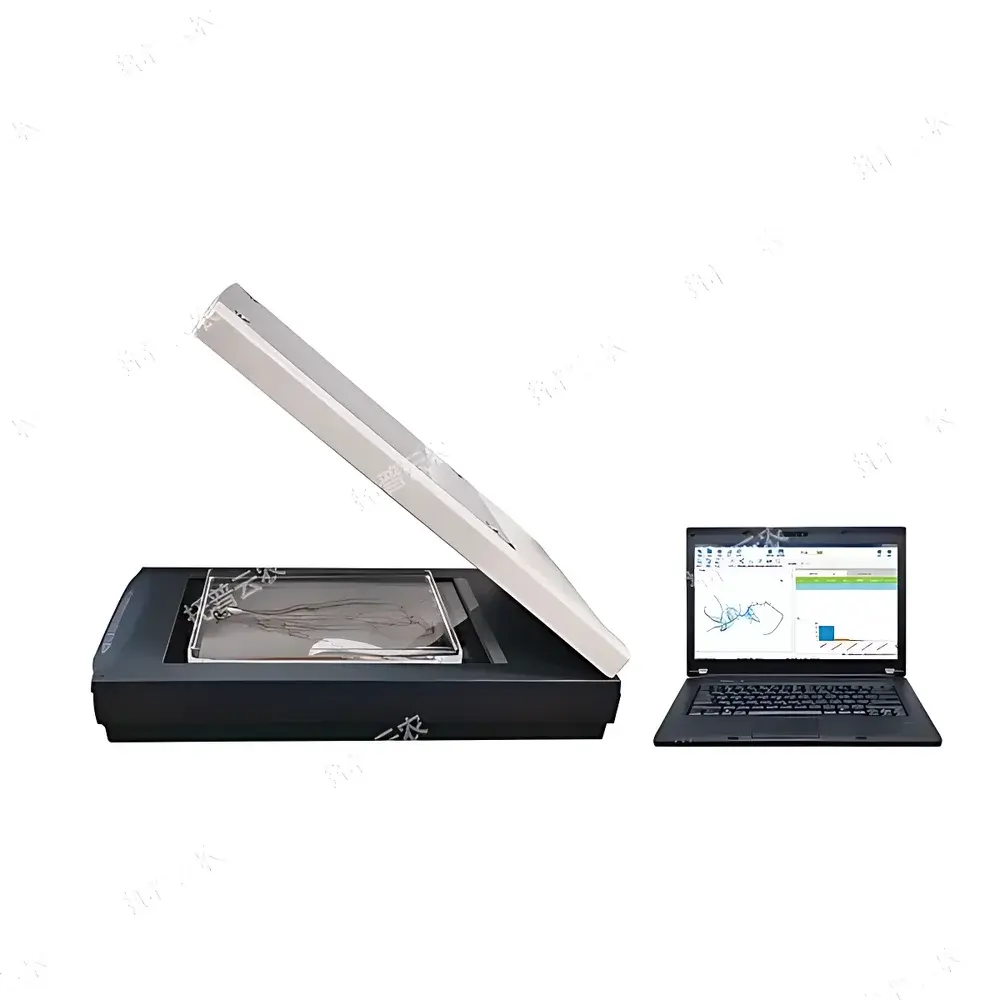
The Top Cloud-agri GXY-A Plant Root Image Analysis System is a high-precision, non-destructive digital imaging platform engineered for quantitative morphometric analysis of excised plant root systems. It operates on the principle of high-resolution grayscale image acquisition followed by algorithm-driven binary segmentation, edge detection, skeletonization, and topological graph reconstruction—enabling robust extraction of structural, geometric, and spatial parameters from scanned root images. Designed specifically for post-wash root specimens placed on flatbed scanners or digital document cameras, the system supports standardized root phenotyping workflows in plant physiology, agroecology, soil–plant interaction studies, and breeding programs where root architecture serves as a critical functional trait. Its architecture conforms to reproducible measurement protocols aligned with FAO and ICARDA root phenotyping guidelines and integrates seamlessly into GLP-compliant laboratory environments requiring traceable, auditable data generation.
Key Features
- Automated Topological Graph Reconstruction: Generates hierarchical root networks with up to six-order branching levels; distinguishes primary, lateral, and adventitious roots based on connectivity and diameter gradients.
- Multi-Dimensional Segmentation & Calibration: Supports user-defined pixel-to-mm calibration; enables adaptive thresholding, noise suppression (e.g., speckle removal), and manual correction tools including branch merging, tip splitting, root thickening adjustment, and junction realignment.
- Comprehensive Morphometric Quantification: Measures over 30 standardized parameters—including total root length, tip count, projected surface area, volume estimation (via cylinder approximation), fractal dimension (box-counting method), RGB color distribution, and RHS (Red-Hue-Saturation) spectral profiling.
- Region-of-Interest (ROI) Analysis: Allows polygonal or rectangular selection of sub-regions within an image for localized parameter extraction—essential for heterogeneous root samples or multi-species trays.
- Batch Processing Engine: Processes ≥100 TIFF/JPEG images per session with auto-resume functionality; maintains full audit trail of processing steps, timestamps, and operator IDs.
- Secure Software Licensing: Implements dual-layer protection via hardware dongle + dynamic QR-based activation tied to institutional registration—ensuring license portability and preventing unauthorized redistribution.
Sample Compatibility & Compliance
The GXY-A system is optimized for washed, air-dried or water-immersed root samples imaged at ≥600 dpi resolution. Compatible with common scanner models (Epson Perfection V-series, Canon CanoScan LiDE series) and USB macro cameras (e.g., AmScope MU1403). All output metrics adhere to ISO 22865:2021 (Plant Phenotyping — Terminology and Measurement Standards for Root Architecture) and support alignment with USDA-ARS root trait ontology (RO) and MIAPPE v1.1 metadata standards. Data export formats include CSV, Excel (.xlsx), and structured JSON for integration into LIMS or ELN platforms compliant with 21 CFR Part 11 requirements.
Software & Data Management
The proprietary “ZhiJian GengYun” software suite provides desktop (Windows 10/11) and cloud-based access via encrypted HTTPS endpoints. Raw images, processed skeletons, and metadata are stored with SHA-256 checksum validation. Each analysis session logs full provenance: scanner model, exposure settings, threshold values, correction history, and user annotations. Export modules generate publication-ready tables and histograms (length/diameter distribution, branching angle frequency), with optional GIS-compatible WKT geometry export for spatial root mapping. Mobile synchronization via the ZhiJian GengYun iOS/Android app enables field-to-lab continuity and remote review of queued analyses.
Applications
- Quantitative comparison of root architectural responses to drought, nutrient deficiency, salinity, or mycorrhizal inoculation
- High-throughput screening of crop germplasm for ideotype root traits (e.g., deep rooting index, lateral density ratio)
- Validation of root growth simulation models (e.g., CRootBox, SimRoot) against empirical morphology data
- Longitudinal monitoring of root development across developmental stages under controlled-environment conditions
- Supporting QTL mapping and GWAS studies where root morphology serves as a quantitative phenotype
FAQ
What image formats does the GXY-A software accept?
TIFF (uncompressed), PNG, and JPEG files with 8-bit grayscale or RGB encoding. Color images undergo automatic channel decomposition for R/G/B intensity profiling.
Is calibration required for every scan session?
Yes—users must input the scanner’s optical resolution (dpi) or define a known-length reference bar in each image to establish spatial scaling. Calibration data is saved per project folder.
Can the software analyze live roots in soil or hydroponic media?
No—the system requires clean, contrast-enhanced 2D images of excised roots. In situ root imaging (e.g., rhizotrons, minirhizotrons) requires separate hardware and preprocessing pipelines.
How is data integrity ensured during batch processing?
Each image file is assigned a unique UUID; processing logs record hash values before and after analysis. Failed analyses trigger automatic retry with fallback thresholds and generate error reports with timestamped screenshots.
Does the system comply with FDA or EU regulatory documentation standards?
While not a medical device, its software architecture supports ALCOA+ principles (Attributable, Legible, Contemporaneous, Original, Accurate, Complete, Consistent, Enduring, Available) and can be validated per GAMP5 for use in regulated agricultural research environments.
Related Products