
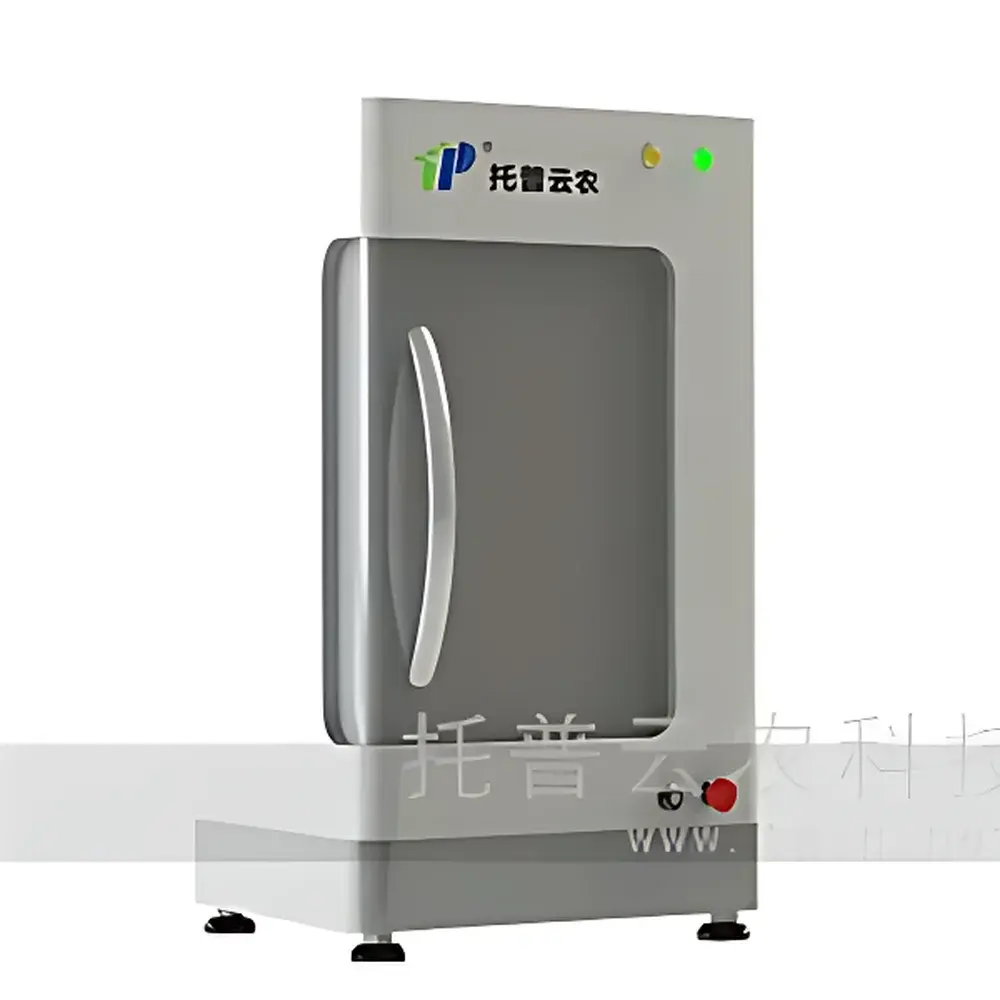
Top Cloud-agri HY-1180 Ultra-High-Resolution Seed X-ray Imaging System
| Brand | Top Cloud-agri |
|---|---|
| Origin | Zhejiang, China |
| Manufacturer Type | Direct Manufacturer |
| Country of Origin | Domestic (China) |
| Model | HY-1180 |
| Instrument Category | Seed Purity Analyzer |
| X-ray Tube Rating | 90 kV / 200 µA |
| Focal Spot Size | 8 µm |
| Flat-Panel Detector Active Area | 180 mm × 150 mm |
| Pixel Pitch | 125 µm |
| Geometric Magnification | 6× |
| Operating Voltage | AC 220 V ±10% |
| Frequency | 50 Hz ±10% |
| Max Input Current | 18 A |
| Radiation Leakage | Compliant with GBZ 138–2002 (Chinese National Standard for X-ray Equipment Safety) |
Overview
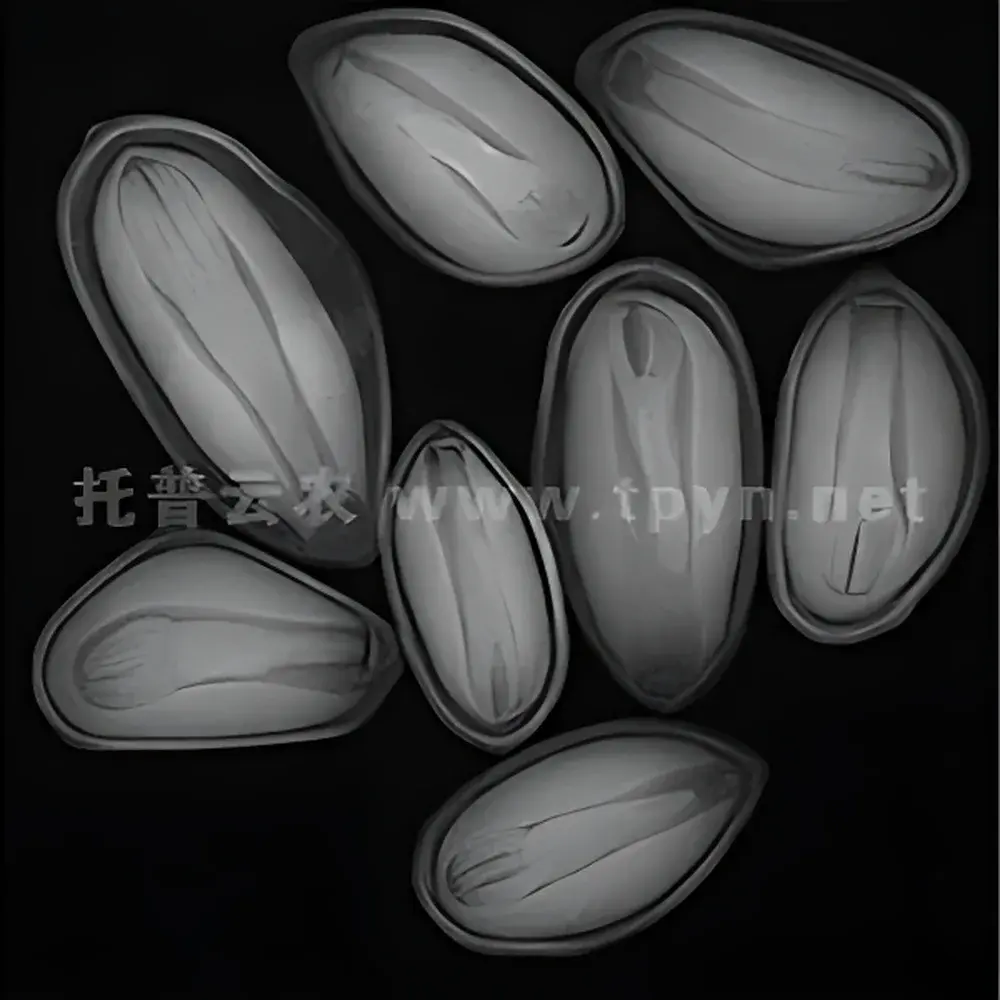
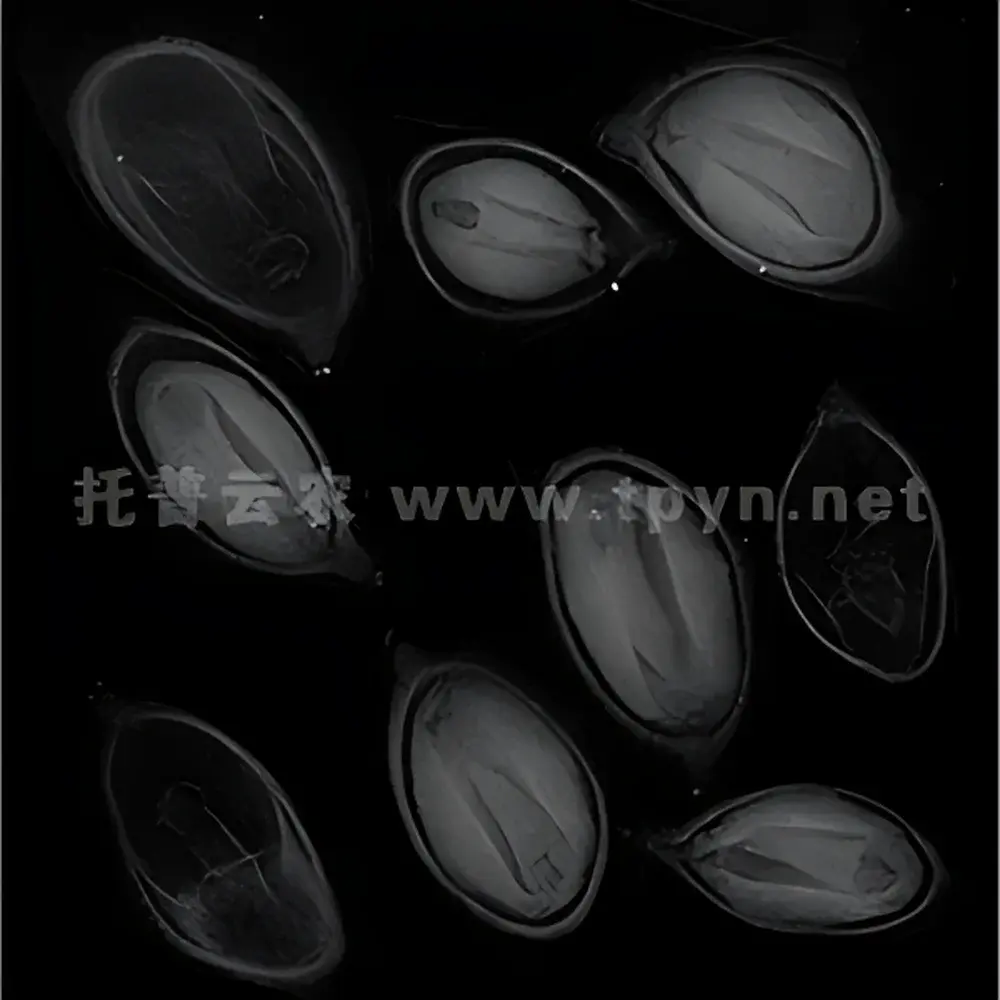
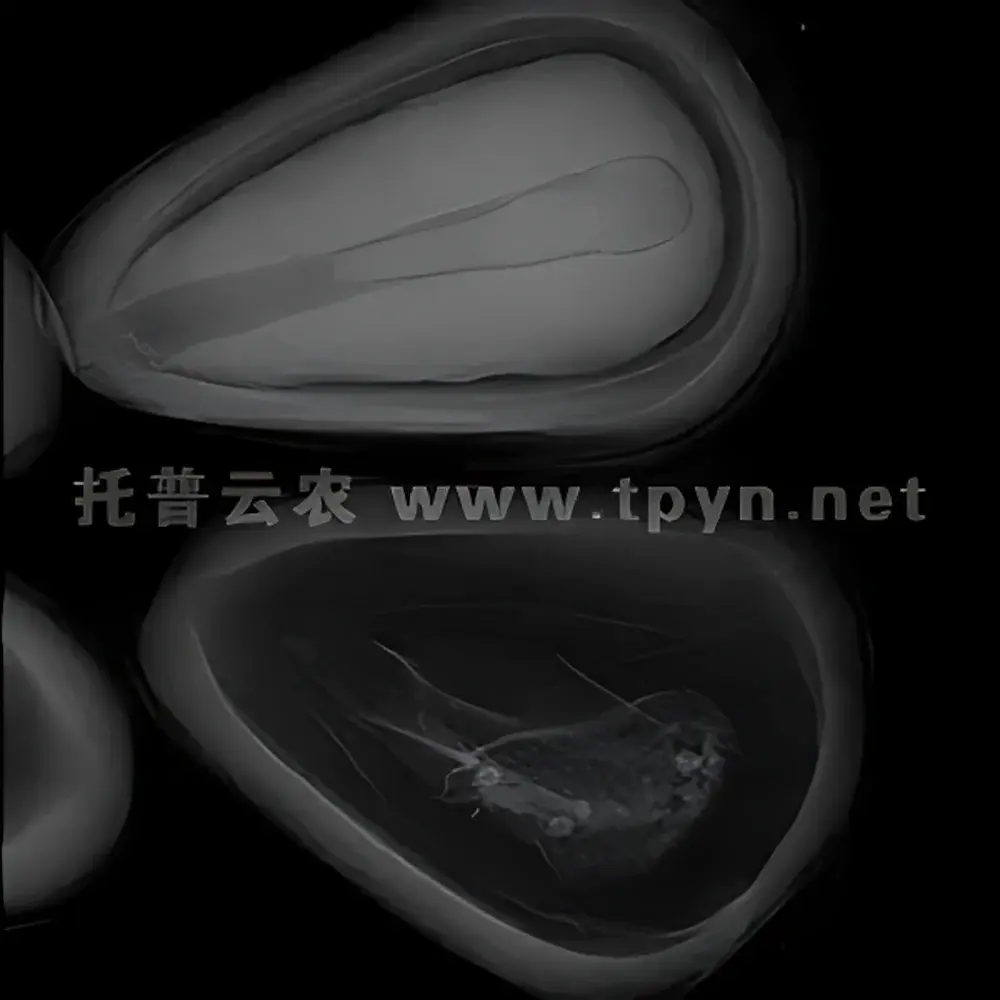
The Top Cloud-agri HY-1180 Ultra-High-Resolution Seed X-ray Imaging System is a dedicated non-destructive inspection platform engineered for quantitative internal morphological analysis of intact seeds. Based on transmission radiography using soft X-ray radiation (up to 90 kV), the system enables high-fidelity visualization of embryonic structure, endosperm integrity, cavity formation, and developmental anomalies—without physical sectioning or chemical treatment. Its core measurement principle relies on differential X-ray attenuation across seed tissues: dense structures (e.g., viable embryos, starch-rich endosperm) absorb more photons and appear lighter in grayscale images, while air-filled voids (e.g., hollow cavities, shriveled embryos) attenuate less and render darker. This contrast mechanism supports objective, repeatable assessment of seed viability, purity, and physiological quality—critical parameters in seed certification, breeding programs, and phytosanitary compliance.
Key Features
- Sub-10 µm focal spot X-ray source ensures minimal geometric unsharpness, enabling resolution of sub-millimeter anatomical features such as cotyledon separation, radicle positioning, and embryo-to-endosperm ratio.
- High-sensitivity flat-panel detector (180 mm × 150 mm active area, 125 µm pixel pitch) delivers >60 dB dynamic range and low-noise digitization at 16-bit depth for precise grayscale quantification.
- 6× geometric magnification capability facilitates detailed examination of small-seeded species—including Brassica, lettuce, and grasses—without sample repositioning.
- Integrated lead-shielded enclosure complies with GBZ 138–2002: all six walls incorporate ≥2 mm Pb-equivalent shielding; interlocked manual lead door prevents X-ray emission during access; rotating warning beacon and interior lighting ensure operational safety and visibility.
- Rugged industrial-grade architecture designed for continuous operation in laboratory and seed processing facility environments—no moving parts in the imaging path, thermally stabilized high-frequency HV generator.
Sample Compatibility & Compliance
The HY-1180 accommodates bulk and individual seed samples across major agricultural families: cereals (rice, wheat, maize), legumes (soybean, pea), oilseeds (sunflower, rapeseed), and horticultural species (tomato, cucumber). Sample handling is optimized via adjustable-height inspection platform with precision stage controls. The system conforms to national radiation safety standards (GBZ 138–2002) and supports traceable documentation required under ISO/IEC 17025-accredited seed testing laboratories. While not FDA 21 CFR Part 11–certified out-of-the-box, audit-ready image metadata (timestamp, operator ID, exposure parameters) and immutable storage logs enable implementation of GLP/GMP-aligned workflows with site-specific validation.
Software & Data Management
The proprietary acquisition and analysis suite provides dual-mode imaging: static radiograph capture (for high-SNR morphology analysis) and real-time video acquisition (for dynamic inspection of seed orientation or density gradients). Core functions include calibrated linear and angular measurement tools, region-of-interest (ROI) histogram analysis, pseudo-color mapping for contrast enhancement, edge sharpening filters, and batch-enabled image annotation. All images embed EXIF-style metadata—including kV, µA, exposure time, and system calibration ID—for full traceability. Export formats include DICOM 3.0 (for integration with LIMS), TIFF (lossless), and PDF reports with embedded statistical summaries (defect count per batch, average grayscale intensity per ROI). Image archives are stored in hierarchical directory structures with SHA-256 checksum verification.
Applications
- Seed viability prediction via embryonic structural integrity scoring (correlated with germination assays per ISTA Rule 5.3).
- Identification and quantification of empty, collapsed, or insect-damaged kernels in cereal and oilseed lots.
- Support for QTL mapping studies requiring high-throughput phenotyping of internal seed architecture.
- Verification of seed treatment uniformity (e.g., coating thickness, fungicide distribution) through density gradient analysis.
- Regulatory compliance screening for national seed certification programs (e.g., China’s GB 4404.1–2008, FAO Seed Quality Standards).
FAQ
What regulatory standards does the HY-1180 meet for radiation safety?
The system satisfies GBZ 138–2002 “Hygienic Standard for Protection Against External Radiation from Medical X-ray Diagnostic Equipment”, including verified leakage dose ≤1.0 µSv/h at 5 cm from any surface.
Can the system be integrated into an existing LIMS or seed database?
Yes—DICOM 3.0 export and configurable CSV metadata output allow direct ingestion into most laboratory information management systems; API documentation available upon request.
Is training provided for operators and maintenance personnel?
Comprehensive on-site installation commissioning includes 2-day operator training and 1-day service technician workshop covering image interpretation protocols, routine QA checks, and basic fault diagnostics.
Does the software support multi-user role-based access control?
Standard deployment uses local Windows user accounts; enterprise-level RBAC (read/write/delete permissions per project folder) can be enabled via domain integration.
What is the recommended preventive maintenance schedule?
Annual calibration verification of X-ray output (kV/mA stability, focal spot size) and detector uniformity testing is advised; lead shielding integrity inspection every 24 months per GBZ 138–2002 Section 7.2.






