Top Cloud-agri Outdoor-Deployable Plant Growth Chamber
| Brand | Top Cloud-agri |
|---|---|
| Origin | Zhejiang, China |
| Manufacturer Type | Direct Manufacturer |
| Regional Category | Domestic (China) |
| Model | Outdoor-Deployable |
| Price | USD 4,450 (FOB Zhejiang) |
Overview
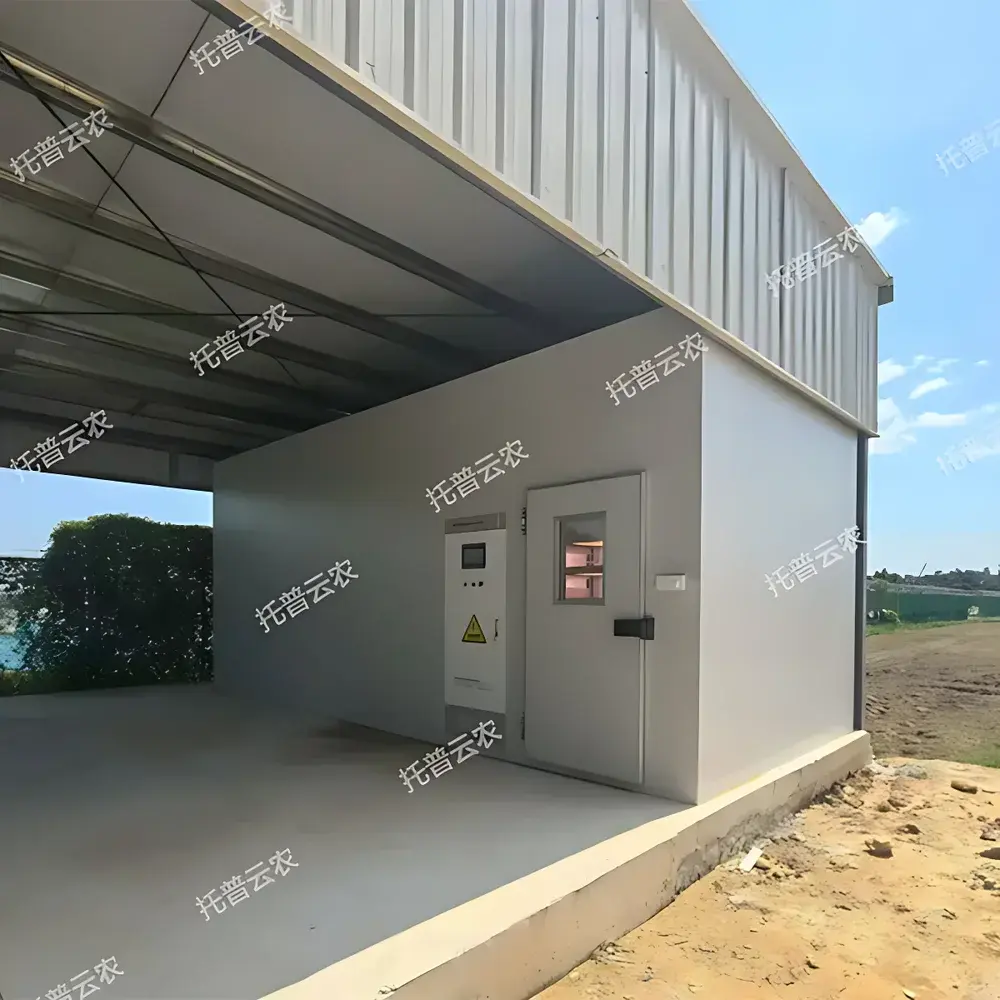
The Top Cloud-agri Outdoor-Deployable Plant Growth Chamber is an engineered environmental simulation system designed for year-round, field-deployable plant phenotyping and controlled-environment agriculture (CEA) research. Unlike conventional indoor growth chambers, this unit operates autonomously in unconditioned outdoor environments—exposed to ambient temperature fluctuations, solar radiation, wind, rain, and dust—while maintaining precise, programmable control over core environmental parameters: air temperature (±0.3 °C stability), relative humidity (±3% RH), photosynthetic photon flux density (PPFD), spectral light composition (380–780 nm tunable LED arrays), and CO₂ concentration (400–2,000 ppm). Its operational principle integrates closed-loop feedback control of HVAC, lighting, gas injection, and irrigation subsystems, enabling reproducible multi-factorial stress experiments—including drought, heat, photoperiod shift, and elevated CO₂—to support climate-resilient crop breeding, functional genomics, and ecophysiology studies under real-world deployment constraints.
Key Features
- Weather-resistant structural architecture: Hot-dip galvanized steel frame with reinforced aluminum alloy cladding; dual-layer insulated glazing (tempered glass or polycarbonate impact-resistant panels) rated IP65 for ingress protection against rain, dust, and hail.
- Integrated intelligent climate control: PID-regulated refrigeration/heating system with desiccant-assisted dehumidification and steam-based humidification; real-time compensation for solar gain and ambient thermal load.
- Full-spectrum tunable LED lighting: High-efficiency 0–1,000 µmol/m²/s PPFD output per layer; independently controllable red/blue/far-red/white channels with spectral profiles programmable via LUT (Look-Up Table) configuration.
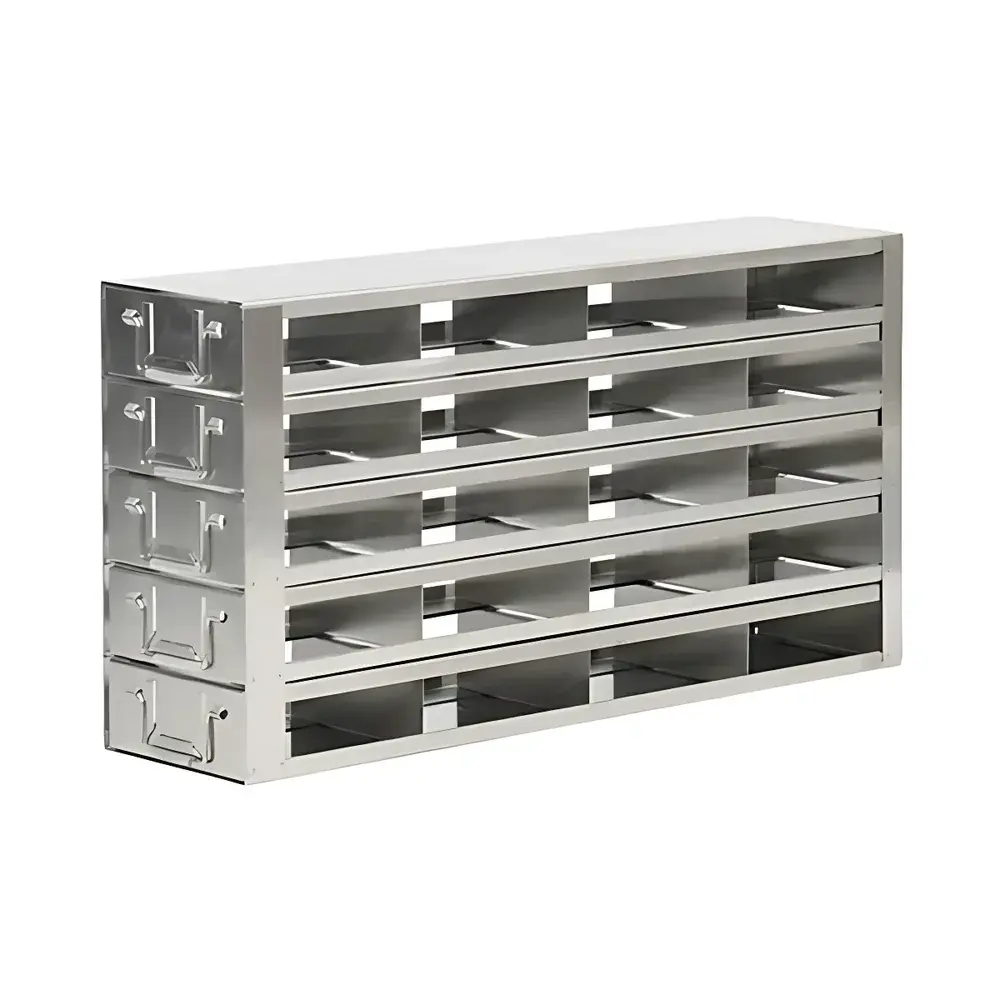
- Modular vertical cultivation system: Adjustable-height stainless-steel or epoxy-coated galvanized steel shelving; compatible with hydroponic, aeroponic, and substrate-based growing configurations; standardized tray interfaces (600 × 400 mm DIN format).
- Smart fertigation module: Onboard EC/pH sensors (±0.1 unit accuracy), peristaltic dosing pumps, and reservoir-level monitoring; supports dynamic nutrient solution formulation based on plant growth stage and environmental setpoints.
- Multi-tiered data acquisition & telemetry: Embedded PLC with Modbus TCP/RTU and MQTT protocols; local HMI touchscreen interface; secure cloud connectivity for remote access via web dashboard and native iOS/Android applications.
Sample Compatibility & Compliance
The chamber accommodates a broad range of botanical specimens—from Arabidopsis thaliana seedlings and rice tillers to mature tomato or lettuce plants—across developmental stages (germination, vegetative, flowering, fruiting). Its internal volume (standard configuration: 2.4 m × 2.4 m × 2.6 m H) allows for multi-layer canopy profiling and non-destructive imaging integration. The system complies with ISO 17025-aligned calibration traceability for environmental sensors and meets IEC 60529 (IP65) for enclosure protection. All electrical components conform to GB/T 19001 (equivalent to ISO 9001) and CE-marked for EMC and low-voltage directive compliance. Data logging functionality supports audit-ready records aligned with GLP principles, including user authentication, timestamped parameter changes, and immutable event logs.
Software & Data Management
The embedded control software (v3.2+) provides ISO/IEC 17025-compliant data integrity features: role-based user permissions (admin/operator/guest), electronic signatures, 21 CFR Part 11–compatible audit trails, and encrypted SQLite database storage with automatic daily backup to NAS or cloud endpoints. Historical environmental trends are visualized as synchronized time-series plots (temperature/humidity/CO₂/light intensity), with export options in CSV, PDF, and HDF5 formats. API access (RESTful JSON) enables integration with LIMS platforms (e.g., LabVantage, Thermo Fisher SampleManager) and third-party analytics tools (Python/Pandas, MATLAB). Firmware updates are delivered over-the-air (OTA) with SHA-256 signature verification.
Applications
- Phenotypic screening of abiotic stress tolerance (drought, salinity, high-temperature acclimation) under semi-field conditions.
- Controlled-environment validation of CRISPR-edited crop lines prior to greenhouse or field trials.
- Photobiology studies on light-quality effects on secondary metabolite biosynthesis (e.g., anthocyanins, glucosinolates).
- CO₂ fertilization response modeling for C3/C4 species across diurnal cycles.
- Long-term growth monitoring for biomass accumulation, leaf area index (LAI), and chlorophyll fluorescence kinetics (via optional Fv/Fm sensor integration).
- Training infrastructure for agricultural extension programs and university teaching laboratories requiring scalable, low-infrastructure CEA modules.
FAQ
What is the maximum operating ambient temperature range for outdoor deployment?
The chamber maintains internal setpoints within specification when ambient temperatures range from −25 °C to +50 °C, verified per IEC 60068-2-14 (cyclic temperature testing).
Can the system operate off-grid using solar power?
Yes—optional DC-coupled PV integration kit (with MPPT charge controller and LiFePO₄ battery bank) supports full functionality for up to 72 h during grid outage.
Is remote firmware update supported without physical access?
Yes—secure OTA updates are performed via TLS 1.2 encrypted channel with rollback capability and versioned firmware signing.
How is calibration traceability maintained for environmental sensors?
Each sensor module ships with NIST-traceable calibration certificate; field recalibration is supported using certified reference standards (e.g., Rotronic HC2-AW for RH, Vaisala CARBOCAP® for CO₂).
Does the system comply with USDA APHIS or EU phytosanitary requirements for quarantine use?
The chamber’s sealed airflow path and HEPA-filtered recirculation (optional) meet Class II biological safety prerequisites; formal phytosanitary certification requires site-specific validation per ISPM 27 and EPPO PM 7/117.