
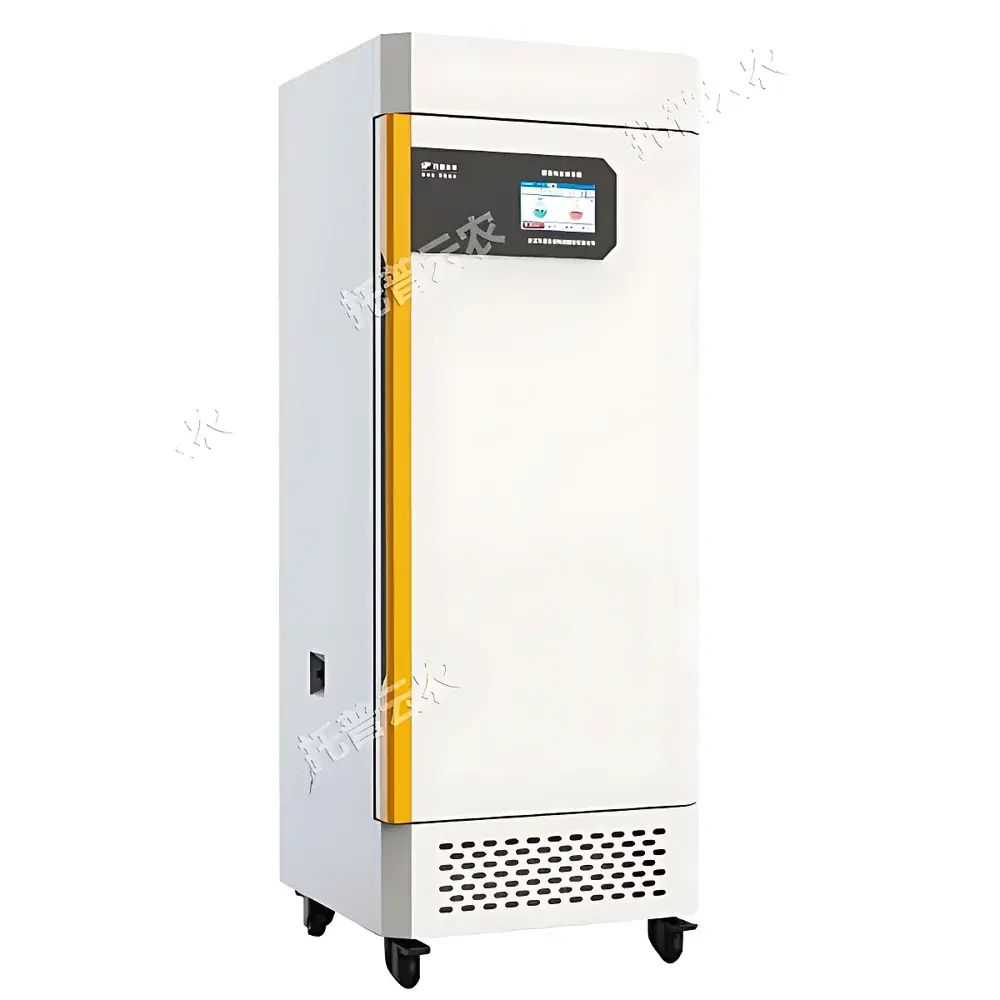
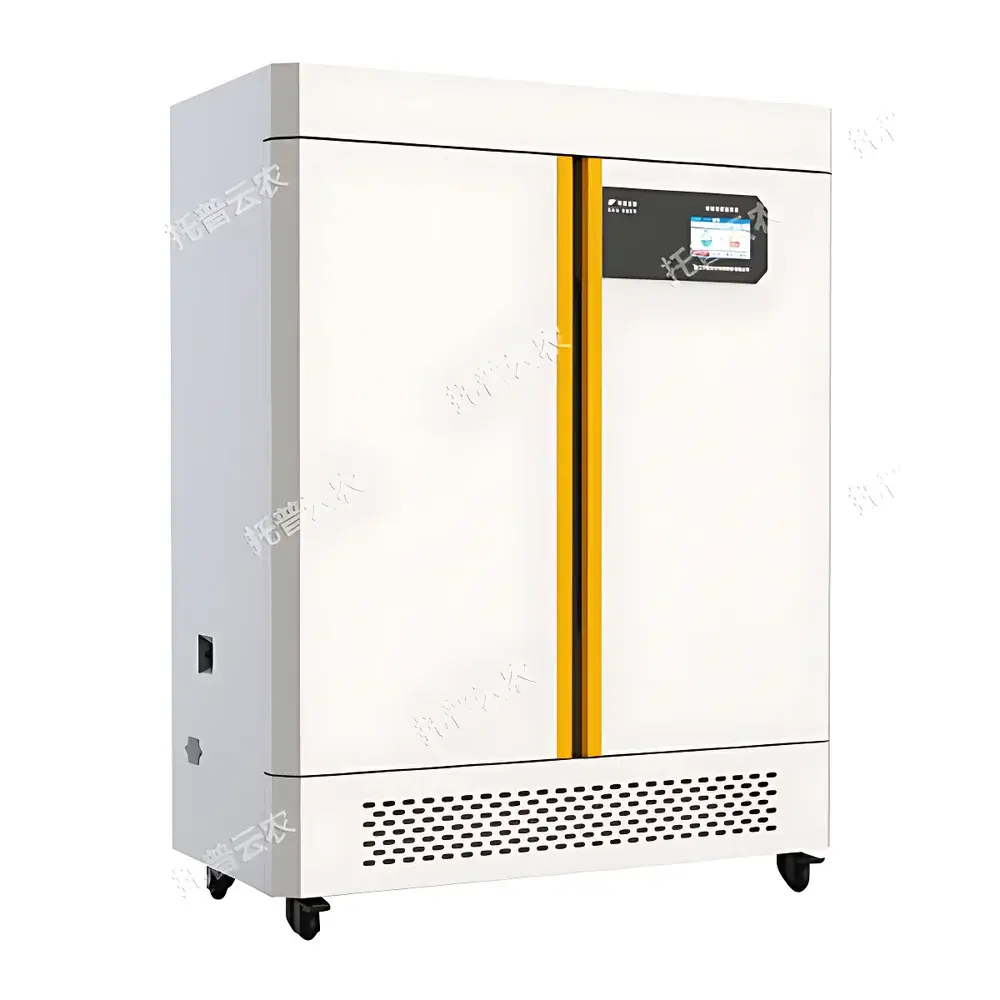
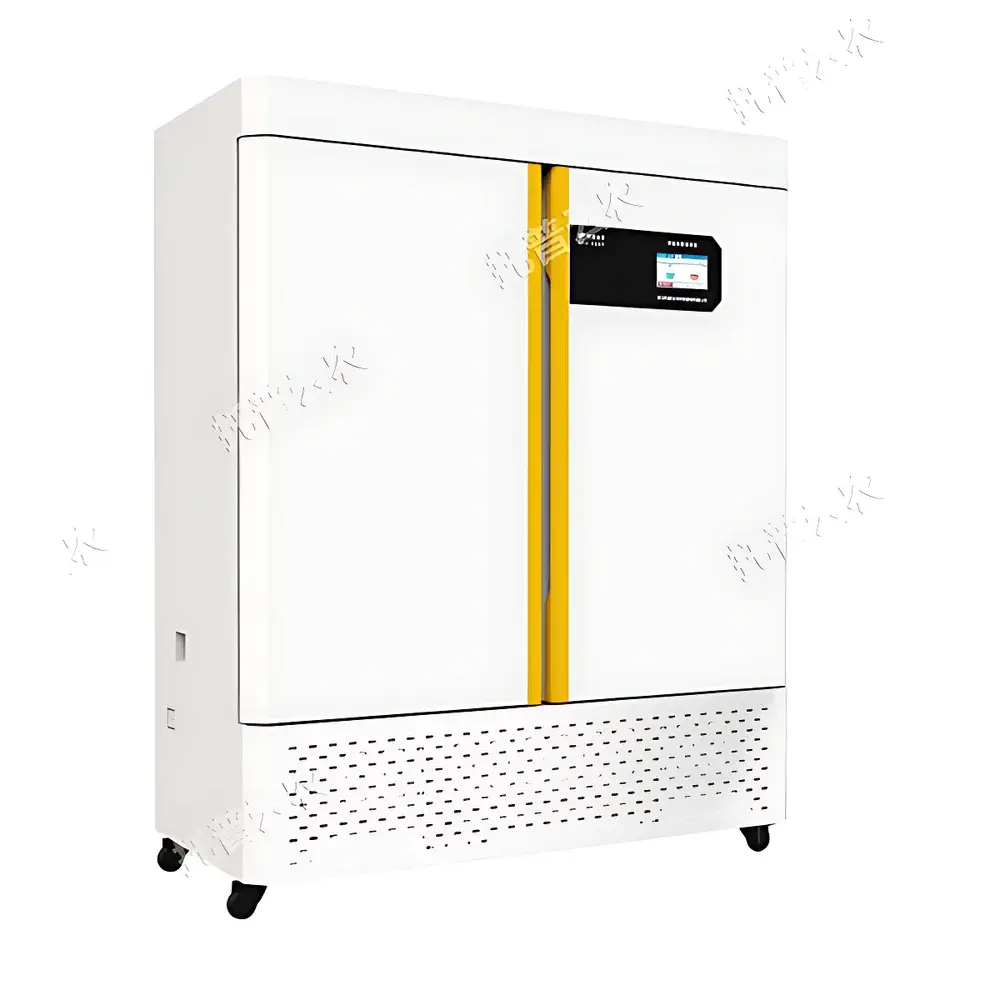
Top Cloud-agri TP-G420C / TP-G420D / TP-G1000C / TP-G1000D Artificial Climate Incubator for Plant Growth Studies
| Brand | Top Cloud-agri |
|---|---|
| Origin | Zhejiang, China |
| Manufacturer Type | Direct Manufacturer |
| Model Series | TP-G420C / TP-G420D / TP-G1000C / TP-G1000D |
| Temperature Uniformity | ±0.1°C (at 25.0°C, TP-G420C) / ±0.3°C (at 25.0°C, TP-G420D) |
| Illumination Range | 0–22,000 lux |
| Light Source Configuration | Side-mounted (C-series) or Top-mounted (D-series) Full-spectrum LED arrays |
| Airflow Control | 30–100% stepwise adjustable internal circulation |
| Humidity Control Accuracy | ±5% RH |
| Programmable Segments | Up to 99 segments per program, 30 programs stored |
| Power Input | AC 220 V / 50 Hz (10 A for 420 L models |
| Communication Interfaces | RJ45 Ethernet, Wi-Fi 802.11 b/g/n, USB 2.0, IoT-enabled |
| Data Export Formats | Excel (.xlsx), PDF |
| Cloud Platform Integration | Real-time remote monitoring via web portal and mobile app |
| Optional Modules | RGB+Far-Red LED spectral tuning (1004 spectral combinations), seed germination image analysis (AI-based counting & phenotyping), multi-parameter in-chamber environmental sensing (PAR, CO₂, soil T/θv/EC/pH) |
Overview
The Top Cloud-agri TP-G Series Artificial Climate Incubators are engineered for precision-controlled plant growth research under simulated natural environmental conditions. Designed according to the operational principles of programmable climate chambers, these incubators integrate independent regulation of temperature, illumination intensity and spectrum, relative humidity, airflow velocity, and gas exchange—enabling reproducible simulation of diurnal cycles, seasonal transitions, and stress-response regimes. Unlike basic thermal incubators, the TP-G series implements dual-mode lighting architecture (side-illuminated C-type or top-illuminated D-type), allowing researchers to select optimal photon delivery geometry based on phototropic behavior, canopy density, and experimental endpoint (e.g., morphological phenotyping vs. photosynthetic efficiency assays). All models comply with structural and safety requirements outlined in IEC 61000-6-3 (EMC emissions) and IEC 61010-1 (safety of laboratory equipment), and support audit-ready data integrity through timestamped, user-logged parameter records.
Key Features
- 7-inch full-color capacitive touchscreen interface with intuitive icon-driven navigation—designed for glove-compatible operation and ergonomic eye-level viewing.
- Full-spectrum white + red/blue/far-red LED arrays (optional spectral tuning module) delivering uniform irradiance (±5% spatial variation) across working volume; intensity continuously adjustable from 0–22,000 lux in 1% increments.
- Three-stage programmable airflow system: internal recirculation fan speed configurable per time segment (30%, 60%, or 100%) to modulate convective heat transfer and boundary layer dynamics around specimens.
- Dual-layer insulated chamber with panoramic tempered glass inner door minimizes thermal inertia during observation and reduces temperature deviation (<±0.1°C at setpoint) upon brief door openings.
- Stainless steel interior (304 grade) featuring large-radius corner radii and seamless welds—facilitating ISO 14644-compliant cleaning protocols and reducing microbial retention sites.
- Modular shelving system: three standard pull-out wire mesh trays (height-adjustable in 25 mm increments); optional tray count expansion up to six levels with load-rated support rails.
- Integrated UV-C germicidal lamp (254 nm) with timer-based activation and automatic shutoff—validated for ≥3-log reduction of Escherichia coli and Bacillus subtilis spores per ISO 15714.
- Multi-layer security architecture: password-protected touchscreen lock, electromagnetic door latch with forced-closure detection, and real-time alarm logging for door-open duration >30 s.
- Comprehensive fault diagnostics: redundant NTC temperature sensors, refrigerant pressure monitoring, compressor current profiling, and leakage current detection meeting IEC 61000-4-5 surge immunity Class 3.
Sample Compatibility & Compliance
The TP-G series accommodates a broad range of biological samples including seedlings (Arabidopsis, rice, maize), tissue cultures (callus, meristems), hydroponic systems, and small-scale potting experiments (up to 15 cm diameter containers). Chamber dimensions and lighting geometry have been validated against ASTM E3086-22 (Standard Practice for Evaluating Plant Growth Chamber Performance) for light uniformity, temperature homogeneity, and temporal stability. All firmware and cloud data handling processes conform to GLP-aligned metadata capture requirements—including operator ID, protocol version, calibration certificate traceability, and electronic signature support per FDA 21 CFR Part 11 Annex 11 guidelines. Optional CO₂ and PAR sensors are factory-calibrated against NIST-traceable reference instruments.
Software & Data Management
Embedded Linux-based controller runs proprietary firmware supporting segmented environmental programming (time/temperature/light/intensity/airflow), with local storage of ≥100,000 data points (1-min resolution). Data export includes experiment metadata (user name, start/end timestamps, program ID), sensor readings, and event logs (door opens, alarms, UV activation). The TopCloud LabLink platform provides role-based access control (RBAC), encrypted HTTPS transmission (TLS 1.2+), and automated daily backup to geo-redundant AWS S3 buckets. Mobile applications (iOS/Android) deliver push notifications for critical alerts (e.g., temperature excursion >±2°C, door left open >60 s) and permit remote parameter modification without compromising audit trail integrity. Over-the-air (OTA) firmware updates preserve configuration files and historical datasets during version migration.
Applications
- Controlled-environment phenotyping: high-throughput screening of drought-, cold-, or shade-tolerant genotypes under standardized photoperiods and spectral profiles.
- Seed germination kinetics: AI-powered image analysis quantifies emergence rate, coleoptile length, and hypocotyl elongation using onboard HD camera modules (optional).
- Photosynthetic acclimation studies: synchronized modulation of PPFD (Photosynthetic Photon Flux Density), temperature, and CO₂ concentration enables dynamic A/Ci curve generation.
- Microbial co-culture experiments: precise O₂/CO₂ balance maintenance supports rhizosphere microbiome interaction assays under defined abiotic stressors.
- Educational plant physiology labs: preloaded curriculum protocols (e.g., “Effect of Blue Light Ratio on Stem Elongation”) facilitate undergraduate instruction aligned with ABET learning outcomes.
- Regulatory stability testing: compliance with ICH Q5C guidance for biopharmaceutical excipient storage condition validation (25°C/60% RH, 30°C/65% RH).
FAQ
What is the maximum sustained illumination intensity achievable inside the chamber?
The TP-G series delivers up to 22,000 lux at the center plane of the lowest shelf under full-power operation, verified using a calibrated silicon photodiode sensor traceable to NIST SRM 2252.
Can the incubator maintain stable conditions during extended power outages?
Equipped with non-volatile memory and battery-backed real-time clock, the system resumes its last active program upon power restoration—including all setpoints, segment timers, and alarm states.
Is remote access compatible with institutional firewalls and proxy servers?
Yes—LabLink supports outbound-only HTTPS connections (port 443) and configurable domain whitelisting; no inbound port forwarding required.
How frequently should the UV-C lamp be replaced to ensure germicidal efficacy?
Lamp output degrades ~15% annually under typical usage (2 h/day); replacement is recommended every 12 months or after 1,000 operating hours, as tracked by the onboard usage counter.
Does the system support integration with third-party LIMS or ELN platforms?
Via RESTful API (JSON over HTTPS), the incubator exposes real-time sensor values, alarm status, and program metadata—enabling bidirectional synchronization with LabVantage, Benchling, or custom middleware.
Related Products





