
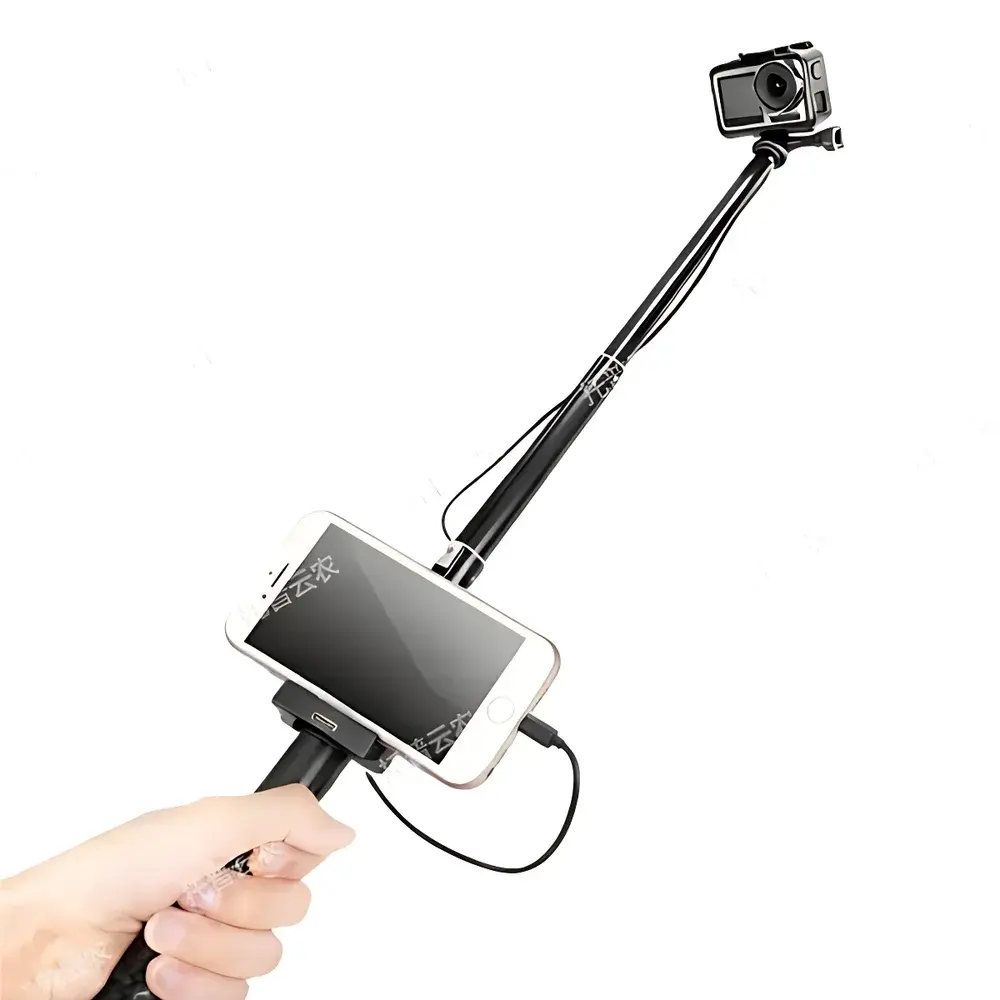
Top Cloud-agri TP-plant-SC Handheld Plant Phenotyping Imaging System
| Brand | Top Cloud-agri |
|---|---|
| Origin | Zhejiang, China |
| Manufacturer Type | OEM/ODM Producer |
| Country of Origin | China |
| Model | TP-plant-SC |
| Price | Upon Request |
| RGB Image Resolution | ≥12 MP |
| Shutter Mode | Auto & Manual Exposure |
| Data Interface | USB |
| Operating Temperature | −10 to 50 °C |
| Operating Humidity | 20–95% RH (non-condensing) |
Overview
The Top Cloud-agri TP-plant-SC Handheld Plant Phenotyping Imaging System is an engineered field-deployable solution for non-destructive, in-situ acquisition and quantitative analysis of morphological, chromatic, and textural plant phenotypic traits. Designed explicitly for low-canopy vegetation (≤1 m height), the system integrates a purpose-built optical imaging module with commercial-grade smartphones via a standardized mechanical and software interface. It operates on the principle of calibrated digital image acquisition followed by pixel-level segmentation and geometric feature extraction—leveraging robust computer vision algorithms grounded in plant-specific color space modeling (e.g., HSV, CIELab) and morphological operations. Unlike stationary or rail-based phenotyping platforms, the TP-plant-SC enables rapid point-of-interest sampling across heterogeneous field plots, greenhouse benches, growth chambers, and potted experiments—supporting time-series monitoring under natural or controlled abiotic/biotic stress conditions without requiring plant relocation or destructive sampling.
Key Features
- Field-Ready Portability: Weighing under 650 g (including mounting bracket and smartphone interface), the imaging unit features ergonomic grip design, integrated LED illumination with adjustable intensity, and vibration-dampened lens housing for stable handheld operation in outdoor wind or uneven terrain.
- In-Situ, Non-Invasive Acquisition: No plant removal or positioning fixtures required; real-time preview and focus lock enable consistent image capture at standardized distances (30–80 cm) and angles, minimizing perspective distortion and ensuring reproducible spatial calibration.
- On-Device Real-Time Analysis: The companion Android/iOS application performs edge-based image processing directly on the smartphone—eliminating latency associated with cloud upload—and delivers quantitative outputs within ≤3 seconds per image under typical ambient lighting.
- Multi-Trait Parameter Extraction: Algorithms automatically compute 12+ standardized phenotypic descriptors per image, including projected canopy area (cm²), convex hull area (cm²), plant height estimate (cm, via reference scale bar), width/length ratio, green pixel fraction (%), yellow pixel fraction (%), leaf coverage index, and texture heterogeneity metrics (e.g., entropy, contrast) derived from grayscale co-occurrence matrices (GLCM).
- Calibration-Aware Workflow: Includes built-in reference target detection and automatic white balance correction using embedded X-Rite ColorChecker patches—ensuring cross-session and cross-device color fidelity compliant with ISO 17321-1 for digital color imaging.
Sample Compatibility & Compliance
The TP-plant-SC is validated for use with dicot and monocot species exhibiting upright or semi-erect architecture and maximum vertical dimension ≤100 cm—including but not limited to Arabidopsis thaliana, Brassica napus, Zea mays (seedling stage), Solanum lycopersicum (young vegetative), Triticum aestivum (tillering phase), and Medicago truncatula. It supports both single-plant and small-group (≤5 plants) imaging configurations. All image metadata (EXIF + custom phenotypic tags) adhere to MIAPPE v1.1 (Minimum Information About a Plant Phenotyping Experiment) standards. Data export formats include CSV (tabular traits), GeoTIFF (georeferenced overlays), and JSON-LD (semantic annotation-ready). The system meets CE marking requirements for electromagnetic compatibility (EN 61000-6-3) and safety (EN 62368-1), and its operational environmental envelope complies with IEC 60529 IP54-rated dust/moisture resistance when used with recommended protective smartphone cases.
Software & Data Management
The proprietary mobile application provides local data persistence with AES-256 encryption for on-device image and trait storage. Synchronized cloud backup (optional Top Cloud-agri Web Platform) implements role-based access control (RBAC), audit trails for all analysis parameter changes, and versioned dataset management—fully traceable per GLP/GMP-aligned workflows. Raw image archives and processed trait tables are exportable in FAIR-compliant formats (e.g., ISA-Tab, NetCDF) and support direct ingestion into R/Bioconductor pipelines (e.g., phenoptr, plantcv) or Python-based analysis environments (scikit-image, OpenCV). Software updates are delivered over-the-air (OTA) with semantic versioning (SemVer 2.0); firmware and algorithm modules undergo quarterly validation against NIST-traceable reference plant image sets.
Applications
- High-throughput screening of drought, salinity, or nutrient-deficiency responses in early-generation breeding populations
- Time-lapse quantification of herbicide efficacy or pathogen progression (e.g., powdery mildew, early blight)
- Validation of genotype-by-environment (G×E) interaction models using field-acquired phenotypic anchors
- Phenotypic calibration of hyperspectral or thermal sensor deployments via ground-truth correlation
- Undergraduate and graduate teaching modules in plant physiology, crop science, and digital agriculture curricula
FAQ
Is the system compatible with all smartphone models?
The TP-plant-SC app is certified for Android 10+ (ARM64) and iOS 15+ devices with ≥4 GB RAM and dual-camera capability; full compatibility matrix is available upon request.
Can analysis parameters be modified or extended by the user?
Yes—via the “Custom Algorithm Module” SDK (provided under academic/research license), users may integrate domain-specific segmentation rules or trait definitions using Python-based plugins.
Does the system support GPS-tagged image capture?
GPS metadata is embedded automatically when enabled on the host smartphone; coordinate accuracy is dependent on device GNSS chipset performance (typically ±3–5 m under open-sky conditions).
How is measurement repeatability ensured across operators?
Standardized operating procedures (SOPs) are embedded in the app as guided workflows—including distance verification prompts, lighting condition alerts, and posture feedback—and are auditable via session logs.
Is regulatory compliance documentation available for institutional procurement?
Yes—Declaration of Conformity (DoC), technical file summary, and MIAPPE-compliance report are provided with each unit shipment.
Related Products




