
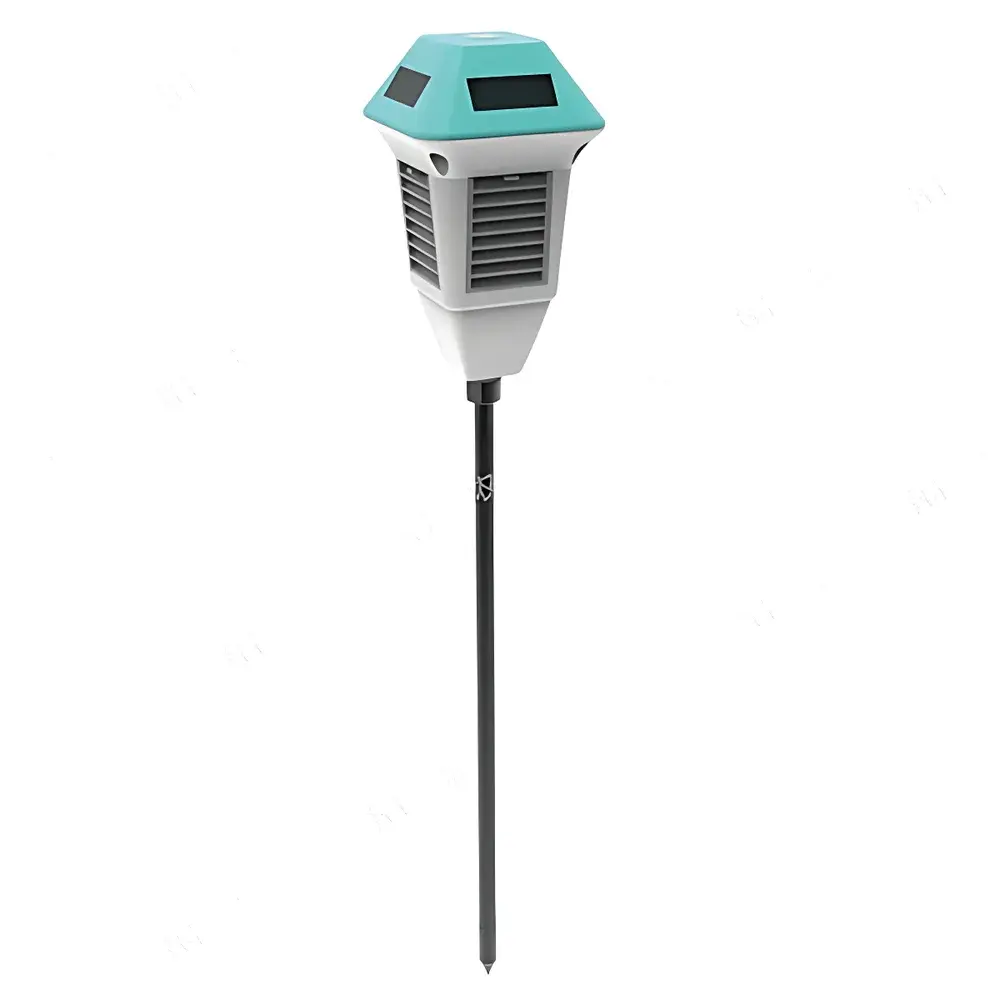
Top Cloud-agri TP-WSB-02 Greenhouse Environmental Monitoring Station
| Brand | Top Cloud-agri |
|---|---|
| Origin | Zhejiang, China |
| Manufacturer Type | OEM/ODM Producer |
| Country of Origin | China |
| Model | TP-WSB-02 |
| Pricing | Available Upon Request |
| Air Temp Range | −20–70 °C, Res: 0.1 °C, Acc: ±0.4 °C |
| Air Humidity Range | 0–98% RH, Res: 1% RH, Acc: ±3% RH |
| Soil Temp Range | −20–70 °C, Res: 0.1 °C, Acc: ±0.5 °C |
| Illuminance Range | 0–200,000 lux, Res: 1 lux, Acc: ±2% FS |
| Soil Moisture Range | 0–100% VWC, Res: 0.1% VWC |
| Soil Probe Depth | ≥30 cm |
| Power Supply | Integrated Solar Panel + 1000 mAh Rechargeable Li-ion Battery |
| Enclosure Rating | IP66 (Main Unit), IP68 (Soil Probes) |
Overview
The Top Cloud-agri TP-WSB-02 Greenhouse Environmental Monitoring Station is a field-deployable, solar-powered wireless sensing platform engineered for continuous, unattended monitoring of microclimatic and edaphic parameters in controlled-environment agriculture. It operates on the principle of multi-sensor fusion—integrating calibrated digital sensors for air temperature, relative humidity, photosynthetic photon flux density (PPFD-equivalent illuminance), soil temperature, and volumetric water content (VWC) into a single sealed enclosure. Data acquisition follows ISO 11464-compliant sampling protocols, with configurable temporal resolution aligned to FAO-recommended greenhouse data logging intervals. Designed for long-term deployment under variable solar irradiance and high-humidity conditions, the system eliminates external cabling and reduces installation time to under five minutes via direct soil insertion of probes and surface-mounting of the main unit.
Key Features
- Integrated sensor architecture: All five core environmental sensors housed within a single IP66-rated enclosure; no external junction boxes or exposed wiring.
- Solar-rechargeable power system: 1000 mAh lithium-ion battery paired with monocrystalline solar panel ensures >12 months of autonomous operation under typical greenhouse insolation (≥3 kWh/m²/day).
- Wireless telemetry: LoRaWAN® or NB-IoT (configurable) enables secure, low-bandwidth transmission to cloud platforms with end-to-end AES-128 encryption.
- Adaptive power management: Real-time battery voltage and solar input monitoring trigger dynamic duty cycling—extending operational life during low-light periods without compromising data continuity.
- Configurable alerting: User-defined thresholds per parameter generate push notifications (via mobile app) and email/SMS alerts compliant with IEC 62443-3-3 security guidelines.
- Web-based remote control: Web dashboard allows over-the-air (OTA) adjustment of sampling interval (1 min–24 h), upload frequency (5 min–1 week), and operational mode (e.g., low-power sleep, diagnostic, or full-scan).
- Comprehensive diagnostics: Signal strength mapping, SIM card traffic monitoring, firmware version tracking, and automated fault log generation support predictive maintenance planning.
Sample Compatibility & Compliance
The TP-WSB-02 is validated for use in horticultural substrates including peat-perlite mixes, coconut coir, mineral wool, and native loam soils. Its IP68-rated soil probes withstand prolonged immersion and resist root intrusion up to 30 cm depth. Calibration certificates traceable to NIM (National Institute of Metrology, China) are provided for all factory-calibrated sensors. The device meets CE marking requirements for electromagnetic compatibility (EN 61000-6-3/6-4) and environmental robustness (EN 60529). While not FDA 21 CFR Part 11-certified out-of-box, audit-ready data logs—including immutable timestamps, user action trails, and checksum-verified data packets—support GLP/GMP-aligned validation workflows when deployed with Top Cloud-agri’s certified SaaS platform.
Software & Data Management
Data ingestion occurs via RESTful OpenAPI v3.0 endpoints, enabling seamless integration with third-party farm management systems (FMS), ERP platforms, or custom SCADA architectures. The native web platform provides ISO/IEC 19770-1-compliant asset inventory tracking and supports role-based access control (RBAC) with granular permissions. Historical datasets are stored in time-series-optimized databases (InfluxDB-compatible schema) and support SQL-like queries across multi-parameter dimensions. Analytical capabilities include: statistical aggregation (mean/min/max/std dev), temporal comparisons (day-over-day, week-over-week, year-over-year), cross-parameter correlation heatmaps, and export in CSV, Excel (.xlsx), PDF (print-ready reports), and NetCDF4 formats. All exports retain embedded metadata (sensor ID, calibration date, GPS geotag, firmware version) for regulatory traceability.
Applications
- Real-time irrigation scheduling based on soil moisture depletion curves and evapotranspiration (ET₀) models.
- Early detection of condensation risk zones through dew point analysis derived from concurrent air T/RH readings.
- Light integral (DLI) calculation for optimizing supplemental lighting strategies in low-sunlight seasons.
- Post-harvest storage environment verification for compliance with UNECE FFV-27 quality standards.
- Longitudinal phenotyping studies correlating microclimate exposure with crop yield metrics (e.g., fruit set rate, stem elongation, leaf area index).
- Validation of HVAC and fogging system performance against ASHRAE Standard 188-2021 indoor air quality benchmarks.
FAQ
What communication protocols does the TP-WSB-02 support?
The device ships with dual-mode radio support—LoRaWAN Class C for private gateway deployments and NB-IoT for cellular network integration. MQTT and HTTP(S) transport layers are supported at the application level.
Can sensor calibration be performed in-field?
Air temperature/humidity and illuminance sensors support two-point field recalibration using NIST-traceable reference instruments. Soil probes require factory recalibration every 24 months due to dielectric drift in heterogeneous media.
Is the solar panel output monitored continuously?
Yes—the platform displays real-time solar panel voltage (Voc) and charging current (mA) alongside battery state-of-charge (SOC) percentage, enabling rapid diagnosis of shading or panel degradation.
How is data integrity ensured during network outages?
Local edge storage retains up to 30 days of raw sensor data (15-minute intervals) in non-volatile memory. Data is automatically retransmitted upon connection restoration with sequence-numbered packet acknowledgment.
Does the system comply with GDPR or CCPA data residency requirements?
Data residency is configurable: customers may deploy the platform on private cloud infrastructure (AWS GovCloud, Azure Germany, or on-premise Kubernetes clusters) to meet jurisdiction-specific sovereignty mandates.







