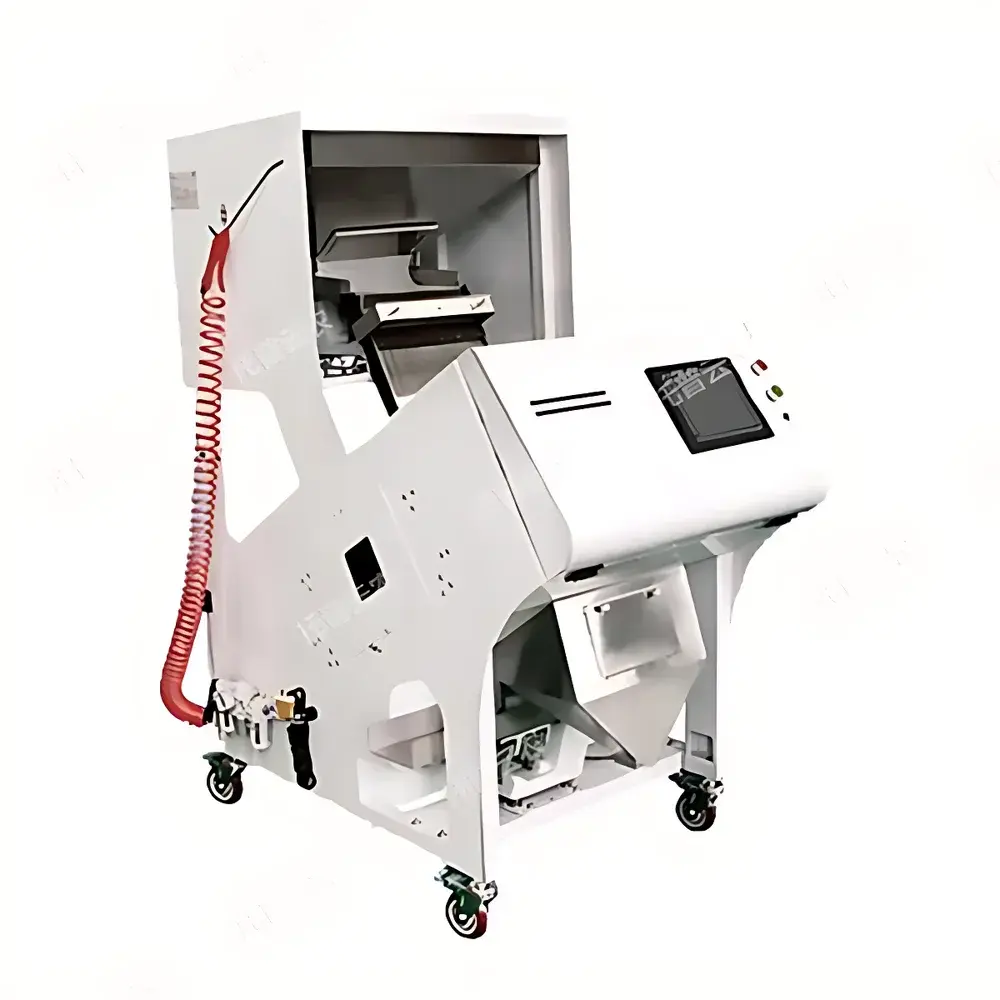
Top Cloud-agri TPSX-G250 Intelligent Seed Color Sorter
| Brand | Top Cloud-agri |
|---|---|
| Origin | Zhejiang, China |
| Manufacturer Type | Direct Manufacturer |
| Country of Origin | China |
| Model | TPSX-G250 |
| Price | Upon Request |
| Imaging Sensor | Ultra-High-Resolution CCD (Multi-Megapixel) |
| Detection Resolution | ≥0.01 mm² Spot Discrimination |
| Rejection Ratio (Defect | Good): 12.5:1 |
| Throughput | 100–250 kg/h |
| Purity Rate | ≥99% |
| Power Supply | 220 V, 50 Hz |
| Power Consumption | 0.8–3.5 kW |
| Air Pressure Requirement | 0.4–0.6 MPa |
| Air Consumption | 140–560 L/min |
| Net Weight | 127 kg |
| Dimensions (L×W×H) | 1110 × 500 × 1450 mm |
Overview
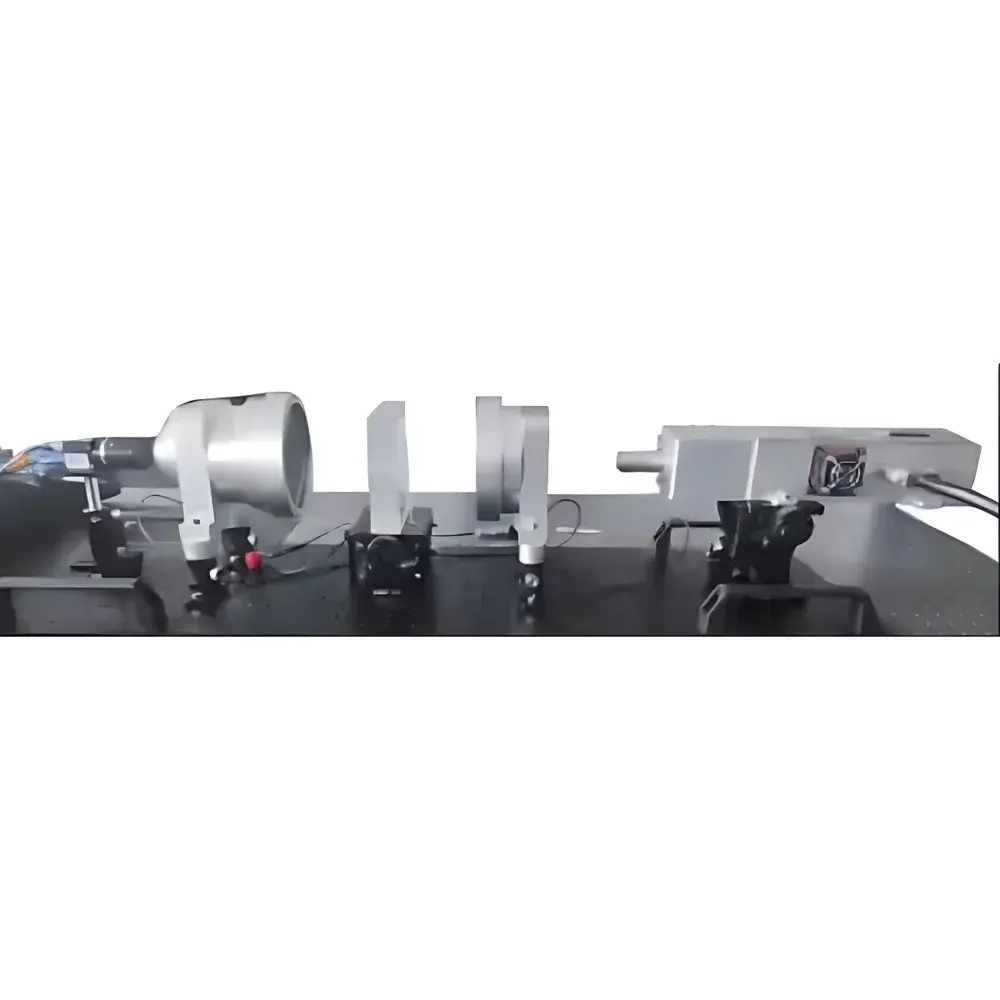
The Top Cloud-agri TPSX-G250 Intelligent Seed Color Sorter is a high-precision optical sorting system engineered for seed quality assurance in agricultural research, breeding programs, and commercial seed processing facilities. Based on high-speed visible-light spectral imaging and real-time pixel-level color discrimination, the instrument identifies and ejects defective or foreign material—including moldy, discolored, shriveled, or mechanically damaged seeds—as well as non-biological contaminants such as stones, husk fragments, dust aggregates, and residual soil particles. Unlike conventional mechanical sieving or density-based separation, this device operates on chromatic contrast analysis within the 400–700 nm visible spectrum, enabling reliable detection of sub-millimeter surface anomalies (≥0.01 mm²) without physical contact or sample preparation. Its design aligns with international seed testing standards—including ISTA (International Seed Testing Association) Rule 5 (Purity Analysis) and OECD Seed Schemes—supporting traceable, repeatable, and auditable sorting outcomes required for certified seed production and GLP-compliant agronomic trials.
Key Features
- Ultra-high-resolution CCD imaging system with multi-megapixel capture capability and microsecond-level exposure control for consistent image fidelity across variable feed rates.
- Real-time adaptive color segmentation algorithm trained on >10,000 reference spectral signatures, supporting simultaneous multi-class classification (e.g., normal vs. fungal-infected vs. immature vs. foreign matter) per frame.
- True-color RGB+IR fused sensing architecture enabling differentiation of subtle hue shifts (e.g., early-stage Aspergillus discoloration in soybean), chlorophyll degradation patterns in aged maize kernels, or anthocyanin variation in heirloom rice varieties.
- Modular pneumatic ejection system with industrial-grade solenoid valves (corrosion-resistant stainless steel body, IP65-rated), delivering precise, non-contact rejection with ≤20 ms response latency.
- Dual-mode operation: configurable for positive selection (retaining target phenotype) or negative rejection (removing defects); supports synchronized parallel sorting of up to four independent color bands per acquisition cycle.
- Integrated environmental protection module featuring HEPA-grade particulate filtration and oil–water coalescing elements to maintain optical path integrity under high-dust field conditions.
- Embedded Ethernet and optional 4G LTE connectivity enabling remote firmware updates, live video streaming, diagnostic telemetry, and predictive maintenance alerts via cloud dashboard.
Sample Compatibility & Compliance
The TPSX-G250 accommodates dry, free-flowing seeds ranging from 1.2 mm (sesame) to 12 mm (large peanut cultivars), including but not limited to Oryza sativa (rice), Zea mays (corn), Glycine max (soybean), Arachis hypogaea (peanut), Sesamum indicum (sesame), Brassica napus (rapeseed), and Phaseolus vulgaris (common bean). All sorting protocols are fully documentable and support audit-ready data export in CSV/Excel format compliant with ISO/IEC 17025 documentation requirements. The system’s operational log includes timestamped event records (e.g., reject count, air pressure deviation, image gain adjustment), satisfying traceability mandates under national seed certification frameworks (e.g., China’s GB/T 3543.1–3543.7 series, USDA Federal Seed Act reporting guidelines).
Software & Data Management
Equipped with proprietary SeedVision™ v3.2 software, the TPSX-G250 provides intuitive GUI-based parameter configuration, real-time histogram visualization of RGB channel distribution, and automated calibration using NIST-traceable ceramic color tiles. All session data—including raw image thumbnails, rejection statistics, operator ID, and environmental metadata—are stored locally on encrypted SD card and optionally synced to secure cloud storage. Audit trail functionality complies with ALCOA+ principles (Attributable, Legible, Contemporaneous, Original, Accurate, Complete, Consistent, Enduring, Available), supporting regulatory review under FAO/WHO Codex Alimentarius Annex IV and national phytosanitary inspection protocols.
Applications
- Pre-germination purity assessment in certified seed laboratories.
- Phenotypic screening of mutant lines in forward/reverse genetics studies.
- Post-harvest quality grading for export-oriented seed processors.
- Contaminant removal validation prior to molecular analysis (e.g., DNA extraction, qPCR).
- Seed lot homogeneity verification for variety registration trials.
- Teaching tool in agricultural engineering curricula for digital phenotyping methodology.
FAQ
Does the TPSX-G250 require daily recalibration?
No—factory-calibrated spectral response remains stable for ≥6 months under standard operating conditions; optional quarterly verification using supplied reference targets is recommended.
Can it distinguish between two genetically similar varieties with minor color differences?
Yes—when trained on validated reference samples, the system achieves ≥92% inter-varietal classification accuracy for morphologically conserved cultivars (e.g., japonica vs. indica rice subspecies) based on surface reflectance profiling.
Is compressed air supply mandatory?
Yes—the pneumatic ejection mechanism requires clean, dry, oil-free compressed air within the specified 0.4–0.6 MPa range; an inline desiccant filter is strongly advised for humid environments.
What file formats does the software support for data export?
CSV (for statistical analysis), PNG/JPEG (for image archiving), and XML (for LIMS integration via ASTM E1384-compliant schema).
Is the system compatible with existing seed cleaning line automation?
Yes—it features Modbus RTU and TCP/IP interfaces for seamless integration with PLC-controlled conveyors, feeders, and downstream packaging units.